The defining technical distinction that settles the choice between the Nvidia RTX 3080 Ti and the Nvidia RTX 3090 is dedicated video memory capacity: the RTX 3090 carries a 24GB GDDR6X frame buffer across a 384-bit memory interface, while the RTX 3080 Ti features a 12GB GDDR6X pool running at a 19.5 Gbps memory speed. For pure rasterized and ray-traced gaming, both graphics processors share NVIDIA’s foundational Ampere architecture and deliver nearly identical framerate targets, making this memory headroom the central factor in your selection.
Gamers demanding maximum frame rates across modern high-refresh displays without professional production demands should choose the Nvidia RTX 3080 Ti. Creative professionals, 3D animators, and workstation users handling complex simulations or machine learning datasets should invest in the Nvidia RTX 3090.

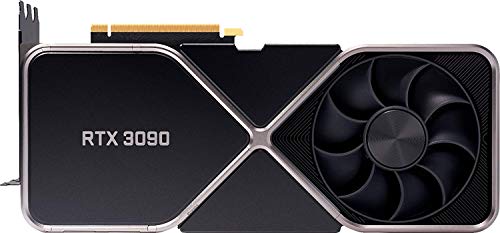
Nvidia RTX 3080 Ti vs Nvidia RTX 3090 at a Glance
| Attribute | Nvidia RTX 3080 Ti | Nvidia RTX 3090 |
|---|---|---|
| Graphics Coprocessor | NVIDIA GeForce RTX 3080 Ti | NVIDIA GeForce RTX 3090 |
| Video Memory (VRAM) | 12 GB GDDR6X | 24 GB GDDR6X |
| Memory Interface Width | Not listed | 384-bit |
| Memory Clock / Speed | 19.5 Gbps (4000 MHz) | Not listed |
| Architecture Generation | NVIDIA Ampere | NVIDIA Ampere |
| Display Outputs | DisplayPort 1.4a, HDMI 2.1 | DisplayPort 1.4a (x3), HDMI 2.1 (x1) |
| Maximum Digital Resolution | 7680 x 4320 | 7680 x 4320 |
| Cooling Configuration | 3 Axial-tech Fans (2.9-Slot Heatsink) | 3 Fans |
| Physical Dimensions | 12.53″ L x 5.51″ W | 12.3″ L x 5.4″ W |
| Best For | High-End 4K Gaming | Workstation 3D Rendering and AI |
VRAM Capacity and Memory Bandwidth
Video random-access memory determines the volume of texture data, geometric assets, frame buffers, and neural network parameters a graphics processor can hold locally without caching out to system RAM. When a graphics card exhausts its on-board memory during high-resolution rendering or compute operations, system throughput drops sharply as data transfers bottleneck over the PCI Express interface. In an intensive creative pipeline or data science environment, sufficient VRAM capacity is the single difference between a successful render job and an out-of-memory crash.
Evaluating the nvidia rtx 3080 vs 3090 family demonstrates how dramatically memory pools shape workload suitability. The RTX 3080 Ti provides 12GB of GDDR6X memory running at 19.5 Gbps with a 4000 MHz memory clock. In contrast, the RTX 3090 provides 24GB of GDDR6X memory paired with a wide 384-bit memory interface. That represents a 100 percent increase in usable capacity, allowing the RTX 3090 to load massive scene files, dense poly meshes, uncompressed 8K video timelines, and deep learning models that saturate smaller buffers immediately. While the RTX 3080 Ti provides exceptional throughput for real-time asset streaming, it cannot overcome the physical 12GB ceiling when complex workstation projects demand larger memory pools.
For standard gaming applications, 12GB remains robust for asset-heavy titles at high graphical presets. However, anyone analyzing the RTX 3080 Ti vs 3090 VRAM difference for digital content creation will find the 24GB frame buffer indispensable. The extra local memory gives users the freedom to work in production suites like Blender, DaVinci Resolve, and Unreal Engine without compromising texture quality or spending time optimizing scene geometry to circumvent memory limits.
Edge: Nvidia RTX 3090. The 24GB GDDR6X frame buffer and 384-bit interface double the local memory capacity of the RTX 3080 Ti to eliminate memory bottlenecks in high-demand rendering and machine learning workloads.
Core Architecture and Ray Tracing Performance
Underlying graphics capabilities depend on execution efficiency across streaming multiprocessors, specialized ray tracing hardware, and dedicated artificial intelligence logic. In modern titles and graphical applications, performance relies on how efficiently a card computes lighting physics, reflections, shadows, and machine-learning-driven image upscaling concurrently without degrading base frame rates.
Both graphics processors leverage NVIDIA Ampere architecture, integrating second-generation RT Cores and third-generation Tensor Cores. The RTX 3080 Ti incorporates Ampere streaming multiprocessors delivering twice the FP32 throughput of prior generations, alongside second-generation RT Cores that provide concurrent ray tracing and shading calculations. Its third-generation Tensor Cores utilize structural sparsity to double throughput for artificial intelligence algorithms like Deep Learning Super Sampling (DLSS), scaling image reconstruction up to 8K resolution. When evaluating nvidia rtx 3080 vs 3080 ti upgrades, the 3080 Ti delivers top-tier rasterization and ray-tracing throughput. The RTX 3090 is built on the identical Ampere foundation, delivering what NVIDIA classifies as TITAN-class performance with enhanced RT Cores, Tensor Cores, and streaming multiprocessors designed for extreme computational throughput.
In actual deployment, real-time gaming performance between the two graphics cards remains exceptionally close. Because both GPUs leverage Ampere silicon with advanced ray tracing and AI upscaling capabilities, frame delivery in modern titles shows marginal variance. Pure rasterization and ray-traced reflections process at virtually identical rates, meaning gamers do not gain a meaningful gaming frame-rate leap simply by moving to the larger card. The primary computational gains on the RTX 3090 appear in continuous compute loops, scientific computing tasks, and AI model training where parallel resources remain fully engaged over hours of execution.
Edge: Tie. Both cards share NVIDIA Ampere architecture with second-generation RT Cores and third-generation Tensor Cores, resulting in nearly identical ray tracing and rasterized gaming performance.
Cooling Engineering and Physical Dimensions
High-performance graphics cards consume substantial electrical power, converting energy directly into thermal output that must be dissipated rapidly to prevent thermal throttling. Cooler efficiency directly affects sustained boost clocks, acoustic profiles, and long-term hardware reliability. Furthermore, physical dimensions determine case compatibility and clearance around adjacent expansion slots on the motherboard.
The ASUS ROG Strix version of the RTX 3080 Ti utilizes an extensive custom cooling system engineered around a 2.9-slot profile. This card measures 12.53 inches in length and 5.51 inches in width, housing an expanded heatsink surface area designed to maximize thermal headroom. It employs three Axial-tech fans, with the center fan spinning in a reversed rotational direction relative to the outer fans to reduce air turbulence and streamline static pressure through the fin array. The RTX 3090 Founders Edition measures 12.3 inches in length and 5.4 inches in width, utilizing a 3-fan layout designed to maintain thermal equilibrium across its components and dual-sided memory configuration.
While the RTX 3090 Founders Edition offers a marginally more compact footprint in both length and width, the ASUS ROG Strix RTX 3080 Ti brings specialized cooling enhancements tailored for sustained operation. The 2.9-slot thickness allows for a denser fin structure, which keeps core components cool even under extended gaming sessions. When choosing between these form factors, system builders must ensure their PC chassis provides adequate length and at least three clear expansion slots to accommodate the physical mass of either card.
Edge: Nvidia RTX 3080 Ti. The ASUS ROG Strix 2.9-slot design combines reversed center fan rotation, expanded heatsink surface area, and three Axial-tech fans to provide exceptional thermal dissipation.
Video Output Configuration and High-Resolution Display Support
Display connectivity dictates how effectively a graphics card integrates into multi-monitor battle stations, high-refresh simulation rigs, and professional editing suites. Bandwidth standards like HDMI 2.1 and DisplayPort 1.4a determine whether a GPU can deliver high refresh rates at 4K and 8K resolutions without relying on chroma subsampling that degrades text clarity and color accuracy.
Both graphics processors support an ultra-high digital maximum resolution of 7680 x 4320, enabling true 8K video output. Shoppers assessing nvidia rtx 3070 ti vs 3090 options will appreciate that the RTX 3090 listing specifies three DisplayPort 1.4a connections alongside one HDMI 2.1 port. This array provides plug-and-play multi-monitor workstation setups, allowing users to drive three high-refresh DisplayPort monitors while simultaneously connecting a high-bandwidth HDMI 2.1 display. The RTX 3080 Ti listing specifies both DisplayPort 1.4a and HDMI 2.1 interface support, ensuring compatibility with modern gaming displays and high-resolution monitors.
The shared maximum resolution of 7680 x 4320 ensures that either card can power cutting-edge display hardware. However, the clearly defined triple DisplayPort 1.4a and HDMI 2.1 array on the RTX 3090 provides direct convenience for complex production setups requiring dedicated multi-panel connectivity right out of the box without supplemental adapters.
Edge: Nvidia RTX 3090. Its factory configuration provides three DisplayPort 1.4a outputs and an HDMI 2.1 port, making it ready for multi-display workstation rigs running up to 7680 x 4320 resolution.
Power Components and Hardware Tuning Utilities
Sustained performance during intense processing spikes requires high-grade power delivery components capable of regulating clean voltage to the GPU core and memory modules. Additionally, the software utilities bundled with a card dictate how easily a user can monitor clock frequencies, manage fan curves, and adjust power targets without third-party tools.
The ASUS ROG Strix RTX 3080 Ti incorporates Super Alloy Power II hardware, featuring premium alloy chokes, solid polymer capacitors, and high-current power stages. These upgraded electronic components improve electrical efficiency, reduce parasitic power loss, and minimize acoustic coil whine during full-load gaming. To manage these components, the card supports ASUS GPU Tweak II, a dedicated software platform that provides real-time hardware monitoring, intuitive clock speed tweaking, thermal threshold management, and customized fan curves.
Comparatively, the RTX 3090 Founders Edition listing focuses on structural hardware delivery, including a bundled converter cable to facilitate connection to standard desktop power supply units, along with a 3-year warranty service period and parts availability. When comparing the broader market, such as nvidia rtx 3070 ti vs 3080 ti models, dedicated manufacturer software and reinforced power arrays add significant value for users who like to fine-tune their hardware. The inclusion of GPU Tweak II and Super Alloy Power II gives the RTX 3080 Ti a distinct advantage for hardware enthusiasts who demand comprehensive monitoring and component-level reinforcement.
Edge: Nvidia RTX 3080 Ti. Built with Super Alloy Power II components and supported by the ASUS GPU Tweak II utility, it provides superior on-board voltage regulation and accessible performance monitoring.
Included Accessories and Hardware Extras
The physical accessories packaged alongside high-end graphics cards streamline the assembly process and provide added utility for custom desktop builds. Cable adapters, mounting aids, and documentation eliminate friction when integrating a massive graphics accelerator into an existing system.
The RTX 3090 listing includes a power converter cable as built-in media, which is essential for adapting conventional power supply leads to the card’s specific power input requirements. It also details regional service backing with a 3-year term and confirmed EU spare parts availability duration of three years, providing peace of mind for long-term workstation reliability. When exploring adjacent card tiers like the nvidia rtx 3060 ti vs 3080 ti, bundled components reflect the card’s specific target audience.
The ASUS ROG Strix RTX 3080 Ti comes with a specialized enthusiast accessory bundle. The packaging includes a collection card, a ROG ruler, ROG Velcro hook-and-loop cable ties for clean chassis management, and a comprehensive Speedsetup manual. While the RTX 3090 supplies the functional converter cable required for system integration, the ROG Strix RTX 3080 Ti provides a more complete package of cable management aids and branded building tools for custom desktop assemblers.
Edge: Nvidia RTX 3080 Ti. Its package includes practical assembly extras like ROG Velcro cable management straps, a ROG ruler, and detailed setup documentation alongside the graphics card.
Pros and Cons
Nvidia RTX 3080 Ti

Pros
- 9-slot heatsink with Axial-tech fan design
- Fast 19.5 Gbps GDDR6X memory speed
- Super Alloy Power II component construction
- GPU Tweak II performance and monitoring utility
- Included ROG Velcro cable ties and setup aids
Cons
- Limited to 12GB VRAM capacity
- Longer 12.53-inch physical card length
View Nvidia RTX 3080 Ti on Amazon
Nvidia RTX 3090

Pros
- Massive 24GB GDDR6X video memory
- Wide 384-bit memory interface
- Three DisplayPort 1.4a and HDMI 2.1 outputs
- Included power converter cable accessory
- Three-year listed service and spare parts support
Cons
- Memory headroom unutilized by most games
- No dedicated software tuning suite listed
View Nvidia RTX 3090 on Amazon
Who Should Buy Each One
Choose the Nvidia RTX 3080 Ti If
- Your primary objective is 4K gaming with maximum ray tracing effects and DLSS upscaling support.
- You want the advanced cooling of a 2.9-slot heatsink with counter-rotating Axial-tech fans.
- You prefer tuning clock speeds, thermal profiles, and fan curves via ASUS GPU Tweak II software.
- You value premium board components like Super Alloy Power II chokes and solid polymer capacitors.
Choose the Nvidia RTX 3090 If
- You handle massive 3D rendering scenes, complex visual effects, or uncompressed 8K video editing pipelines.
- You run local machine learning models or artificial intelligence training sets that exceed 12GB of VRAM.
- You require a guaranteed 24GB GDDR6X frame buffer across a 384-bit memory interface to prevent memory overflow errors.
- You need a dedicated display layout featuring three DisplayPort 1.4a outputs and an HDMI 2.1 connection out of the box.
Final Verdict
For the vast majority of PC enthusiasts and high-end gamers, the Nvidia RTX 3080 Ti is the superior choice. It harnesses NVIDIA’s Ampere architecture with second-generation RT Cores and third-generation Tensor Cores, delivering gaming performance that matches the flagship card across modern 4K titles. Enhanced by the ASUS ROG Strix custom cooling system, 2.9-slot thermal footprint, Super Alloy Power II component design, and GPU Tweak II utility, the RTX 3080 Ti maximizes gaming potential without forcing you to invest in memory capacity that standard games cannot utilize.
The Nvidia RTX 3090 wins definitively in production environments where hardware memory capacity dictates workflow viability. Its massive 24GB GDDR6X frame buffer and 384-bit memory interface provide the necessary headroom for complex 3D modeling, deep learning computation, and high-resolution timeline rendering that immediately overwhelm a 12GB pool. If your daily operations involve professional content creation, machine learning, or extreme simulation datasets, the RTX 3090 provides the indispensable workstation capacity you need.
FAQ
Is the RTX 3090 worth it over the RTX 3080 Ti for standard desktop gaming?
For standard PC gaming, the RTX 3090 is rarely necessary over the RTX 3080 Ti. Both graphics cards are built on NVIDIA Ampere architecture, incorporating second-generation RT Cores and third-generation Tensor Cores. Because current gaming titles do not saturate more than 12GB of VRAM under normal conditions, the RTX 3080 Ti delivers matching framerates and ray tracing responsiveness at 4K resolution.
What is the real-world RTX 3080 Ti vs 3090 VRAM difference?
The RTX 3090 provides 24GB of GDDR6X memory operating on a 384-bit bus, whereas the RTX 3080 Ti provides 12GB of GDDR6X memory clocked at 19.5 Gbps (4000 MHz). This represents a twofold increase in local memory capacity for the RTX 3090, which prevents system bottlenecks when processing workstation-scale datasets and complex 3D rendering scenes.
Can both graphics cards output to 8K resolution displays?
Yes, both the RTX 3080 Ti and RTX 3090 support a maximum digital resolution of 7680 x 4320. Both graphics cards feature HDMI 2.1 and DisplayPort 1.4a interfaces capable of driving high-resolution 8K panels, and both leverage Ampere Tensor Cores capable of DLSS upscaling to high-resolution targets.
Does the RTX 3080 Ti require a larger computer case than the RTX 3090?
The ASUS ROG Strix RTX 3080 Ti measures 12.53 inches long and 5.51 inches wide with a 2.9-slot profile, making it slightly larger than the RTX 3090 Founders Edition, which measures 12.3 inches long and 5.4 inches wide. Both cards require a spacious desktop chassis with ample clearance for three expansion slots and unobstructed airflow.
Which graphics card is better suited for 3D animation and video rendering?
The RTX 3090 is significantly better suited for heavy 3D animation, GPU-accelerated rendering, and 8K video timelines. Its 24GB VRAM capacity allows creative applications like Blender, Maya, and Premiere Pro to load dense polygonal geometries and uncompressed video assets directly into GPU memory without caching to slower system storage.
What software utility is included with the ASUS ROG Strix RTX 3080 Ti?
The ASUS ROG Strix RTX 3080 Ti includes ASUS GPU Tweak II. This utility allows users to adjust core clocks, customize fan curves, control thermal thresholds, and monitor real-time system performance metrics directly from an intuitive software dashboard.


