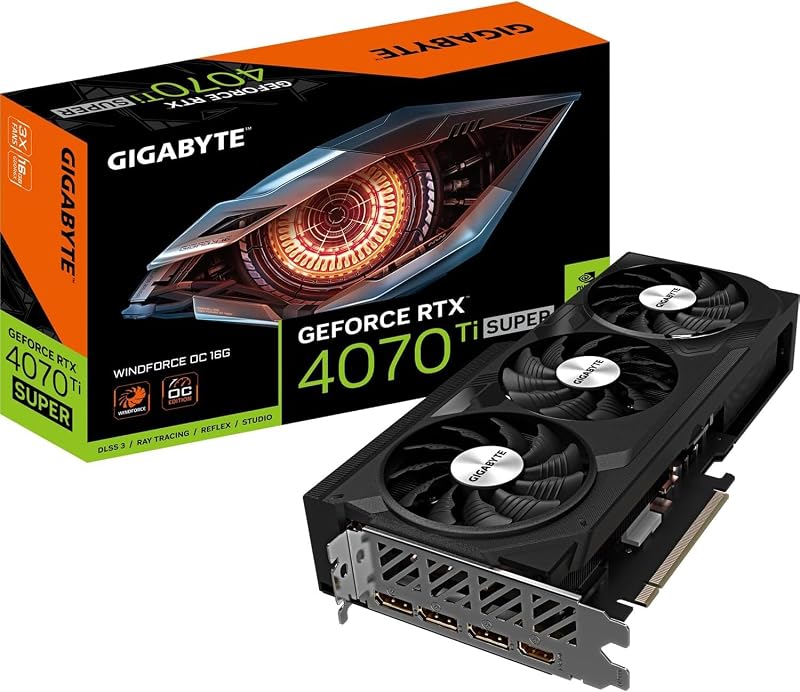
The decisive difference between the Nvidia RTX 5070 Ti and the Nvidia RTX 5090 comes down to memory architecture and thermal engineering: the flagship RTX 5090 delivers an expansive 32GB GDDR7 buffer across a 512-bit bus cooled by an all-in-one liquid loop, whereas the RTX 5070 Ti pairs a 16GB GDDR7 capacity over a 256-bit interface with a standard triple-fan air cooler. When examining the Nvidia RTX 5090 vs 5070 Ti, this hardware division clearly sets the boundary between high-refresh 4K gaming and unconstrained 8K workstation production.
Gamers looking for exceptional 4K visual performance in a standard air-cooled chassis should choose the RTX 5070 Ti. Creative professionals requiring massive memory capacity for complex rendering and native 8K display output should invest in the RTX 5090.


Nvidia RTX 5070 Ti vs 5090 at a Glance
| Feature | Nvidia RTX 5070 Ti | Nvidia RTX 5090 |
|---|---|---|
| Graphics Processor | NVIDIA GeForce RTX 5070 Ti | NVIDIA GeForce RTX 5090 |
| VRAM Capacity and Type | 16 GB GDDR7 | 32 GB GDDR7 |
| Memory Interface Width | 256-bit | 512-bit |
| Memory Clock Speed | 30000 MHz | 28000 MHz |
| Core Clock Frequency | 2588 MHz | 2655 MHz |
| Cooling System | Triple-fan air cooler (2.5 slot) | WATERFORCE all-in-one liquid cooling |
| Maximum Display Resolution | 3840×2160 | 7680×4320 |
| Video Outputs | 3 x DisplayPort 2.1a, 1 x HDMI 2.1b | 3 x DisplayPort 2.1a, 1 x HDMI 2.1b |
| Included In Box | Power cables | Manual |
| Best For | High-framerate 4K gaming | Heavy production rendering and 8K gaming |
Memory Capacity and Bus Bandwidth
Evaluating the RTX 5070 Ti vs 5090 VRAM reveals the single most significant architectural split between these graphics processors. The RTX 5090 carries an expansive 32GB GDDR7 memory buffer routed through an ultra-wide 512-bit bus. In contrast, the RTX 5070 Ti provides 16GB of GDDR7 memory over a 256-bit interface. In computational workflows and modern game engines, the capacity and bus width dictate how much uncompressed texture data, geometry, and neural cache can reside directly on the card without relying on system RAM. Buyers exploring lower-tier alternatives often study the nvidia rtx 5070 vs 5090 to understand where bus constraints first emerge.
Looking closer at the RTX 5070 Ti vs 5090 memory bus, doubling the physical bus width to 512-bit on the flagship card vastly increases the total data pipeline per clock cycle. Interestingly, the official listing specifications reveal that the RTX 5070 Ti runs its memory modules at 30000 MHz, whereas the RTX 5090 lists a memory clock speed of 28000 MHz. While the RTX 5070 Ti holds an advantage in raw frequency per pin, the 512-bit interface of the RTX 5090 delivers vastly superior aggregate bandwidth. For standard consumer workloads, 16GB is more than adequate, but extreme simulations and generative machine learning models will quickly overwhelm a 16GB limitation.
Edge: Nvidia RTX 5090 wins decisively by providing twice the memory capacity and double the bus width to prevent data bottlenecks under heavy loads.
Rendering and Production Workloads
When deciding between the RTX 5070 Ti or 5090 for rendering, frame buffer limits define your project capabilities. In complex 3D rendering engines like Blender, Unreal Engine 5, and Autodesk Maya, large geometry sets, high-resolution texture maps, and volumetric lighting simulations must fit within the onboard GPU memory. The 32GB buffer on the RTX 5090 enables artists to assemble massive environments and compute intensive ray-traced viewports without paging memory out to system storage, which avoids severe system slowdowns.
While an everyday RTX 5070 Ti review highlights impressive rendering efficiency for independent digital artists, the 16GB memory pool can impose limits when dealing with uncompressed multi-layer 8K video timelines or generative AI model training. The RTX 5090 features a 512-bit pipeline that rapidly digests sustained creative compute streams without stuttering. Creators weighing competing GPU ecosystems often check resources like the nvidia rtx 5070 ti vs amd rx 9070 xt to assess how memory thresholds impact production overhead across various architectures.
Edge: Nvidia RTX 5090 takes the lead due to its massive 32GB pool that prevents memory spillover during intensive creative rendering sessions.
Target Resolution and Gaming Performance
The display resolution ceiling marks an important technical divide between these two cards. According to the official specifications, the RTX 5070 Ti lists a maximum display resolution of 3840×2160, making it an optimized solution for dedicated 4K displays. The RTX 5090 lists a maximum display resolution of 7680×4320 pixels, opening the door for ultra-enthusiast 8K gaming and multi-monitor simulation rigs. Both cards feature modern Blackwell architecture capabilities and support NVIDIA DLSS 4 to maximize frame rates in demanding graphical scenes.
When evaluating the RTX 5070 Ti or 5090 for 4K gaming, the RTX 5070 Ti offers a well-balanced experience, delivering smooth frame rates in demanding DirectX 12 titles while utilizing a 2588 MHz core clock. However, the RTX 5090 elevates processing speeds with a 2655 MHz core clock alongside its superior compute horsepower, allowing it to sustain visual clarity at native resolutions beyond 4K. Gamers reviewing generational upgrades frequently consult the nvidia rtx 5070 vs 5070 ti to determine the exact display resolution where higher tier investments show tangible benefits.
Edge: Nvidia RTX 5090 wins for its higher core clock frequency and support for 7680×4320 8K resolutions.
Cooling Architecture and System Integration
Analyzing RTX 5070 Ti vs 5090 cooling brings two drastically different hardware formats into perspective. The Gigabyte GeForce RTX 5070 Ti Gaming OC relies on a proven triple-fan air-cooling mechanism arranged in a 2.5-slot footprint. This air cooler relies on three fans to drive airflow directly through dense aluminum fins, exhausting heat into the computer case. It fits standard motherboard PCIe slots without requiring external component mounting, ensuring straightforward hardware installation across typical mid-tower cases.
In contrast, the Gigabyte AORUS GeForce RTX 5090 Xtreme WATERFORCE uses an integrated all-in-one liquid cooling system complemented by RGB lighting and a protective metal backplate. Liquid cooling moves thermal energy directly away from the core and memory modules through liquid tubing out to an external radiator. While this design provides superior thermal management under sustained heavy loads, it requires dedicated chassis mounting space for the radiator. Builders seeking simplified internal configurations often compare options like the nvidia rtx 5060 vs 5070 ti to skip liquid cooling maintenance completely.
Edge: Nvidia RTX 5070 Ti wins on physical integration thanks to a conventional triple-fan air cooler that requires no radiator installation.
Clock Speeds and Overall Architecture
A technical assessment of the RTX 5070 Ti vs RTX 5090 specs showcases how NVIDIA tunes core and memory behavior within the Blackwell architecture. Both graphics cards connect through a high-bandwidth PCI-Express 5.0 (PCIe x16) interface to maximize data exchange with compatible motherboards. Display connectivity is also identical across both units, each featuring three DisplayPort 2.1a ports and one HDMI 2.1b output, supporting high-refresh-rate gaming monitors and variable refresh displays.
Where these cards diverge is in clock speed distribution. The RTX 5090 operates with a higher core clock speed of 2655 MHz compared to the 2588 MHz core clock of the RTX 5070 Ti. On the memory side, the RTX 5070 Ti reaches a 30000 MHz memory clock speed, while the RTX 5090 operates at 28000 MHz. Builders mapping out performance tiers sometimes review comparisons like the nvidia rtx 5060 ti vs 5090 to gauge how clock speeds correlate with real-world output. Despite the lower memory clock number on paper, the wider 512-bit bus on the RTX 5090 ensures superior total memory performance.
Edge: Nvidia RTX 5090 secures the advantage by pairing a higher 2655 MHz core clock with an ultra-wide memory pathway.
Pros and Cons
Nvidia RTX 5070 Ti

Pros
- Faster 30000 MHz memory clock
- Triple-fan air cooling fits standard cases
- Power cables included in packaging
- Efficient 2.5-slot desktop footprint
Cons
- Half the VRAM capacity at 16GB
- Narrower 256-bit memory interface
- Maximum display resolution limited to 3840×2160
View Nvidia RTX 5070 Ti on Amazon
Nvidia RTX 5090

Pros
- Massive 32GB GDDR7 memory capacity
- Ultra-wide 512-bit memory interface
- WATERFORCE all-in-one liquid cooling system
- Supports up to 7680×4320 8K output
- Higher 2655 MHz core clock frequency
Cons
- Requires radiator mounting clearance in chassis
- Lower 28000 MHz memory clock speed
- Requires online registration for 4-year warranty
View Nvidia RTX 5090 on Amazon
Who Should Buy Each One
Choose the Nvidia RTX 5070 Ti If
- You target smooth 4K gaming at 3840×2160 resolution using NVIDIA DLSS 4.
- You want a standard 2.5-slot triple-fan air cooler that drops into standard PC enclosures without mounting a radiator.
- You prefer having bundled power cables included directly in the packaging.
- Your production work and gaming workflows fit comfortably inside a 16GB VRAM buffer.
Choose the Nvidia RTX 5090 If
- You execute demanding 3D rendering, machine learning models, or VFX tasks that require 32GB of VRAM.
- You game or edit content on ultra-high-resolution 7680×4320 8K monitors.
- Your desktop case has ample radiator clearance for a WATERFORCE all-in-one liquid cooling system.
- You want maximum GPU compute power with a factory core frequency of 2655 MHz and RGB lighting.
Final Verdict
For the vast majority of PC builders and dedicated gamers, the RTX 5070 Ti represents the ideal equilibrium of performance, physical compatibility, and architectural efficiency. Its 16GB of GDDR7 memory, 30000 MHz memory clock speed, and 2588 MHz core frequency handle demanding DirectX 12 games smoothly at 3840×2160 resolution. The standard triple-fan air cooling system fits easily into conventional cases without the mounting complications of a liquid radiator, and the inclusion of power cables in the retail package makes setup straightforward. It delivers premium 4K gaming performance without demanding specialized chassis plumbing.
However, when evaluating whether the RTX 5090 is worth it, the card justifies its status for professionals handling heavy production rendering or enthusiasts pushing native 8K displays. The 32GB GDDR7 frame buffer paired with an ultra-wide 512-bit memory interface prevents render pipelines from stalling on massive geometric assets. Combined with its factory-installed WATERFORCE liquid cooling loop, 2655 MHz core clock, and 7680×4320 maximum resolution support, the RTX 5090 is the clear winner for elite creator workstations and extreme computing environments.
FAQ
Is the RTX 5090 worth it over the RTX 5070 Ti for everyday gaming?
For standard 4K gaming at 3840×2160, the RTX 5070 Ti provides plenty of graphical power with its 16GB GDDR7 buffer and DLSS 4 support. The RTX 5090 is primarily worth it if you play on native 8K displays up to 7680×4320 or use heavy graphics mods and simulations that exceed 16GB of memory.
Can the RTX 5070 Ti output to 8K displays?
According to the official listing data, the RTX 5070 Ti supports a maximum display resolution of 3840×2160. To display native 8K resolution at 7680×4320 pixels, you will need the RTX 5090.
What cooling hardware comes on each card?
The RTX 5070 Ti uses a 2.5-slot triple-fan air-cooling design that pushes air across an internal heatsink. The RTX 5090 features the AORUS WATERFORCE all-in-one liquid cooling system, which circulates coolant from the card to an external radiator for heat dissipation.
Why is the memory clock speed higher on the RTX 5070 Ti than the RTX 5090?
The RTX 5070 Ti lists a memory clock speed of 30000 MHz, while the RTX 5090 lists 28000 MHz. However, because the RTX 5090 uses a 512-bit bus width compared to the 256-bit bus on the RTX 5070 Ti, the RTX 5090 delivers vastly higher overall memory bandwidth.
Do both cards support PCI-Express 5.0 and DLSS 4?
Yes, both the RTX 5070 Ti and the RTX 5090 support the PCI-Express 5.0 motherboard interface and take advantage of NVIDIA DLSS 4 technology.
What display connection ports are included on these graphics cards?
Both models feature three DisplayPort 2.1a ports and one HDMI 2.1b port, providing identical multi-monitor connectivity options.
What warranty and spare part support is provided?
The RTX 5070 Ti lists EU spare part availability of 4 years. The RTX 5090 includes a 4-year warranty requiring online registration, along with 4 years of EU spare part availability.