The core distinction deciding the choice between these two 18V reciprocating saws comes down to connected digital management and automated cut safety versus mechanical, analog simplicity. Crew leads and commercial contractors who need remote inventory tracking, custom trigger ramp-up profiles, and automatic blade stopping require the specialized digital hardware on the newer platform, while tradespeople seeking a rugged, unencumbered demo tool often favor an uncomplicated, pull-and-cut design.
If you prioritize simple mechanical operation and dependable motor output for general framing and teardown, choose the Milwaukee 2720-20. If your jobsite demands centralized asset tracking, active cut braking to protect surrounding materials, and tailored speed profiles, choose the Milwaukee 2822-20.


Milwaukee 2720-20 vs 2822-20 at a Glance
| Feature | Milwaukee 2720-20 | Milwaukee 2822-20 |
|---|---|---|
| Motor Technology | POWERSTATE Brushless | Brushless (M18 FUEL) |
| Power / Wattage | 400 watts | Not listed |
| Stroke Length | Not listed | 1-1/4 inches |
| Bare Tool Weight | 7.4 pounds | 6.8 pounds |
| ONE-KEY Connectivity | No | Yes (Customize, track, manage) |
| Cut Brake Feature | No | Yes (Selectable active brake) |
| Blade Clamp Mechanism | Standard clamp | Anti-corrosion lever action quick-lock |
| LED Worklight | Integrated LED light | Built-in LED light |
| Shoe Adjustment | Adjustable shoe | Not listed |
| Rafter / Hang Hook | Yes | Yes |
| Best For | General demolition and straightforward framing | Managed tool fleets and precision rough-in cutting |
Smart Connectivity and Fleet Management
On modern commercial jobsites, tool tracking and performance tuning can save dozens of lost production hours. The fundamental M18 FUEL Sawzall ONE-KEY difference is that the 2822-20 incorporates Milwaukee’s integrated ONE-KEY wireless module, enabling operators and tool crib managers to locate the saw via Bluetooth, log utilization data, and lock the tool remotely if it leaves a defined perimeter. Beyond security, this connectivity grants access to digital performance tuning, allowing users to configure custom trigger ramp-up parameters and set specific cut speeds optimized for diverse materials like rigid cast iron, thick structural steel, or soft framing timber directly within an app.
By contrast, the 2720-20 represents an entirely analog tool architecture. It relies purely on the physical variable-speed trigger to modulate stroke speed without any wireless hardware, onboard memory, or remote lockout functionality. When evaluating the dewalt dcs367 vs milwaukee 2822-20 for connected jobsite logistics, digital inventory reporting is often the deciding factor that large commercial mechanical contractors seek. The 2720-20 cannot integrate into an automated asset-management ecosystem, leaving inventory accountability strictly to physical sign-out sheets and manual tool tagging.
The operational cost of this difference depends entirely on your job setup. For an independent carpenter or solo remodeler, the digital module adds electronic complexity that may sit unused throughout the lifespan of the tool. For electrical, mechanical, and plumbing crews operating across multi-story builds, tool crib visibility and anti-theft tracking justify the platform integration immediately. The 2822-20 provides complete administrative and operational control over every cut profile, whereas the 2720-20 remains a traditional pull-the-trigger power tool.
Edge: Milwaukee 2822-20 delivers advanced ONE-KEY digital tracking, remote security locking, and customizable speed profiles that the 2720-20 lacks entirely.
Blade Control and Active Braking Technology
Rough-in demolition and MEP installation work frequently present instances where a reciprocating saw blade punches through a target pipe or stud and damages adjacent electrical lines, structural materials, or finished surfaces. To combat this issue, the 2822-20 features a selectable Milwaukee 2822-20 cut brake system. This active sensor system continuously evaluates the operational load on the motor while driving through a cut. As the blade exits the workpiece and the resistance drops abruptly, the tool automatically halts blade oscillation in most applications, preventing destructive over-travel and sudden kickback on breakthrough.
The 2720-20 utilizes standard motor electronics governed by its REDLINK PLUS intelligence, which monitors overload, overheating, and over-discharging conditions. However, the listing for the 2720-20 does not specify an automatic load-sensing cut brake mechanism. When finishing a heavy rough cut with the 2720-20, the blade continues cycling at whatever speed the operator holds on the trigger until the finger releases it. Managing the saw as it bursts out the back of a tough cut requires pure manual trigger feathering and strong user bracing.
When comparing tools in this segment, such as in our breakdown of the milwaukee 2822-20 vs makita xrj05z, cut braking dramatically reduces accidental plunge damage in tight spaces. For plumbing apprentices, mechanical rough-in specialists, and anyone operating in densely packed utility chases, this automated safety net provides noticeable peace of mind. The 2720-20 performs reliably in wide-open demolition where over-penetration is harmless, but the 2822-20 actively protects surrounding infrastructure.
Edge: Milwaukee 2822-20 takes the lead thanks to its selectable active cut brake that stops blade travel upon cut completion.
Cutting Capacity and Stroke Performance
Reciprocating cut speed depends heavily on motor power and stroke distance. A longer stroke length allows the blade teeth to sweep away chips and heat more rapidly during aggressive demolition work. The 2822-20 provides an aggressive 1-1/4 inch stroke length, which maximizes material clearance on every stroke cycle. Combined with its brushless motor configuration, this long stroke makes quick work of heavy timber, nail-embedded lumber, and industrial pipe.
For the 2720-20, the product listing explicitly confirms a 400-watt rating and a POWERSTATE brushless motor engineered to outpace corded saws, but the listing does not specify the exact stroke length. While the 400-watt output provides substantial continuous torque under REDLINK PLUS electronic supervision, the unlisted stroke specification leaves the mechanical stroke distance unconfirmed in the official data. Buyers assessing Milwaukee 2720-20 stroke specs must rely on the rated 400-watt motor baseline rather than confirmed physical throw dimensions.
When looking at the milwaukee 2720-20 vs makita xrj05z, knowing exact mechanical throw metrics matters for production demolition. Because the 2822-20 confirms a full 1-1/4 inch stroke in its documentation, buyers can count on optimized tooth engagement per cycle. The 2720-20 still cuts with aggressive corded-equivalent power, but the confirmed specifications on the 2822-20 give it a transparent edge for heavy stock removal.
Edge: Milwaukee 2822-20 secures the advantage with a verified 1-1/4 inch stroke length that maximizes cut speed and material evacuation.
Weight, Ergonomics, and Handling
Reciprocating saws are notoriously demanding on an operator’s shoulders, forearms, and wrists, particularly when trimming ceiling joists, cutting overhead ductwork, or notching studs at shoulder height. Weight distribution and overall mass play a dominant role in job fatigue over an eight-hour shift. The 2720-20 registers at 7.4 pounds for the bare tool body, presenting a solid, heavyweight profile constructed with durable plastic handle materials designed to absorb jobsite impacts.
The 2822-20 sheds notable bulk, weighing in at 6.8 pounds according to its manufacturer specifications. Cutting more than half a pound from the chassis while adding wireless tracking and active electronic braking represents a major engineering achievement. In tight spaces or extended overhead usage, that 0.6-pound difference significantly postpones operator exhaustion and muscle strain. As seen in comparisons like the dewalt dcs367 vs milwaukee 2720-20, tool mass heavily influences daily handling comfort.
Both models provide essential convenience hardware for demanding site conditions. Each saw features an integrated LED worklight to illuminate cut lines in dimly lit framing bays and basements. Furthermore, both models incorporate a built-in metal rafter hang hook, allowing operators to hang the tool safely on framing timber, staging, or pipe ladders between cuts rather than dropping it on damp subfloors. Nevertheless, the lighter chassis of the 2822-20 makes it noticeably easier to maneuver through contorted cut angles.
Edge: Milwaukee 2822-20 wins with a 6.8-pound frame that reduces user fatigue compared to the 7.4-pound 2720-20.
Blade Clamp Mechanism and Jobsite Durability
Demolition and pipe cutting inevitably expose a reciprocating saw’s front nose to dirt, abrasive masonry slurry, rainwater, and acidic jobsite chemicals. Over extended use, these contaminants can seize blade clamps, forcing crews to rely on pliers or punches to swap dull blades. The 2822-20 tackles this challenge directly with an anti-corrosion lever action quick-lock blade clamp. This upgraded clamp architecture minimizes maintenance downtime and ensures effortless one-handed blade insertion and release even after sustained exposure to damp, corrosive environments.
The 2720-20 features a heavy-duty blade locking mechanism alongside an adjustable shoe that allows users to shift the contact point along the blade, exposing fresh teeth to lengthen blade lifespan. While the 2720-20 includes an adjustable shoe that the 2822-20 listing does not specify, the 2720-20 listing does not specify specialized anti-corrosion coatings or a lever-action locking system on its front nose clamp. Standard blade clamps can collect debris and require frequent lubricating sprays to prevent binding over years of heavy teardown duty.
For crews weighing the dewalt dcs380 vs milwaukee 2822-20, mechanical clamp reliability under harsh exterior conditions is an essential purchase factor. The 2720-20 retains an advantage for extending blade life via its adjustable shoe, but the 2822-20 ensures that the clamp mechanism itself resists jamming caused by rust and grit. Depending on whether your primary priority is saving blade consumables or preventing clamp freeze-ups, both saws bring distinct mechanical advantages to the front end.
Edge: Tie. The 2822-20 offers superior anti-corrosion lever-action clamp engineering, while the 2720-20 features a practical adjustable shoe to optimize blade wear.
Pros and Cons
Milwaukee 2720-20
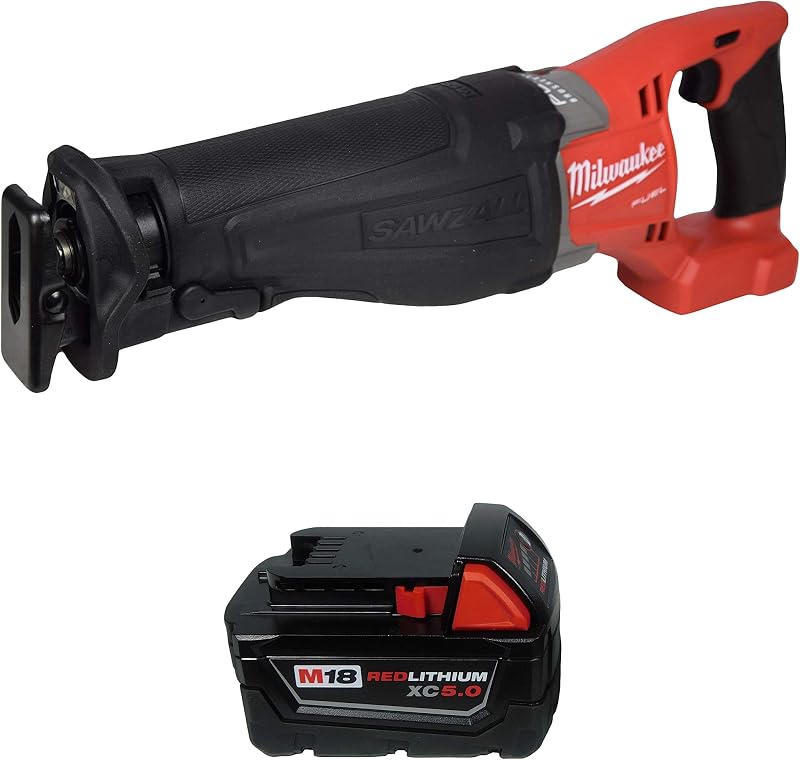
Pros
- 400-watt POWERSTATE brushless motor
- REDLINK PLUS electronic overload protection
- Adjustable shoe extends blade life
- Integrated rafter hang hook
Cons
- Heavier 7.4-pound tool body
- Stroke length not specified in listing
- Lacks digital tracking and cut brake
View Milwaukee 2720-20 on Amazon
Milwaukee 2822-20

Pros
- ONE-KEY digital tracking and customization
- Selectable active cut brake feature
- Aggressive 1-1/4 inch stroke length
- Lighter 6.8-pound bare tool weight
- Anti-corrosion lever action blade clamp
Cons
- Added digital complexity for simple demo
- Shoe adjustability not listed
View Milwaukee 2822-20 on Amazon
Who Should Buy Each One
Choose the Milwaukee 2720-20 If
- You prefer a simple mechanical tool without Bluetooth radios, companion apps, or digital setup requirements.
- You want an integrated adjustable shoe to maximize blade tooth lifespan during heavy teardown.
- Your primary tasks involve wide-open framing or rough demolition where cut over-travel is not a hazard.
- You need a proven 400-watt POWERSTATE brushless platform backed by a 5-year limited manufacturer warranty.
Choose the Milwaukee 2822-20 If
- Your company uses Milwaukee ONE-KEY to track inventory, customize trigger profiles, and secure tools remotely.
- You cut inside tight wall cavities or around delicate utilities where an active cut brake prevents collateral damage.
- You perform extensive overhead or ladder work and need a lighter 6.8-pound bare tool chassis.
- You operate in corrosive, wet, or muddy environments that demand an anti-corrosion lever-action blade clamp.
Final Verdict
For most commercial contractors, mechanical installers, and modern jobsites, the Milwaukee Sawzall 2822-20 represents the smarter and more capable long-term investment. By incorporating a verified 1-1/4 inch stroke length, a selectable cut brake that halts blade movement upon breakthrough, and an anti-corrosion lever clamp into a lighter 6.8-pound body, it solves the most frustrating pain points of heavy recip sawing. The addition of ONE-KEY connectivity seals the decision for multi-person crews who must account for gear, monitor performance, and manage tool security from a centralized digital dashboard.
The Milwaukee 2720-20 remains a formidable and durable workhorse for operators who want pure, uncomplicated cutting power. If your work consists of standalone residential demolition, barn tear-outs, or general carpentry where asset tracking is unnecessary and electronic cut braking adds unwarranted complexity, the 2720-20 delivers robust 400-watt brushless muscle and an adjustable shoe without fuss. However, in this Milwaukee 2822-20 vs 2720-20 matchup, the advanced safety, lighter frame, and connected convenience make the 2822-20 the superior overall performer.
FAQ
Is the Milwaukee 2822-20 worth it over the 2720-20 for general demolition?
Whether the 2822-20 is worth the upgrade depends on your working environment. If you frequently perform delicate remodeling cuts where severing a hidden pipe or wire behind drywall could cause severe damage, the selectable cut brake and lighter 6.8-pound chassis make the 2822-20 well worth selecting. However, if your demolition involves tearing down wide-open framing, sheds, or rough lumber where precise stopping control and digital tracking offer no tangible advantage, the 2720-20 provides all the raw brushless power you need.
How does the Milwaukee 2822-20 cut brake actually operate?
The cut brake on the 2822-20 actively monitors the mechanical load placed on the motor throughout the cutting process. While the blade is chewing through dense lumber, metal conduit, or pipe, the tool sustains full cutting stroke speed. The instant the blade breaks through the backside of the material and the resistance drops, the onboard electronics sense the load reduction and automatically stop the blade from cycling, which prevents the tip from slamming into rear wall studs, plumbing pipes, or wiring.
What is the primary M18 FUEL Sawzall ONE-KEY difference between these units?
The primary difference is that the 2822-20 contains an integrated ONE-KEY Bluetooth module, whereas the 2720-20 has zero wireless or digital capabilities. With ONE-KEY on the 2822-20, users can track tool locations on a digital map, view usage statistics, lock out the tool remotely to deter jobsite theft, and customize operational parameters such as trigger ramp-up speed and material-specific cutting speeds directly through an app.
What are the Milwaukee 2720-20 stroke specs compared to the 2822-20?
The product listing for the 2822-20 confirms a 1-1/4 inch stroke length, which is optimized for rapid material removal and efficient debris clearing. In contrast, the listing for the 2720-20 does not specify its stroke length, listing only its 400-watt power output rating and POWERSTATE brushless motor designation. As a result, the 2822-20 is the only saw of the two with a confirmed stroke length in the manufacturer listing specifications.
Can both saws use the same M18 REDLITHIUM battery packs?
Yes, both the 2720-20 and the 2822-20 belong to the Milwaukee M18 FUEL cordless ecosystem and operate on standard 18-volt M18 lithium-ion battery packs. The listing for the 2720-20 highlights compatibility with REDLITHIUM XC5.0 packs to deliver extended runtime and optimized motor performance through REDLINK PLUS intelligence, while the 2822-20 meets standard Milwaukee M18 FUEL platform specifications.
How does blade replacement differ on the Milwaukee 2822-20 vs 2720-20?
The 2822-20 features a specialized lever-action quick-lock blade clamp engineered with anti-corrosion treatments to prevent binding caused by rust, grit, and cutting lubricants over long-term field use. The 2720-20 includes a standard quick-change clamp paired with an adjustable shoe that can be moved inward or outward to utilize unworn portions of the reciprocating saw blade, though its listing does not specify anti-corrosion coatings.


