The core deciding difference between the Makita XFD131 and the larger hammer model comes down to raw rotational torque and percussion capability versus compact handling. While both tools run on the 18V LXT cordless platform, one is an agile, everyday driver-drill designed for general trades, and the other is a high-torque beast engineered to power large bits through structural lumber and hammer through masonry.
Homeowners, cabinetmakers, and light contractors should pick the XFD131 for its lightweight, balanced frame and complete kit convenience. General contractors, electricians, and framers should choose the Makita XPH07Z when their workday demands severe fastening torque and masonry hammer drilling without switching tools.


Makita XFD131 vs Makita XPH07Z at a Glance
| Feature | Makita XFD131 | Makita XPH07Z |
|---|---|---|
| Tool Type | Driver-Drill Kit | Hammer Driver-Drill (Tool Only) |
| Motor Type | BL Brushless | BL Brushless |
| Max Torque | 440 in-lbs | 1,090 in-lbs |
| Max Rotational Speed | 1,900 RPM | 2,100 RPM |
| Hammer Action (BPM) | None | 0-31,500 BPM |
| Chuck Size | 1/2-inch (13 mm) | 1/2-inch |
| Supplied Battery | 18V LXT 3.0Ah Lithium-Ion | Not included (bare tool) |
| Operating Weight | 3.8 lbs (with 3.0Ah battery) | The listing does not specify |
| Wood Drilling Capacity | 1.25 inches | The listing does not specify |
| Best For | Carpentry, assembly, and overhead drilling | Masonry, structural drilling, and heavy lag bolts |
Torque Output and Heavy Fastening Power
Torque determines how much rotational muscle a cordless drill can exert against extreme resistance. When driving long structural fasteners, spinning large hole saws, or turning auger bits through seasoned dimensional lumber, a drill with insufficient torque will stall, overheat, or drain its battery rapidly. The mechanical leverage built into the motor and gearbox dictates whether a tool effortlessly pulls a fastener flush or binds midway through the cut.
In this comparison, the disparity in rotational force is massive. The XFD131 features an electronically controlled BL Brushless motor delivering 440 in-lbs of maximum torque and 350 watts of maximum power. This level of force easily handles standard interior fastening, cabinet hanging, drywall framing, and small-to-medium lag screws. By contrast, the Makita xph14z vs xph07z discussion highlights how the XPH07Z sits at the absolute summit of heavy-duty performance. Looking strictly at the Makita XPH07Z torque specs, this tool dishes out an astounding 1,090 in-lbs of maximum torque. Its brushless motor is engineered with 5.6-amp draw capabilities to tackle punishing structural hardware that would instantly lock up lighter motors.
For users who regularly sink timber screws, run mixing paddles, or bore through thick beams, the XPH07Z provides an unmatched safety margin against stalling. However, that extreme force can twist your wrist or snap small screw heads if you lack experience controlling high-torque tools. The XFD131 offers far more controllable, moderate torque that protects delicate materials from stripping.
Edge: Makita XPH07Z delivers more than double the torque to master the toughest framing and boring tasks.
Masonry Drilling and Hammer Capabilities
Drilling into masonry, brick, mortar, or concrete requires a dedicated percussion mechanism alongside rotation. A basic driver-drill spins smooth flutes that merely polish hard stone surfaces, generating excessive heat and dulling carbide bits without penetrating. A hammer driver-drill incorporates internal ratchet plates that produce rapid axial strikes against the back of the chuck, fracturing brittle masonry aggregates so the rotating flutes can clear the debris.
Choosing the Makita XFD131 or XPH07Z for masonry presents an open-and-shut case. The XFD131 is categorized purely as a basic drill and fastening tool; it contains no internal hammer mechanism whatsoever. If you need to install Tapcon screws into a concrete foundation, set anchors in a brick facade, or drill through ceramic tiles, the XFD131 cannot perform the job effectively without causing extreme bit wear and motor strain. In contrast, those evaluating the makita xfd131 vs xph12z often weigh adding hammer functions, but the XPH07Z takes percussion to a professional tier with an internal mechanism delivering 0 to 31,500 blows per minute (BPM).
The 31,500 BPM percussion rate allows the XPH07Z to blast clean anchor holes into poured concrete, cinder block, and stone walls with minimal downward pressure from the operator. For tradespeople who work on foundation walls, exterior siding, or masonry landscaping, carrying the XPH07Z eliminates the need to haul a secondary rotary hammer drill for light-to-medium anchoring jobs. The XFD131 remains strictly restricted to wood, plastic, and metal substrates.
Edge: Makita XPH07Z includes a dedicated 31,500 BPM hammer mechanism that penetrates concrete and masonry materials.
Woodworking and Precision Assembly
While heavy construction demands raw output, fine woodworking, cabinet construction, and mechanical assembly require finesse, speed regulation, and balance. In delicate trim work, excessive rotational force is actually a liability that leads to split boards, stripped screw heads, and damaged finishes. The ability to feather the variable-speed trigger and dial in precise clutch settings ensures fasteners sink to uniform depths across an entire installation.
Selecting the Makita XFD131 or XPH07Z for woodworking heavily favors the smaller unit. The XFD131 is tailored precisely for finish carpentry and general shop duties, featuring a mechanical 2-speed transmission providing 0-500 RPM on low gear and 0-1,900 RPM on high gear. Its clutch collar provides adjustable torque settings designed specifically to give users control over fasteners spanning from small, delicate trim screws to large framing anchors. The tool is factory-rated for a 1.25-inch drilling capacity in wood and a 0.5-inch capacity in metal, which completely covers standard cabinet installation, door hanging, and furniture assembly.
The XPH07Z achieves higher rotational speed, topping out at 2,100 RPM, but its immense torque output and burly nose assembly make it awkward for tight cabinetry work. Driving small brass screws or sinking trim fasteners with a 1,090 in-lb hammer drill demands constant trigger modulation to avoid destroying workpieces. Any detailed Makita XFD131 review will emphasize that this tool excels at repeatable, clean driving where precision and control outrank brute strength.
Edge: Makita XFD131 offers refined low-speed control and fine-tuned clutch adjustments that excel in detailed woodwork.
Tool Ergonomics, Size, and Operator Fatigue
Tool weight and physical dimensions fundamentally dictate how long an operator can work overhead, on scaffolding, or inside cramped cabinets before joint strain sets in. A heavy drill might feel stable on a waist-height workbench, but carrying it up an extension ladder or reaching overhead to drill joists all afternoon quickly leads to muscle exhaustion and dropped tools.
The XFD131 is engineered explicitly around a superior power-to-weight ratio. With its included 3.0Ah battery pack installed, the XFD131 weighs just 3.8 pounds. Its lightweight footprint makes it easy to clip to a tool belt and maneuver in confined areas between wall studs. For professionals moving frequently across a jobsite, this reduced weight translates directly to increased productivity and fewer physical strains when drilling repeated holes overhead.
While the Amazon listing does not specify the exact standalone weight of the XPH07Z bare tool, its heavy-duty mechanical transmission, massive armature, steel-reinforced gear casing, and 5.6-amp electrical rating indicate a significantly heavier, bulkier chassis. As explored when comparing the makita xfd131 vs xph14z, Makita’s flagship hammer drills are solid, robust tools built for stability under extreme loads rather than ultralight convenience. Working all day overhead with a high-torque hammer drill creates noticeable arm fatigue compared to running a sub-4-pound driver-drill.
Edge: Makita XFD131 is vastly lighter at 3.8 pounds with battery, dramatically reducing fatigue during repetitive tasks.
Kit Completeness and Platform Integration
Understanding what arrives inside the box is critical for assessing true jobsite readiness. Buying a bare tool leaves a user stranded if they do not already possess compatible power packs and charging stations, whereas buying a full kit provides an immediate, standalone solution ready to deploy straight out of the box.
The XFD131 is packaged as a complete 18V LXT Lithium-Ion Brushless Cordless 1/2″ Driver-Drill Kit. It includes not only the drill body but also a Makita 18V LXT 3.0Ah battery pack. The listing notes that its electronically controlled BL Brushless motor optimizes battery energy to deliver up to 50% longer run time per charge. Furthermore, the XFD131 drill body remains fully compatible across the wider Makita 18V LXT battery ecosystem, including compact 2.0Ah packs for even lighter operation.
The XPH07Z listing designates the tool as “Tool Only” (indicated by the Z suffix). It ships without a battery, without a charger, and without an auxiliary storage case. For tradespeople who already own a vast collection of 18V LXT packs from other cordless tools, adding the XPH07Z bare tool is a seamless way to gain top-tier drilling power. However, for buyers just stepping into the platform, the XFD131 kit provides everything required to begin working immediately without sourcing separate accessories.
Edge: Makita XFD131 comes equipped as a complete kit containing an 18V 3.0Ah battery pack.
Pros and Cons
Makita XFD131

Pros
- Lightweight 3.8-pound build with battery
- Includes 3.0Ah 18V LXT battery
- Brushless motor with 440 in-lbs torque
- Efficient 2-speed transmission up to 1,900 RPM
Cons
- No percussion hammer mechanism
- Wood drilling capacity limited to 1.25 inches
- Lower torque for heavy structural fasteners
Makita XPH07Z
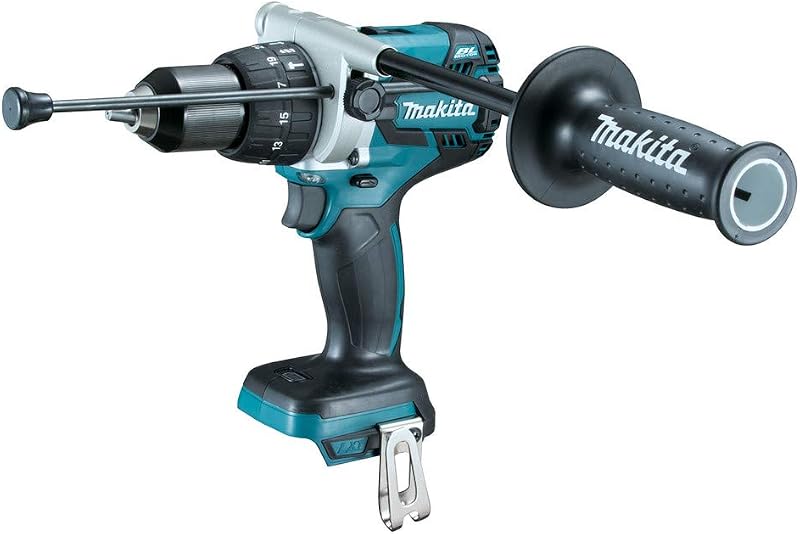
Pros
- Massive 1,090 in-lbs maximum torque
- Hammer mechanism delivering 31,500 BPM
- Fast drilling speeds up to 2,100 RPM
- Brushless motor automatically matches torque demands
Cons
- Sold as bare tool without battery
- Listing does not specify tool weight
- Excessive torque can overpower small fasteners
Who Should Buy Each One
Choose the Makita XFD131 If
- You need a complete ready-to-drill system with an 18V LXT 3.0Ah lithium-ion battery included in the package.
- Your projects consist of woodworking, cabinet building, general interior remodeling, and hardware fastening under 1.25 inches.
- You work on ladders, scaffolding, or overhead ceilings where a compact 3.8-pound operating weight preserves arm energy.
- You exclusively drill through wood, plastics, and mild metals without any requirement for masonry anchoring.
Choose the Makita XPH07Z If
- You must bore anchor holes into brick, poured concrete, mortar, or stone utilizing a 31,500 BPM hammer mechanism.
- You regularly pull heavy lag screws, large self-feed bits, or heavy hole saws requiring up to 1,090 in-lbs of rotational torque.
- You already own compatible Makita 18V LXT batteries and dedicated chargers from your existing cordless tool setup.
- You need high-velocity drilling speeds reaching 2,100 RPM to churn through demanding commercial jobsite tasks.
Final Verdict
When weighing the Makita XPH07Z vs XFD131, the best choice depends on whether your daily work involves rough structural trades or precision installation. For the vast majority of homeowners, woodworkers, and maintenance specialists, the Makita XFD131 is the smarter pick. It packs a highly capable 440 in-lbs of torque, a smooth 1,900 RPM 2-speed transmission, and a complete 3.0Ah battery kit into an agile 3.8-pound frame. For standard carpentry, drywall work, and shop assembly, it provides ample power without dragging you down with unnecessary bulk.
However, when structural timber and masonry enter the equation, is Makita XPH07Z worth it? Without question. If your workday requires anchoring framing plates to concrete footings, driving structural timber screws, or drilling brick facades, the XFD131 simply lacks the mechanism to do the work. The XPH07Z delivers an astonishing 1,090 in-lbs of torque and a 31,500 BPM hammer mode that breezes through masonry. If you already run Makita 18V LXT packs, the XPH07Z gives you industrial construction power in a single handheld tool, while the XFD131 remains the ultimate champion of everyday versatility.
FAQ
Can the Makita XFD131 drill into brick or concrete?
The XFD131 is a rotary driver-drill that lacks a percussion hammer mechanism. While it can technically spin small masonry bits through soft mortar or soft brick with enough manual pressure, doing so is slow, rapidly wears out drill bits, and causes motor strain. For consistent, safe drilling into concrete and brick, you need a hammer drill like the XPH07Z.
What battery comes included with the Makita XFD131 kit?
The XFD131 kit includes a Makita 18V LXT 3.0Ah Lithium-Ion battery pack. The drill is also fully compatible with other batteries in the Makita 18V LXT family, including compact 2.0Ah packs if you want an even lighter setup for elevated overhead work.
Does the Makita XPH07Z include a battery and charger?
No, the XPH07Z is sold as a bare tool (“Tool Only”). It is intended for users who already own compatible Makita 18V LXT lithium-ion batteries and chargers. You will need to supply your own 18V LXT battery to operate the tool.
What is the core difference in a Makita hammer drill vs driver drill?
A driver-drill like the XFD131 uses smooth rotational motion alongside an adjustable clutch to bore holes into wood and metal or sink screws without overtightening. A hammer driver-drill like the XPH07Z incorporates an internal mechanism that creates thousands of rapid impacts per minute (up to 31,500 BPM) along the axis of the bit, pulverizing masonry aggregates while rotating.
Is Makita XFD131 worth it for general DIY and woodworking?
Yes, any comprehensive Makita XFD131 review confirms it is an exceptional choice for general DIYers and woodworkers. It balances 440 in-lbs of torque with a light 3.8-pound operating weight, providing plenty of power for 1.25-inch wood drilling and fine fastener driving without the wrist strain caused by larger hammer drills.
How do the Makita XPH07Z torque specs compare to the XFD131?
The XPH07Z generates up to 1,090 in-lbs of maximum torque, which is nearly two and a half times the 440 in-lbs produced by the XFD131. This massive torque allows the XPH07Z to drive huge lag bolts and turn aggressive hole saws that would easily stall the smaller XFD131 motor.
Can I use higher capacity batteries on both drills?
Both models belong to the Makita 18V LXT cordless tool platform. They are engineered to work with Makita 18V LXT lithium-ion batteries, allowing you to swap packs freely across your compatible Makita collection. To see how other high-power hammer drills stack up on this platform, read our comparison on the makita xph12z vs xph07z.


