The single deciding factor between these two 18V cordless hammer drills is the balance between raw turning force and physical handling: the Makita XPH12Z focuses on lightweight agility with 530 in-lbs of torque, while the Makita XPH07Z is engineered for severe, high-demand workloads with a massive 1,090 in-lbs of rotational force.
Choose the XPH12Z if you need a nimble, low-fatigue driver-drill for everyday overhead fasteners and basic framing holes; pick the Makita XPH07Z if your trade requires sinking wide-diameter hole saws or continuous hammer drilling through tough masonry.


Makita XPH12Z vs Makita XPH07Z at a Glance
| Feature | Makita XPH12Z | Makita XPH07Z |
|---|---|---|
| Tool Type | Compact Hammer Driver-Drill | High-Torque Hammer Driver-Drill |
| Maximum Torque | 530 in-lbs | 1,090 in-lbs |
| Max Rotational Speed | 2,000 RPM (2 Speeds: 0-500 & 0-2,000) | 2,100 RPM |
| Impact Rate (BPM) | Up to 30,000 BPM (0-7,500 & 0-30,000) | 0-31,500 BPM |
| Chuck Size | 1/2-inch (0.5 in) | 1/2-inch (0.5 in) |
| Overall Length | 7-1/8 inches | The listing does not specify |
| Weight | 4.2 lbs (with battery) | The listing does not specify |
| Rated Amperage | 5.0 A | 5.6 A |
| Drilling Capacity (Wood / Metal) | 1.5 inches / 0.5 inches | The listing does not specify |
| Best For | General contracting, cabinetry, overhead drilling | Heavy structural timber, large masonry anchors, hole saws |
Maximum Torque and Power Delivery
When evaluating the Makita XPH12Z vs XPH07Z, the starkest functional dividing line lies in the motor output. The Makita XPH12Z torque specs max out at 530 in-lbs, backed by a motor rated at 350 watts of maximum power. This level of rotational force is tuned for standard commercial and residential work: setting self-tapping screws, driving framing fasteners, and boring holes through standard two-by-four timber with spade bits up to its rated 1.5-inch capacity. In these everyday scenarios, 530 in-lbs gives you sufficient muscle without twisting your wrists out of alignment should a bit bind unexpectedly.
In contrast, the Makita XPH07Z max torque reaches an astonishing 1,090 in-lbs-more than double the turning strength of the lighter model. This high-amp delivery (rated at 5.6 A compared to the 5.0 A draw on the XPH12Z) moves the tool into heavy mechanical territory. That extra rotational force is crucial when driving massive structural screws, turning large auger bits through green timber, or spinning carbide masonry core bits. When readers examine a makita xph14z vs xph07z comparison, they see that the XPH07 platform was engineered expressly to bridge the gap between standard hand drills and high-torque ground augers or mixers.
This power gap carries direct operational trade-offs. The high twisting force of the XPH07Z requires a firm grip and disciplined stance; in dense materials, sudden stops transfer substantial reactive torque back to the user. The XPH12Z produces much gentler handling, making it far more forgiving when driving hardware in awkward body positions or working off ladders where excessive torque can become a safety liability. If your daily tasks do not demand sinking 6-inch lag bolts or 2-inch hole cutters, the extra torque is dead capacity that offers no practical speed advantage.
Edge: Makita XPH07Z, providing more than double the maximum torque for severe heavy-duty fastening and boring.
Impact Mechanism and Masonry Drilling Speed
Both models feature built-in hammering mechanisms to fracture brittle masonry, mortar, concrete, and brick, but their percussion outputs reflect their divergent chassis designs. The Makita XPH12Z operates across two variable percussion ranges: a lower gear yielding 0-7,500 blows per minute (BPM) and a high gear delivering up to 30,000 BPM, accompanied by rotational speeds up to 2,000 RPM. When determining whether to pick the Makita XPH12Z or XPH07Z for masonry, the XPH12Z is fully capable of sinking 3/16-inch or 1/4-inch concrete screw anchors for electrical boxes, plumbing straps, or framing ties.
The Makita XPH07Z elevates masonry capability with an impact frequency running up to 31,500 BPM alongside a 2,100 RPM maximum rotation. While an extra 1,500 blows per minute may seem modest on paper, the hammer mechanism on the XPH07Z is driven by a motor with far higher rotational momentum. This allows it to pulverize aggregate faster while preventing the tool from bogging down under hard downward feed pressure. When sinking 3/8-inch or 1/2-inch wedge anchors into poured concrete, the XPH07Z clears crushed dust and advances through stone aggregates with substantially greater authority.
However, hammer driver-drills have hard limits when compared against dedicated SDS rotary hammers. For routine residential tapcons into cinder block, brick, or mortar joints, the XPH12Z will bore holes smoothly without placing excess strain on the internal hammer clutches. For commercial pours, hard aggregate, or repetitive anchor grids where every second counts, the higher BPM and persistent torque of the XPH07Z pay dividends by avoiding thermal throttling during continuous percussion drilling.
Edge: Makita XPH07Z, thanks to its 31,500 BPM strike rate and persistent motor momentum under heavy masonry loads.
Tool Dimensions, Weight, and Ergonomics
The physical profile of a drill directly affects user stamina over an eight-hour shift. The Makita XPH12Z is explicitly built around a compact footprint, measuring just 7-1/8 inches in overall tool length and weighing a light 4.2 pounds with an 18V battery installed. This short front-to-back profile lets the chuck fit neatly between standard 16-inch-on-center wall studs, inside assembled kitchen cabinetry, or beneath joists. The reduced 4.2-pound mass significantly decreases shoulder and forearm exhaustion during extended overhead ceiling installations or prolonged drywall framing.
For the Makita XPH07Z, the manufacturer listing does not specify the exact chassis length or total weight. However, housing a high-output brushless motor delivering 1,090 in-lbs of torque inevitably requires larger steel gear assemblies, heavier motor windings, and a reinforced gear casing. Anyone conducting an honest Makita XPH07Z review will note that heavy-torque drills in this class possess noticeable heft and bulk. Managing a tool built to withstand quadruple-digit torque requires substantial physical effort, which becomes particularly tiring when performing horizontal installations or repetitive light driving tasks.
The practical result is a stark difference in all-day utility. When comparing the compact XPH12Z against larger alternatives like in the makita xph12z vs xph14z lineage, the compact model stands out for its effortless maneuverability. The XPH12Z feels balanced and quick in the hand, easily hanging from a tool belt without tugging your work pants down. If your workload involves light fasteners, drilling pilot holes, or driving cabinet screws, carrying the unlisted bulk of the XPH07Z brings unwanted fatigue with zero mechanical upside.
Edge: Makita XPH12Z, offering a verified 7-1/8-inch compact length and manageable 4.2-pound operating weight.
Motor Electronics and Battery Efficiency
Both tools leverage Makita’s electronically controlled brushless (BL) motor technology, eliminating carbon brushes to run cooler, extend motor lifespan, and reduce friction losses. Both product listings highlight that these brushless systems optimize battery energy use to deliver up to 50% longer runtime per charge compared to legacy brushed motors. By continually matching rotational torque and RPM to the resistance met at the drill chuck, the onboard computer controllers prevent wasted energy draw during low-resistance tasks.
Where the electrical architectures diverge is in their current draw profiles. The XPH12Z draws a specified 5.0 A amperage with a 350-watt power ceiling. It integrates Star Computer Controls and Extreme Protection Technology (XPT), an engineered series of seals designed to channel water and dust away from sensitive internal components during harsh jobsite exposure. When checking a makita xfd131 vs xph12z breakdown, the XPT weather-resistance and Star safety communications represent critical engineering layers that safeguard the tool from thermal overload and deep discharge.
The XPH07Z operates at a higher 5.6 A rating to feed its massive brushless motor windings. Because it pulls more current to generate 1,090 in-lbs of rotational muscle, it will deplete standard 18V LXT battery packs noticeably faster when pushed through dense timbers or hard concrete. Both tools connect to Makita’s Rapid Optimum Charger system with built-in active cooling fans, ensuring rapid turnaround on depleted packs. Yet for general assembly jobs where deep torque reserves are irrelevant, the XPH12Z extracts more working hours out of a standard pack due to its leaner power requirements.
Edge: Tie. Both feature identical brushless energy-management electronics and up to 50% efficiency gains, differing only in amperage scale.
Speed Ranges and Application Control
Gearing and speed regulation dictate how clean your holes are and whether screws drive flush without stripping. The Makita XPH12Z features a variable 2-speed transmission spanning 0-500 RPM on low gear and 0-2,000 RPM on high gear. The low gear allows precise, slow-speed screw placement and high-resistance drilling in metal up to its rated 0.5-inch capacity. The high gear running at 2,000 RPM provides clean, rapid chip ejection when running twist bits or spade bits through dimensional lumber up to 1.5 inches.
The Makita XPH07Z delivers a slightly higher maximum rotational speed of 2,100 RPM, giving it a subtle edge in surface speed when spinning high-speed steel or carbide-tipped bits. Although its listing specifies a single top speed of 2,100 RPM rather than detailing the lower transmission gear breakdown, tools in this heavy-torque class rely on variable-speed triggers to let operators feather the motor at low revs when starting delicate holes. A reader looking at a makita xfd131 vs xph07z comparison will observe how heavy-duty hammer drills balance sheer RPM with gearbox reduction to maintain high twisting power across the trigger band.
In daily workshop applications, the explicit two-speed setup and clear drilling capacities of the XPH12Z make it exceptionally straightforward to calibrate for delicate materials. Sinking fasteners into softwoods or sheet metal demands finesse; an overly aggressive motor can easily snap small screw heads or cam out Phillips drive bits. The XPH12Z provides an easily manageable throttle response that keeps small-gauge fastening under strict operator control, whereas the XPH07Z requires a disciplined trigger finger to avoid overdriving hardware.
Edge: Makita XPH12Z, providing clearly segmented two-speed gearing for controlled driving and high-speed drilling.
Pros and Cons
Makita XPH12Z
Pros
- Compact 7-1/8-inch body length
- Lightweight 4.2-pound build
- Integrated LED work light
- Dual-speed settings up to 2,000 RPM
Cons
- Lower 530 in-lbs maximum torque
- Slower 30,000 BPM hammer rate
- Battery and charger sold separately
Makita XPH07Z
Pros
- High 1,090 in-lbs maximum torque
- Fast 31,500 BPM hammer mechanism
- Higher 2,100 RPM maximum speed
- Higher 5.6-amp current rating
Cons
- Battery and charger sold separately
- Lacks integrated LED work light specification
Who Should Buy Each One
Choose the Makita XPH12Z If

- You focus on residential remodeling, cabinetry, finish carpentry, or punch-list maintenance tasks.
- You frequently work overhead, on extension ladders, or inside tight wall cavities where a 7-1/8-inch tool length prevents clearance issues.
- You want to minimize arm fatigue over full work shifts using a light 4.2-pound drill body.
- Your masonry work consists mainly of occasional small-diameter concrete screws and masonry anchors under 3/8 inch.
Choose the Makita XPH07Z If
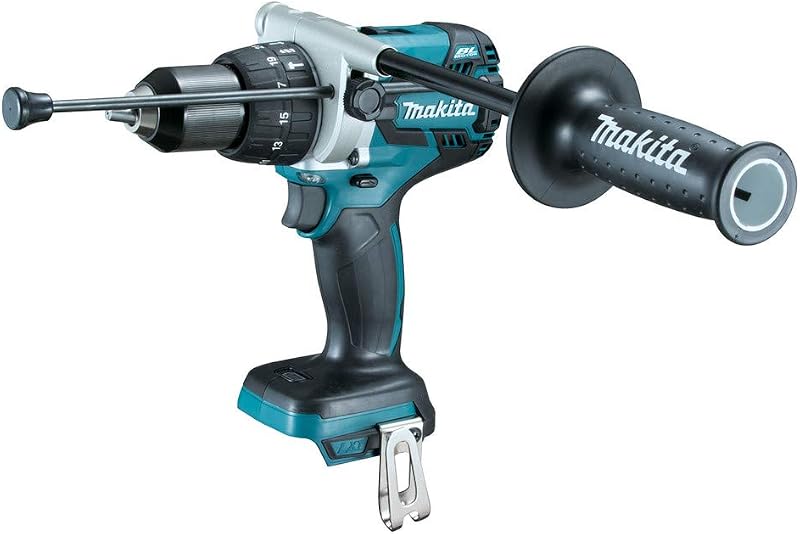
- You regularly drill with large hole saws, self-feed bits, or heavy auger bits through thick structural lumber.
- You need maximum hammer drilling muscle up to 31,500 BPM to sink heavy anchor bolts into solid poured concrete.
- You require a drill capable of generating 1,090 in-lbs of max torque for demanding commercial and mechanical fastening.
- Your primary concern is raw turning muscle and continuous production speed rather than compact tool dimensions.
Final Verdict
For the vast majority of tradespeople, DIY remodelers, and maintenance technicians, the Makita XPH12Z is the smarter purchase. Delivering 530 in-lbs of max torque, a two-speed transmission reaching 2,000 RPM, and up to 30,000 BPM in hammer mode, it handles 90 percent of common jobsite tasks without demanding unnecessary physical exertion. Its verified 7-1/8-inch chassis and 4.2-pound operational weight mean you can drill between narrow studs, hang ceiling fixtures, and drive drywall screws all day without fighting tool heft or severe wrist snap.
On the other hand, the heavy-duty Makita XPH07Z stands as an essential workhorse when high resistance is a daily certainty. If your projects involve boring large-diameter plumbing penetrations, mixing compounds, driving structural timber screws, or drilling repetitive masonry anchor grids into cured concrete, the massive 1,090 in-lbs of torque and 31,500 BPM hammer rate justify the tool’s larger footprint. Match the XPH12Z to everyday agility and versatile construction, and reserve the XPH07Z for demanding structural and heavy masonry workloads.
FAQ
Is Makita XPH07Z worth it for standard home maintenance?
For standard home repairs, assembling flat-pack furniture, and hanging fixtures, the XPH07Z is excessive. Its 1,090 in-lbs of torque can easily strip drywall anchors or snap small screws if the trigger is not feathered carefully. The compact XPH12Z offers far more practical control, lighter handling, and plenty of power for typical household maintenance.
Can the Makita XPH12Z drill through concrete and brick?
Yes, the Makita XPH12Z features a dedicated hammer mode delivering up to 30,000 blows per minute. It is specifically designed to handle masonry materials, making it ideal for installing masonry plugs, concrete screws, and anchor sleeves up to small commercial diameters.
What is the primary difference in the Makita XPH07Z vs XPH12Z hammer drill mechanisms?
The XPH07Z delivers a slightly higher percussion rate of up to 31,500 BPM compared to the 30,000 BPM high-gear limit on the XPH12Z. More importantly, the XPH07Z backs those impacts with 1,090 in-lbs of torque, allowing it to maintain rotation through tough aggregate where smaller drills might slow down.
Are the batteries interchangeable between the XPH12Z and XPH07Z?
Yes, both models are part of Makita’s 18V LXT system. Any standard 18V LXT lithium-ion battery pack with slide-on terminal rails will power either tool, though higher amp-hour batteries are generally recommended to sustain the heavy 5.6 A draw of the high-torque XPH07Z.
Does the Makita XPH12Z come with an integrated work light?
Yes, the Makita XPH12Z listing confirms an integrated L.E.D. light designed to illuminate the immediate workspace, making it particularly useful for dark electrical closets, crawlspaces, and enclosed cabinetry.
What are the maximum rated drilling capacities for the Makita XPH12Z?
According to its manufacturer specifications, the XPH12Z provides a maximum drilling capacity of 1.5 inches in wood and 0.5 inches in metal, making it well-suited for general carpentry, mechanical rough-ins, and light steel fabrication.
Is Makita XPH12Z worth it if I already own a dedicated impact driver?
Yes, because an impact driver lacks a 1/2-inch chuck for round-shank twist bits and does not feature a dedicated percussion hammer drill mode for concrete. The XPH12Z complements an impact driver by offering smooth hole boring in wood and metal alongside light hammer drilling in masonry.


