The core difference between the DeWalt DCS367 and the Milwaukee 2720-20 comes down to compact maneuverability versus raw motor output. DeWalt engineered the DCS367 with a short 14.5-inch footprint and a 4-position blade clamp for navigating tight framing bays, whereas Milwaukee built the 2720-20 as a high-output demolition tool driven by a 400-watt POWERSTATE brushless motor.
Choose the DeWalt DCS367 if you spend your workdays cutting plumbing runs, electrical conduits, or framing timber between narrow wall studs. Choose the Milwaukee 2720-20 if your projects demand heavy teardown muscle, prolonged structural cutting, and an integrated hanging hook for high-volume demolition jobs.


DeWalt DCS367 vs Milwaukee 2720-20 at a Glance
| Feature | DeWalt DCS367 | Milwaukee 2720-20 |
|---|---|---|
| Motor Type | Brushless | POWERSTATE Brushless |
| System Voltage | 20V MAX | 18V (M18) |
| Rated Wattage | 100 watts | 400 watts |
| Tool Weight | 5.0 lbs (tool only, 5.4 lbs item weight) | 7.4 lbs |
| Overall Length | 14.5 inches | Not listed |
| Stroke Length | 1-1/8 inches | Not listed |
| Max Stroke Speed | 2,900 SPM (2,800 RPM in listing specs) | Not listed |
| Blade Clamp Positions | 4-position keyless clamp | Standard single orientation |
| Shoe Design | Pivoting head | Adjustable shoe |
| Rafter / Hanging Hook | Not listed | Integrated hanging hook |
| Manufacturer Warranty | 3 Year Limited Warranty | 5 Year Limited Warranty |
| Best For | Tight framing bays and overhead remodeling | Heavy teardown and structural demolition |
Size and Maneuverability in Tight Spaces
Reciprocating saws frequently operate in compromised postures: inside crawlspaces, above finished ceilings, and tucked between wall studs spaced 16 inches on center. When evaluating a compact vs full size reciprocating saw, physical geometry dictates where you can place the cut without damaging neighboring framework or electrical runs. A tool that cannot fit perpendicularly inside a stud pocket forces awkward diagonal blade angles, which strains blades and compromises cut accuracy.
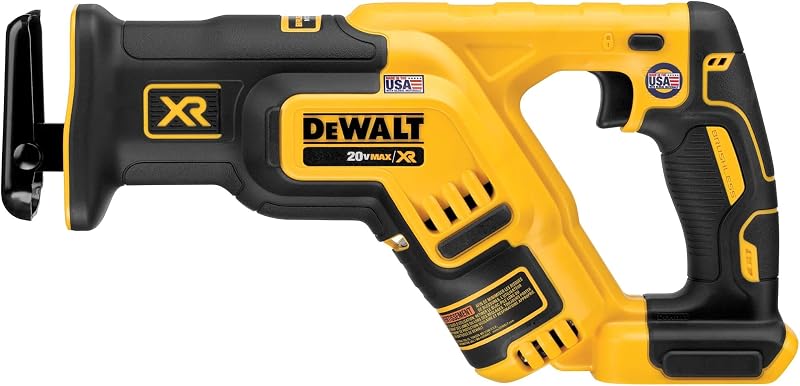
Physical size represents the primary selling point in any practical DeWalt DCS367 review. Measuring 14.5 inches in total body length with a width of 6 inches and height of 7 inches, the DCS367 slides comfortably between standard framing lumber. Its motor sits diagonally across the handle assembly rather than inline, keeping the nose stubby. For contractors wrestling with the choice of DeWalt DCS367 or Milwaukee 2720-20 for tight spaces, the DCS367 provides clear physical clearance. In contrast, the Milwaukee listing does not specify total body length, but its traditional inline chassis format and 7.4-pound construction create a substantially larger profile that resists easy turning in compact chases.
Working in enclosed areas also requires clear sightlines. Both saws integrate LED lighting to illuminate pitch-black framing voids. However, the physical chassis of the DCS367 lets tradespeople insert both the body and their hands into places where the bulkier Milwaukee 2720-20 cannot fit. If your workload involves existing residential retrofits where sheetrock cutouts must remain minimal, the smaller frame saves substantial patching labor. Those looking at alternate inline tools might evaluate the DeWalt DCS380 vs Milwaukee 2720-20, but within this comparison, DeWalt controls the clearance advantage.
Edge: DeWalt DCS367, because its 14.5-inch compact chassis effortlessly slides between standard framing studs where longer demolition saws cannot fit.
Motor Output and Demolition Power
Motor output determines how aggressively a reciprocating saw drives teeth through dense subflooring, heavy-gauge steel pipe, and nail-embedded timbers. Demolition crews rely on raw electrical throughput to maintain stroke speed under heavy feed pressure. If an electric motor lacks sufficient wattage, the blade bogs down inside wet lumber, turning a ten-second severance into a frustrating physical struggle that generates excess thermal buildup.
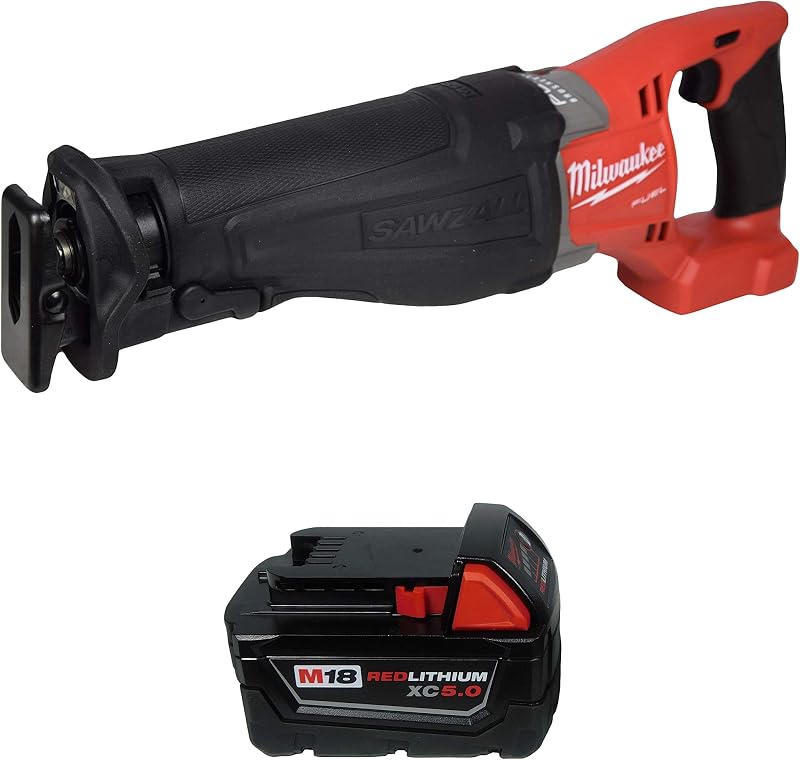
On paper, the motor specifications reveal a tremendous gap between these two models. The Milwaukee 2720-20 listing specifies a powerful 400-watt rating backed by Milwaukee’s POWERSTATE brushless motor and REDLINK PLUS Intelligence. Milwaukee states that this M18 FUEL SAWZALL cuts faster than its corded counterparts and delivers corded-grade muscle directly from an 18-volt battery platform. The REDLINK PLUS electronics monitor motor loads in real time to prevent overload, overheating, and over-discharging during brutal cutting cycles. The listing for the DeWalt DCS367 states a rated output of 100 watts with its brushless motor, delivering up to 2,900 SPM (with 2,800 RPM noted in spec details).
This wattage difference establishes clear boundaries when deciding between the DeWalt DCS367 or Milwaukee 2720-20 for demolition. The Milwaukee 2720-20 delivers four times the listed wattage of the DCS367, translating into sustained cutting speed when slicing through heavy framing plates and structural members. While the DCS367 features an aggressive 1-1/8-inch stroke length that chews through timber efficiently, it is tuned for controlled agility rather than high-load teardown. For large-scale lumber clearing or commercial pipe dismantling, the 400-watt POWERSTATE motor makes fast work of heavy materials. Readers examining high-speed brushless motors across categories can see similar power design philosophies in our DeWalt DCS570 vs Milwaukee 2730-20 breakdown.
Edge: Milwaukee 2720-20, due to its 400-watt POWERSTATE brushless motor that delivers corded-level power for aggressive demolition.
Blade System and Cutting Versatility
A reciprocating saw depends heavily on its blade clamping mechanism to deliver versatility on the jobsite. Tradespeople rarely cut in clean, level directions. Plumbers need to cut flush along floorboards, electricians must trim metal conduit flush against framing, and framers must slice upward through ceiling plates. A versatile clamping system eliminates the need to hold the entire power tool upside down or at contorted angles.
DeWalt equips the DCS367 with its signature keyless 4-position blade clamp. This mechanical design allows you to insert standard reciprocating blades facing up, down, left, or right without using auxiliary adapters or keys. Slicing flush along a subfloor or trimming a vertical timber against an adjoining wall stud requires only shifting blade orientation 90 degrees. This feature transforms how users approach tight-quarter cuts. Furthermore, the DCS367 delivers a confirmed 1-1/8-inch stroke length, offering full-depth tooth engagement on every pass. The nose features a pivoting head that rests against the work surface to stabilize vibration during high-speed cutting.
The Milwaukee 2720-20 listing specifies an adjustable shoe alongside an integrated blade mount, but the listing does not specify a multi-orientation clamp or its exact stroke length. The adjustable shoe on the 2720-20 remains a valuable asset for heavy demolition because it lets operators shift the contact point forward or backward. This adjustment exposes fresh, unused teeth along an extended blade, doubling or tripling consumable lifespan when slicing abrasive materials. Nonetheless, the pure positional flexibility of DeWalt’s 4-way clamp gives users unmatched freedom when clearance dictates how the tool body must be positioned. For those comparing newer full-sized alternatives, see our analysis of the DeWalt DCS367 vs Milwaukee 2821-20.
Edge: DeWalt DCS367, thanks to its 4-position keyless blade clamp that allows multi-angle flush cutting without twisting the tool body.
Weight, Handling, and Ergonomics
Operator fatigue accumulates quickly during extended overhead cutting or day-long wall dismantling. The overall mass of the reciprocating saw, paired with how that mass distributes across the grip points, directly influences cutting control. A heavier tool can assist downward horizontal cuts by letting gravity apply feed pressure, but that same mass becomes an exhausting liability when working off ladders, cutting overhead pipes, or trimming ceiling joists.
The Milwaukee 2720-20 weight is listed at a substantial 7.4 pounds for the bare tool. When paired with high-capacity M18 battery packs, the total operating mass demands significant upper-body stamina. Milwaukee incorporates plastic handle construction alongside an integrated hanging hook. This rafter hook represents a major convenience feature on commercial sites, allowing workers to safely hang the tool from framing or staging between cuts rather than setting it down on dusty flooring or balancing it across open joists.
The DeWalt DCS367 targets users who prioritize lightweight maneuverability. The listing notes that the DCS367 weighs just 5.0 pounds for the tool only, with an item weight of 5.4 pounds. Cutting nearly 2.4 pounds off the tool chassis fundamentally changes overhead ergonomics. Plumbers trimming pipe runs inside floor cavities or carpenters performing overhead ceiling modifications will feel considerably less shoulder strain with the DeWalt. Combined with its central handle placement and compact 14.5-inch length, the DCS367 acts like an agile one-handed or compact two-handed saw. For trades prioritizing lightweight framing setups, a lighter tool footprint is a decisive operational asset, similar to comparisons found in our DeWalt DCS391 vs Milwaukee 2730-20 guide.
Edge: DeWalt DCS367, because its 5.0-pound bare tool weight reduces shoulder fatigue by over two pounds compared to its competitor.
Battery Platform, Runtime, and Durability
When investing in professional cordless reciprocating saws, platform electronics and manufacturer warranties reveal the long-term reliability of the tool. Heavy cutting causes intense thermal spikes inside motor windings and lithium cells. Tools designed for commercial longevity incorporate specialized firmware and cooling architecture to safeguard against catastrophic field failures.
Milwaukee equips the 2720-20 with REDLINK PLUS Intelligence, creating an electronic feedback loop between the tool, battery, and motor. This communication prevents overheating and protects against over-discharging when tearing through metal structural assemblies. Milwaukee backs this saw with an exceptional 5 Year Limited Warranty, signaling robust build standards. The manufacturer description states that the tool cuts faster than corded units, provides up to 5X longer tool life than competitive saws, and pairs with M18 REDLITHIUM XC5.0 packs to deliver extended runtime and durability. Milwaukee also constructs the tool with a robust housing and includes a rafter hook for jobsite convenience.
DeWalt builds the DCS367 around its 20V MAX XR brushless platform, which provides up to 2.5X more runtime in 2×4 wood cutting tasks when comparing a DCB205 battery against older legacy tools. DeWalt supports the DCS367 with a standard 3 Year Limited Warranty. While DeWalt’s brushless architecture delivers excellent battery efficiency, Milwaukee’s five-year warranty duration provides two additional years of factory protection over DeWalt’s coverage. For heavy-use demolition trades asking is Milwaukee 2720-20 worth it for the long haul, that extended warranty protection provides serious peace of mind. Similar electronic protection and heavy-duty designs can be examined in the DeWalt DCS380 vs Milwaukee 2821-20 evaluation.
Edge: Milwaukee 2720-20, offering a superior 5-year warranty and advanced REDLINK PLUS electronic overload protection.
Pros and Cons
DeWalt DCS367
Pros
- Compact 14.5-inch length fits between framing studs
- Lightweight 5.0-pound bare tool minimizes user fatigue
- 4-position keyless blade clamp allows multi-directional cuts
- Fast 1-1/8-inch stroke length for efficient cutting
- Bright integrated LED illuminates dark work areas
Cons
- Lower 100-watt power output rating
- Shorter 3-year limited warranty period
- Lacks an integrated rafter hanging hook
Milwaukee 2720-20
Pros
- High-output 400-watt POWERSTATE brushless motor
- REDLINK PLUS Intelligence protects against tool overload
- Adjustable shoe extends consumable blade life
- Integrated hanging hook allows quick rafter storage
- Extended 5-year manufacturer limited warranty
Cons
- Heavy 7.4-pound weight causes fatigue during overhead work
- Chassis is less maneuverable in narrow wall studs
- Clamp does not support 4-way blade orientation
View Milwaukee 2720-20 on Amazon
Who Should Buy Each One
Choose the DeWalt DCS367 If
- You regularly cut between 16-inch on-center wall studs and require a compact 14.5-inch body length.
- You need multi-angle flush cutting capabilities provided by a 4-position keyless blade clamp.
- You perform overhead cutting, plumbing rough-ins, or electrical chase cuts where a 5.0-pound tool reduces physical fatigue.
- You are already heavily invested in the DeWalt 20V MAX cordless battery ecosystem.
Choose the Milwaukee 2720-20 If
- You tackle full-scale structural demolition requiring the muscle of a 400-watt POWERSTATE brushless motor.
- You want an adjustable shoe to extend reciprocating blade life across abrasive materials.
- You value jobsite convenience features like an integrated hanging hook for staging and rafter storage.
- You require commercial-grade protection backed by an extensive 5-year manufacturer limited warranty.
Final Verdict
The choice in the DeWalt DCS367 vs Milwaukee SAWZALL contest hinges entirely on your daily cutting environment. For mechanical contractors, remodelers, and plumbers, the DeWalt DCS367 takes the overall victory. Its 14.5-inch compact body length, 5.0-pound bare tool weight, and versatile 4-position blade clamp make it uniquely suited for maneuvering through framing cavities. The 1-1/8-inch stroke length and 2,900 SPM trigger provide plenty of cutting speed for standard residential and light commercial modifications without beating up the user.
However, when raw demolition speed and teardown endurance are the mission, the Milwaukee 2720-20 wins without question. Its 400-watt motor output dwarfs the 100-watt rating of the DeWalt, allowing demo crews to power through timber, structural framing, and metal pipe without bogging down. Supported by REDLINK PLUS overload electronics, an adjustable shoe, an integrated hanging hook, and an industry-leading 5-year limited warranty, the 2720-20 is built for heavy commercial destruction where tool size is secondary to cutting force.
FAQ
What is the stroke length on the DeWalt DCS367?
The DeWalt DCS367 features a 1-1/8-inch stroke length. This stroke depth allows the saw to clear chips quickly and make aggressive, efficient cuts across various wood and metal materials.
How much does the Milwaukee 2720-20 weigh?
The Milwaukee 2720-20 has a listed tool weight of 7.4 pounds. This extra heft provides downward stability during horizontal demolition cuts, though it requires more effort during sustained overhead work compared to compact saws.
Can the blade on the DeWalt DCS367 be inserted sideways?
Yes. The DeWalt DCS367 features a keyless 4-position blade clamp that accepts blades pointing up, down, left, or right. This allows operators to execute flush horizontal and vertical cuts against walls and floors without rotating the tool body.
Does the Milwaukee 2720-20 include an adjustable shoe?
Yes. The Milwaukee 2720-20 features an adjustable shoe. This mechanism allows you to reposition the contact foot along the blade, utilizing previously unexposed teeth to prolong the usable lifespan of your cutting blades.
Which saw has a longer warranty coverage?
The Milwaukee 2720-20 comes with a 5 Year Limited Warranty, whereas the DeWalt DCS367 includes a 3 Year Limited Warranty. Milwaukee provides two additional years of factory warranty protection.
Does the DeWalt DCS367 come with a built-in hanging hook?
The product listing for the DeWalt DCS367 does not list an integrated rafter or hanging hook. In contrast, the Milwaukee 2720-20 listing explicitly features an integrated hanging hook for convenient jobsite storage on ladders, scaffolding, and framing.
Are both the DeWalt DCS367 and Milwaukee 2720-20 brushless tools?
Yes. Both reciprocating saws are powered by brushless electric motors. DeWalt utilizes its 20V MAX XR brushless motor design, while Milwaukee uses its M18 FUEL POWERSTATE brushless motor architecture.