The defining choice in the mouse pad cloth vs hard debate comes down to the balance between stopping control and glide speed: a cloth surface creates deliberate dynamic friction that lets your mouse stop on a dime, while a hard surface delivers near-frictionless gliding that lets your mouse skate effortlessly across your desk.
Gamers and desk workers who require precise micro-adjustments and plush wrist support should pick the mouse pad cloth side, whereas users who prioritize instantaneous twitch speed, rapid sweeps, and an effortless wipe-clean surface should pick a hard mouse pad.
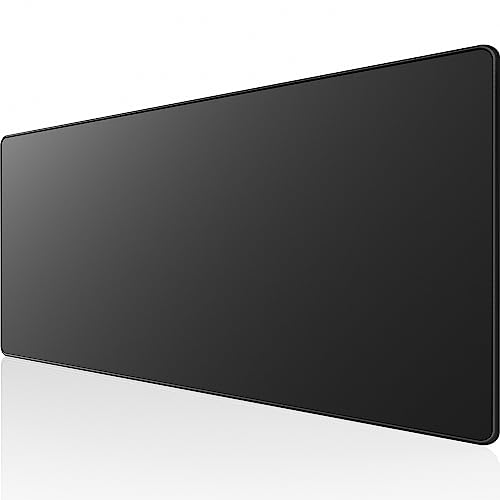


Mouse Pad Cloth vs Hard at a Glance
| Attribute | Mouse Pad Cloth | Hard |
|---|---|---|
| Surface Material | Woven or micro-weave textile | Rigid polymer or resin (the listing does not specify) |
| Base Material | Dense non-slip rubber | Not listed |
| Standard Thickness | 2 mm to 3 mm | Not listed |
| Edge Construction | Reinforced stitched edges or raw cut | Rigid borders (the listing does not specify) |
| Liquid Resistance | Water-resistant coating on select models | Non-porous solid surface (the listing does not specify) |
| Glide Characteristic | Controlled friction with tactile feedback | Ultra-low dynamic and kinetic friction |
| Sensor Compatibility | Optimized for optical and laser sensors | Optical and laser (the listing does not specify) |
| Best For | Tactical shooters, controlled aiming, and wrist comfort | Fast tracking, high-speed flicking, and effortless gliding |
Surface Friction and Stopping Power
Surface friction defines how your mouse accelerates from a standstill and how quickly you can bring the crosshair to a dead stop. In mouse pad cloth vs hard discussions, this physical resistance is split into static friction, which is the force needed to begin moving the mouse, and dynamic friction, which is the resistance felt while sweeping. A traditional textile surface introduces enough dynamic drag to prevent accidental overshoot, providing a tactile anchor for deliberate hand motions.
When looking at cloth mouse pad control, the micro-weave cloth mouse pad architecture demonstrates this principle directly. For example, the KTRIO Large Gaming Mouse Pad employs a textured micro-weave cloth surface specifically engineered to balance glide speed with tactile stopping power. Similarly, the SteelSeries QcK utilizes a high thread count cloth that gives physical feedback through your mouse skates. In contrast, rigid listings like the Hard Target offer minimal kinetic resistance across their rigid surfaces, though the listing does not specify exact friction ratings. You will notice that cloth vs hard mouse pad friction changes how you stabilize your cursor during sudden transitions.
Choosing hard mouse pad speed eliminates the drag that some players find muddy, but it sacrifices immediate physical stopping power. On a hard mat, your arm, wrist, and hand muscles must supply all the deceleration force to halt the mouse. On cloth, pressing your mouse downward compresses the soft material slightly, multiplying the friction coefficient to brake instantly. If you play tactical shooters requiring pixel-level crosshair placement, the mechanical braking of cloth gives you a tangible advantage.
Edge: Mouse pad cloth, because the natural texture and surface resistance deliver consistent, physical stopping power for pinpoint cursor placement.
Tracking Precision and Sensor Compatibility
Tracking reliability hinges on how an optical or laser engine reads the surface beneath it. Modern optical mouse sensors operate by taking thousands of microscopic surface photographs per second, interpreting texture variations to calculate direction and velocity. If a surface is completely uniform, semi-reflective, or non-porous, some sensors can introduce tracking inconsistencies, jitter, or unexpected cursor drift depending on whether you run an optical vs laser mouse sensor.
Cloth surfaces excel here because the microscopic texture of woven yarn provides ideal contrast for sensor illumination. The SteelSeries QcK features a micro-woven cloth surface that was explicitly tested by top mouse sensor manufacturers to optimize tracking accuracy across both optical and laser units. The KTRIO mat also relies on its woven textile surface to stabilize sensor registration across its entire 31.5-inch length. Meanwhile, hard surface examples such as the Hard Target 2 feature a solid face, but the listing does not specify sensor testing, calibration baselines, or texture profiles. While hard vs soft mouse pad tracking is typically sharp on quality hard resin, any scratch, speck of dust, or debris resting on a rigid mat can cause an optical sensor to hitch or skip.
Dust and tiny particles represent a major operational difference between the two surfaces. On a cloth pad, small airborne particles sink into the woven gaps between fibers, leaving the top glide plane unobstructed. On a rigid pad, hard particles remain pinned between your mouse skates and the solid plane, creating an unpleasant scratching sensation and causing momentary sensor refraction.
Edge: Mouse pad cloth, because microscopic weave patterns provide exceptional contrast for optical sensors and absorb loose debris without causing sensor jitter.
Durability, Edge Wear, and Maintenance
Every cloth mouse pad review notes that textile pads face gradual wear from skin oils, sweat, and friction. Over months of heavy use, cloth fibers can absorb grime and accumulate moisture, subtly altering the friction profile between the center and the edges. Furthermore, traditional raw-cut cloth edges can fray or delaminate from the rubber backing if repeatedly rubbed against your forearm.
To combat this, manufacturers build reinforced boundaries. The KTRIO model integrates anti-fray stitched edges along its exterior perimeter, locking down the textile layer and preventing edge separation over time. It also features a water-resistant coating that makes spilled liquids bead on the surface for quick wiping with a damp cloth. The SteelSeries QcK opts for a flush, stitch-free edge on its 2 mm profile, relying on dense construction to hold its shape. Conversely, a hard mouse pad review highlights that rigid pads are naturally non-porous and wipe completely dry in seconds, but hard surfaces face an irreversible form of wear: the center texture gradually polishes smooth over time, permanently lowering friction in high-traffic spots. For listings like Hard Target and Hard Target 2, the listing does not specify edge treatment or wear-resistant coatings.
Maintenance is straightforward for both, but hard pads require less downtime. A rigid pad can be sanitized instantly with an alcohol wipe and used immediately. A cloth pad, even one with spill-resistant treatment like the KTRIO, eventually demands a mild wash with warm water and detergent to lift deep grease, requiring hours of air-drying before it is ready for use.
Edge: Hard, because non-porous rigid surfaces do not absorb spills or sweat and can be wiped completely clean in seconds.
Ergonomic Comfort and Desk Usability
Ergonomic comfort becomes a decisive factor during long gaming sessions or ten-hour workdays. Your wrist, palm heel, and forearm constantly press into the desk edge as you reposition the mouse. Pairing your surface with an ambidextrous vs ergonomic mouse changes your wrist angles, which makes the softness of the underlying desk mat immediately noticeable.
Cloth mouse pads provide an integrated layer of cushioning between your arm bones and the hard desk. The KTRIO pad features a 3 mm thick natural rubber base, offering noticeable compressive padding that dampens arm pressure and softens repetitive impacts. The SteelSeries QcK offers a slimmer 2 mm profile that sits closer to the desk while retaining a flexible, soft-touch micro-woven exterior. Both cloth models use non-slip rubber backings that adapt to minor imperfections in desk wood or laminate without wobbling.
Hard mouse pads lack compressive give entirely. Resting your wrist on a rigid plastic, aluminum, or composite slab for extended periods can produce localized pressure points, especially along the carpal tunnel area. Furthermore, the sharp or beveled outer edges of a rigid pad can dig into your forearm during low-angle arm sweeps. The listings for Hard Target and Hard Target 2 do not provide base thickness or wrist cushioning details, reflecting the rigid nature typical of the category.
Edge: Mouse pad cloth, because the compliant rubber base cushions the wrist and eliminates sharp pressure points against hard desks.
Footprint and Setup Flexibility
Desk real estate and equipment layout heavily dictate which mouse pad style integrates cleanly into your workspace. If you use a compact keyboard, evaluating a tkl vs full size keyboard shows how much horizontal space remains for wide, low-DPI mouse sweeps. Desk mats that stretch under both typing and mousing zones eliminate uneven transitions across your desk.
Cloth options dominate large-format configurations because flexible fabric rolls easily for packaging and shipping. The KTRIO comes in a 31.5-inch by 11.8-inch XL extended size that spans across your desktop to host both your keyboard and mouse. The SteelSeries QcK goes even further with its XXL layout, measuring 35 inches wide by 16 inches long, creating a continuous, seamless battlestation surface. These expansive mats stabilize your keyboard, quiet typing vibrations, and ensure your mouse never runs off the edge during a sudden flick.
Hard mouse pads are constrained by their rigid materials, meaning they are almost exclusively manufactured in medium or standalone desktop footprints. An oversized hard mat would be cumbersome to transport, impossible to roll up, and prone to warping or cracking if your desk surface is not perfectly planar. For users wondering is a hard mouse pad worth it, the trade-off involves accepting a smaller, dedicated boundary. While the listings for Hard Target and Hard Target 2 do not list their exact dimensions, hard mats universally lack the rollable, desk-spanning form factor that modern desk setups favor.
Edge: Mouse pad cloth, thanks to flexible, rollable extended sizes like 31.5-inch and 35-inch widths that cover your entire work area.
Mouse Skate Longevity and Gear Wear
The friction interaction between your mouse feet (PTFE skates) and the tracking pad affects the longevity of your gear. If you operate a lightweight vs heavy gaming mouse, downforce and glide wear will directly influence how long your mouse skates maintain their original shape.
Cloth surfaces are soft on PTFE feet. The flexible, yielding fibers of micro-weave textiles create minimal abrasive wear against virgin-grade or treated Teflon skates. On the KTRIO and SteelSeries QcK surfaces, mouse feet can glide for thousands of hours before showing measurable thinning, preserving the glide consistency of your mouse for years. The micro-weave textile absorbs downward force without grinding down the edges of the skates.
Hard surfaces behave like fine abrasives against softer PTFE skates. The microscopic textures on a rigid composite or resin pad steadily grind down mouse feet, rounding off skate bevels and thinning the pads until the mouse chassis begins scraping the surface. While hard surfaces deliver low resistance, maintaining that glide requires frequent skate replacements. The Hard Target and Hard Target 2 listings do not specify surface texture grades or skate compatibility, but the abrasive reality of rigid surfaces remains a baseline consideration for any buyer weighing mouse pad cloth or hard for gaming.
Edge: Mouse pad cloth, because soft textile weaves create negligible abrasive friction, extending the lifespan of your mouse skates.
Pros and Cons
Mouse Pad Cloth

Pros
- Exceptional stopping power for precise cursor control
- Dense rubber base cushions wrists and forearms
- Extended desk-mat sizes cover keyboards and mice
- Minimal abrasive wear on mouse skates
Cons
- Absorbs sweat and liquid spills over time
- Requires regular washing and air-drying
View KTRIO Large Gaming Mouse Pad Desk on Amazon
Hard

Pros
- Near-frictionless glide for high-speed tracking
- Non-porous surface wipes dry instantly
- Provides a rigid surface on uneven desks
Cons
- Accelerates abrasive wear on PTFE mouse feet
- Lacks wrist cushioning and flexible desk-mat sizes
Who Should Buy Each One
Choose the Mouse Pad Cloth If
- You play tactical first-person shooters that demand high stopping power and steady cursor deceleration.
- You want wrist and forearm comfort provided by 2 mm to 3 mm of dense, compressive rubber cushioning.
- You prefer an extended desk mat that covers your entire work surface to anchor both your keyboard and mouse.
- You want to preserve your mouse feet from premature abrasive wear over years of daily gaming.
Choose the Hard If
- You play fast-paced tracking games where near-zero static friction enables rapid, effortless micro-adjustments.
- You need a completely waterproof surface that can be wiped clean and disinfected instantly with no drying downtime.
- You use your mouse on soft surfaces like a bed, couch, or uneven desk where a rigid platform is necessary.
- You prioritize sheer gliding speed over mechanical stopping resistance.
Final Verdict
For the vast majority of PC users and competitive gamers, the mouse pad cloth represents the smarter, more versatile investment. Cloth surfaces like the KTRIO and SteelSeries QcK provide natural stopping control, broad sensor compatibility, wrist cushioning, and desk-spanning dimensions. The controlled dynamic friction allows you to land precise clicks without overshooting, while the soft rubber base keeps your hands comfortable through grueling sessions.
Hard mouse pads earn their place for niche setups where low static friction and effortless gliding outweigh all other priorities. If you demand immediate, zero-resistance glide for speed-centric tracking, or if you need an impervious surface that can be wiped dry after an accidental spill, a hard pad delivers unmatched slickness. Just keep in mind that you will sacrifice wrist cushioning and replace mouse skates far more frequently.
FAQ
Is a cloth mouse pad better than a hard mouse pad for gaming?
A cloth mouse pad is generally better for tactical shooters and precision aiming because its textured fibers provide stopping power to prevent overshooting your target. A hard mouse pad is favored by players who prefer fast flicking and tracking games that benefit from minimal surface resistance.
Do hard mouse pads wear down mouse skates faster?
Yes, hard surfaces act as a mild abrasive against the soft PTFE material used in mouse skates. Over time, rigid plastic or composite surfaces will grind mouse feet down, requiring you to replace the skates significantly sooner than if you used a micro-weave cloth pad.
Can you wash a cloth mouse pad?
Yes, most cloth mouse pads can be cleaned using warm water, mild dish soap, and a soft sponge. Some models, such as the KTRIO desk mat, feature a water-resistant coating that allows routine spills to be wiped away with a damp cloth before liquids sink into the fibers.
Are hard mouse pads completely waterproof?
Yes, hard mouse pads are made from solid, non-porous materials that will not absorb liquids. Any spilled drink can be wiped dry immediately with a cloth or paper towel without leaving damp residue or requiring drying time.
Does a cloth mouse pad work with optical sensors?
Cloth mouse pads provide an exceptional tracking surface for optical sensors. Models like the SteelSeries QcK are specifically tested by top sensor manufacturers to ensure the high thread count delivers consistent, jitter-free data to the optical sensor.
How thick should a gaming mouse pad be?
Standard cloth mouse pads range from 2 mm to 3 mm in thickness. A 2 mm pad, like the SteelSeries QcK, provides a slim, low-profile interface, while a 3 mm pad, like the KTRIO, offers extra wrist cushioning and helps smooth over uneven desk surfaces.


