The decisive difference between sous vide and a slow cooker is temperature control: a sous vide immersion circulator maintains a water bath within a fraction of a degree to cook ingredients to an exact level of doneness, whereas a slow cooker applies continuous heat to an enclosed crock to braise, stew, and tenderize food over several hours.
Choose sous vide if you want restaurant-grade accuracy for edge-to-edge medium-rare steaks, delicate fish, and perfectly cooked chicken breasts. Choose a slow cooker if you need an all-in-one vessel where you can drop in meats, vegetables, and liquids before leaving for the day and return to a completed, hot family meal.

Sous Vide vs Slow Cooker at a Glance
| Feature | Sous Vide | Slow Cooker |
|---|---|---|
| Primary Cooking Method | Circulated water bath immersion | Enclosed conductive ceramic slow braising |
| Temperature Accuracy | Within 0.2°F (0.1°C) | Not listed (fixed High, Low, Warm cycles) |
| Operating Range / Settings | 32°F to 197°F (0°C to 92°C) | 3 settings (Low, High, Keep Warm) |
| Dedicated Cooking Vessel | Requires external stockpot or container | Included 7-quart removable stoneware insert |
| App and Wireless Control | App control with Wi-Fi or Bluetooth options | Manual dial or touch control only |
| Device Dimensions | 12.8 inches tall, under 4.2 inches wide | 14.2 to 16.9 inches deep, 10.4 to 11.8 inches tall |
| Unit Weight | 1.7 pounds (Nano model) | 12.6 pounds (Stainless steel model) |
| Oven-Safe Components | No (water immersion only) | Stoneware insert oven-safe up to 400°F |
| Maximum Batch Size | Container-dependent (up to 8L on select units) | 7 quarts (serves 8 to 9+ people, 6 to 7-lb roast) |
| Best For | Edge-to-edge meat doneness and precision proteins | One-pot stews, soups, chilies, and large roasts |
Temperature Accuracy and Doneness Control
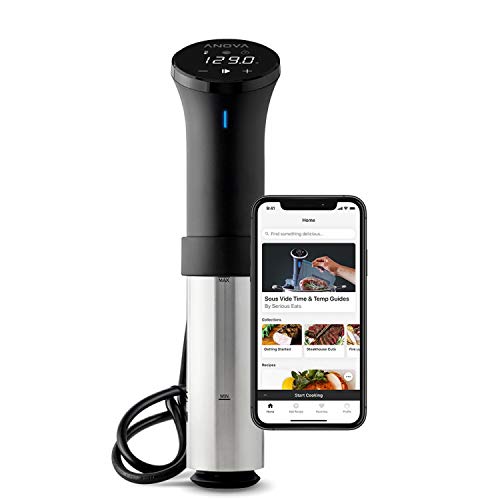
Temperature management defines the operational gap between these two cooking styles. In precision immersion cooking, the machine actively draws in water, brings it to an exact setpoint, and continuously circulates it around vacuum-sealed or zip-top bags. The Anova Culinary Sous Vide Precision Cooker Nano 2.0 illustrates this approach with a temperature range spanning from 32°F to 197°F and a variance rating of just plus-or-minus 0.2°F (0.1°C). Because the circulating water never exceeds the programmed target, the food inside cannot surpass that temperature. This eliminates the narrow margin of error common to high-heat pan frying or dry roasting, guaranteeing that the interior and exterior of the protein reach the exact same thermal threshold.
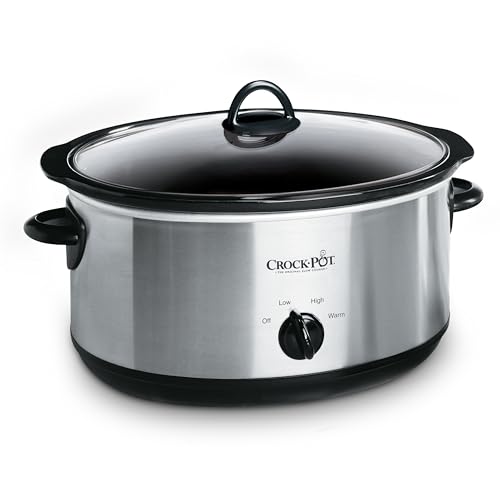
Slow cookers operate under a completely different thermal philosophy. Appliances like the Crock-Pot 7-Quart Manual Slow Cooker utilize heating elements that warm a heavy stoneware crock using three broad settings: Low, High, and Warm. The manufacturer does not list exact degree targets because the temperature rises gradually over several hours to simmer the contents, gently breaking down tough connective fibers and collagen into gelatin. While this prolonged simmering environment creates deeply flavorful braises and tender shredded meats, it lacks the ability to target intermediate states of doneness such as rare or medium-rare.
When evaluating sous vide temperature accuracy against the manual heat cycles of a crock, your cooking objective dictates which system works. If you are comparing versatile kitchen appliances and considering how heat regulation functions across gadgets, examining a pressure cooker vs slow cooker breakdown reveals similar broad thermal curves. In this matchup, however, immersion units offer mathematical precision, while the slow cooker delivers generalized simmering heat designed for endurance rather than pinpoint targets.
Edge: Sous vide, because its calibrated circulation maintains heat within 0.2°F, completely eliminating the risk of overcooking.
Cooking Steaks, Roasts, and Delicate Proteins
Deciding between a sous vide or slow cooker for steak highlights the mechanical strengths of immersion circulators. When preparing a thick-cut ribeye, strip, or tenderloin, an immersion stick like the Anova Culinary Sous Vide Precision Cooker 2.0 circulates water at an exact temperature-such as 130°F for medium-rare-for hours without overshooting. The steak emerges uniformly pink from edge to edge, retaining its natural juices because the sealed bag locks in moisture. The only required follow-up is a quick sear in a smoking-hot skillet or under a broiler to develop a textured crust, an extra step that takes under two minutes.
Conversely, placing a premium steak into a slow cooker produces disappointing results. Because slow cookers reach simmering temperatures over extended periods, the steak quickly passes the threshold of medium-rare, losing cellular moisture and turning gray and chewy. However, the scenario reverses when considering a sous vide or slow cooker for pot roast. The 7-quart interior of a slow cooker easily accommodates a 6-pound or 7-pound beef chuck roast alongside potatoes, carrots, onions, and broth. Over eight hours on Low, the sustained heat liquefies tough connective tissues, melding the aromatics and braising liquid into a rich, cohesive gravy inside a single pot.
Sous vide can also tenderize tough cuts through ultra-long cooking times-the Anova Nano features a cook timer supporting up to 99 hours-transforming a chuck roast into something resembling prime rib. However, it does not reduce braising liquids into a classic homestyle sauce within the bag. For dense roasts served with thick pan juices, the slow cooker remains the undisputed standard, while sous vide dominates individual steaks, pork chops, chicken breasts, and delicate fish fillets.
Edge: Sous vide for individual steaks and delicate cuts; Slow Cooker for traditional, fork-tender pot roasts with gravy.
Workflow, Cleanup, and One-Pot Convenience
Day-to-day usability is where the comparison between slow cooker vs sous vide reveals radically different kitchen workflows. A slow cooker embodies authentic one-pot cooking. With the Crock-Pot 7-Quart Manual Slow Cooker, you place all your raw meats, chopped vegetables, seasonings, and liquids directly into the removable stoneware insert, secure the lid, and turn the dial to Low or High. When the meal finishes, you serve directly from the stoneware crock. Cleaning is straightforward: the lid and stoneware insert are dishwasher safe, and the insert can even transition to a microwave or an oven heated up to 400°F for browning.
Sous vide involves a multi-stage process that requires additional tools. First, ingredients must be seasoned and placed inside heat-safe plastic bags, using either a vacuum sealer or the water-displacement method to remove trapped air. Next, you must provide your own water vessel-such as a large metal stockpot or a polycarbonate container-and clamp the immersion stick securely to the sidewall. Once the water bath timer expires, proteins look pale and wet upon removal from the bag. To make them visually appealing and flavorful, you must unbag the meat, pat it dry with paper towels, and sear it in a hot skillet or grill, creating an extra pan to clean.
For cooks exploring multi-functional appliances, comparisons like the instant pot duo vs duo plus show how modern machines attempt to bundle these steps. Yet when comparing dedicated hardware in a classic sous vide vs crock pot showdown, the slow cooker demands fewer steps, fewer dirty dishes, and zero external vessels, making it vastly more convenient for busy weeknights.
Edge: Slow cooker, thanks to genuine one-pot preparation, dishwasher-safe stoneware, and no requirement for separate searing pans or sealing bags.
Meal Prep and Batch Cooking Flexibility
Batch cooking requires balancing volume against texture, making slow cooker vs sous vide meal prep an important consideration for weekly planners. A slow cooker excels at large-batch, homogeneous recipes like chili, shredded chicken for tacos, pulled pork shoulder, and hearty bean soups. A 7-quart basin comfortably prepares enough food to serve 8 to 9 or more people in a single cycle. Once the cook cycle concludes, the manual Keep Warm setting holds the entire batch at a food-safe serving temperature without scorching, allowing family members to serve themselves as their schedules permit.
Sous vide provides a distinct advantage for protein-centric meal prep where precise texture is paramount. You can season and bag eight individual chicken breasts, drop them into a circulating water bath, and cook them simultaneously to 150°F-producing exceptionally juicy poultry that never dries out. Once cooked, the still-sealed bags can be chilled rapidly in an ice bath and stored in the refrigerator or freezer. During the week, you can reheat each portion in warm water without degrading the texture or pushing the meat past its ideal doneness.
Nevertheless, a sous vide immersion circulator cannot cook a complete meal in one step. While it handles the protein, side dishes like steamed vegetables, rice, or pasta must be prepared using independent cookware or dedicated appliances like an air fryer vs toaster oven setup. The slow cooker merges starch, vegetables, meat, and sauce into a unified meal ready to ladle onto plates the moment you walk through the front door.
Edge: Slow cooker, because its 7-quart capacity yields complete, multi-serving meals in a self-contained unit with an automatic warm hold.
Footprint, Storage, and Power Consumption
Kitchen storage and counter availability frequently dictate appliance choices. The Anova Precision Cooker Nano measures 12.8 inches in height, 2.2 inches in width, and 4.1 inches in depth, weighing a modest 1.7 pounds. Its slender cylindrical profile allows it to slide into a standard kitchen drawer alongside ladles and rolling pins when not in use. It leaves your kitchen counters completely free until you clip it onto an existing pot. The full-size Anova Precision Cooker 2.0 maintains a similarly compact 3.07 by 3.07-inch footprint while integrating an adjustable clamp and 1000 watts of heating power.
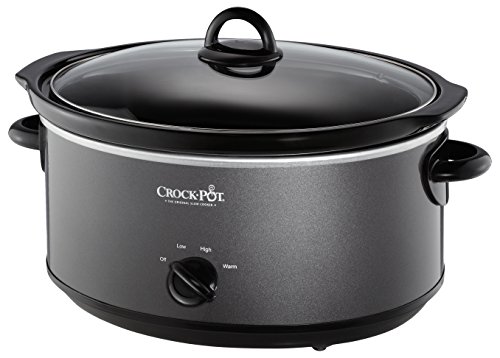
A 7-quart slow cooker demands significant, permanent real estate. The stainless steel Crock-Pot measures 16.9 inches deep, 11.8 inches wide, and 10.4 inches tall, tipping the scale at 12.6 pounds due to its dense ceramic stoneware construction. Storing an appliance of this bulk requires deep cabinet space or a dedicated shelf in a pantry. If left on the counter, it occupies a sizable section of prep area all day long.
From an electrical perspective, the devices utilize power differently. The Crock-Pot manual unit lists an operating draw of 210 watts for the stainless model (or up to 1500 watts on high-output 220V regional variants like the SCV700-KC), drawing low, steady power to maintain simmering temperatures. Anova immersion units utilize 800 to 1000 watts to rapidly heat standing water to the target setpoint, after which the heating coil cycles intermittently while the small circulator motor runs continuously. For tight apartments or kitchens with limited storage, the immersion stick has an undeniable physical advantage.
Edge: Sous vide, thanks to its 1.7-pound, drawer-friendly form factor that requires zero dedicated counter space when stored.
Smart Features and Remote Connectivity
Modern kitchen hardware increasingly relies on digital integration to simplify cooking routines. The sous vide category has embraced wireless technology aggressively. Both the Anova Nano and Anova 2.0 connect to mobile devices via the free Anova App, allowing you to set temperature thresholds, establish cooking timers, and receive notifications when the water reaches temperature or when the cooking cycle concludes.
In stark contrast, classic slow cookers like the SCV700 series from Crock-Pot rely entirely on analog simplicity. The interface consists of a manual rotary dial or touch switch with three basic positions: Off, Low, High, and Warm. There are no timers, no digital readouts, no Wi-Fi antennas, and no smartphone push alerts. If you leave the slow cooker on Low before going to work, it will continue cooking on Low until you manually return to the kitchen and switch the knob to Warm or Off.
While some cooks appreciate the bulletproof reliability of a basic mechanical dial that recovers seamlessly from brief electrical blips, the lack of an integrated auto-shutoff or digital timer limits operational flexibility. Those accustomed to monitoring smart kitchen hardware-similar to advanced programmable units seen in an instant pot pro plus vs rio comparison-will find the app-driven monitoring and precise notifications of sous vide far more adaptable to unpredictable daily schedules.
Edge: Sous vide, providing smartphone connectivity, remote cook monitoring, and guided digital recipe integration.
Pros and Cons
Sous Vide

Pros
- Calibrated accuracy within 0.2 degrees Fahrenheit
- Uniform edge-to-edge protein doneness
- Compact 1.7-pound stick stores in drawers
- Smart app control and guided cooking recipes
Cons
- Requires external pots and water containers
- Requires separate pan searing after cooking
View Anova Culinary Sous Vide Precision Cooker on Amazon
Slow Cooker

Pros
- Complete all-in-one 7-quart cooking vessel
- Fits large 6 to 7-pound family roasts
- Dishwasher-safe removable stoneware insert
- Stoneware insert oven-safe up to 400 degrees
Cons
- Bulky 12.6-pound footprint demands counter space
- Imprecise heating with only three basic settings
View Crock-Pot 7-Quart Manual Slow Cooker Family on Amazon
Who Should Buy Each One
Choose Sous Vide If
- You cook high-end steaks, chicken breasts, pork chops, or fish and demand edge-to-edge doneness without overcooking.
- You have a compact kitchen and need an appliance that stows away neatly inside a cutlery drawer.
- You enjoy using smartphone apps to monitor cooking cycles, track cook times, and execute chef-developed recipes.
- You already own sturdy stockpots or containers and do not mind searing meat in a separate pan before serving.
Choose a Slow Cooker If
- You want a true dump-and-go experience that cooks an entire family meal in one pot while you are away from home.
- Your regular menu features pot roasts, chilis, pulled pork, stews, and soups that benefit from long, low-temperature simmering.
- You cook for large gatherings or families requiring a generous 7-quart capacity that serves 8 to 9 or more people.
- You prefer simple manual controls without apps, Wi-Fi pairing, or digital subscriptions, paired with dishwasher-safe cleanup.
Final Verdict
For culinary perfectionists and protein enthusiasts, sous vide delivers results that no traditional cooker can replicate. By holding a water bath to within 0.2°F, units like the Anova Precision Cooker Nano eliminate guesswork, ensuring that chicken remains juicy, fish stays tender, and steaks achieve a uniform edge-to-edge medium-rare every single time. It takes up virtually no storage space in a drawer, pairs seamlessly with mobile devices for effortless monitoring, and elevates the quality of everyday meats to restaurant standards.
However, when convenience, volume, and comforting homestyle meals are the priority, the slow cooker remains an indispensable workhorse. Appliances like the Crock-Pot 7-Quart Manual Cooker allow you to combine vegetables, starches, meats, and liquids into a single pot with zero prep bags, producing rich gravies and fork-tender shredded roasts with minimal cleanup. If your goal is hands-off family dinners waiting for you after a long workday, choose the slow cooker; if your goal is culinary precision and flawless meat execution, invest in sous vide.
FAQ
Can a slow cooker do sous vide cooking?
Standard manual slow cookers cannot perform true sous vide cooking because their heating elements cycle broadly without active water circulation, leading to severe hot and cold spots. Furthermore, slow cookers operate on broad High, Low, and Warm settings that exceed the precise low temperatures (such as 130°F or 145°F) required for controlled sous vide cooking, which would result in overcooking delicate vacuum-sealed meats.
Is sous vide worth it if I already have a slow cooker?
Yes, sous vide is worth adding to your kitchen because it performs tasks a slow cooker cannot handle. While your slow cooker excels at soups, stews, and breaking down tough roasts into shredded meat, sous vide is built for pinpoint doneness on steaks, chicken breasts, pork tenderloin, and delicate seafood without drying them out or pushing them past medium-rare.
Is a slow cooker worth it if I only cook for one or two people?
A slow cooker is still worth owning for small households if you enjoy batch cooking and meal prepping. A 7-quart cooker allows you to prepare large batches of chili, stew, or shredded carnitas that can be portioned out and frozen for future meals, saving significant cooking time throughout the month.
Do I need a vacuum sealer to start sous vide cooking?
You do not need an expensive vacuum sealer to use a sous vide immersion circulator. High-quality food-grade zip-top freezer bags work well using the water displacement method, where you submerge the bagged food into the water bath to push out trapped air before sealing the zipper at the waterline.
Why does meat cooked sous vide look pale when it comes out of the water?
Meat emerges pale from a sous vide bath because the water bath never exceeds your desired internal doneness temperature, meaning the surface never reaches the 300°F+ required for the Maillard browning reaction. To achieve a rich brown crust and appetizing presentation, simply pat the cooked meat dry and sear it in a hot skillet for 60 to 90 seconds per side.
Can you leave a slow cooker on all day while at work?
Yes, manual slow cookers are engineered specifically for unattended, low-temperature cooking over extended periods. Placing a roast or stew on the Low setting allows it to gently simmer over 8 to 10 hours, and the Warm setting will hold the food at a safe serving temperature until you are ready to eat.
Which appliance uses less electricity during a long cook?
A standard 120-volt manual slow cooker typically uses less peak electricity, operating around 210 watts continuously. An immersion circulator draws between 800 and 1000 watts to rapidly heat the water volume to the initial setpoint, though its power consumption drops significantly once the bath reaches temperature and the unit only pulses its heating element to maintain it.


