Choosing between the Sony WH-1000XM4 and the Bose QuietComfort Ultra Earbuds comes down to physical form factor and endurance: the Sony provides a full-size over-ear design with a 30-hour battery life for marathon desk sessions, while the Bose delivers an ultra-portable in-ear fit with spatial audio and an IPX4 water resistance rating for active use.
Choose the Sony WH-1000XM4 if you want all-day over-ear comfort, smart automatic voice detection, and days of runtime without reaching for a charging cable. Choose the Bose QuietComfort Ultra if you need pocketable everyday carry, advanced ear canal calibration, and sweat-resistant durability for workouts and commutes.


Sony WH-1000XM4 vs Bose QuietComfort Ultra at a Glance
| Feature | Sony WH-1000XM4 | Bose QuietComfort Ultra |
|---|---|---|
| Form Factor | Over-ear, circular earcups, foldable | In-ear earbuds with stability bands |
| Noise Cancellation Technology | Dual Noise Sensor with Adaptive Sound Control | World-Class ANC with CustomTune and ActiveSense |
| Playback Time (Single Charge) | Up to 30 hours | Up to 6 hours (up to 4 hours with Immersive Audio) |
| Charging Case Capacity | Not applicable (protective storage case included) | Holds up to 3 full charges (up to 24 hours total) |
| Charging Options | USB Type-C wired charging | Wireless charging case and USB Type-C |
| Spatial and Audio Enhancement | DSEE Extreme real-time Edge AI upscaling | Bose Immersive Audio and Cinema Mode |
| Water and Sweat Resistance | Not listed | IPX4 rating |
| Microphone Architecture | 5 built-in mics with advanced audio signal processing | Noise-rejecting mics with SpeechClarity technology |
| Bluetooth Version and Range | Not listed | Bluetooth 5.3, 30-foot range |
| Best For | Long-haul desk work, flights, and multi-day battery | Gym workouts, light commutes, and compact portability |
Form Factor, Fit, and Daily Portability
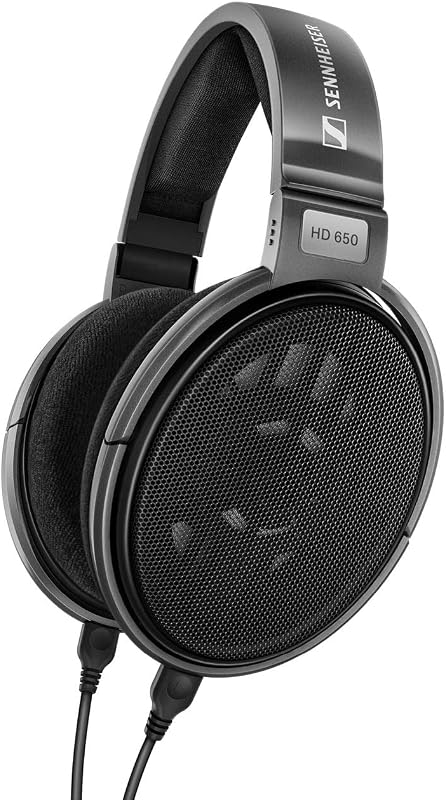
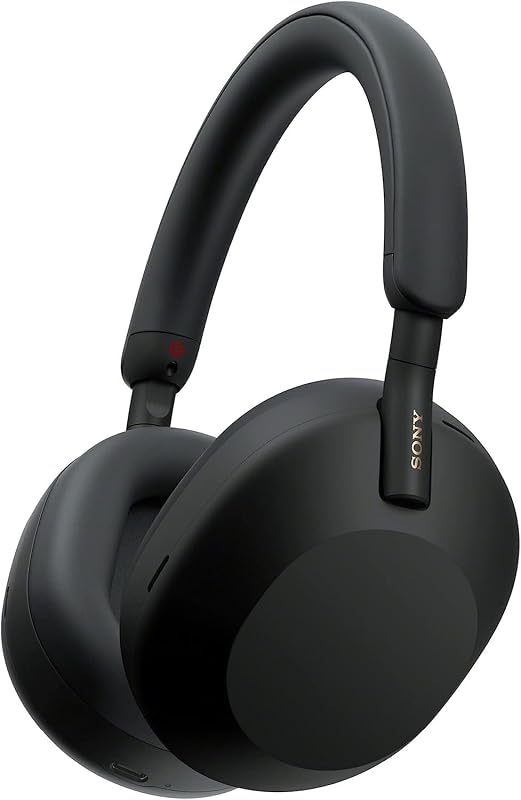
The physical structure of your listening gear shapes every moment of your daily routine. The Sony WH-1000XM4 uses an over-ear architecture with circular ear cushions designed to relieve pressure across your head and ears. Because it fully encloses the ears, it creates a gentle mechanical seal that stays comfortable during entire workdays. However, the over-ear frame requires a dedicated carrying footprint. Sony includes a protective case for travel, but the headset naturally occupies substantial room inside a backpack or briefcase. If you frequently weigh full-sized earcups against earlier hardware generations, our sony wh-1000xm4 vs bose quietcomfort 45 head-to-head demonstrates how traditional over-ear frames handle everyday wear.
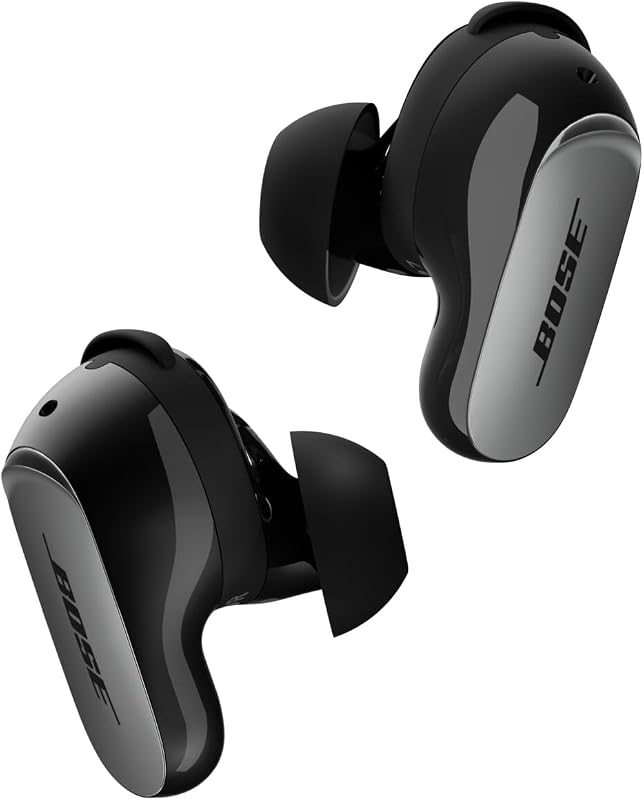
In direct contrast, the Bose QuietComfort Ultra Earbuds rely on an ultra-compact in-ear design weighing just 80 grams including the charging case. Bose packages these earbuds with nine different combinations of umbrella-shaped silicone eartips and stability bands. These bands hook comfortably into the outer contours of your ear, securing the buds during sudden head turns, brisk walks, or gym sessions. Crucially, the Bose earbuds come with an IPX4 water resistance rating, shielding the internal components from sweat and light rain. The Sony listing mentions no water resistance rating, making the over-ear pair ill-suited for workouts or wet weather.
When deciding between the Sony WH-1000XM4 or Bose QuietComfort Ultra for travel, portability differences become obvious immediately. The Bose case slips effortlessly into a shallow pant pocket, eliminating the need to haul a secondary bag just to carry your music. Sony gives you plush physical coverage that prevents ear canal fatigue over twelve hours, but Bose delivers the effortless mobility demanded by active routines.
Edge: Bose QuietComfort Ultra for its pocketable 80-gram charging case, customizable stability bands, and IPX4 water resistance.
Active Noise Cancellation and Ambient Awareness
Noise reduction performance dictates how peacefully you work in loud offices or sleep through noisy transit. The Sony WH-1000XM4 leverages Dual Noise Sensor technology, capturing ambient frequencies through microphones on each earcup to filter out constant rumbles. Sony combines this with Adaptive Sound Control, which senses your current environment and adjusts ambient noise levels automatically. Because the over-ear design physically covers the ears, it combines strong passive acoustic shielding with reliable low-frequency digital cancellation. Shoppers reading a Sony WH-1000XM4 review will find that it excels at neutralizing engine drones and air conditioner hums.
The Bose QuietComfort Ultra tackles noise isolation through an advanced hardware and software pipeline centered around CustomTune technology. When you insert the earbuds, CustomTune analyzes the unique internal contours of your ear canals and customizes the acoustic response specifically for your ears. Bose pairs this with ActiveSense technology in Aware Mode, which lets outside sounds pass through naturally until a sudden, loud spike occurs, at which point the earbuds instantly smooth the intrusive noise. For readers tracking brand evolutions across product styles, our sony wh-1000xm5 vs bose quietcomfort ultra comparison highlights how Bose in-ear ANC challenges even premium full-sized alternatives.
Both models provide distinct noise-attenuation strengths. The umbrella tips on the Bose earbuds block acoustic leakage directly at the entrance of the canal, allowing the CustomTune algorithms to eliminate conversational frequencies with remarkable efficiency. Sony relies on larger physical earcups and dual sensors, but Bose QuietComfort Ultra noise cancelling achieves deeper isolation against human chatter and irregular ambient noises thanks to personalized canal mapping.
Edge: Bose QuietComfort Ultra for its CustomTune personalized ear canal analysis and ActiveSense automatic spike smoothing.
Battery Life and Charging Methods
Battery endurance represents the single widest operational gap between these two devices. The Sony WH-1000XM4 delivers up to 30 hours of continuous playback on a single charge. This monumental lifespan means you can work a full 40-hour week on just one or two charges, or fly across international time zones without ever worrying about a flat battery. If your power runs low, Sony provides quick charging via USB Type-C that delivers 5 hours of playback from just 10 minutes plugged in. Sony also includes an audio cable, allowing you to plug directly into an analog 3.5mm jack if the battery ever completely drains.
The Bose QuietComfort Ultra Earbuds offer up to 6 hours of playback on a single charge in standard Quiet or Aware Mode. If you activate Bose Immersive Audio, battery runtime drops to approximately 4 hours. To sustain all-day listening, you must return the earbuds to their companion charging case, which holds up to three additional full recharges to provide a cumulative 24 hours of listening. While 6 hours easily handles a daily commute or workout, it forces desk workers to take mandatory charging breaks during long sessions. For a broader view of how Bose battery specs have developed, explore our bose quietcomfort ultra vs quietcomfort 45 feature comparison.
Where Bose regains some ground is modern charging flexibility. The Bose case supports both standard USB-C wired charging and Qi wireless charging surfaces, whereas the Sony WH-1000XM4 requires a physical USB-C cable. Nevertheless, when evaluating Sony WH-1000XM4 battery life against the limited single-session capacity of Bose, the over-ear headset provides undeniable power independence. Having 30 continuous playback hours completely removes charging anxiety from your schedule.
Edge: Sony WH-1000XM4 for delivering up to 30 hours of continuous single-session runtime alongside a 5-hour quick charge.
Sound Performance and Spatial Audio Features
Audio rendering philosophies differ sharply across these platforms. The Sony WH-1000XM4 integrates DSEE Extreme (Digital Sound Enhancement Engine), an Edge AI system co-developed with Sony Music Studios Tokyo. DSEE Extreme analyzes compressed digital audio files in real time, restoring acoustic detail, high-frequency harmonics, and instrumental nuances lost during standard lossy compression. The result is a warm, rich, and dynamic sound signature that flatters low-bitrate streaming tracks and broad musical genres through expansive over-ear acoustic chambers.
The Bose QuietComfort Ultra takes an entirely different spatial approach with proprietary Bose Immersive Audio. Instead of confining music inside your head, Immersive Audio projects sound into a wider acoustic field in front of you, simulating what it feels like to sit in the sweet spot between physical studio monitors. Furthermore, Bose introduces Cinema Mode, which spatializes video content while balancing background explosions, sound effects, and actor dialogue for a theatrical experience. Those seeking deeper comparisons between competing sound stages should look at our sony wh-1000xm6 vs bose quietcomfort ultra deep dive.
Any detailed Bose QuietComfort Ultra review must emphasize how CustomTune works alongside Immersive Audio: it customizes the frequency curve to your specific inner ear geometry before widening the soundstage. Sony counters with superior natural instrumental body, uncompressed wired audio cable support, and advanced Edge AI restoration. Listeners who prioritize an expansive home-theater illusion will favor Bose, while those who want pure musical fidelity from over-ear acoustics will appreciate Sony.
Edge: Tie, as Sony excels in Edge AI music restoration while Bose delivers revolutionary spatial Immersive Audio and Cinema Mode.
Call Clarity and Microphone Performance
Clear communication requires advanced microphones capable of isolating your voice from wind, engine roar, and coworker conversations. The Sony WH-1000XM4 uses precise voice pickup technology combining five built-in microphones with advanced audio signal processing. The microphones capture vocal frequencies while filtering out low-end office hums, keeping voice calls and video meetings legible and crisp. In quiet or moderately busy indoor office settings, the five-mic array performs reliably without clipping vocal endings.
The Bose QuietComfort Ultra attacks call clarity through a suite called SpeechClarity technology. Bose utilizes specialized noise-rejecting microphones calibrated specifically to identify vocal tones and reject ambient background chatter and turbulent wind noise. Additionally, the Bose hardware architecture gives you the operational freedom to take voice calls using either both earbuds or a single earbud on its own, leaving your other ear completely open to your immediate physical environment. For another perspective on voice processing across Bose releases, see our sony wh-1000xm5 vs bose quietcomfort 45 analysis.
When selecting the Sony WH-1000XM4 or Bose QuietComfort Ultra for calls in unpredictable outdoor settings, Bose holds an advantage. The noise-rejecting microphones and SpeechClarity algorithms combat exterior wind buffeting far better than traditional over-ear outer microphone grilles. Combined with independent single-bud call support, Bose provides a more adaptable communications toolkit for people on the move.
Edge: Bose QuietComfort Ultra for its wind-filtering SpeechClarity technology and versatile single-earbud calling capability.
Controls, Connectivity, and Smart Features
Day-to-day usability relies on intuitive physical controls and modern Bluetooth connectivity. The Sony WH-1000XM4 features responsive touch sensor controls on the outer shell of the earcup. By tapping or swiping, you can pause music, play tracks, skip songs, adjust volume levels, call up your voice assistant, or answer incoming phone calls. Sony enhances this setup with Wearing Detection, which automatically pauses your playback the exact moment you lift the headphones off your ears, resuming smoothly when placed back on.
Another standout convenience on the Sony headset is Speak-to-Chat. When you speak aloud to a colleague or cashier, the headset instantly recognizes your voice and lowers music volume automatically, allowing a natural conversation without touching a button. Bose counters on the QuietComfort Ultra with modern Bluetooth 5.3 technology, offering a stable wireless connection range of up to 30 feet, alongside quick noise control switching that lets you turn off ANC entirely to preserve battery life without browsing sub-menus in the companion Bose app.
Both devices feature seamless Bluetooth multipoint connectivity, letting you connect to two devices simultaneously-such as your laptop and smartphone-and switch audio sources effortlessly. However, when comparing Bose QuietComfort Ultra vs Sony WH-1000XM4 features in daily work settings, Sony’s automated Speak-to-Chat and wearing sensors create a frictionless, hands-free routine that earbuds cannot fully replicate. Shoppers weighing the Sony WH-1000XM4 vs Bose QC Ultra pairing will find Sony’s automation uniquely suited for office productivity.
Edge: Sony WH-1000XM4 for its effortless Speak-to-Chat auto-attenuation and reliable on-ear wearing detection sensors.
Pros and Cons
Sony WH-1000XM4

Pros
- Up to 30-hour battery life
- Includes audio cable and protective case
- Convenient hands-free Speak-to-Chat feature
- Quick 10-minute charge yields 5 hours
- Real-time DSEE Extreme Edge AI upscaling
Cons
- Bulky over-ear frame requires bag storage
- No IPX water resistance rating listed
- Lacks modern spatial Cinema Mode audio
View Sony WH-1000XM4 on Amazon
Bose QuietComfort Ultra
Pros
- Pocketable 80-gram charging case design
- IPX4 water-resistant build for workouts
- Bose Immersive Audio and Cinema Mode
- CustomTune personalized ear canal analysis
- Supports wireless charging and USB-C
Cons
- Only 6 hours playback per charge
- Immersive Audio cuts battery to 4 hours
- No wired 3.5mm backup audio connection
View Bose QuietComfort Ultra on Amazon
Who Should Buy Each One
Choose the Sony WH-1000XM4 If
- You need up to 30 hours of continuous battery life to survive multiple workdays or long-haul international flights without a charger.
- You prefer the plush physical comfort of an over-ear headband design that avoids putting silicone tips inside your ear canals.
- You frequently converse with office coworkers and want hands-free Speak-to-Chat audio pausing without lifting a finger.
- You need the security of a backup analog audio cable for wired entertainment systems or zero-battery listening.
Choose the Bose QuietComfort Ultra If
- You want a pocketable 80-gram listening setup that slips easily into a pocket for light, daily commuting.
- You exercise outdoors or hit the gym and require an IPX4 water resistance rating to protect against sweat and rain.
- You desire cutting-edge spatial audio with Bose Immersive Audio and Cinema Mode for an expansive 3D acoustic field.
- You prefer personalized noise reduction calibrated directly to your inner ear geometry via CustomTune.
Final Verdict
Choosing between the Sony WH-1000XM4 and the Bose QuietComfort Ultra comes down to where and how you spend the bulk of your listening hours. The Sony WH-1000XM4 remains the ultimate productivity and travel workhorse for anyone who wants uninterrupted power. With a massive 30-hour battery life, plush pressure-relieving over-ear cushions, Edge AI music upscaling, and intuitive Speak-to-Chat automation, it is the superior choice for home offices, corporate desks, and multi-leg flights where taking off your headset to recharge is an unwelcome chore.
On the other hand, the Bose QuietComfort Ultra Earbuds represent the superior purchase for mobile users who want world-class noise cancellation in a pocket-sized form factor. With CustomTune ear canal calibration, an IPX4 splash-proof rating, SpeechClarity wind filtering, and innovative Immersive Audio with Cinema Mode, Bose gives active listeners the versatility they need. If pocketability, gym readiness, and three-dimensional soundstages top your priority list, the Bose QuietComfort Ultra Earbuds are easily worth the investment.
FAQ
Can I use the Sony WH-1000XM4 or Bose QuietComfort Ultra for calls in windy environments?
The Bose QuietComfort Ultra handles wind significantly better during calls thanks to its SpeechClarity technology and noise-rejecting microphones that filter out wind buffeting. While the Sony WH-1000XM4 uses five built-in microphones with advanced signal processing, its larger over-ear grilles are more susceptible to outdoor air turbulence.
Can I listen to either model using a wired connection?
The Sony WH-1000XM4 includes an audio cable in the box, allowing you to connect directly to standard 3.5mm headphone jacks on airplanes, laptops, or audio interfaces. The Bose QuietComfort Ultra Earbuds do not feature a headphone jack and operate entirely as a wireless Bluetooth device.
Is Bose QuietComfort Ultra worth it for gym workouts?
Yes, the Bose QuietComfort Ultra is well suited for workouts because it features an IPX4 water resistance rating that protects against sweat and splashing water, along with nine eartip and stability band combinations to keep the buds firmly in place. The Sony WH-1000XM4 listing does not specify a water resistance rating, so it should not be exposed to heavy sweat or moisture.
How do the battery systems compare between these two models?
The Sony WH-1000XM4 provides up to 30 continuous hours of playback on a single charge and regains 5 hours of playback from a quick 10-minute USB-C charge. The Bose QuietComfort Ultra delivers up to 6 hours per single charge (reduced to 4 hours with Immersive Audio), but its wireless charging case provides three additional full charges for up to 24 hours of total listening time.
Do both products support multipoint pairing between two devices?
Yes, both models support Bluetooth multipoint connectivity. The Sony WH-1000XM4 offers seamless multiple-device pairing, and the Bose QuietComfort Ultra utilizes Bluetooth multipoint to let you swap audio sources between your phone, laptop, or other devices without manually disconnecting.
Can I use a single earbud independently on the Bose QuietComfort Ultra?
Yes, the Bose QuietComfort Ultra allows you to take calls and listen to audio using either both earbuds or a single earbud on its own. The Sony WH-1000XM4 is a one-piece over-ear headphone system, so it must be worn as a complete unit.