The core distinction separating the Eero 6+ and the Netgear Orbi 970 is their wireless generation and system throughput: the Eero 6+ is a Wi-Fi 6 platform built for standard residential service tiers up to 900 Mbps, whereas the Netgear Orbi 970 is an enterprise-grade Wi-Fi 7 mesh system capable of speeds reaching up to 27 Gbps with dedicated 10 Gbps wired networking.
Choose the Eero 6+ if you want a compact, simple mesh unit for a moderate-sized layout with built-in smart home hub management. Choose the Netgear Orbi 970 if you manage a sprawling home requiring multi-gigabit backhaul, extreme device capacity, and maximum wireless performance across every level.
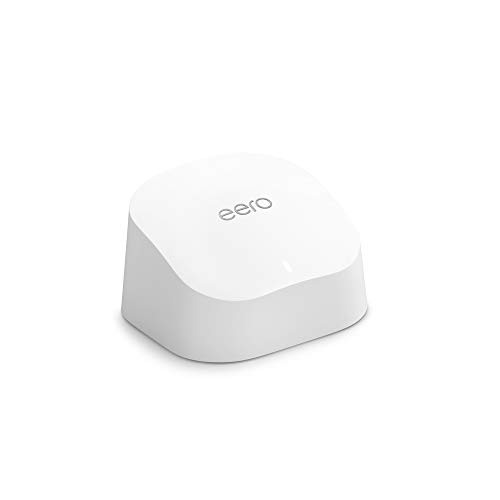

Eero 6+ vs Netgear Orbi 970 at a Glance
| Feature | Eero 6+ | Netgear Orbi 970 |
|---|---|---|
| Wi-Fi Generation | Wi-Fi 6 (802.11ax) | Wi-Fi 7 (802.11be) |
| Maximum Data Transfer Rate | Up to 900 Mbps | Up to 27 Gbps |
| Frequency Band Class | Not listed | Quad-Band |
| Advertised Coverage Area | Up to 1,500 sq. ft. (1-pack) | Up to 10,000 sq. ft. (3-pack) |
| Connected Device Capacity | 75+ devices | 200 devices |
| Wired LAN / WAN Bandwidth | Not listed | 10 Gbps LAN / 10 Gig Internet Port |
| Total Port Count | Not listed | 6 ports |
| Installed System RAM | Not listed | 4 GB |
| Smart Home Integration | Built-in Zigbee hub (Alexa compatible) | Not listed |
| Security & Protection | Automatic firmware updates | NETGEAR Armor (1-year), WPA2/WPA3 |
| Best For | Everyday sub-gigabit mesh coverage | Demanding multi-gigabit estates & Wi-Fi 7 clients |
Wireless Generation and Throughput Speeds
The technological gap between Wi-Fi 6 and Wi-Fi 7 represents a generational shift in how data moves through the air. The eero 6 router is built around Wi-Fi 6, engineered to handle residential connections supporting internet plans up to 900 Mbps. In an everyday environment, this bandwidth comfortably handles simultaneous 4K streaming, remote workplace video conferencing, and general web browsing without bottlenecking typical sub-gigabit service tiers. The system operates on established standards that ensure stable connections across legacy tablets, laptops, and smartphones without demanding cutting-edge network interface cards.
In contrast, the NETGEAR Orbi 970 delivers the bleeding edge of the 802.11be specification, unlocking aggregate bandwidth potential up to 27 Gbps. This makes the Orbi 970 WiFi 7 performance roughly 2.4 times faster than preceding standards, allowing it to move massive amounts of data in short bursts. When evaluating real-world capabilities, any Eero 6+ vs Orbi 970 speed test highlights this difference: while the Eero 6+ peaks within the ceiling of its 900 Mbps rating, the Orbi 970 system is engineered to handle multiple concurrent multi-gigabit streams. If you are comparing future-proof platforms, you might also examine the eero max 7 vs netgear orbi 970 to see how newer generations compare across brands.
Choosing between these speed capabilities depends strictly on your incoming internet feed and internal local network demands. For an owner with an everyday 300 Mbps or 500 Mbps fiber plan, the extra spectrum bandwidth provided by Wi-Fi 7 remains largely dormant. However, for households utilizing multi-gigabit fiber connections who frequently transfer uncompressed video files, run local backup servers, or utilize next-generation hardware, the Orbi 970 eliminates the wireless choke points that standard Wi-Fi 6 hardware inevitably encounters.
Edge: Netgear Orbi 970 due to its revolutionary Wi-Fi 7 standard delivering speeds up to 27 Gbps.
Coverage Area and Multi-Unit Expansion
Physical coverage determines whether a mesh system can maintain a dependable signal in distant bedrooms, basements, and exterior spaces. The standard single-pack Eero 6+ is rated to blanket up to 1,500 square feet, which translates approximately to a 22-foot radius from the unit. For apartments, single-story ranch homes, or smaller multi-room flats, this single node acts as a central hub that delivers steady coverage without necessitating supplementary extenders. Because eero uses modular hardware, you can scale the system by incorporating additional compatible eero units as physical layout demands change.
On the other side of the scale, the Orbi 970 comes packaged as a three-piece system-consisting of one primary router and two satellite extenders-that claims an expansive coverage footprint of up to 10,000 square feet. NETGEAR designs this system to offer continuous 360-degree wireless coverage from the front entryway to the backyard, penetrating through multiple structural levels from basement to rooftop. When evaluating Eero 6+ coverage vs Orbi 970, the difference is massive: a single Eero 6+ covers a tight residential zone, whereas the Orbi 970 kit is tailored for extensive architectural footprints and multi-story layouts where dead zones commonly plague lesser routers. Readers exploring step-up options from basic mesh systems often weigh comparisons like the eero 6+ vs netgear orbi rbk752 to understand these structural sizing differences.
The practical implication is that deploying the Orbi 970 resolves widespread coverage challenges across massive properties right out of the box. While you can expand an Eero 6+ setup by purchasing additional nodes to bridge signal drop-offs, doing so relies on hopping across multiple compact access points. The Orbi 970 utilizes three high-powered, fixed-antenna chassis strategically positioned to maintain a resilient wireless blanket across sprawling properties without requiring additional add-on hardware.
Edge: Netgear Orbi 970 thanks to its comprehensive 10,000 square foot multi-unit configuration.
Band Architecture and Backhaul Routing
The internal architecture that routes wireless data between nodes dictates whether your devices experience slowdowns during peak network activity. The Eero 6+ uses proprietary TrueMesh software algorithms, which dynamically adapt to network traffic and route packets through the cleanest available path to prevent disconnects and buffering. However, the manufacturer listing does not specify a dedicated secondary backhaul channel or list its exact frequency band class, meaning traffic sharing the same channels must balance backhaul routing with direct client communications.
The Orbi 970 operates on an advanced quad-band frequency architecture. The Orbi 970 quad-band backhaul incorporates NETGEAR’s patented Enhanced Dedicated Backhaul, providing an isolated high-speed communication lane exclusively reserved for communication between the primary router and its two satellites. This architectural separation prevents node-to-node synchronization traffic from crowding the bands utilized by personal computers, smart televisions, and mobile devices. For those considering other multi-band mesh architectures, our comparison of the netgear orbi rbk752 vs 970 details how backhaul implementations have evolved over successive hardware generations.
In actual household use, this architectural distinction proves critical whenever multiple users engage in high-demand activities simultaneously. With TrueMesh, the Eero 6+ does an admirable job routing packets efficiently within its 900 Mbps envelope, but satellite hops on shared channels inevitably increase latency under heavy load. The Orbi 970 eliminates this degradation entirely through its dedicated backhaul lane, ensuring that a user streaming 8K media in an upstairs bedroom does not reduce the throughput available to a workstation in the basement office.
Edge: Netgear Orbi 970 because of its patented quad-band design and Enhanced Dedicated Backhaul.
Wired Connectivity and Multi-Gigabit Ports
While wireless performance garners the headlines, physical Ethernet ports remain vital for stationary workstations, network attached storage arrays, and gaming consoles that require rock-solid connections. The Amazon product listing for the Eero 6+ does not specify its Ethernet port count or interface speeds. Consequently, buyers looking strictly at manufacturer-listed specifications have no confirmation of multi-gigabit wired capabilities on this base model, indicating an architecture primarily oriented toward wireless operation and sub-gigabit service tiers.
Conversely, the Netgear Orbi 970 provides an industrial-strength wired foundation. The system listing specifies a total of 6 physical ports, headlined by a dedicated 10 Gig internet WAN port alongside LAN port bandwidth that reaches up to 10 Gbps. This enables users with multi-gigabit residential fiber plans to ingest speeds higher than 1 Gbps directly into the router and distribute those multi-gigabit rates directly over copper cabling to high-performance client machines or switches. To see how this wired capability stacks up against other premium mesh networking options, look at our breakdown of the netgear orbi 970 vs asus zenwifi xt9.
The functional benefit of the Orbi 970’s 10 Gbps port array is massive for prosumers. Instead of being throttled by standard gigabit ports, a home network can support true high-throughput point-to-point transfers between local storage drives and editing stations. The Eero 6+, by advertising support capped at 900 Mbps internet plans, clearly targets standard consumer environments where standard sub-gigabit connections handle every household need.
Edge: Netgear Orbi 970 due to its 10 Gbps internet port and 10 Gbps LAN bandwidth across 6 ports.
Device Capacity, Smart Home, and Security
Modern homes host dozens of connected gadgets, from smart light bulbs and door locks to tablets and security cameras, all contending for router resources. The Eero 6+ is engineered to accommodate 75+ connected devices without degradation, which is more than adequate for typical households. More importantly, the eero 6 includes a built-in Zigbee smart home hub that connects compatible devices directly with Amazon Alexa. This integrated radio eliminates the requirement to purchase and configure separate smart home bridges for individual lighting and sensor systems throughout the living space.
The Orbi 970 scales device capacity dramatically higher, supporting up to 200 concurrently connected devices across its quad-band network. Under the hood, it features 4 GB of installed RAM to manage heavy routing tables, connection states, and firewall operations. Security on the Orbi 970 is driven by Netgear OS and Advanced Router Protection, featuring a medium firewall security level, WPA2/WPA3 support, and an included 1-year subscription to NETGEAR Armor all-in-one internet security. The product specifications also confirm WPS support for streamlined device onboarding, though it lacks an integrated Zigbee radio.
For smart home enthusiasts evaluating the Eero 6+ review details, the integrated Zigbee hub provides unique convenience by streamlining IoT hardware management into a single app interface. However, for complex smart homes containing dozens of cameras, home automation nodes, and smart appliances operating simultaneously, the Orbi 970’s expansive 200-device limit backed by 4 GB of system RAM ensures the router never runs out of memory or connection overhead. Those exploring how other platforms handle capacity and protocol security can review our guide on the eero pro 6e vs netgear orbi 970.
Edge: Tie. The Eero 6+ wins for smart home automation with its built-in Zigbee hub, while the Orbi 970 dominates raw device capacity and installed memory.
Latency, Congestion, and Gaming Capability
Real-time online gaming, augmented reality, and ultra-high-definition streaming demand more than raw bandwidth-they require stable latency and zero packet jitter. In discussions regarding the Eero 6+ or Netgear Orbi 970 for gaming, both systems implement unique approaches to mitigating latency. The Eero 6+ relies on TrueMesh intelligence to steer client traffic dynamically around channel congestion, allowing console and PC gamers to run multiplayer sessions, voice chats, and video conferences smoothly under normal network conditions.
The Orbi 970, however, elevates network performance to enterprise thresholds. Because Wi-Fi 7 incorporates native protocol enhancements designed to reduce airtime latency, the Orbi 970 can easily sustain high-bandwidth, low-latency activities concurrently. Its listing highlights its capability to handle everything from 8K streaming to video conferencing, VR, and competitive gaming simultaneously without causing latency spikes for other family members on the network. The hardware incorporates 3 fixed antennas optimized for business-grade throughput, ensuring directional reliability across difficult wall materials.
When asking is Netgear Orbi 970 worth it for entertainment and gaming, the answer hinges on how crowded your network gets during prime time. If your household has multiple people streaming video, making video calls, and gaming all at the same moment, the Eero 6+ will approach the ceiling of its 900 Mbps internet tier and TrueMesh routing capacity. The Orbi 970 operates with so much processing headroom and backhaul separation that intense multiplayer gaming remains completely insulated from local network congestion.
Edge: Netgear Orbi 970 due to its ultra-low latency Wi-Fi 7 features and quad-band isolation.
Pros and Cons
Eero 6+
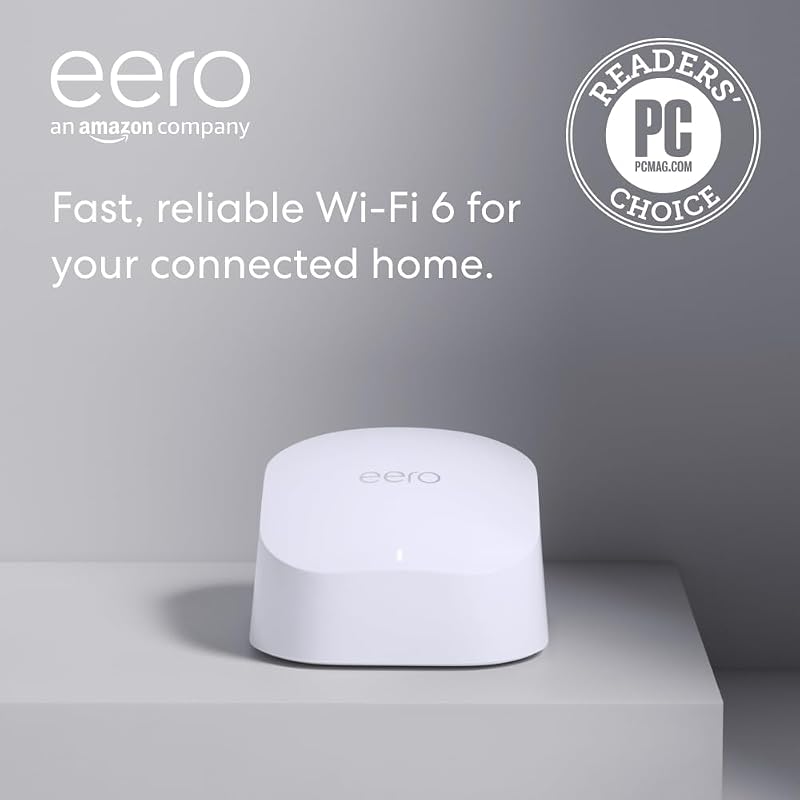
Pros
- Built-in Zigbee smart home hub
- Supports internet speeds to 900 Mbps
- TrueMesh dynamic routing technology
- Free 7-day customer support in US
- Cross-compatible with other eero hardware
Cons
- Listing omits specific Ethernet port counts
- Covers up to 1,500 sq ft per node
- Caps at 75 connected devices
Netgear Orbi 970
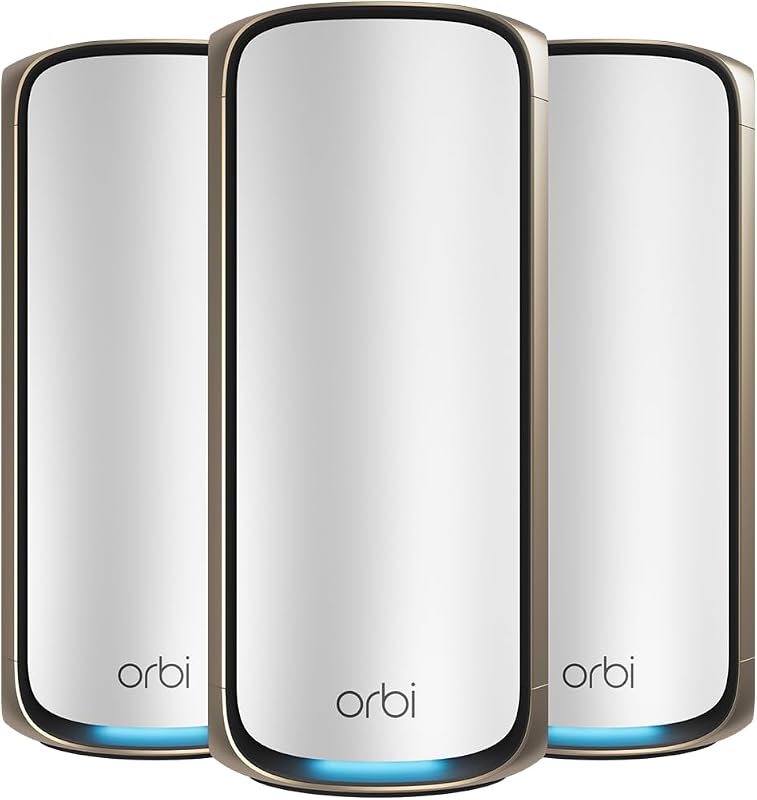
Pros
- Massive 10,000 sq ft coverage area
- Blazing Wi-Fi 7 speeds to 27 Gbps
- Patented quad-band dedicated backhaul
- 10 Gbps internet and LAN ports
- High capacity for 200 connected devices
Cons
- Made for use in the US only
- Large physical footprint
- Lacks built-in Zigbee smart home hub
View Netgear Orbi 970 on Amazon
Who Should Buy Each One
Choose the Eero 6+ If
- Your internet service plan is 900 Mbps or below and you want to utilize every megabit efficiently.
- You manage smart home gear and want a built-in Zigbee hub that integrates seamlessly with Amazon Alexa.
- Your residence is an apartment, condo, or single-level home spanning up to 1,500 square feet.
- You want quick app-guided installation supported by free customer assistance 7 days a week.
Choose the Netgear Orbi 970 If
- You subscribe to a multi-gigabit fiber internet tier and need a 10 Gig internet port to ingest full line speeds.
- You live in a sprawling multi-story residence spanning up to 10,000 square feet requiring 360-degree coverage.
- Your household connects up to 200 devices across simultaneous demanding tasks like 8K video, VR, and gaming.
- You require isolated quad-band transmission with Enhanced Dedicated Backhaul to eliminate intra-mesh traffic slowdowns.
Final Verdict
For the vast majority of everyday households, the Netgear Orbi 970 represents an undeniable technological triumph in this head-to-head comparison, claiming distinct advantages in overall throughput, coverage footprint, physical port speeds, and channel architecture. With its Wi-Fi 7 wireless platform delivering up to 27 Gbps, a 10,000-square-foot coverage area across three nodes, dedicated 10 Gbps Ethernet interfaces, and 4 GB of installed memory, it is built from the ground up to conquer massive modern properties and high-bandwidth multi-gigabit network loads.
Nonetheless, the Eero 6+ remains an exceptionally practical, focused solution for shoppers who have no need for multi-gigabit hardware. If your home falls under 1,500 square feet, your internet subscription peaks below 900 Mbps, and your priority is easy smart home automation via a built-in Zigbee Alexa hub, the Eero 6+ fulfills those core duties reliably without occupying substantial physical space or introducing unnecessary network complexity.
FAQ
Does the Netgear Orbi 970 work with older Wi-Fi devices?
Yes, the Netgear Orbi 970 is fully backward compatible with older Wi-Fi standards. While it unlocks next-generation speeds on Wi-Fi 7 hardware, existing Wi-Fi 6, Wi-Fi 5, and legacy devices can connect seamlessly to its network.
Does the Eero 6+ require a separate smart home bridge for Zigbee accessories?
No, the Eero 6+ features an integrated Zigbee smart home hub. This internal radio connects compatible smart devices directly to Amazon Alexa without needing dedicated third-party hardware bridges plugged into your wall outlets.
Can you expand an Eero 6+ network with other eero models?
Yes, eero hardware is cross-compatible. You can start with a single Eero 6+ unit and easily expand your network coverage later by adding additional eero devices as your living space or layout requirements change.
What makes the Orbi 970 quad-band backhaul distinct from standard dual-band mesh systems?
The Orbi 970 utilizes patented Quad-Band technology featuring an Enhanced Dedicated Backhaul. This reserves a dedicated wireless frequency lane solely for communication between the router and satellites, preventing device traffic from degrading node-to-node speeds.
Can the Netgear Orbi 970 be used internationally?
According to the manufacturer listing specifications, the Netgear Orbi 970 is made for use in the United States only, operates on a 240-volt rating, and is engineered specifically to comply with domestic wireless regulations.
What customer support channels are available for the Eero 6+?
The Eero 6+ includes free customer support available 7 days a week in the United States. Users can receive technical troubleshooting by reaching out via email at [email protected] or by calling +1-877-659-2347.


