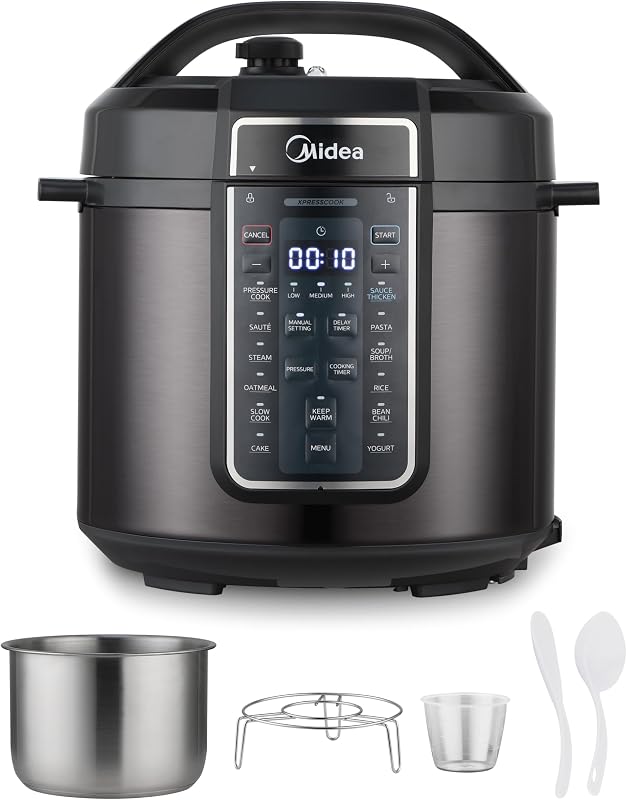
The core difference that decides the choice between these two appliances comes down to vessel engineering and thermal output: the Midea 12-in-1 Electric Pressure Cooker utilizes a traditional, uncoated stainless steel inner pot powered by a 1000-watt heating base, whereas the Ninja PC201 features an expansive 9.5-inch ceramic nonstick SimpliServe pot driven by a 1200-watt HyperHeat system.
Cooks who want indestructible cookware free of synthetic coatings and prioritize long-term metal durability should choose the Midea 12-in-1 Electric Pressure Cooker, while home chefs who prioritize high-temperature browning, rapid grain cooking, and effortless wipe-down cleanup should select the Ninja PC201.


Midea 12-in-1 Electric Pressure Cooker vs Ninja PC201 at a Glance
| Feature | Midea 12-in-1 Electric Pressure Cooker | Ninja PC201 |
|---|---|---|
| Inner Pot Material | Stainless steel | PFAS-free ceramic nonstick |
| Heating Power | 1000 watts | 1200 watts |
| Advertised Capacity | 6 quarts | 6.5 quarts |
| Cooking Surface Width | Not listed | 9.5 inches diameter |
| Pre-Programmed Functions | 12 smart presets | 9 cooking functions |
| Control Panel Style | Touchscreen display | Push button |
| Safety Protection Architecture | REALSAFE 9-in-1 system | Not listed |
| Exterior Dimensions | 12.99″D x 12.2″W x 13.27″H | 13.89″D x 14.76″W x 12.24″H |
| Included Accessories | Rice ladle, measuring cup, power cord | Lid, SimpliServe pot, recipe guide |
| Best For | Scratch-resistant longevity and uncoated metal cooking | High-heat browning, sous vide, and rapid nonstick cleanup |
Inner Pot Construction and Cooking Surface
The culinary philosophy separating these two units starts inside the cooking well. In any thorough midea 12-in-1 vs ninja pc201 inner pot comparison, the distinction between uncoated food-grade metal and engineered nonstick surfaces dictates how you prep, cook, and clean. The Midea electric pressure cooker stainless steel liner offers an impervious cooking basin that never degrades from metal utensil contact, high-acid tomato reductions, or vigorous scouring. Because stainless steel is chemically non-reactive, foods retain their pure flavor profiles without risk of the cooking surface flaking or peeling over years of heavy cycling. The trade-off is surface adhesion: starchy ingredients like rice or proteins seared at medium heats will latch onto the metal floor, requiring deglazing or soaking.
Conversely, the Ninja PC201 equips cooks with the proprietary SimpliServe ceramic nonstick pot. Engineered completely free of PFAS chemicals, this vessel provides immediate food release when preparing delicate egg bakes, sticky oat porridges, and cheeses. A standout physical specification of this pot is its wide 9.5-inch diameter base, which significantly expands usable bottom surface area compared to standard cylindrical pressure liners. Furthermore, Ninja designed the SimpliServe pot to lift directly out of the heating housing and sit on the dining table as an attractive serving dish, cutting down on intermediate plating platters.
The durability dynamic remains the critical pivot. While the ceramic surface on the Ninja avoids stuck-on residue and wipes clean in seconds, it demands non-metal utensils to avoid scratching the ceramic coating. The Midea inner pot, being solid stainless steel, tolerates immersion blenders, bone-in roasts, and stainless wire scrubbers without any structural penalty. Much like evaluating wear-prone equipment versus heavy-duty steel in an electric vs gas pressure washer, cooks must decide whether they prefer long-term surface invulnerability or everyday nonstick convenience.
Edge: Tie. The Midea provides indefinite durability with zero coating to wear down, whereas the Ninja offers an expansive 9.5-inch PFAS-free nonstick surface optimized for table service.
Heating Power and Searing Performance
Searing is often the weak point of countertop multi-cookers, making thermal wattage a vital metric. When shoppers ask whether to choose the midea or ninja pressure cooker for searing, the specifications highlight a decisive hardware gap. The Ninja PC201 utilizes a 1200-watt heating base branded with HyperHeat technology, delivering 20 percent higher electrical wattage than the 1000-watt element inside the Midea. Extra wattage allows the heating element to recover temperature rapidly when cold cuts of chuck roast, chicken thighs, or pork shoulder hit the hot surface.
Beyond electrical wattage, searing efficacy is physically constrained by pan geometry. The 9.5-inch flat bottom of the Ninja HyperHeat PC201 multi cooker prevents the overcrowding that typically causes braising cuts to steam in their own juices rather than caramelize. In a typical 6-quart tall pressure pot, a five-pound pork roast must be seared in small batches or flipped awkwardly against high sidewalls. The Ninja pot accommodates up to a 5-pound roast or a 4-pound whole chicken across its wide bed, facilitating genuine Maillard reaction browning before you lock the pressure lid.
The Midea 12-in-1 Electric Pressure Cooker relies on its 1000-watt element for sautéing and browning. While capable of sweating aromatics, softening onions, and gently browning ground beef, the lower wattage and narrower standard base mean heat recovery takes longer after introducing chilled meat. When assessing performance in our broader ninja vs instant pot comparisons, higher wattage consistently shortens preheating intervals and delivers superior crust formation during one-pot recipes.
Edge: Ninja PC201. Its 1200-watt heating system combined with a broad 9.5-inch searing surface delivers faster thermal recovery and vastly superior browning performance.
Preset Programs and Cooking Versatility
Both manufacturers bundle multi-cooker capabilities into an all-in-one chassis, but their pre-programmed menus reflect distinct culinary priorities. In any comprehensive midea 12-in-1 electric pressure cooker review, the machine stands out for its straightforward menu structure, packaging 12 automated presets: pressure cook, sauté, steam, slow cook, oatmeal, soup, rice, bean chili, yogurt, cake oven, warmer, and reheat/simmer modes. This dedicated preset roster caters directly to home cooks who prefer single-touch activation for specific staples like legumes and morning porridge without dialing in custom pressures manually.
The Ninja PC201 organizes its interface around 9 comprehensive cooking programs: pressure cook, slow cook, make rice, sous vide, steam, sear/sauté, yogurt, and grain cycles. While it features fewer named preset buttons than the Midea, it incorporates a dedicated sous vide mode that precise-temperature cooks vacuum-sealed proteins in a gentle water bath-a capability entirely absent from the Midea feature list. Ninja also emphasizes targeted grain speeds with its HyperHeat system, claiming white rice in as little as 8 minutes and quinoa in 5 minutes, excluding pressure pressurization and release intervals.
Deciding between these program configurations depends on cooking methodology. Understanding the mechanics of a pressure cooker vs slow cooker setup reveals that the Midea focuses heavily on comfort-food staples like cakes, soups, and bean stews with custom automatic timings. The Ninja leans toward modern culinary techniques by providing sous vide alongside rapid grain cycles. Home cooks wanting dedicated push-button recipes will find the Midea well-calibrated, but those seeking gourmet versatility gain a technical advantage with Ninja.
Edge: Ninja PC201. The inclusion of a dedicated sous vide mode and optimized grain cooking profiles provides greater culinary range than standard preset algorithms.
Capacity, Form Factor, and Countertop Space
Physical footprint and interior usable volume represent critical logistical factors in everyday kitchen workflows. The Ninja PC201 provides a family-sized 6.5-quart capacity, rated by the manufacturer to handle a 4-pound chicken or 5-pound roast and feed groups of 8 to 10 people. However, that capacity is distributed horizontally: the Ninja measures 13.89 inches deep, 14.76 inches wide, and 12.24 inches high, carrying a total weight of 15.9 pounds. Its broader stance demands notable countertop real estate and requires extra clearance inside low storage cabinets.
The Midea 12-in-1 Electric Pressure Cooker adheres to a more vertical, traditional footprint. It holds a standard 6-quart volume, which comfortably feeds average families while occupying 12.99 inches of depth, 12.2 inches of width, and 13.27 inches of height. Because it is more than two inches narrower than the Ninja across the front profile, the Midea slots cleanly into tighter counter nooks and under standard upper kitchen cabinets. For kitchens where workspace is scarce, this compact footprint prevents the appliance from dominating the prep area.
This layout difference directly impacts food placement. The wider, shallower bowl of the 6.5-quart Ninja makes it easier to arrange flat foods, layered proteins, and multiple ramekins side-by-side without vertical stacking. The taller, narrower 6-quart Midea cylinder excels at vertical liquid recipes such as large batches of stock, bone broths, and submerged chilis. The question of whether the instant pot pro plus vs instant pot duo plus or other classic cylinders fit your space applies equally here: evaluate whether your counter space favors vertical height or horizontal width.
Edge: Midea 12-in-1 Electric Pressure Cooker. Its upright 6-quart architecture requires over two inches less counter width while providing ample volume for standard family meals.
Controls, Maintenance, and Safety Systems
Day-to-day operation and appliance upkeep depend heavily on panel controls, exterior materials, and lid engineering. The Midea model integrates a modern touchscreen display that presents a sleek, flush front panel with automatic operation modes. It incorporates the REALSAFE SYSTEM, an advanced 9-in-1 safety framework that governs pressure limits, monitors over-temperature thresholds, and provides automatic overpressure release mechanisms. Furthermore, both the stainless steel inner pot and the outer lid assembly are fully dishwasher safe, streamlining maintenance after messy braises.
The Ninja PC201 utilizes tactile push-button controls with both manual and automatic operation modes, finished in a distinctive Blue Macaron matte housing that contrasts with standard utilitarian kitchen appliances. Maintenance on the Ninja is driven primarily by its PFAS-free ceramic nonstick coating, which rarely requires dishwashing because stuck residue wipes away easily with a sponge under warm tap water. However, the listing does not document a dishwasher-safe lid rating, meaning manual hand washing of the lid seals and pressure valves is standard practice.
From an operational safety standpoint, Midea documents its protection layers explicitly through its branded 9-in-1 REALSAFE engineering. Ninja relies on industry-standard pressure-locking lids and automatic keep-warm routines, but does not enumerate proprietary safety redundancies in the product listing. If you favor clear, flat digital touch controls backed by documented pressure-relief mechanisms and dishwasher-safe structural components, Midea holds a noticeable operational advantage.
Edge: Midea 12-in-1 Electric Pressure Cooker. Documented 9-in-1 REALSAFE engineering, full dishwasher compatibility for lid and pot, and an intuitive touchscreen display create an easier maintenance cycle.
Pros and Cons
Midea 12-in-1 Electric Pressure Cooker
Pros
- Durable stainless steel inner pot
- 12 versatile cooking presets
- Dishwasher-safe lid and inner pot
- Comprehensive 9-in-1 REALSAFE system
Cons
- Lower 1000-watt heating output
- Narrower base for searing meats
View Midea 12-in-1 Electric Pressure Cooker on Amazon
Ninja PC201

Pros
- Powerful 1200-watt HyperHeat base
- Wide 9.5-inch searing cooking surface
- SimpliServe table-ready nonstick pot
- PFAS-free ceramic nonstick coating
- Dedicated sous vide function
Cons
- Coated ceramic requires scratch care
- Wider footprint occupies more counter space
Who Should Buy Each One
Choose the Midea 12-in-1 Electric Pressure Cooker If
- You refuse to cook in nonstick coatings and demand a durable, uncoated stainless steel inner pot that will never chip, flake, or wear out.
- You have tight countertop boundaries and need a multi-cooker with a compact 12.2-inch width that fits easily beneath kitchen cabinets.
- You want simple one-touch cooking for family staples via 12 dedicated presets for oatmeal, beans, chili, soup, and baked cakes.
- You prefer comprehensive dishwasher maintenance, allowing both the removable cooking pot and outer lid assembly to go through machine washing.
Choose the Ninja PC201 If
- You prioritize high-heat meat searing and want a 1200-watt heating base paired with a wide 9.5-inch diameter browning floor.
- You love multi-course culinary flexibility and want advanced cooking methods like precision sous vide and high-speed grain cycles.
- You prefer the effortless wipe-clean properties of a 1000% PFAS-free ceramic nonstick vessel over scrubbing bare steel.
- You want a stylish SimpliServe pot and Blue Macaron matte design that can transition directly from cooking base to dining table for serving.
Final Verdict
When measuring the overall capabilities in this ninja pc201 vs midea 12-in-1 electric pressure cooker matchup, the Ninja PC201 emerges as the superior performance tool for active cooks who care about culinary technique. Its 1200-watt base produces noticeably better searing than traditional 1000-watt cookers, while the 9.5-inch diameter SimpliServe ceramic nonstick pot solves the narrow-base overcrowding that plagues standard multi-cookers. With the added versatility of a dedicated sous vide program and table-ready serving aesthetics, the Ninja justifies its broader footprint for households focused on meal variety and speedy pan cleanup.
The Midea 12-in-1 Electric Pressure Cooker remains the definitive choice for purists who prioritize longevity and material safety over high-wattage searing. With its non-reactive, heavy-duty stainless steel pot, you never need to worry about abrasive scrubbers, peeling chemical layers, or utensil restrictions. Backed by an explicit 9-in-1 REALSAFE architecture, a space-saving upright stance, and dishwasher-safe construction for both pot and lid, the Midea delivers foolproof, enduring reliability for everyday pressure cooking, steaming, and slow-cooked stews.
FAQ
Can you use metal spoons and whisks inside the Ninja PC201?
No, you should avoid metal utensils inside the Ninja PC201. Because the SimpliServe pot features a ceramic nonstick coating, hard metal tools, knives, and wire whisks can scratch or chip the surface over time. Silicone, wood, or heat-resistant plastic utensils should always be used to preserve the nonstick finish.
Is the Midea electric pressure cooker stainless steel pot dishwasher safe?
Yes, the Midea listing explicitly confirms that the 6-quart stainless steel inner pot and the outer lid are dishwasher safe. The robust nature of stainless steel means it will not warp, discolor, or degrade when subjected to standard dishwasher heat and detergents.
Does the Ninja PC201 include a sous vide mode?
Yes, the Ninja PC201 includes sous vide among its 9 all-in-one cooking functions. This allows you to cook vacuum-sealed meats and vegetables at precise, low water temperatures directly within the 6.5-quart nonstick pot, a capability not featured on the Midea model.
What accessories are included in the box with the Midea 12-in-1?
The Midea pressure cooker package includes the main 6-quart cooker base and lid, a stainless steel inner pot, a rice ladle, a dedicated measurement cup, a detachable power cord, and a user manual.
Is Ninja PC201 worth it for browning and searing meats?
Yes, the Ninja PC201 is exceptionally well-suited for searing meats due to its 1200-watt heating base and extra-wide 9.5-inch pot diameter. These features provide significantly more flat surface area and faster heat recovery than standard 1000-watt pressure cookers, preventing meat from steaming.
Does the Midea pressure cooker have an automatic keep warm setting?
Yes, the Midea 12-in-1 Electric Pressure Cooker features dedicated smart programs that include Keep Warm, Reheat, Simmer, and Steam functions, alongside an automatic shut-off safety feature.
Can the inner pot of the Ninja PC201 be used as a serving dish?
Yes, Ninja specifically designed the removable 6.5-quart ceramic vessel as a SimpliServe pot. Its handles, wide presentation profile, and Blue Macaron color coordination allow home cooks to carry the vessel directly from the heating cooker to the dining table for family-style serving.


