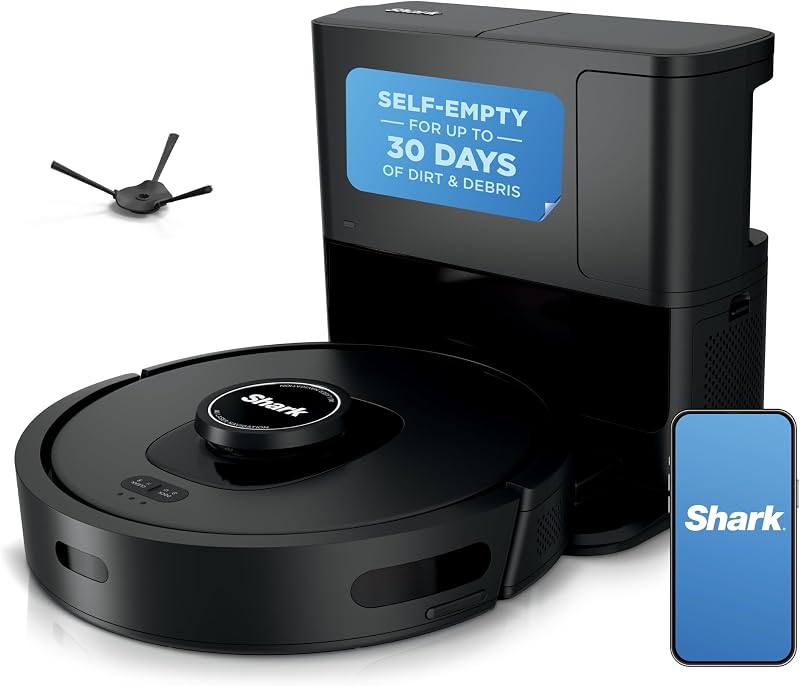
The primary difference that decides the choice between these two robotic vacuums is how much maintenance automation you require for your floors. The Roborock Q10 S5+ delivers a fully automated experience with its hands-free auto-emptying station and VibraRise 2.0 sonic mop lifting, whereas the Roborock Q7 L5 utilizes a compact standard base and an integrated manual combo bin that requires manual emptying after cleaning runs.
Homeowners with mixed carpets, active shedding pets, and larger multi-room layouts should choose the Roborock Q10 S5+ for its 70-day self-emptying dustbin and automated carpet protection. Buyers wanting a quiet, capable vacuum-and-mop combination for mostly hard floors without storing a large docking station should pick the Roborock Q7 L5.


Roborock Q10 S5+ vs Roborock Q7 L5 at a Glance
| Feature | Roborock Q10 S5+ | Roborock Q7 L5 |
|---|---|---|
| HyperForce Suction | 10,000 Pa | 8,000 Pa |
| Dust Disposal | Auto-Empty Station (2.7L Dust Bag) | Manual Dustbin (Integrated Combo Tank) |
| Mopping Technology | VibraRise 2.0 Dual-Zone Sonic Scrubbing | Removable Microfiber Mop Pad |
| Mop Auto-Lifting | 8 mm Lift on Carpets | Not listed |
| Carpet Detection | Ultrasonic Detection with Auto-Boost | Automatic Suction Boost |
| Obstacle Avoidance | ReactiveTech Structured Light | App-Suggested No-Go Zones |
| Navigation Type | PreciSense LiDAR (360° Scanning) | Precision LiDAR (360° Scanning) |
| Anti-Tangle Architecture | JawScrapers Comb & Anti-Tangle Side Brush | Dual Anti-Tangle Main & Side Brushes |
| Operating Noise Level | 65 dB | 60 dB |
| Run Time | 150 minutes | 150 minutes |
| Best For | Busy households with carpets and heavy shedding | Hard-floor apartments and quiet daily maintenance |
Suction Power and Carpet Performance
Suction strength determines how thoroughly a robotic vacuum pulls dense particulate matter, dried dirt, and embedded pet hair from the deepest layers of woven carpets. The Roborock Q10 S5+ suction power reaches an impressive 10,000 Pa HyperForce rating, generating immense static lift to dislodge stubborn debris trapped in high-pile rugs and deep tile grout lines. In contrast, the Roborock Q7 L5 provides 8,000 Pa HyperForce suction, which remains significantly stronger than standard robotic cleaners but provides 2,000 Pa less pull than its counterpart.
When deciding on the Roborock Q10 S5+ or Q7 L5 for carpet, carpet sensing technology plays an equally critical role alongside sheer motor wattage. The Q10 S5+ incorporates dedicated ultrasonic carpet detection hardware that instantly recognizes the acoustic shift from hard flooring to woven rugs. Upon detection, it automatically ramps up suction to its maximum threshold while simultaneously disengaging the mopping module. The Q7 L5 boosts airflow when detecting higher resistance, but it lacks the dedicated ultrasonic acoustic sensor to adjust cleaning modes instantly. Anyone assessing a roborock q10 s5+ vs q7 m5+ comparison will note that ultrasonic hardware fundamentally alters how reliably a vacuum navigates mixed-texture rugs.
In day-to-day operation, the extra 2,000 Pa suction on the Q10 S5+ translates into visibly cleaner carpet fibers after a single pass, especially in entryways where people track in heavy sand and grit. The Q7 L5 handles everyday dust bunnies and loose surface crumbs on low-pile carpets with ease, but it requires multiple passes or regular spot cleaning to extract fine debris buried deep within thick fabrics.
Edge: Roborock Q10 S5+ delivers 10,000 Pa suction combined with ultrasonic carpet detection for superior deep-pile extraction.
Mopping Architecture and Carpet Protection
Mopping hardware determines whether a robot simply drags a damp cloth across your flooring or actively scours dried stains while protecting expensive carpets. The Q10 S5+ features the VibraRise 2.0 mopping system, which uses dual-zone sonic vibration technology to scrub hard surfaces up to 3,000 times per minute. Crucially, the mop plate automatically lifts 8 mm off the floor the instant the robot rolls onto a rug, preventing damp mop pads from transferring dirty water to carpets.
The Q7 L5 adopts a more conventional mopping setup centered around a 270 ml water tank with three adjustable water flow levels. It wipes hard floors smoothly to collect microscopic dust, but it relies on passive surface drag rather than sonic high-speed scrubbing. More importantly, the listing does not specify an automatic mop-lifting mechanism on the Q7 L5. If you run a mopping cycle in a room with scatter rugs, you must either remove the mop bracket manually or draw no-mop boundaries in the companion software. Shoppers who compare the roborock s7 maxv vs q10 s5+ will recognize that automated mop elevation is the linchpin of true multi-surface cleaning.
The performance gap between these two systems becomes evident when tackling dried-on spills such as spilled coffee, muddy paw prints, or kitchen grease. The sonic scouring pads of the Q10 S5+ break surface tension and loosen sticky residue with mechanical agitation, whereas the static pad on the Q7 L5 is limited to capturing loose surface film. For homes featuring both hardwood and area rugs, the 8 mm lift of the Q10 S5+ provides complete autonomy that the static bracket of the Q7 L5 cannot match.
Edge: Roborock Q10 S5+ provides dual-zone 3,000 scrubs-per-minute sonic mopping and an 8 mm automated lift to protect rugs.
Dust Handling and Docking Automation
Dust management is often the deciding factor when determining whether a robotic vacuum truly reduces your weekly chores or merely relocates them. The Q10 S5+ ships with a self-emptying base station equipped with a 2.7-liter sealed dust bag. Every time the vacuum docks, a high-powered evacuation motor strips the robot dustbin clean, sealing away pet dander and debris for up to 70 days of maintenance-free operation. This feature prevents pet owners and allergy sufferers from dealing with billowing dust plumes during manual bin disposal.
By contrast, the Q7 L5 utilizes a traditional charging dock without auto-emptying capabilities. Its debris container is built directly into an integrated 2-in-1 combo unit that shares housing with the 270 ml water tank. Because the onboard capacity must share space with liquid storage, pet hair and bulky dust fill the container rapidly, requiring you to open, tap out, and wash the compartment every one to two cleaning runs. When evaluating whether the roborock q7 m5 vs l5 meets your household needs, the labor involved in servicing an integrated combo bin is an essential consideration.
For buyers asking is Roborock Q10 S5+ worth it, the self-emptying station answers that question decisively. The 70-day capacity allows the vacuum to run uninterrupted on automated schedules while you travel or work. With the Q7 L5, forgetting to empty the manual dustbin results in packed compartments, dropped suction, and interrupted cleaning routines.
Edge: Roborock Q10 S5+ eliminates manual bin maintenance with its 2.7L self-emptying station that holds up to 70 days of dust.
Obstacle Avoidance and Floor Navigation
A robotic cleaner must be able to navigate around common household items without swallowing cables, jamming on discarded socks, or wedging itself beneath low furniture. The Q10 S5+ is engineered with ReactiveTech obstacle avoidance, which utilizes structured light optical sensors on the bumper to measure distance to objects in real time. This allows the robot to recognize floor clutter dynamically and steer around hazards before bumping into them.
The Q7 L5 takes a software-guided approach to obstacle management. While it lacks structured light avoidance sensors, it utilizes its Precision LiDAR system to detect tight areas like chair legs or wiring clusters and proactively recommends no-go zones within the mobile app. Both models use 360-degree LiDAR laser navigation to map floor plans rapidly, generate multi-level maps, and navigate in straight, efficient lines regardless of lighting conditions. Comparing these capabilities against higher-tier models in our roborock saros 20 vs roborock q7 l5 guide shows how essential physical avoidance sensors are in busy family homes.
In a tidy room, both robots navigate with military precision. However, in homes with children or pets where toys, slippers, and power cords are regularly left on the floor, the ReactiveTech structured light on the Q10 S5+ prevents the machine from getting stranded. The Q7 L5 depends entirely on you maintaining the floor clear or manually establishing software exclusion zones to prevent bumper entrapment.
Edge: Roborock Q10 S5+ avoids clutter reliably using dedicated ReactiveTech structured light hardware.
Anti-Tangle Brush Systems and Pet Hair Maintenance
Pet hair collection frequently leads to clogged roller bearings and tangled brushes that require tedious manual cutting. Both the Roborock Q10 S5+ and Roborock Q7 L5 integrate advanced dual anti-tangle brush architectures designed specifically to mitigate hair wraps. The Q10 S5+ utilizes a specialized JawScrapers comb system embedded within the main brush roller chamber alongside an anti-tangle side brush that guides strands directly into the suction stream.
The Q7 L5 employs its own dual anti-tangle engineering, combining a specially contoured rubberized main roller with a zero-tangle side brush. Both designs work to migrate hair outward toward the edges of the roller where it can be pulled into the vacuum airflow rather than wrapping tightly around the central core. In any comprehensive Roborock Q10 S5+ review or Roborock Q7 L5 review, pet owners consistently find that these anti-tangle innovations significantly reduce brush maintenance compared to older bristle-style rollers.
When asking whether you should select the Roborock Q10 S5+ or Q7 L5 for pets, both brush mechanisms perform admirably with dog and cat hair. The physical rollers shed long hair cleanly without binding the motors. The main functional separation remains the bin capacity: the Q10 S5+ transfers collected pet hair directly to its dock, while the Q7 L5 stores that fur in its onboard combo compartment until you empty it by hand.
Edge: Tie. Both robots employ purpose-built anti-tangle main and side brushes that resist pet hair binding.
Noise Levels, App Control, and Daily Convenience
Everyday convenience involves more than just cleaning metrics; acoustic comfort and ease of software control dictate how pleasant a robot is to live with. The Q7 L5 holds a noticeable advantage in operating volume, generating just 60 dB of sound during standard cleaning. By contrast, the more powerful motor inside the Q10 S5+ operates at 65 dB, which is perceptibly louder when working in open-concept living rooms or home offices.
Software customization is managed through the Roborock App on both models, requiring a 2.4 GHz Wi-Fi frequency for setup. Both robots support Amazon Echo and Google Home voice control, customized room cleaning routines, and multi-floor map storage. The Q7 L5 includes a child lock feature directly within the software to prevent children or pets from accidentally starting cleaning cycles via top-mounted physical buttons. The Q10 S5+ app interface adds specific settings for auto-empty frequency, suction boost behavior, and mopping scrub intensities. Evaluating these convenience features alongside our roborock q7 l5 vs roborock qrevo breakdown demonstrates how different docking sizes influence home aesthetics.
For shoppers asking is Roborock Q7 L5 worth it, the smaller physical footprint of its standard charging dock is a genuine asset. It tucks neatly beneath side tables and along narrow hallways without demanding dedicated floor clearance. The Q10 S5+ requires a permanent, open floor space to accommodate its vertical auto-emptying station, making the Q7 L5 an attractive option for compact living quarters.
Edge: Roborock Q7 L5 is noticeably quieter at 60 dB, features a child lock, and uses a much smaller dock footprint.
Pros and Cons
Roborock Q10 S5+

Pros
- 10,000 Pa HyperForce suction
- 70-day self-emptying base station
- VibraRise 2.0 mop with 8mm auto-lift
- ReactiveTech structured light obstacle avoidance
- Ultrasonic acoustic carpet detection
Cons
- Louder 65 dB operating noise
- Bulky docking station footprint
View Roborock Q10 S5+ on Amazon
Roborock Q7 L5

Pros
- Quiet 60 dB operation
- Strong 8,000 Pa HyperForce suction
- Compact standard charging base
- Dual anti-tangle brush rollers
- Integrated app child lock
Cons
- Requires manual dustbin emptying
- No automatic mop lifting for carpets
Who Should Buy Each One
Choose the Roborock Q10 S5+ If
- You have high-shedding dogs or cats and need hands-off dust disposal for up to 70 days.
- Your layout combines hardwood, tile, and rugs, requiring automatic 8 mm mop lifting to protect fabrics.
- You need maximum suction power (10,000 Pa) and ultrasonic sensing to extract deep debris from carpets.
- Your home frequently has stray shoes, toys, and cables that require ReactiveTech structured light avoidance.
Choose the Roborock Q7 L5 If
- You live in an apartment or smaller home where an oversized self-emptying station would cause clutter.
- Your floors are predominantly laminate, tile, vinyl, or wood with few high-pile area rugs.
- You prefer a quieter 60 dB cleaning profile while working or relaxing at home.
- You want strong 8,000 Pa suction and dual anti-tangle rollers without paying for docking automation.
Final Verdict
When weighing the Roborock Q7 L5 vs Q10 S5+, the Roborock Q10 S5+ emerges as the clear victor for most multi-room and mixed-floor homes. Its combination of 10,000 Pa HyperForce suction, ultrasonic carpet detection, and the VibraRise 2.0 sonic mop with 8 mm auto-lifting allows it to vacuum rugs and scrub hard surfaces in a single, uninterrupted run. Backed by a 2.7-liter auto-emptying station that holds up to 70 days of dirt and ReactiveTech structured light to steer clear of floor hazards, the Q10 S5+ delivers true hands-off automation.
The Roborock Q7 L5 remains a compelling alternative for shoppers with specific spatial and acoustic requirements. Delivering a formidable 8,000 Pa suction and anti-tangle rollers at a quiet 60 dB sound level, it cleans hard floors thoroughly while occupying a fraction of the floor space required by a self-emptying base. If you do not mind emptying an integrated combo dustbin every couple of runs and your home does not require automatic mop elevation over rugs, the Q7 L5 provides exceptional core cleaning performance.
FAQ
Can the Roborock Q7 L5 vacuum and mop at the same time?
Yes. The Q7 L5 features an integrated 2-in-1 combo module containing a 270 ml water tank and a dustbin, allowing it to pick up loose dust and wipe floors simultaneously. However, because it lacks an automatic mop-lifting mechanism, you must set no-mop boundaries in the app to keep it from dragging the damp pad over carpets.
How does the Roborock Q10 S5+ avoid getting carpets wet while mopping?
The Q10 S5+ uses an ultrasonic acoustic sensor to identify carpet pile the second it drives over it. The robot immediately activates its VibraRise 2.0 system, elevating the mopping module by up to 8 mm to clear the carpet fibers while automatically boosting suction power for deeper cleaning.
Do both the Q10 S5+ and Q7 L5 support 5 GHz Wi-Fi networks?
No. Both the Roborock Q10 S5+ and Roborock Q7 L5 only support 2.4 GHz Wi-Fi connections. If you use a modern mesh or dual-band router, you must connect the robots to the 2.4 GHz frequency or enable a dedicated 2.4 GHz guest network during the initial app pairing process.
How often do you need to empty the dustbin on each model?
The Q10 S5+ empties its dust into a 2.7-liter sealed bag inside the docking station, providing up to 70 days of hands-free cleaning before the disposable bag requires replacement. The Q7 L5 has an onboard combo bin that must be emptied manually every one to two cleaning sessions depending on pet shedding and debris volume.
Can both vacuums store maps for multiple floors?
Yes. Both models feature 360-degree LiDAR navigation systems (PreciSense LiDAR on the Q10 S5+ and Precision LiDAR on the Q7 L5) that support multi-level mapping. You can carry either robot to a different floor, and it will recognize the level, load the correct boundaries, and execute scheduled routes.
Which model is better for homes with long hair and shedding pets?
Both models feature anti-tangle roller systems that prevent hair from wrapping around the brushes. However, the Q10 S5+ is significantly better for pet owners because its 10,000 Pa suction pulls deeply embedded pet fur out of carpets, and its auto-empty station prevents pet hair from instantly clogging a small onboard dustbin.