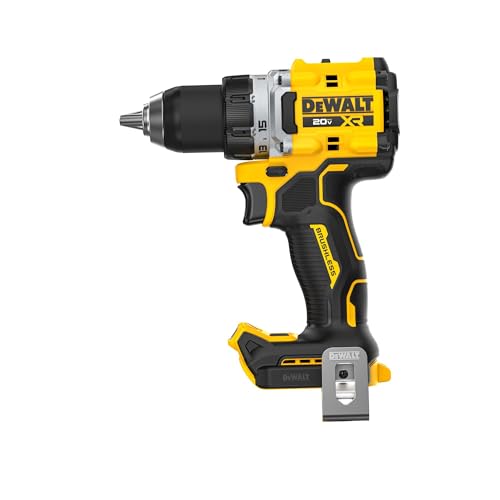
When deciding between the DeWalt DCD777 and the DeWalt DCD801, the primary determining factor comes down to the divide between entry-level utility and advanced jobsite safety: the DCD801 delivers a substantially faster 2,000 RPM transmission, an all-metal chuck, and an active anti-rotation kickback brake, whereas the DCD777 offers a simpler 1,500 RPM brushless platform bundled as a complete starter kit.
Choose the DCD777 if you want an easy-handling drill driver that comes ready to work with an included battery and charger for routine household maintenance. Choose the DCD801 if you already use 20V MAX batteries and demand high-speed hole drilling, superior bit retention, and electronic bind-up protection for rigorous trade tasks.

DeWalt DCD777 vs DCD801 at a Glance
| Feature | DeWalt DCD777 | DeWalt DCD801 |
|---|---|---|
| Motor Technology | Brushless | XR Brushless |
| Max Rotational Speed | 1500 rpm | 2000 rpm |
| Speed Settings | 2-speed | 2-speed (0-650 / 0-2,000 rpm) |
| Power Output | 340 UWO (300 W) | Up to 109% more powerful (UWO not listed) |
| Torque Rating | 53.1 N m | Not listed |
| Chuck Design | 1/2-inch single-sleeve ratcheting | 1/2-inch metal ratcheting |
| Kickback Protection | Not listed | ANTI-ROTATION System with red LED indicator |
| LED Lighting | LED with 20-second trigger release delay | 3-position adjustable LED (70 lumens) |
| Included Equipment | 2.0 Ah battery, charger | Belt hook (tool only) |
| Best For | Everyday home maintenance and basic assembly | High-torque trade drilling and heavy-duty fastening |
Motor Output and Rotational Speed
Motor speed and power output govern how rapidly a tool bores through structural lumber and handles dense fasteners without bogging down. The DCD777 features a capable brushless motor rated at 300 watts of maximum power output and 340 Unit Watts Out (UWO). Its mechanical transmission maxes out at 1500 rpm across its two gear ranges. For typical maintenance, light cabinet assembly, and driving standard wood screws, this powertrain offers reliable, steady progress. However, when tackling wider hole saws or repetitive drilling in tough framing lumber, a motor with lower top-end speed requires more time per hole and can feel strained under continuous load.
In contrast, evaluating the dewalt dcd771 vs dcd777 progression reveals that the newer XR engineering on the DCD801 represents a massive leap forward. The DCD801 is engineered to be up to 109% more powerful than standard 2-speed drill drivers and spins up to 2000 rpm in its second gear setting (with a low-gear range of 0-650 rpm). That 500 RPM surplus makes a profound difference when comparing dewalt dcd777 rpm vs dcd801 performance on the jobsite. The DCD801 clears wood chips significantly faster, maintains spindle momentum under heavy resistance, and completes high-volume drilling cycles with far less thermal strain on the motor internals.
For tradespeople who drill repeatedly through multi-layer studs or dense hardwoods, the extra rotational speed saves noticeable time over a full shift. The DCD777 remains fully adequate for modest DIY tasks, but its 1500 rpm limit forces a slower pace when driving large accessories. Anyone needing rapid boring will immediately notice the extra punch engineered into the XR platform.
Edge: DeWalt DCD801 because its 2,000 RPM high-speed transmission and significantly higher power output drive larger bits with greater efficiency.
Safety and Anti-Rotation Technology
High-torque drilling carries an inherent physical risk: rotational bind-up. When a spade bit, auger bit, or hole saw suddenly catches on a nail, knot, or metal framing edge, the cutting accessory stops instantly, transferring all rotational energy through the tool body directly into the operator’s wrist, hand, and forearm. Traditional drill drivers depend entirely on the user’s grip strength and reaction time to prevent violent twisting, which can lead to strained tendons or wrist injuries.
The DCD801 addresses this hazard directly by incorporating advanced dewalt dcd801 anti rotation technology. This integrated electronic system monitors the rotational motion of the tool in real time. If the onboard sensors detect sudden, excessive rotational movement indicating a severe bit bind, the tool automatically cuts power to the motor before the drill can wrench your arm. A dedicated red LED illuminates on the housing to notify the operator that the anti-rotation clutch has engaged. Similar to the modern electronic protections analyzed in our dewalt dcd777 vs dcd800 comparison, this safety mechanism is invaluable when operating from ladders, inside cramped framing cavities, or at awkward angles where maintaining two-handed leverage is difficult.
The DCD777 does not feature an active anti-rotation sensor or electronic bind cutoff. It relies solely on a mechanical clutch collar that disengages when reaching a preset torque threshold in screw-driving modes. While that mechanical clutch prevents overdriving fasteners, it provides zero automatic shutdown protection if the tool binds while locked in drill mode. The safety advantage of the DCD801 is one of the most critical upgrades separating modern XR equipment from baseline tools.
Edge: DeWalt DCD801 due to its integrated anti-rotation system that cuts motor power to prevent violent kickback during bit bind-ups.
Chuck Durability and Bit Retention
The chuck serves as the vital connection between a drill’s internal gearing and the bit. Heavy drilling exerts immense radial force on chuck jaws, and inadequate clamping pressure can lead to slipped bits, scored shanks, and ruined workpieces. When comparing the dcd801 vs dcd777 drill driver mechanisms, the materials used in the chuck assembly reflect their differing intended duty cycles.
Equipped with a dewalt dcd801 metal chuck, the DCD801 utilizes a full 1/2-inch metal ratcheting mechanism. The all-metal sleeve and heavy-duty internal jaws are built to endure abrasive jobsite dust, rough drops, and aggressive torque loads. When you hand-tighten the ratcheting collar, the metal jaws bite deeply into round and hex shanks, providing exceptional retention that prevents loosening when reversing or when chewing through knotty timber. This metal construction ensures that the chuck does not crack or wear down after thousands of bit swaps.
The DCD777 uses a 1/2-inch single-sleeve ratcheting chuck. While it provides single-handed operation and adequate clamping force for small drill bits and standard driver bits, its outer shell is lighter and less wear-resistant than an all-metal assembly. Under extreme torsional stress with large diameter bits, single-sleeve composite chucks are more prone to minor bit slippage than hardened metal alternatives. For basic home maintenance, the DCD777 chuck works smoothly, but it is not built for the unrelenting abuse that professional trades inflict.
Edge: DeWalt DCD801 for its heavy-duty 1/2-inch all-metal ratcheting chuck that offers superior grip strength and rugged durability.
Size, Weight, and Balance
Drill dimensions and balance dictate how comfortably you can work overhead, reach inside kitchen base cabinets, or drill between narrow 16-inch-on-center wall studs. Maneuvering an oversized tool into tight corners causes operator fatigue and awkward wrist angles that degrade driving accuracy.
The DCD777 is recognized for its compact profile, measuring just 7.6 inches from front to back along its motor housing. It features an ergonomic comfort grip handle that distributes weight evenly across the palm. Because the overall tool is lightweight and well-balanced, it minimizes strain during overhead ceiling drywall fastening or extended shelf-building sessions. For DIY users tackling home repairs, this streamlined geometry makes it easy to control without feeling unwieldy.
The DCD801 listing indicates an item length of 9 inches and a compact, high-density build weighing only 13.76 ounces for the bare tool body. It feels solid in the hand and features an optimized center of gravity that balances well with compact or extended-run lithium-ion packs. Much like the differences highlighted when comparing the dewalt dcd771 vs dcd801, the DCD801 packs commercial-grade internal components into a manageable form factor. However, the DCD777 still holds a slight advantage for basic spatial maneuverability due to its proven 7.6-inch nose-to-tail length, making it slightly easier to tuck between tight joists.
Edge: DeWalt DCD777 because its 7.6-inch front-to-back length provides easier maneuverability in cramped, tight spaces.
Worksite Lighting and Visibility
Integrated work lights have evolved from afterthought novelties into essential operational features. Drilling under vanities, inside crawlspaces, or inside unlit electrical service boxes requires consistent, shadow-free illumination right at the bit tip.
The DCD801 features an advanced 3-position adjustable LED work light capable of delivering up to 70 lumens of brightness. This system allows you to tilt the light beam to point directly at your drill bit point regardless of bit length, eliminating the annoying shadows that fixed chuck-mounted lights often cast. Furthermore, the light includes an auto-shutoff function that enables it to serve as an extended-duration task light for working in completely dark environments without draining your battery unnecessarily.
On the DCD777, illumination is provided by a standard base-mounted LED light with a 20-second trigger release delay. When you pull the trigger, the LED turns on and remains illuminated for 20 seconds after the trigger is released, giving you brief visibility before setting up your next hole. However, the DCD777 light does not offer multi-position pivoting, selectable brightness levels, or an extended task light mode. The single-beam output gets the job done for brief checks, but the DCD801 provides far more versatile illumination for dark construction environments.
Edge: DeWalt DCD801 for its powerful 70-lumen, 3-position adjustable LED system with auto-shutoff task lighting capability.
Kit Packaging, Tool Tracking, and Value
What comes in the box dramatically influences which tool makes practical sense for your workshop. A high-performance bare tool offers little value to a beginner who lacks batteries and a charger, while seasoned tradespeople often resent paying extra for low-capacity batteries they do not need.
The DCD777 is packaged as the DCD777D1 kit, which includes a 2.0 Ah 20V MAX lithium-ion battery and a compatible charger alongside the drill. For a homeowner or hobbyist entering the cordless power tool ecosystem, this package delivers immediate functionality right out of the box. You do not need to hunt down separate power sources. In any standard dewalt dcd777 review, this turnkey setup is praised for offering reliable brushless performance without the complexity of sourcing individual accessories.
On the other side of the aisle, the DCD801 is sold as a bare tool (DCD801B) with an included belt hook, leaving the battery and charger to be purchased separately or supplied from your existing tool arsenal. However, it incorporates professional site-management readiness: it is Tool Connect Chip Ready (DEWALT chip sold separately). When paired with the DEWALT Site Manager app, commercial contractors can track inventory, log tool location, and deter theft across job sites. Similar to how high-output trade tools are evaluated in the dewalt dcd777 vs dcd796 and dewalt dcd777 vs dcd998 equipment tiers, the DCD801 is built for integrated fleet deployment rather than stand-alone hobby use.
Edge: DeWalt DCD777 because it includes a 2.0 Ah lithium-ion battery and charger, delivering complete out-of-the-box utility.
Pros and Cons
DeWalt DCD777

Pros
- Complete kit with 2.0 Ah battery and charger
- Compact 7.6-inch front-to-back profile
- Ergonomic handle with balanced weight distribution
- Brushless motor delivers 340 UWO
Cons
- Lower maximum rotational speed of 1500 rpm
- Lacks anti-rotation kickback safety cutoff
- Single-sleeve chuck less durable than metal
DeWalt DCD801

Pros
- High-speed transmission up to 2000 rpm
- Anti-Rotation System prevents wrist-snapping kickback
- Heavy-duty 1/2-inch metal ratcheting chuck
- Adjustable 3-position 70-lumen LED work light
- Tool Connect Chip Ready asset tracking capability
Cons
- Sold as bare tool without battery or charger
- Longer 9-inch chassis length
Who Should Buy Each One
Choose the DeWalt DCD777 If
- You need an all-in-one starter kit that includes a 2.0 Ah battery and charger without purchasing separate power gear.
- Your primary tasks involve routine home repairs, picture hanging, flat-pack furniture assembly, and light maintenance.
- You prioritize a compact 7.6-inch tool head that fits easily into tight vanity corners and narrow structural bays.
- You want a dependable brushless motor with a 20-second delay LED for simple, periodic drilling needs.
Choose the DeWalt DCD801 If
- You require active anti-rotation kickback protection to safeguard your wrists when using large hole saws and augers.
- You already own DeWalt 20V MAX batteries and want an XR drill driver with 2,000 RPM top-end speed.
- You need a heavy-duty 1/2-inch metal ratcheting chuck that prevents bit slipping under high resistance.
- You work in dark or unpowered spaces and need a bright, 70-lumen 3-position adjustable LED work light.
Final Verdict
Comparing the dewalt dcd801 vs dcd777 reveals two distinct tiers of engineering within the same battery ecosystem. The DCD801 stands out as the superior performer in raw drilling power, mechanical durability, and user safety. Its 2,000 RPM motor speeds through heavy boring tasks, its all-metal chuck provides unyielding bit retention, and its anti-rotation kickback control offers vital protection against violent bind-ups. For contractors, remodelers, and serious woodworkers asking is dewalt dcd801 worth it, the answer is unequivocally yes if you already possess DeWalt 20V batteries and push your tools through demanding workloads.
Nevertheless, the DCD777 remains a highly sensible option for homeowners and general DIYers. Because it arrives as a complete kit with a 2.0 Ah battery and charger, it provides an immediate, hassle-free entry point into brushless cordless tools. Its 7.6-inch head length maneuvers effortlessly in cramped quarters, and its 340 UWO motor handles standard household fastening and drilling with ease. If your projects center on standard maintenance rather than heavy commercial fabrication, the DCD777 delivers all the utility you need in a clean, compact package.
FAQ
Does the DeWalt DCD777 have anti-rotation kickback control?
No, the DCD777 does not feature an electronic anti-rotation system. It utilizes a standard mechanical clutch collar to manage fastener torque, but it does not have sensors to shut off the motor during sudden bit bind-ups in drill mode.
What is the difference in speed between the DCD777 and DCD801?
The DCD777 has a maximum rotational speed of 1500 rpm across its 2-speed transmission, while the DCD801 reaches up to 2000 rpm (with speed settings of 0-650 and 0-2,000 rpm), providing 500 more RPM for faster hole-making.
Can the DeWalt DCD801 use standard 20V MAX batteries?
Yes, the DCD801 is fully compatible with all DEWALT 20V MAX lithium-ion batteries. Because it is sold as a bare tool (DCD801B), you can use any existing 20V MAX battery pack you currently own.
Does the DeWalt DCD801 come with a battery and charger?
The DCD801B listing is a tool-only configuration that includes the drill driver and a belt hook. The battery and charger are sold separately, unlike the DCD777D1 which includes a 2.0 Ah battery and charger.
Is the DeWalt DCD801 metal chuck better than the DCD777 chuck?
Yes, the DCD801 features a 1/2-inch all-metal ratcheting chuck that offers superior clamping force, wear resistance, and bit retention under heavy loads compared to the single-sleeve chuck on the DCD777.
Which drill is better when choosing the DeWalt DCD777 or DCD801 for woodworking?
In any dewalt dcd801 review, woodworkers favor the DCD801 for heavy timber framing, large Forstner bits, and deep hole drilling due to its 2,000 RPM speed and anti-rotation safety. For basic woodworking, cabinetry, and joinery screws, the DCD777 provides more than enough control and power.
What is the maximum drilling capacity for both drills?
According to the official specifications for both models, both the DCD777 and DCD801 have a listed drilling capacity of 0.5 inches in wood and 0.5 inches in metal.