The decisive difference between the Fitbit Charge 5 and the Fitbit Versa 4 comes down to whether you prioritize advanced cardiovascular health sensors in a minimalist band or everyday smartwatch utility with on-wrist communication on a spacious screen. While both wearables capture core health metrics, the Charge 5 packs specialized electrodermal activity and electrocardiogram hardware into a slender bracelet, whereas the Versa 4 delivers an expanded smartwatch experience featuring onboard Bluetooth voice calls, Amazon Alexa, Google Maps, and dozens of dedicated sport modes.
Choose the Charge 5 if you want clinical-grade heart rhythm monitoring, stress tracking, and long battery endurance in an unobtrusive form factor. Opt for the Versa 4 if you want a full-size display that handles phone calls, turn-by-turn navigation, and diverse fitness routines directly from your wrist.

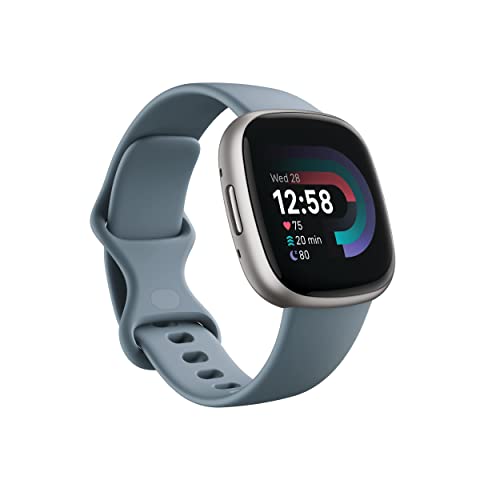
Fitbit Charge 5 vs Versa 4 at a Glance
| Feature | Fitbit Charge 5 | Fitbit Versa 4 |
|---|---|---|
| Device Category | Advanced Health & Fitness Tracker | Fitness Smartwatch |
| Display Style | Color touchscreen (2x brighter than Charge 4) | Square color touchscreen |
| Heart Health Tracking | Compatible ECG app & high/low heart rate alerts | High/low heart rate notifications (ECG not listed) |
| Stress Management | EDA sensor mindfulness sessions & Stress Score | Daily Stress Management Score & reflection logging |
| On-Wrist Phone Calls | Not supported | Bluetooth calls supported with on-wrist speaker/mic |
| Voice Assistants & Navigation | Not supported | Amazon Alexa, Google Maps, Google Wallet, Fitbit Pay |
| Exercise Profiles | Active Zone Minutes & standard workout tracking | 40+ exercise modes & automatic workout tracking |
| Built-in GPS | Built-in GPS with workout intensity map | Built-in GPS with workout intensity map |
| Battery Endurance | Up to 7 days | 6+ days |
| Water Resistance | Water resistant to 50 meters | Water resistant to 50 meters |
| Best For | Health-focused athletes & discrete recovery tracking | Daily smartwatch convenience & broad workout variety |
Health Sensors and ECG Heart Monitoring
Health tracking depth represents the primary difference between Fitbit Charge 5 and Versa 4. The Charge 5 is engineered around clinical-grade biometric monitoring, making it one of the most capable fitness bands on the market. It includes a compatible ECG app that allows users to evaluate their heart rhythm for signs of atrial fibrillation directly from the wrist. In addition to high and low heart rate notifications, the Charge 5 features a dedicated Galvanic Skin Response (EDA) sensor. Holding your fingers to the stainless steel frame during an EDA mindfulness session measures microscopic electrodermal changes in your skin, giving you physical confirmation of how your body reacts to acute stress.
By contrast, examining the fitbit charge 5 vs sense 2 hardware reveals where the Versa 4 makes deliberate trade-offs. The Versa 4 listing details an optical heart rate sensor, an SpO2 oxygen saturation sensor, and skin temperature variation tracking, but it does not specify an ECG app or an EDA scan sensor. The Versa 4 still provides a daily Stress Management Score based on heart rate metrics and sleep, and it prompts you to log reflections and participate in guided breathing sessions. However, it lacks the physical sensors required to record an electrocardiogram or detect real-time electrodermal responses on the wrist.
For readers weighing the Fitbit Charge 5 vs Versa 4 ecg capabilities, this omission is critical. If your wellness routine centers on monitoring irregular heart rhythms or gathering physiological data on stress, the Charge 5 gives you hard diagnostic data that the Versa 4 simply cannot measure. Both models include the Fitbit Health Metrics dashboard to follow heart rate variability, SpO2 levels, and breathing trends over time, but the Charge 5 gives proactive health enthusiasts a distinct hardware edge.
Edge: Fitbit Charge 5 takes this category by offering a compatible ECG app and an on-wrist EDA stress sensor that the Versa 4 lacks.
Smartwatch Features and Wrist Communication
When looking at the Fitbit Charge 5 vs Versa 4 smartwatch comparison, everyday connectivity completely shifts the advantage. The Versa 4 operates on Fitbit OS and is purpose-built to act as an extension of your smartphone. Its integrated speaker and microphone allow you to accept and conduct Bluetooth phone calls directly from your wrist, view detailed text messages, and dismiss notifications without reaching into your pocket. The inclusion of Amazon Alexa built-in allows you to set timers, ask quick questions, and control smart home gear using voice commands.
The Charge 5 takes a far more restrained approach to wrist notifications. It delivers text, calendar, and app alerts through subtle vibrations on its narrow touchscreen, but it contains no microphone or speaker. You cannot answer calls, dictate replies, or command an onboard voice assistant. While reading through any thorough Fitbit Charge 5 review, you will find that its smart functionality ends at passive notification mirroring and basic silent alarms. It is meant to record your day quietly, not help you manage inbound workplace communications.
The Versa 4 also includes practical everyday tools like Google Wallet, Fitbit Pay, and Google Maps for on-wrist turn-by-turn guidance. Those who frequently compare the fitbit charge 5 vs apple watch se will appreciate that the Versa 4 functions much closer to a true smartwatch than a traditional fitness band. If you ask is Fitbit Versa 4 worth it for daily productivity, the answer is a resounding yes for anyone who dislikes carrying a phone around the house or office just to field urgent phone calls.
Edge: Fitbit Versa 4 wins easily by providing on-wrist Bluetooth calling, Amazon Alexa, Google Maps, and interactive smartwatch controls.
Fitness Tracking and Workout Modes
Both devices track all-day activity, burned calories, and 24/7 heart rate using Active Zone Minutes to ensure you hit recommended weekly cardiovascular targets. Each tracker includes a six-month Fitbit Premium trial that unlocks the Daily Readiness Score, which calculates your recent activity levels, sleep quality, and heart rate variability to reveal whether your body is prepared for high-intensity training or requires a recovery day. Both models also feature built-in GPS, allowing you to track pace and distance during outdoor sessions without needing your phone, followed by a workout intensity map in the companion app.
The operational divide appears in workout mode variety and mid-exercise visibility. Choosing between the Fitbit Charge 5 or Versa 4 for running often depends on how you digest telemetry mid-stride. The Versa 4 boasts over 40 distinct exercise modes-more than double the standard roster on older bands-and features automatic workout detection. Its expansive square display lets you configure multiple metrics on a single view, meaning runners and cyclists can check pace, split time, distance, and heart rate zone simultaneously without swiping through compact menus with sweaty fingers.
The Charge 5 handles outdoor runs and gym workouts with equal precision, but its slender vertical display can only show limited data points at once. Browsing a newer comparison like the fitbit charge 6 vs versa 4 highlights how screen real estate affects athletic pacing. While the Charge 5 is an exceptional companion for general fitness enthusiasts who want GPS routes mapped accurately, dedicated multisport athletes who train across unique disciplines will get better utility from the Versa 4 and its broader exercise library.
Edge: Fitbit Versa 4 secures the win with over 40 exercise modes and a larger display that presents workout telemetry much more clearly.
Display Size and Interface Navigation
The visual interface highlights the physical contrast between a fitness band and a smartwatch. The Charge 5 sports an oblong color touchscreen that is engineered to be twice as bright as the Charge 4 in direct outdoor sunlight. The panel looks crisp and vibrant, but its compact width requires precise vertical swipes to scroll through daily metrics, battery levels, and exercise options. Users with larger fingers or those wearing running gloves may find navigating tiny menu icons slightly tedious during brisk movements.
The Versa 4 utilizes a spacious square display that transforms how you interact with Fitbit OS. A larger surface area allows text messages to be read in full paragraphs rather than broken up into scrolling sentence fragments. It also supports customizable clock faces that pack weather widgets, step counters, and heart rate graphs onto a single screen without visual clutter. The physical tactile button on the side of the Versa 4 case provides dependable navigation back to the home screen even when the touchscreen gets damp with sweat or rain.
Those who evaluate smaller fitness devices like the fitbit charge 5 vs inspire 3 know that compact screens excel at disappearing on your wrist. The Charge 5 achieves this discreet aesthetic with its stainless steel casing and deployant clasp, making it look like high-end jewelry rather than a piece of consumer technology. However, if visual ergonomics and immediate text legibility matter most to you, the Versa 4 provides the superior viewing experience.
Edge: Fitbit Versa 4 wins for general usability thanks to its spacious square layout and tactile side button, while the Charge 5 remains ideal for low-profile wear.
Battery Life and Daily Wear Comfort
Battery endurance and physical form factor directly dictate whether a wearable stays on your arm 24/7. In the Fitbit Charge 5 vs Versa 4 battery life matchup, the Charge 5 holds a slight numerical advantage. The Charge 5 delivers up to 7 days of operating time on a single charge, depending on your display settings and GPS usage. The Versa 4 listing rates its battery at 6+ days, which remains exceptionally strong for a device running an interactive smartwatch operating system with Bluetooth calling.
Where the Charge 5 pulls ahead is overnight wearability. Tracking your sleep quality requires wearing a device consistently through the night to capture light, deep, and REM sleep stages alongside skin temperature variation and blood oxygen levels. The Charge 5 weighs significantly less than a traditional smartwatch, and its low-profile silhouette does not snag on bedsheets or press uncomfortably against your wrist when sleeping on your side. It is one of the most transparent sleep trackers available.
Readers exploring comparisons like the fitbit charge 5 vs garmin venu 3 often observe that bulky smartwatches frequently end up charging on a nightstand instead of monitoring sleep. While the Versa 4 is relatively lightweight with its silicone strap and stainless steel body, its square face is still noticeably larger on the arm. Both models carry 50-meter water resistance ratings, allowing you to wear them in the shower or swimming pool without worry. However, if your ultimate goal is uninterrupted 24/7 health tracking with minimal charging downtime, the Charge 5 is easier to live with around the clock.
Edge: Fitbit Charge 5 takes this category with its up to 7-day battery life and an ultralight, streamlined chassis that is vastly more comfortable for sleep tracking.
Pros and Cons
Fitbit Charge 5

Pros
- Compatible ECG app for heart rhythm tracking
- On-wrist EDA sensor for stress monitoring
- Up to 7-day battery life
- Compact and lightweight stainless steel casing
- Bright color screen visible in daylight
Cons
- No on-wrist Bluetooth phone calling
- Lacks Amazon Alexa and Google Maps
- Narrow screen limits glanceable data
View Fitbit Charge 5 on Amazon
Fitbit Versa 4

Pros
- On-wrist Bluetooth calls with speaker and mic
- Over 40 exercise modes with auto-tracking
- Amazon Alexa, Google Maps, and Google Wallet
- Spacious square display for easy reading
- Built-in GPS with workout intensity maps
Cons
- Listing does not include an ECG app
- No dedicated on-wrist EDA stress sensor
- Slightly bulkier profile for sleep tracking
Who Should Buy Each One
Choose the Fitbit Charge 5 If
- You want clinical-grade health tools like an on-wrist ECG app to check heart rhythms and an EDA sensor to gauge stress.
- You prefer a slender, jewelry-like fitness band that sits flush against your skin and never interferes with dress shirts or workout gear.
- You prioritize sleep tracking and want an ultralight device that feels completely weightless when you sleep.
- You want maximum battery life that reaches up to a full 7 days between trips to the charging cable.
Choose the Fitbit Versa 4 If
- You need on-wrist convenience, such as answering incoming Bluetooth phone calls and using Amazon Alexa voice commands.
- You participate in varied athletic training and want access to more than 40 distinct workout profiles with automatic exercise logging.
- You rely on Google services on your wrist, including Google Maps turn-by-turn navigation and Google Wallet contactless payments.
- You prefer a traditional smartwatch form factor with a large, readable touchscreen and a physical navigation button.
Final Verdict
For most people focused squarely on health, recovery, and fitness metrics, the Fitbit Charge 5 is the smarter, more purposeful purchase. By pairing a bright outdoor color touchscreen and built-in GPS with specialized sensors-including an ECG heart monitor and an EDA electrodermal stress sensor-it offers deeper health diagnostic tools than many higher-priced alternatives. Its slender build, 50-meter water resistance, and up to 7-day battery life make it effortless to wear day and night, ensuring you never miss critical sleep stages or Daily Readiness updates.
However, when modern lifestyle conveniences and daily wrist communication take precedence, the Fitbit Versa 4 is the clear winner. If you want to take phone calls from your wrist, check full text messages at a glance, dictate shopping lists to Amazon Alexa, or navigate unfamiliar routes with Google Maps, the Versa 4 justifies its smartwatch classification. It sacrifices the ECG app and physical EDA sensor, but in exchange, it delivers a superior smartwatch interface and an expansive library of over 40 workout modes.
FAQ
Does the Fitbit Versa 4 have an ECG sensor like the Charge 5?
No. The product listing for the Versa 4 does not include an ECG sensor or a compatible ECG app. If you need on-wrist electrocardiogram readings to screen for irregular heart rhythms, the Charge 5 provides that specialized capability, whereas the Versa 4 relies on standard optical heart rate sensors to issue high and low heart rate notifications.
Can I take phone calls on the Fitbit Charge 5?
No. The Charge 5 does not feature an onboard speaker or microphone. It can vibrate to notify you of incoming calls and display caller identification, but you must answer and speak through your connected smartphone. The Versa 4, conversely, features built-in Bluetooth calling that allows you to answer and converse directly from your wrist.
Which tracker is better for running without a phone?
Both models include built-in GPS that logs your pace, distance, and route maps independently of a phone. The Versa 4 holds a slight functional advantage for runners because its larger screen can display multiple live statistics simultaneously, whereas the compact display of the Charge 5 requires swiping between metrics mid-run. However, runners who dislike bulky wrist gear often prefer the lightweight band of the Charge 5.
How does battery life compare between the Charge 5 and Versa 4?
The Charge 5 offers up to 7 days of battery life on a single charge under standard conditions, while the Versa 4 is rated for 6+ days. Both run times vary based on GPS tracking duration, screen brightness, and display settings, but both comfortably outperform traditional full-featured smartwatches that demand daily recharging.
Do both devices require a Fitbit Premium subscription to work?
Basic fitness tracking, heart rate monitoring, sleep stages, and smartphone notifications work on both devices without an ongoing paid membership. However, advanced metrics like your personalized Daily Readiness Score, Sleep Profiles, and in-depth historical trend analytics require Fitbit Premium. Both the Charge 5 and the Versa 4 include a 6-month Premium membership trial for new and returning users upon activation.
Are both models safe for swimming and showering?
Yes. Both the Charge 5 and the Versa 4 feature water resistance ratings down to 50 meters. You can safely wear either device while swimming laps, washing your hands, or showering without causing liquid damage to the internal electronics.

