The single operational difference deciding the choice between these two hammer drills comes down to rotational bind-up safety versus transmission versatility. The newer platform integrates an active anti-rotation electronic shutdown to protect against wrist snaps during sudden stall events, whereas the established heavy-duty platform relies on a 3-speed all-metal mechanical transmission with a dedicated 360-degree auxiliary side handle for managing demanding continuous drilling resistance.
Choose the DeWalt DCD806 if you prioritize personal safety in awkward overhead angles or tight framing corners where sudden bit binding can cause physical injury. Select the DeWalt DCD996 if your daily workload demands maximum multi-speed flexibility, supplementary two-handed leverage, and sustained heavy-duty drilling through rigid materials.

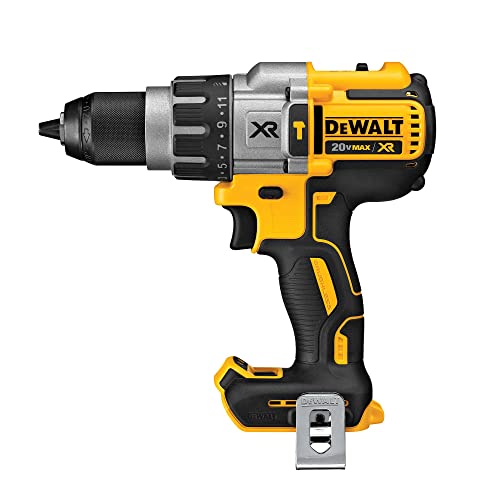
DeWalt DCD806 vs DCD996 at a Glance
| Attribute | DeWalt DCD806 | DeWalt DCD996 |
|---|---|---|
| Drill Type | Hammer Drill | Hammer Drill |
| Motor Type | Brushless | Brushless |
| Transmission Speeds | 2-Speed | 3-Speed |
| No-Load RPM | 0-650 / 0-2,000 RPM | Up to 2,000 RPM (2,800 RPM listed) |
| Chuck Size & Material | 1/2 in. Metal Ratcheting | 1/2 in. (13 mm) Nitro-Carburized Metal with Carbide Inserts |
| Worklight System | 3-position LED, 70 lumens, auto-shutoff | 3-mode LED with 20-minute spotlight shutoff |
| Kickback Protection | ANTI-ROTATION System with red LED indicator | Not listed (mechanical 360° side handle included) |
| Smart Asset Tracking | TOOL CONNECT CHIP READY | Not listed |
| Included Aux Handle | Not listed | 360° side handle included |
| Power / Amperage Spec | 20V, 5 A | 20V, 300 watts, 16 microamps |
| Best For | Modern jobsite safety and compact control | Heavy-duty 3-speed drilling and maximum leverage |
Anti-Rotation Safety and Bind-Up Protection
When drilling into tough timbers, metal studs, or masonry blocks, drill bits frequently catch on structural knots, rebar fragments, or dense impurities. A sudden bit jam immediately transfers the motor rotational torque back through the tool chassis directly into the user wrist and forearm. In compact workspaces or when working from ladders, an unexpected lockup can dislodge a contractor or cause acute joint sprains. Built-in electronic safety sensors mitigate this workplace hazard by reading tool rotation in real time.
The dewalt dcd806 vs dcd800 platform distinction becomes clear when looking at advanced electronics. The DCD806 comes equipped with an ANTI-ROTATION System that continuously senses the rotational motion of the tool body. If an abrupt, excessive rotational movement occurs during a severe stall, the internal control module immediately shuts down power to the motor before the drill spins out of your grasp. A red LED indicator illuminates on the casing to notify the user that the safety cutoff engaged. In contrast, the DCD996 listing mentions no electronic gyroscopic sensor or automatic stall shutdown system. Instead, the DCD996 addresses heavy rotational forces through mechanical control, including a vibration control handle and a heavy-duty 360-degree auxiliary side handle that requires two hands on the tool to physically fight rotational leverage.
For tradespeople who frequently drill with large hole saws or self-feed bits without secondary side grips, the electronic intervention on the DCD806 changes the safety profile significantly. The DCD996 requires physical muscle and rigid two-handed positioning to arrest a sudden bind-up, making every unexpected stop a contest between the motor torque and the operator grip strength.
Edge: DeWalt DCD806, because its active electronic ANTI-ROTATION System automatically cuts motor power during violent binds to protect the user from strain or injury.
Gearbox Versatility and Speed Settings
The mechanical transmission determines how effectively a cordless drill converts electric motor power into controlled rotational speed and usable torque. Having distinct gearing ratios allows operators to match peripheral bit speed precisely to the material hardness, preventing burned workpieces, overheated bits, and unnecessary motor strain. High-speed drilling in sheet metal requires completely different RPM thresholds than boring large-diameter timber passages or driving structural concrete fasteners.
The DCD806 operates using a high-speed two-speed transmission coupled with a sensitive variable-speed trigger. Its mechanical range tops out across two distinct gears: 0-650 RPM in low gear for high-resistance fastening and boring, and 0-2,000 RPM in high gear for rapid small-diameter drilling. This covers mainstream daily tasks efficiently, though it lacks an intermediate step. Comparing options like the dewalt dcd800 vs dcd996 shows how users often navigate the boundary between two-speed handling and three-speed performance.
The DCD996 incorporates a heavy-duty 3-speed all-metal transmission designed to bridge the broad gap between delicate torque and high-speed boring. The product data notes three mechanical speeds, listing speeds reaching up to 2,000 RPM in standard operation alongside a listed top operating speed rating of 2,800 RPM. This intermediate gear gives the DCD996 operator a middle ground to drive medium-diameter hole saws or masonry bits at high wheel speeds without bogging down or spinning too fast for clean chip clearance. The presence of a 3-speed box ensures that motor efficiency remains near optimal power bands across a broader array of heavy commercial accessories.
Edge: DeWalt DCD996, because its 3-speed mechanical transmission provides a dedicated mid-range gear for precise control across a wider variety of drilling accessories.
Power Output and Continuous Duty Performance
Drill power determines how quickly you can finish repetitive hole drilling without thermal tripping or loss of momentum. Under high load, a hammer drill motor must sustain continuous electrical draw without sagging in rotational speed. Factors like motor armature design, brushless commutation efficiency, and tool thermal regulation determine whether a drill can push through dozens of consecutive deep drill cycles.
According to the product specifications, the DCD806 is branded as DeWalt’s most powerful 20V MAX 2-speed hammer drill, engineered to be up to 109% more powerful than older company benchmarks and designed to be up to 25% more powerful versus key industry competitors like Milwaukee. It demonstrates high electrical capability with an amperage rating of 5 A, geared to make up to 175 holes per charge under standard testing protocols. For an in-depth look at this compact platform, reading a dewalt dcd806 vs dcd998 breakdown illustrates how far DeWalt advanced power density in smaller frames.
On the other side of the matchup, the DCD996 is an established industrial workhorse built for sustained punishment. The listing specifies a maximum power output of 300 watts from its high-efficiency brushless motor, which delivers up to 75% more runtime compared to legacy 18V NiCad brushed options. Its maximum capacities include 16 mm drilling capacity in wood and 15 mm drilling capacity in metal. The physical chassis of the DCD996 accommodates extensive cooling airflow, enabling it to tackle deep masonry hammer drilling and heavy metal fabrication without overheating. While the DCD806 delivers explosive punch in a compact envelope, the DCD996 remains engineered to endure grueling high-wattage cycles without backing down.
Edge: DeWalt DCD996, because its 300-watt heavy-duty brushless construction and high-load thermal capacity are built specifically for unrelenting, continuous commercial drilling.
Chuck Construction and Bit Gripping Strength
A drill chuck must hold accessories dead center and lock round shanks firmly under heavy radial and axial vibration. During hammer drill mode, the rapid percussive impacts can loosen standard friction sleeves, allowing masonry bits or hex shanks to slip, score the metal shank, or fall out entirely inside a wall cavity. High-grade chuck components prevent bit slippage during high-torque stall events.
The DCD806 uses a 1/2-inch metal ratcheting chuck that provides secure bit retention. This all-metal chuck provides firm manual clamping with audible ratcheting clicks that bite into drill shanks, preventing them from backing off during light to medium hammer drilling. It provides reliable concentricity and industrial durability far above standard composite-sleeved drill chucks.
The DCD996 elevates bit retention higher through specialized metallurgical treatments and internal hardware. Its listing highlights a heavy-duty 1/2-inch (13 mm) ratcheting nitro-carburized metal chuck equipped with dedicated carbide inserts. Nitro-carburizing hardens the outer surface to resist aggressive field abrasion and rust, while the integrated carbide gripping teeth bite aggressively into hardened drill bit shanks. When paired against alternatives like the dewalt dcd996 vs dcd998 or older drills, this chuck design remains one of the toughest chuck systems DeWalt has ever assembled.
Edge: DeWalt DCD996, because its nitro-carburized metal ratcheting chuck features carbide inserts that deliver superior bit-gripping strength under extreme hammer vibrations.
Worklight Illumination and Digital Asset Tracking
Jobsite lighting and tool security are critical workflow factors for modern contractors. Drilling inside dark utility cabinets, unfinished basements, crawlspaces, or unpowered construction decks requires integrated LED illumination that eliminates shadowing around the bit tip. Simultaneously, preventing lost inventory and managing fleet maintenance across multiple job trailers has made smart tracking a core operational requirement.
The DCD806 features a modern 3-position adjustable LED light capable of producing 70 lumens of illumination, complete with an automatic shutoff function to preserve battery life when the tool is set down. Crucially, the DCD806 incorporates TOOL CONNECT CHIP READY functionality directly into its housing. By inserting a compatible chip (sold separately), the drill links to the DEWALT Site Manager app, giving contractors direct data tracking for jobsite asset management and tool location monitoring.
The DCD996 features an ultra-capable 3-mode LED setup advertised as up to 20X brighter than the previous generation. One of its standout utility features is an integrated LED Spotlight Mode with an extended 20-minute shutoff function. This allows the DCD996 to function as a standalone work light in dark or confined spaces when you are setting up lines or securing fasteners. However, the DCD996 listing makes no mention of TOOL CONNECT CHIP integration or native digital tracking provisions, reflecting its mechanical, pre-chip generation design architecture.
Edge: Tie. The DCD806 wins for connected jobsite asset management and a directed 70-lumen light, while the DCD996 wins for dark-site utility thanks to its 20-minute continuous spotlight mode.
Pros and Cons
DeWalt DCD806

Pros
- ANTI-ROTATION kickback protection with red LED
- TOOL CONNECT CHIP READY asset tracking
- Up to 109% more powerful 2-speed motor
- Adjustable 3-position 70-lumen LED worklight
- Delivers up to 175 holes per charge
Cons
- Only 2 transmission speed settings
- No included 360-degree auxiliary side handle
DeWalt DCD996

Pros
- Heavy-duty 3-speed mechanical transmission
- Nitro-carburized chuck with carbide inserts
- Included 360-degree side handle and vibration handle
- 3-mode LED with 20-minute spotlight shutoff
- 300-watt continuous heavy-duty power output
Cons
- Lacks electronic ANTI-ROTATION kickback shutdown
- No TOOL CONNECT CHIP smart asset tracking
Who Should Buy Each One
Choose the DeWalt DCD806 If
- You drill from stepladders, scaffolding, or confined corners where an abrupt bit bind could cause serious wrist injury or balance loss.
- Your company uses digital inventory management and requires TOOL CONNECT CHIP READY equipment to monitor assets on commercial job sites.
- You want high power output in a responsive 2-speed hammer drill chassis that minimizes user fatigue across standard drilling shifts.
- You do not want or need to carry a bulky 360-degree secondary side handle to safely manage high-resistance drilling tasks.
Choose the DeWalt DCD996 If
- You regularly bore large-diameter holes that benefit from the middle gear ratio of a dedicated 3-speed mechanical transmission.
- You perform continuous heavy-duty masonry drilling that requires the extreme holding power of a nitro-carburized chuck with carbide inserts.
- You routinely work in dark, unpowered utility rooms and need an onboard LED with an extended 20-minute spotlight function.
- You want a heavy-duty drill package that includes a 360-degree auxiliary side handle and a vibration control handle out of the box for two-handed leverage.
Final Verdict
For most modern tradespeople and remodelers, the DeWalt DCD806 is the smarter, more practical overall investment. Its electronic ANTI-ROTATION System offers critical user safety that physical handles simply cannot match, actively neutralizing sudden stall forces before they sprain your wrist. Coupled with a capable 2-speed transmission delivering up to 2,000 RPM, a 70-lumen 3-position worklight, and TOOL CONNECT CHIP READY integration, it meets the rigorous demands of modern jobsites while keeping weight and complexity manageable.
However, when your work shifts toward brutal, continuous commercial drilling, the DeWalt DCD996 takes over as the superior machine. With its 300-watt heavy-duty brushless motor, 3-speed mechanical transmission offering up to 2,800 RPM capability, heavy-duty carbide-insert chuck, and included 360-degree side handle, it is built to survive grueling masonry and steel applications that push two-speed tools beyond their mechanical limits. If maximum gear versatility and heavy-duty durability outweigh digital tracking and electronic kickback control, the DCD996 remains an elite heavy-duty champion.
FAQ
Does the DeWalt DCD806 come with a side handle included in the box?
The product listing for the DCD806 does not specify an included side handle. Because it features an active electronic ANTI-ROTATION System that cuts power when rotational movement exceeds safe thresholds, the tool is primarily engineered for direct, compact handling without relying on a full-time secondary mechanical grip.
How does the ANTI-ROTATION System work on the DeWalt DCD806?
The ANTI-ROTATION System in the DCD806 uses internal sensors to monitor the rotational movement of the drill chassis. If a drill bit binds in tough material and causes the tool body to violently twist in the operator hands, the system senses the motion instantly, cuts electrical drive to the motor, and illuminates a red LED indicator on the tool body to alert the user.
What are the chuck differences between the DCD806 and DCD996?
The DCD806 features a standard heavy-duty 1/2-inch metal ratcheting chuck for dependable daily bit retention. The DCD996 upgrades to a 1/2-inch (13 mm) nitro-carburized metal chuck that includes integrated carbide inserts. These carbide teeth grip hardened steel bit shanks with exceptional bite, minimizing slippage during high-vibration hammer drilling operations.
Can the DeWalt DCD996 be used as a temporary work area light?
Yes. The DCD996 includes a 3-mode LED system with a dedicated Spotlight Mode. When activated, this mode features a 20-minute shutoff function that keeps the light illuminated continuously, allowing you to use the tool as a hands-free work lantern in dark, unpowered utility rooms or mechanical crawlspaces.
Does the DeWalt DCD996 feature smart asset tracking?
The listing for the DCD996 does not list TOOL CONNECT CHIP READY capability. In contrast, the DCD806 listing explicitly states that it is TOOL CONNECT CHIP READY, which enables contractors to install a chip (sold separately) and monitor the tool via the DEWALT Site Manager app for location tracking and inventory control.
Which hammer drill has higher maximum rotational speed?
Both models list a standard maximum rotational speed rating of 2,000 RPM. However, the DCD996 product data also specifies a high-speed rating reaching up to 2,800 RPM, facilitated by its 3-speed heavy-duty mechanical transmission compared to the 2-speed 0-650 / 0-2,000 RPM range found on the DCD806.

