The core distinction deciding the choice between the Fitbit Charge 5 and the Apple Watch SE is whether you want a dedicated health band that runs for nearly a week on a single charge or an interactive, wrist-worn computer that seamlessly integrates with iOS communications at the expense of daily charging. While both devices monitor cardiovascular metrics and physical activity, they approach daily wear from fundamentally different philosophies of hardware design, software interaction, and battery endurance.
Choose the Fitbit Charge 5 if you prioritize multi-day battery life, dedicated recovery sensors like electrodermal activity and electrocardiogram monitoring, and platform flexibility that supports both Android and iPhone devices. Choose the Apple Watch SE if you are an iPhone user who wants comprehensive watchOS app integration, on-wrist calling and messaging, advanced emergency safety features, and a full-size display.


Fitbit Charge 5 vs Apple Watch SE at a Glance
| Feature | Fitbit Charge 5 | Apple Watch SE |
|---|---|---|
| Device Type | Advanced health and fitness tracker band | Full-featured smartwatch |
| Battery Life | Up to 7 days | Up to 18 hours (all-day) |
| Operating System Compatibility | Apple iOS 15 or higher, Android OS 9 or higher | watchOS (requires nearby iPhone) |
| Display | Color touchscreen (2x brighter than Charge 4) | 40mm Always-On Display |
| Navigation and Location | Built-in GPS | Built-in GPS |
| Health and Heart Sensors | Optical heart rate, ECG app, EDA stress sensor, SpO2 | Optical heart rate, irregular rhythm alerts, Vitals app |
| Temperature Sensing | Skin temperature variation (Health Metrics dashboard) | Wrist temperature tracking during sleep |
| Onboard Storage | The listing does not specify | 64 GB |
| Safety and Emergency Tools | The listing does not specify | Fall detection, Crash detection, Check In, Emergency SOS |
| Water Resistance | 50 meters | Water resistant (depth not specified) |
| Best For | Continuous multi-day recovery tracking across iOS and Android | Interactive wrist communications and deep iPhone safety integration |
Fitbit Charge 5 vs Apple Watch SE Battery Life and Power Management
Battery longevity represents the most tangible operational difference between these two devices. The Fitbit Charge 5 is engineered around a low-overhead tracker architecture capable of operating for up to 7 days on a single charge, though real-world longevity varies with usage patterns and sensor activation. This multi-day capacity allows users to wear the device continuously throughout the workweek and weekend without scheduling daily replenishment, making it an exceptional tool for round-the-clock biological tracking where charging interruptions break continuous baseline trends. When comparing compact wearable platforms in our fitbit inspire 3 vs apple watch se analysis, continuous uptime remains the definitive strength of dedicated fitness bands.
In contrast, the Apple Watch SE operates on watchOS, powering a complex background system, interactive animations, and constant radio communication that yields an 18-hour all-day battery rating. Wearers must establish a strict daily charging habit to keep the device functioning. To mitigate this constraint, the SE features accelerated charging capabilities that provide up to 8 hours of battery life from a 15-minute quick charge, performing up to twice as fast as the prior SE 2 generation. While this quick turnaround makes morning top-offs practical while showering or getting ready, you remain anchored to a proprietary charging puck every 24 hours.
The trade-off is clear: the Charge 5 frees you from battery management anxiety during weekend trips, remote hikes, and consecutive nights of sleep tracking. The Apple Watch SE demands a daily charging window, trading battery independence for a dynamic operating system capable of running local apps, processing voice commands, and handling real-time communications.
Edge: Fitbit Charge 5 because its 7-day battery runtime completely eliminates the burden of daily charging cycles required by watchOS.
Health, Recovery, and Sensor Technology
Health monitoring capabilities diverge based on whether your priority is proactive medical screening or integrated lifestyle wellness. In a comprehensive Fitbit Charge 5 review, the band’s standout hardware includes an on-wrist electrodermal activity (EDA) sensor for mindfulness and stress management scoring, alongside an integrated electrocardiogram (ECG) app. The ECG sensor records electrical heart signals to assess cardiac rhythm and identify high or low heart rate anomalies. Furthermore, the Charge 5 populates a Health Metrics dashboard tracking blood oxygen saturation (SpO2), heart rate variability (HRV), and overnight skin temperature variation, providing raw recovery data that feeds into its Daily Readiness Score.
The Apple Watch SE approaches health through a balance of active monitoring and broad lifestyle assistance. It includes an optical heart rate sensor delivering alerts for unusually high or low heart rates as well as irregular rhythm notifications. For overnight monitoring, the SE utilizes the Vitals app to present overnight health metrics alongside wrist temperature sensing that powers retrospective cycle tracking and period predictions. However, the SE lacks an onboard ECG electrical sensor and does not include an EDA sensor for galvanic skin response stress tracking, reserving those specific hardware tools for higher-tier hardware, as detailed in our fitbit charge 5 vs apple watch series 10 comparison.
While the Charge 5 delivers more specialized sensor hardware on your wrist with ECG and EDA tracking, it restricts full access to longitudinal insights and the Daily Readiness Score behind a recurring Fitbit Premium subscription (a 6-month membership is included with the device). The Apple Watch SE delivers its native health tracking tools, Vitals metrics, and wrist temperature data without placing core analytics behind a digital paywall.
Edge: Fitbit Charge 5 for users seeking dedicated physical sensors like ECG and EDA, though the Apple Watch SE wins on out-of-the-box software accessibility without subscription gates.
Smartwatch Functionality, Safety, and Apple Ecosystem Integration
When assessing interactive wrist computing, the Apple Watch SE completely outclasses the Fitbit Charge 5. Running watchOS with 64 GB of onboard storage, the SE acts as a true auxiliary extension of an iPhone. It allows users to answer incoming phone calls, compose and dictate text messages, play music and podcasts directly from local storage or Wi-Fi, and interact with Siri using on-device processing. The hardware interface incorporates a tactile Digital Crown with haptic feedback, a physical side button, and gesture controls such as double tap and wrist flick actions to navigate without touching the glass.
Beyond everyday communication, the Apple Watch SE integrates critical personal safety systems. The device features hardware sensors capable of detecting severe car crashes or hard falls, automatically connecting the wearer to emergency dispatch services and notifying emergency contacts if the user is unresponsive. It also provides a Check In utility that automatically updates loved ones when you safely reach a destination. The Fitbit Charge 5 provides none of these emergency detection capabilities, functioning purely as a closed-system passive tracker.
The Fitbit Charge 5 limits its smart capabilities to basic phone notifications, silent vibrating alarms, and simple timer utilities on a narrow band interface. It lacks a speaker, microphone, voice assistant, and local music storage. Furthermore, while the Charge 5 communicates with both iOS and Android smartphones via the Fitbit app, the Apple Watch SE is strictly tethered to the Apple hardware ecosystem, requiring an iPhone for setup and daily operation. For buyers exploring broader smartwatch designs within the tracker realm, our fitbit versa 4 vs apple watch se guide highlights similar operating software contrasts.
Edge: Apple Watch SE due to its standalone 64 GB storage, active messaging and calling, Siri processing, and automated crash and fall detection systems.
Sleep and Overnight Recovery Tracking
Continuous sleep evaluation is an essential buying consideration when deciding between the Fitbit Charge 5 or Apple Watch SE for sleep tracking. The Charge 5 is uniquely suited for overnight wear due to its narrow form factor, light profile, and week-long battery life. Because you do not need to recharge it before bed, the tracker captures uninterrupted nocturnal data, delivering a daily Sleep Score alongside granular breakdowns of time spent in light, deep, and REM stages. Its Health Metrics dashboard monitors nocturnal skin temperature variation, baseline HRV, and SpO2 levels, helping you understand how daytime exertion impacts physical restoration.
The Apple Watch SE has made significant strides in sleep monitoring through the native Vitals app and overnight wrist temperature tracking. While you sleep, the SE measures wrist temperature changes to deliver cycle tracking predictions, logs sleep duration, and flags deviations across core vital signs. However, the physical reality of the Apple Watch SE creates friction: wearing a rectangular 40mm case to bed can feel bulkier than a slim wristband, and users must consciously ensure the watch has sufficient battery life before turning off the lights. A 15-minute top-off before bed provides up to 8 hours of runtime, but missing that window risks overnight shutdown.
Both devices provide reliable sleep stage information, but the Charge 5 provides a more seamless user experience. You can wear the Charge 5 continuously for multiple nights without worrying about mid-sleep battery failure, making it easier to build consistent longitudinal health baselines.
Edge: Fitbit Charge 5 because its compact profile and multi-day battery make continuous overnight tracking effortless compared to a daily-charge smartwatch.
Workout Tracking, GPS, and Running Performance
For outdoor athletic performance, selecting the Fitbit Charge 5 or Apple Watch SE for running requires balancing compact simplicity against interactive workout metrics. Both devices feature built-in GPS, allowing you to track outdoor pace, distance, and split times without tethering to a smartphone. The Fitbit Charge 5 logs your workout route for post-run review in the companion app, tracks calorie burn, and introduces Active Zone Minutes, which guide you into specific personalized heart rate zones during exercise. Its 50-meter water resistance ensures reliable logging across pool workouts and adverse outdoor weather conditions.
The Apple Watch SE elevates the workout experience by leveraging the broader watchOS platform and on-wrist computing capabilities. It tracks diverse sports from strength training to distance running, incorporating Workout Buddy powered by Apple Intelligence from a nearby iPhone to deliver dynamic feedback. With 64 GB of internal storage, runners can pair Bluetooth earbuds directly to the SE to stream music or podcasts without carrying a phone, a feature entirely absent from the Charge 5. Athletes comparing modern tracker iterations in our fitbit charge 6 vs apple watch se breakdown will note that music controls remain a pivotal workout differentiator.
The primary constraint of the Charge 5 during vigorous running is its compact screen. Glancing at real-time pace and distance on a slender fitness band requires precise wrist positioning, whereas the 40mm display of the SE allows multiple large-font data fields to be read instantly mid-stride. For advanced running analysis and standalone workout entertainment, the Apple Watch SE delivers a superior workout interface.
Edge: Apple Watch SE because of its expansive 40mm display, independent music storage, and rich real-time workout telemetry.
Display Quality, Physical Controls, and Build Materials
Hardware ergonomics define the day-to-day tactile experience of these wearables. The Fitbit Charge 5 features a color touchscreen that is two times brighter in daylight than the prior Charge 4, housed in a modern case. According to the product specifications, the Charge 5 utilizes stainless steel for its case and band construction, paired with a folding deployant clasp and including both Small (5.1 to 6.7 inches) and Large (6.7 to 8.3 inches) wristbands. Navigation relies entirely on swiping and tapping the glass surface, as the chassis lacks physical buttons or rotating dials.
The Apple Watch SE utilizes an aluminum casing available in Midnight, Starlight, and Silver finishes, weighing just 0.96 ounces. Its standout design element is the 40mm Always-On Display, allowing wearers to read the time, check workout metrics, and view complications without raising their wrist or tapping the screen. Navigating watchOS is remarkably intuitive thanks to multiple physical inputs: the Digital Crown with haptic feedback allows fluid scrolling through menus, a dedicated side button opens system controls, and gesture support lets users interact via double tap and wrist flicks.
The Always-On Display on the SE fundamentally improves everyday utility by eliminating the awkward wrist-raise gestures sometimes required to wake smaller tracker bands. While the Charge 5 offers a bright, vibrant color panel, the SE provides significantly more visual screen area and superior physical control mechanisms, making navigation during wet workouts or rapid menu navigation substantially easier.
Edge: Apple Watch SE for its expansive 40mm Always-On Display, versatile Digital Crown, and physical button controls.
Pros and Cons
Fitbit Charge 5

Pros
- Up to 7-day battery life
- Built-in ECG and EDA sensors
- Cross-platform support for iOS and Android
- Water resistant to 50 meters
Cons
- Daily Readiness requires paid Premium subscription
- No speaker, microphone, or onboard music storage
View Fitbit Charge 5 on Amazon
Apple Watch SE
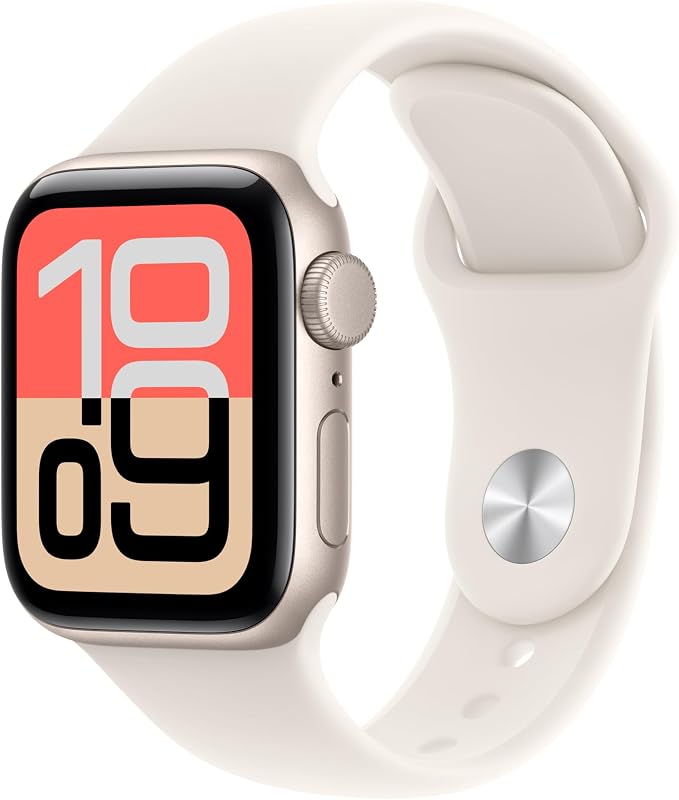
Pros
- Interactive watchOS with call and text capability
- Crash detection and hard fall emergency safety
- 64 GB internal storage for media and apps
- Always-On Display with Digital Crown navigation
Cons
- 18-hour battery demands daily charging
- Completely incompatible with Android smartphones
Who Should Buy Each One
Choose the Fitbit Charge 5 If
- You want up to 7 days of continuous battery life without the nuisance of daily charging schedules.
- You rely on an Android smartphone, or you want the freedom to switch between iOS and Android platforms freely.
- You prioritize dedicated wellness hardware including an on-wrist ECG app and an EDA sensor for stress management.
- You prefer a slender, lightweight band on your wrist that stays unobtrusive throughout the night for sleep tracking.
Choose the Apple Watch SE If
- You use an iPhone and desire a seamless extension for calls, text messaging, and native app notifications.
- You want essential personal safety tools, including severe car crash detection, hard fall detection, and automatic Emergency SOS.
- You exercise outdoors and want to store music, podcasts, and audio directly on a device with 64 GB of storage.
- You value an Always-On Display with tactile inputs like the Digital Crown and physical side buttons.
Final Verdict
The decision between the Fitbit Charge 5 and the Apple Watch SE ultimately hinges on whether your daily routine favors passive wellness monitoring or interactive smartwatch utility. For users whose primary goal is uninterrupted health optimization, the Fitbit Charge 5 provides exceptional value. Its multi-day battery life, built-in GPS, electrodermal activity stress tracking, and compatible ECG app make it a comprehensive recovery companion that effortlessly monitors your body across day and night without demanding constant maintenance.
However, for the committed iPhone owner, the Apple Watch SE is the superior overall wearable device. The combination of an Always-On Display, standalone 64 GB media storage, on-device Siri processing, and life-saving accident detection features creates an integrated personal assistant that far exceeds the scope of a standard fitness band. Unless continuous multi-day battery life is your non-negotiable priority, the expansive connectivity and safety suite of the Apple Watch SE make it the more capable daily companion.
FAQ
Can I use the Apple Watch SE with an Android phone?
No. The Apple Watch SE runs watchOS and requires a compatible iPhone for setup, configuration, and daily synchronization. In contrast, the Fitbit Charge 5 is fully compatible with both Apple iOS 15 or higher and Android OS 9 or higher, making it the only choice between the two for Android smartphone owners.
Is the Fitbit Charge 5 worth it without a Fitbit Premium subscription?
Yes, the Fitbit Charge 5 remains functional without Premium. Out of the box, it delivers real-time heart rate tracking, built-in GPS route tracking, Active Zone Minutes, standard Sleep Scores, and access to both the ECG app and EDA stress sensor. However, advanced predictive insights, such as the Daily Readiness Score and long-term sleep analytics, require maintaining the Premium membership after the included 6-month trial concludes.
Can the Apple Watch SE take an ECG reading?
No, the Apple Watch SE does not have an electrical heart sensor for taking on-demand ECG readings. It utilizes an optical heart rate sensor that monitors for unusually high or low heart rates and irregular heart rhythm notifications. If you require on-wrist ECG logging, the Fitbit Charge 5 provides that specific hardware tool.
Can I wear both devices while swimming?
Yes. The Fitbit Charge 5 is water-resistant up to 50 meters, making it suitable for pool swimming and showering. The Apple Watch SE is also designated as water-resistant by Apple, allowing it to withstand fitness pool workouts and daily water exposure, though the product listing does not specify an exact depth rating.
Can I store music on the Fitbit Charge 5 for phone-free runs?
No. The Fitbit Charge 5 does not support onboard music storage or playback controls. If you want to listen to music or podcasts while running with the Charge 5, you must carry your phone. The Apple Watch SE includes 64 GB of internal memory, allowing you to store media locally and stream directly to paired Bluetooth headphones without bringing your smartphone.
How does fast charging work on the Apple Watch SE?
The Apple Watch SE features accelerated charging architecture that performs up to twice as fast as the prior SE 2 generation. According to the manufacturer data, a brief 15-minute charge supplies up to 8 hours of battery life, making it easy to quickly top off the battery before tracking your sleep overnight.


