The single deciding factor between the Fitbit Versa 4 and the Fitbit Inspire 3 comes down to whether you want a full-featured smartwatch with standalone satellite tracking or an ultra-compact fitness band dedicated to unobtrusive health metrics. The Versa 4 packs built-in GPS, on-wrist voice calling, and Google ecosystem tools into a square modern watch casing, eliminating the need to take your phone on training sessions. In contrast, the Inspire 3 prioritizes a streamlined wrist presence that logs workouts, stress, and recovery using connected smartphone sensors without the added bulk of an interactive smartwatch display.
Choose the Fitbit Versa 4 if you want to track outdoor routes without carrying a mobile device and prefer managing phone notifications, navigation, and digital payments directly from your wrist. Choose the Fitbit Inspire 3 if you prefer an ultralight band that monitors your daily heart rate, irregular heart rhythms, and detailed sleep stages without the bulk of a large touchscreen.
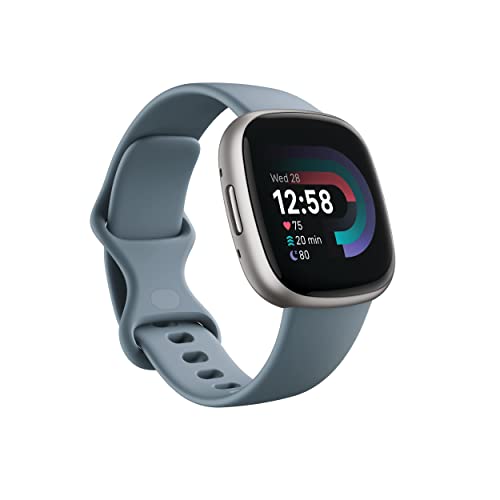

Fitbit Versa 4 vs Fitbit Inspire 3 at a Glance
| Feature | Fitbit Versa 4 | Fitbit Inspire 3 |
|---|---|---|
| Form Factor | Square smartwatch | Rectangular fitness band |
| Case Material | Stainless steel | Resin |
| GPS Tracking | Built-in GPS | GPS via smartphone |
| Voice and Calls | On-wrist Bluetooth calls, Amazon Alexa | Not supported |
| Contactless Payments | Fitbit Pay, Google Wallet | Not supported |
| Exercise Modes | 40+ exercise modes | 40+ exercise modes |
| Heart and Health Metrics | SpO2, 24/7 heart rate, skin temperature | SpO2, 24/7 heart rate, skin temperature, irregular heart rhythm notifications |
| Operating System Compatibility | Apple iOS 15 or higher, Android OS 9 or higher | Apple iOS 16.4 or higher, Android OS 11.0 or higher |
| Battery Life | 6+ days | Listing does not specify |
| Water Resistance | 50 meters | 50 meters |
| Best For | Athletes seeking standalone route tracking and wrist-based utilities | Users wanting lightweight 24/7 health tracking and sleep logging |
GPS Tracking and Outdoor Workout Accuracy
The method each tracker uses to record distance, pace, and route maps during outdoor workouts marks the biggest functional gap between these two wearables. The Versa 4 features an integrated satellite receiver that captures position data independently. When you step outside for a run, bike ride, or hike, the watch links directly to satellites to plot your route and generate a post-workout intensity map in the companion app. This capability eliminates the need to carry a heavy phone in your pocket or an armband during rigorous training. In our fitbit charge 5 vs versa 4 comparison, standalone tracking proved essential for distance athletes who prioritize minimal gear.
The Inspire 3 takes a tethered approach by using connected GPS, labeled in the manufacturer specifications as GPS via smartphone. The band does not possess an internal antenna to locate positioning satellites on its own. To capture distance, pace splits, and geographic routes, it relies entirely on a continuous Bluetooth connection to your nearby phone. If you leave your handset at home while jogging or cycling, the Inspire 3 will still record your steps, active duration, and heart rate data, but it cannot map your course or provide accurate pace updates. Evaluating the Fitbit Versa 4 or Inspire 3 for running highlights how carrying a phone shifts from a minor habit to a mandatory requirement on the slim tracker.
For individuals who train outdoors in varying weather conditions, standalone GPS provides substantial convenience and operational reliability. The Versa 4 operates at temperatures ranging from -14° to 113°F and altitudes up to 28,000 feet, making it a rugged companion for mountain treks and endurance sessions. While tethered tracking on the Inspire 3 preserves the tracker casing’s compact dimensions, it drains phone battery during long activities. When analyzing the Fitbit Versa 4 vs Inspire 3 GPS functionality, the independence of integrated hardware gives serious outdoor exercisers an undeniable performance advantage.
Edge: Fitbit Versa 4 provides standalone satellite mapping without forcing you to carry a smartphone during outdoor training.
Smartwatch Tools and Connected Convenience
Wrist-based connectivity defines the day-to-day user experience beyond athletic metrics. The Versa 4 functions as an interactive smartwatch running Fitbit OS, featuring an on-wrist speaker and microphone setup. This hardware enables on-wrist Bluetooth phone calls, allowing you to answer or decline incoming communications directly from your arm when your phone is within range. You also receive text alerts, calendar updates, and app alerts, alongside voice controls powered by Amazon Alexa built-in. Integrated Google Wallet and Fitbit Pay enable contactless wrist payments, while on-screen turn-by-turn navigation is supported through Google Maps.
The Inspire 3 keeps connectivity strictly functional to maintain its streamlined footprint. It handles fundamental notifications by vibrating to alert you to incoming calls, calendar events, and text messages sent to your paired phone, but it lacks two-way interactive hardware. You cannot accept phone calls on your wrist, reply to messages using speech-to-text, or query a digital voice assistant. The Inspire 3 also lacks Near Field Communication hardware, which means contactless payments through digital wallets are unsupported on this model.
Deciding between these options depends on how frequently you want to interact with your digital life without pulling out your mobile handset. If you regularly handle quick transactions at checkout counters or need to answer brief phone calls while cooking or exercising, the Versa 4 acts as a genuine phone extension. Readers researching options like the fitbit versa 4 vs garmin venu 3 often prioritize this level of lifestyle integration over basic fitness logging. The Inspire 3 satisfies users who only want gentle wrist vibrations when an alert arrives, keeping distractions minimal.
Edge: Fitbit Versa 4 dominates smartwatch functionality with Bluetooth calling, Alexa voice support, turn-by-turn navigation, and digital payments.
Design, Materials, and Daily Comfort
Physical hardware determines how comfortable each device feels during continuous 24/7 wear. The Versa 4 is built with a modern square chassis crafted from stainless steel, paired with a soft silicone band and a smooth touchscreen face. This premium metallic construction provides rigidity, water resistance up to 50 meters, and a substantial presence that resembles a classic digital timepiece. The larger square screen offers ample surface area to read multi-line text notifications, display comprehensive exercise stats simultaneously, and cycle through dense data screens.
The Inspire 3 opts for an ultra-narrow rectangular silhouette constructed from lightweight resin. Its minimalist shell fastens with a traditional tang buckle silicone strap, hugging the wrist closely to minimize snags on clothing sleeves or bedsheets. Like the Versa 4, the Inspire 3 is water-resistant to 50 meters, making it safe for pool sessions, showering, and sweaty training. However, the smaller screen size means stats are stacked in a vertical sequence, requiring frequent swiping to view real-time workout numbers compared to the spacious smartwatch panel.
The trade-off between these two form factors centers on aesthetic visibility versus physical stealth. The Versa 4 looks like a modern tech accessory that fits well in athletic settings, casual social outings, and professional environments. Conversely, the Inspire 3 is deliberately discreet, vanishing under long-sleeve shirts and workout layers. For users who dislike the sensation of wearing a bulky watch while typing at a desk or working out, the slim resin chassis of the Inspire 3 provides an unencumbered experience that larger smartwatches cannot duplicate.
Edge: Fitbit Inspire 3 wins on physical comfort and discreet wrist wear thanks to its featherweight resin shell and narrow profile.
Sleep Tracking and Health Metric Dashboards
Continuous recovery monitoring is a core pillar of the Fitbit ecosystem, and both devices provide extensive biometric logging. Each device tracks 24/7 resting heart rate, blood oxygen saturation through an integrated SpO2 sensor, and variation in skin temperature via the Health Metrics dashboard. Both devices calculate a daily Stress Management Score, guide mindful breathing exercises, and include menstrual health tracking tools. Users can also review their Daily Readiness Score-a personalized metric that indicates whether your body is prepared for strenuous exercise or requires rest, provided you maintain an active Fitbit Premium subscription.
Sleep analysis is exceptionally robust on both platforms, but practical usability differs when worn through the night. Deciding between the Fitbit Versa 4 or Inspire 3 for sleep tracking often hinges on physical bulk. The Versa 4 offers advanced Sleep Profiles for Premium members, daily sleep stages breakdown, a numerical Sleep Score, and smart wake vibrating alarms that wake you during optimal light sleep cycles. However, its broader stainless steel watch body can feel obtrusive to restless sleepers who toss and turn or dislike rigid metallic casings rubbing against their skin overnight.
The Inspire 3 delivers an identical core sleep tracking suite-automatic stage detection, detailed sleep scores, and silent vibrating smart wake alarms-inside an ultra-low-profile housing that is barely noticeable in bed. Furthermore, the Inspire 3 listing explicitly highlights irregular heart rhythm notifications, a feature that checks for signs of atrial fibrillation. As we noted in our fitbit sense 2 vs inspire 3 evaluation, lightweight trackers often generate cleaner long-term sleep records simply because users are far less likely to take them off before falling asleep.
Edge: Fitbit Inspire 3 takes the advantage for sleep tracking and long-term wellness monitoring due to its effortless overnight comfort and irregular heart rhythm alerts.
Battery Runtime and Operating System Compatibility
A fitness wearable is only effective if its battery allows for uninterrupted multi-day tracking. The Versa 4 listing specifies a 6+ day battery life, delivering sufficient endurance to track continuous heart rate, multiple workouts, overnight sleep stages, and connected app notifications on a single charge. However, using standalone GPS for extended outdoor training sessions will draw down battery reserves faster than baseline fitness logging. The listing for the Inspire 3 does not specify an exact battery duration figure, focusing instead on seamless everyday wear, though compact trackers in this class are engineered to avoid daily recharging cycles.
Operating system compatibility reveals an important distinction that could impact your device setup. The Versa 4 supports smartphones running Apple iOS 15 or higher and Android OS 9 or higher, allowing users with slightly older mobile devices to pair without software hurdles. The Inspire 3 requires more modern mobile operating systems, listing compatibility with Apple iOS 16.4 or higher and Android OS 11.0 or higher. If your smartphone runs an older operating system version, the Versa 4 offers broader backward compatibility across legacy platforms.
Software support extends further on the Versa 4 through its native integration with Google services. Following Google’s integration of Fitbit, the Versa 4 incorporates Google Wallet and Google Maps (noting that Google Maps on iOS was scheduled as an update following launch). Both devices include a 6-month trial membership to Fitbit Premium for new and returning users, unlocking guided workout programs, historical metric trends, and customized recovery analysis. However, the Versa 4 pairs that data analysis with transparent 6+ day manufacturer endurance ratings and broader operating system support.
Edge: Fitbit Versa 4 wins with confirmed 6+ day battery performance and broader compatibility with older smartphone operating systems.
Pros and Cons
Fitbit Versa 4

Pros
- Standalone built-in GPS tracking
- On-wrist Bluetooth calling support
- Confirmed 6+ day battery life
- Premium stainless steel case
- Fitbit Pay and Google Wallet
Cons
- Larger square smartwatch profile
- Heavier feel during overnight sleep
Fitbit Inspire 3

Pros
- Ultra-lightweight resin minimalist body
- Irregular heart rhythm notifications
- Exceptional comfort for sleep tracking
- 40+ integrated exercise modes
Cons
- Lacks built-in standalone GPS
- No on-wrist calls or payments
- Battery runtime not specified in listing
View Fitbit Inspire 3 on Amazon
Who Should Buy Each One
Choose the Fitbit Versa 4 If
- You run, walk, or cycle outside regularly and want built-in GPS tracking without carrying a smartphone.
- You want convenient smartwatch utilities like on-wrist Bluetooth calls, Google Wallet contactless payments, and Amazon Alexa voice queries.
- You prefer a larger, square touchscreen display that makes reading workout metrics and text notifications effortless.
- Your paired smartphone runs older software versions such as Android 9 or iOS 15.
Choose the Fitbit Inspire 3 If
- You prioritize an ultralight, narrow band that stays comfortable during sleep and 24/7 continuous wear.
- You want essential wellness metrics, including SpO2, skin temperature, and irregular heart rhythm notifications, without paying for unused smartwatch apps.
- You already carry your mobile phone during outdoor training runs and do not mind using connected GPS.
- You prefer a minimalist aesthetic that blends discreetly alongside jewelry or under long-sleeved clothing.
Final Verdict
For most athletes and active individuals comparing these two models, the Versa 4 is the superior overall device. Its standalone GPS hardware untethers your outdoor training sessions from your phone, while on-wrist Bluetooth calling, Google Wallet payments, and Alexa integration make it a genuine lifestyle companion. The durable stainless steel case and expansive square touchscreen present metrics clearly mid-workout, creating a versatile package that bridges fitness monitoring and modern smartwatch utility. If you want a complete training watch that operates independently outdoors, the Versa 4 justifies its place on your wrist.
On the other hand, the Inspire 3 represents the ideal choice for purists who want non-intrusive health logging without the screen real estate of a conventional smartwatch. If your primary goals are tracking resting heart rate, reviewing daily sleep stages, checking irregular heart rhythm notifications, and calculating your Daily Readiness Score, the Inspire 3 accomplishes those tasks admirably. By trading away standalone GPS and calling hardware, it provides exceptional overnight comfort in an ultra-compact resin case. Reviewing our fitbit charge 6 vs inspire 3 analysis reveals a similar pattern: for effortless everyday health tracking, the minimalist band remains unmatched.
FAQ
Does the Fitbit Inspire 3 have built-in GPS?
No, the Inspire 3 does not have built-in GPS hardware. It utilizes GPS via smartphone, meaning it must stay linked to your phone over Bluetooth during outdoor workouts to calculate distance, track pace splits, and generate a post-exercise route map.
Can you take phone calls on the Fitbit Versa 4?
Yes, the Versa 4 features an integrated microphone and speaker that support on-wrist Bluetooth phone calls when paired with a compatible smartphone within wireless range. The Inspire 3 only vibrates for call notifications and cannot receive audio.
Which device is better for sleep tracking?
While both devices record detailed sleep stages, sleep scores, and SpO2 variations, the Inspire 3 is generally better for sleep tracking because of its slim, lightweight resin form factor. It is significantly less noticeable on the wrist overnight than the larger stainless steel Versa 4.
What is the battery life difference between both models?
The Versa 4 listing specifies a 6+ day battery life during normal operation, although running standalone GPS continuously will reduce runtime. The manufacturer listing for the Inspire 3 does not specify an exact day count for its battery duration.
Is the Fitbit Versa 4 worth it if you always run with a phone?
The Versa 4 can still be worthwhile if you run with your phone, provided you value its larger display for real-time stat checks, on-wrist Bluetooth calling, Google Wallet payments, and Amazon Alexa voice control. However, if you do not need those smartwatch conveniences, a simpler band will fulfill basic tracking needs.
Do both devices require a Fitbit Premium subscription to work?
No, both wearables function without a paid subscription for baseline fitness logging, heart rate tracking, steps, and standard sleep metrics. However, advanced features such as the Daily Readiness Score, personalized Sleep Profiles, and in-depth health analytics require a Fitbit Premium membership, which includes a 6-month trial with both purchases.

