The central choice between the Fitbit Versa 4 and the Garmin Venu 3 comes down to long-range battery endurance and dedicated athletic metrics versus simplified everyday wellness tracking. Garmin equips its watch with a fourteen-day battery reserve, an AMOLED touchscreen, and detailed physiological recovery tools, while Fitbit prioritizes guided health habits, accessible interface navigation, and lightweight comfort.
Choose the Fitbit Versa 4 if you want an approachable fitness companion with built-in daily readiness insights, guided mindfulness, and smooth mobile software integration. Choose the Garmin Venu 3 if you demand extended battery performance, in-depth training metrics, and advanced recovery tracking built for active lifestyles.
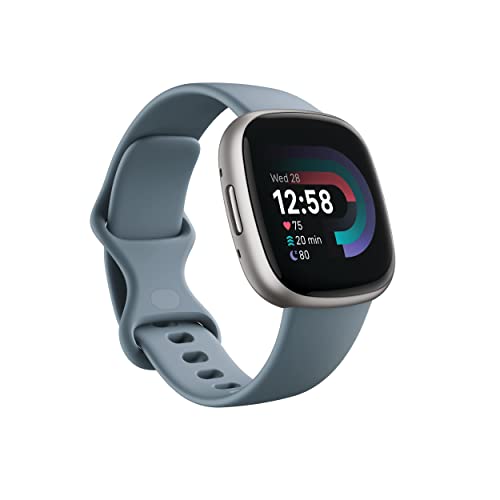

Fitbit Versa 4 vs Garmin Venu 3 at a Glance
| Feature | Fitbit Versa 4 | Garmin Venu 3 |
|---|---|---|
| Case Shape | Square | Round |
| Case Material | Stainless Steel | Alloy Steel with Steel Bezel |
| Display Type | Touchscreen | 1.4-inch AMOLED |
| Battery Life | 6+ days | Up to 14 days |
| Water Resistance | 50 meters | 50 meters |
| Location Tracking | Built-in GPS | GPS enabled |
| Energy & Readiness | Daily Readiness Score | Body Battery Energy Monitoring |
| Sleep Analysis | Sleep Profile, Sleep Stages & Score | Sleep Coach & Sleep Duration |
| Voice & Audio Interface | Amazon Alexa, on-wrist Bluetooth calls | Microphone for voice input |
| Best For | Everyday wellness and casual activity | Dedicated athletic training and stamina tracking |
Battery Life and Power Endurance
Battery longevity dictates how seamlessly a smartwatch integrates into your weekly schedule. Frequent charging breaks interrupt continuous metric collection, particularly overnight physiological tracking. When comparing Garmin Venu 3 battery life against Fitbit Versa 4 battery life, the operational capacity between charges creates two distinct user experiences.
The Garmin Venu 3 leads this category with up to 14 days of power on a single charge in smartwatch mode. This extended capacity enables you to run continuous background tracking, monitor nocturnal metrics, and record multiple outdoor workout sessions across two full weeks without packing a charging cable. In contrast, any comprehensive Fitbit Versa 4 review must highlight its respectable 6+ day battery life. While six days outpaces standard lifestyle smartwatches, it requires recharging more than twice as often as the Garmin counterpart.
For individuals who travel frequently or dislike frequent charging routines, the extended capacity of the Venu 3 eliminates charging anxiety. The Versa 4 offers fast top-ups, but the necessity of docking every few days means you are more likely to miss recovery data if you forget the charging cradle before bed. Readers exploring wearable longevity across other models can compare alternatives in our fitbit charge 6 vs garmin venu 3 breakdown.
Edge: Garmin Venu 3 delivers more than double the operational life between charges with up to 14 days of uptime.
Display Quality and Physical Design
A wearable display determines screen readability during rapid outdoor workouts and dictates how the device looks in social environments. The structural housing also affects long-term durability and wrist comfort during strenuous training or sleep.
Evaluating the Garmin Venu 3 vs Versa 4 display demonstrates two diverging visual philosophies. The Venu 3 incorporates a vibrant 1.4-inch AMOLED panel housed within a traditional round 45mm form factor. Its alloy steel case and steel bezel present a refined aesthetic that bridges performance athletic wear and formal styling. The Fitbit Versa 4 adopts a modern square silhouette crafted with a stainless steel case and a silicone band, prioritizing a low-profile, ergonomic fit that hugs the wrist closely during daily chores and workouts.
While the touchscreen on the Versa 4 provides clear visual feedback and smooth swipe navigation through Fitbit OS, the crisp circular AMOLED panel of the Venu 3 maximizes visual clarity under harsh outdoor sunlight. The round aesthetic gives the Venu 3 the classic appearance of a high-end sports timepiece, whereas the Versa 4 embraces the streamlined look of an activity tracker. Those considering compact alternatives might also examine our fitbit versa 4 vs inspire 3 overview.
Edge: Garmin Venu 3 stands out with its vivid 1.4-inch circular AMOLED screen paired with an alloy steel bezel.
Health Monitoring and Daily Recovery
Continuous health monitoring should translate biometric signals into practical lifestyle guidance. Both brands utilize specialized optical sensors to evaluate recovery, stress loads, and blood oxygen saturation, yet they package this data through different analytical models.
The Fitbit Versa 4 utilizes a Daily Readiness Score alongside a comprehensive health metrics dashboard that tracks SpO2, heart rate variability, and skin temperature trends. It provides structured guided breathing sessions, reflection logging, and a daily Stress Management Score. It is worth noting that accessing advanced analytics and the full Daily Readiness breakdown requires a recurring Fitbit Premium subscription after the bundled 6-month trial concludes. If you want to see how this ecosystem compares across other lines, look at our fitbit sense 2 vs garmin venu 3 comparison.
The Garmin Venu 3 relies on proprietary Body Battery Energy Monitoring to evaluate your daily physical resources. Rather than waiting for a morning score, Body Battery updates dynamically throughout the day, showing how stress, short breaks, and physical exertion influence your remaining energy reserves. The watch measures blood oxygen, sleep duration, and heart rate directly on the wrist without locking recovery metrics behind an ongoing paid subscription paywall. When weighing whether is Garmin Venu 3 worth it, the unhindered access to native metrics provides enduring utility.
Edge: Garmin Venu 3 delivers real-time energy tracking with Body Battery without requiring an ongoing paid subscription.
Fitness Tracking and Running Metrics
Workout performance monitoring requires responsive satellite tracking and diverse exercise profiles to accurately document training volume. Whether you run through neighborhood streets or complete indoor gym sessions, accurate pace and heart rate data drive improvement.
Choosing the Fitbit Versa 4 or Garmin Venu 3 for running highlights notable differences in athletic focus. The Versa 4 features 40+ exercise modes, automatic exercise tracking, Active Zone Minutes, and built-in GPS. After an outdoor workout, the companion mobile application displays a workout intensity map highlighting pace and effort zones across your route. The watch is water-resistant to 50 meters, making it well-suited for pool swimming and varied fitness routines. You can see how this compares to dedicated fitness bands in our fitbit charge 5 vs versa 4 analysis.
In any rigorous Garmin Venu 3 review, its athletic pedigree is immediately apparent. The device is built explicitly around advanced fitness and running tracking, utilizing built-in GPS location tools to record precise splits, pacing, and biometric outputs. While the Versa 4 excels at general fitness tracking and rewarding basic daily movement, the Venu 3 provides granular performance tracking that helps runners plan recovery, balance workout loads, and avoid overtraining.
Edge: Garmin Venu 3 provides deeper athletic feedback and performance tracking for dedicated runners.
Sleep Tracking and Sleep Coaching
Restorative sleep serves as the cornerstone of physical recovery and cognitive performance. Smartwatches track movement and heart rate metrics to score rest quality, but how they interpret those hours determines their overall helpfulness.
Determining whether to choose the Fitbit Versa 4 or Garmin Venu 3 for sleep tracking involves evaluating guided sleep profiles against real-time coaching. Fitbit has long set the benchmark for consumer sleep analysis. The Versa 4 tracks daily sleep stages, generates a consolidated Sleep Score, provides a smart wake alarm, and delivers a personalized Sleep Profile that analyzes long-term rest habits over monthly intervals. These actionable insights make sleep trends intuitive, although the long-term Sleep Profile feature is tied to the Fitbit Premium subscription.
Garmin counters with its integrated Sleep Coach and sleep duration tracking on the Venu 3. Instead of simply rating past sleep, Garmin’s Sleep Coach offers actionable suggestions on how much sleep you need based on recent activity, stress levels, and historical recovery data. While the Versa 4 delivers an exceptionally detailed visual breakdown of sleep architectures, the Venu 3 links your sleep directly to the Body Battery metric to project physical performance for the following day. Additional wrist-based comparisons are explored in our fitbit inspire 3 vs garmin venu 3 review.
Edge: Fitbit Versa 4 offers an easier-to-read, comprehensive sleep analysis with its mature sleep stage algorithms.
Smart Features and Connectivity
Beyond training metrics, a modern smartwatch handles phone communication, digital payments, and voice queries directly from your wrist. Software compatibility and microphone hardware dictate how effectively you interact with incoming alerts.
The Versa 4 brings strong connected utilities to daily wear. It includes on-wrist Bluetooth calls, text replies, phone notifications, customizable clock faces, and Fitbit Pay. Through its integration with Google, it supports Google Wallet and Google Maps for turn-by-turn navigation, alongside Amazon Alexa built-in for voice tasks. Operating on Fitbit OS, it supports both Android OS 9+ and Apple iOS 15+, delivering balanced smartwatch functionality across mobile operating systems.
The Garmin Venu 3 features an integrated microphone for voice functionality and Bluetooth calling when paired with your phone. The listing indicates an Android Wear operating environment, delivering wide app notification support, blood oxygen checks, and media interactions. Both models feature 50-meter water resistance and responsive notifications, but the Versa 4 benefits from the seamless utility of Google Maps and Alexa voice integration right out of the box.
Edge: Fitbit Versa 4 edges ahead with integrated Google Maps navigation and Amazon Alexa support.
Pros and Cons
Fitbit Versa 4

Pros
- Lightweight square stainless steel housing
- Over six days of battery life
- Integrated Google Maps and Amazon Alexa
- Mature sleep stage and sleep score tracking
Cons
- Key readiness metrics require Premium subscription
- Shorter battery life than Venu 3
Garmin Venu 3

Pros
- Up to 14 days of battery life
- Vibrant 1.4-inch AMOLED display
- Body Battery tracking with no subscription fee
- Integrated microphone for voice interaction
Cons
- Larger 45mm round case on smaller wrists
- More complex interface for casual users
Who Should Buy Each One
Choose the Fitbit Versa 4 If
- You prefer a lightweight, square stainless steel watch casing that sits unobtrusively on the wrist.
- You want guided health habits, including structured mindfulness content, reflection logging, and detailed Sleep Profiles.
- You prioritize integration with Google Maps and Amazon Alexa for everyday voice assistance and navigation.
- You want accessible, easy-to-read wellness tracking without navigating complex athletic metrics.
Choose the Garmin Venu 3 If
- You demand exceptional battery endurance with up to 14 days of power between charges.
- You want a round 45mm smartwatch featuring a bright 1.4-inch AMOLED display and a steel bezel.
- You rely on real-time energy tracking via Body Battery without paying for an ongoing monthly subscription.
- You are a runner or athlete seeking deep performance metrics, sleep coaching, and detailed physiological data.
Final Verdict
The Garmin Venu 3 emerges as the stronger all-around performance wearable for buyers who prioritize stamina, hardware quality, and comprehensive athletic tracking. Its up to 14-day battery life liberates you from the charging dock, while its 1.4-inch AMOLED panel and alloy steel construction provide premium durability. With native Body Battery tracking, Sleep Coach, and deep physiological analytics available without a paid subscription, the Venu 3 justifies its standing as a powerful training companion for dedicated athletes.
The Fitbit Versa 4 remains an appealing option for individuals focused on daily lifestyle wellness, casual workouts, and smart ecosystem perks. Its 6+ day battery life remains competitive against standard smartwatches, and its compact square body offers superior comfort for overnight sleep tracking. If you want intuitive step counting, accessible sleep stages, and useful wrist tools like Google Maps and Alexa without the complexity of deep athletic graphs, the Versa 4 delivers a dependable, user-friendly package.
FAQ
Can I make phone calls directly on the Fitbit Versa 4 and Garmin Venu 3?
Yes. Both watches support on-wrist Bluetooth calling when tethered to a compatible smartphone within Bluetooth range. The Fitbit Versa 4 includes on-wrist Bluetooth calls alongside phone notifications, and the Garmin Venu 3 incorporates an onboard microphone to handle voice tasks and incoming calls.
How does the Garmin Venu 3 battery life compare to the Fitbit Versa 4?
The Garmin Venu 3 delivers significantly longer runtime, offering up to 14 days of battery life in smartwatch mode. The Fitbit Versa 4 provides 6+ days of battery life, which is capable for everyday tracking but requires recharging more than twice as often as the Venu 3.
Does the Fitbit Versa 4 require a paid subscription to view health data?
The Versa 4 tracks core metrics like heart rate, steps, Active Zone Minutes, and baseline sleep stages without a fee. However, advanced features such as the full Daily Readiness Score breakdown, historical trend reports, and personalized Sleep Profiles require a Fitbit Premium subscription following the included 6-month trial.
Are both the Versa 4 and Venu 3 suitable for swimming?
Yes. Both the Fitbit Versa 4 and the Garmin Venu 3 feature a water resistance depth rating of 50 meters. This level of protection makes both devices fully capable of tracking pool swimming sessions, showering, and handling outdoor exercise in heavy rain.
Does the Garmin Venu 3 have a touchscreen?
Yes. The Garmin Venu 3 features a 1.4-inch AMOLED touchscreen display. Users can swipe and tap through menus, widgets, and workout tracking screens, complemented by responsive physical side buttons and voice controls via the integrated microphone.
Which watch is better for running between the Versa 4 and Venu 3?
The Garmin Venu 3 is better suited for serious runners due to its advanced physiological metrics, dedicated running profiles, and continuous Body Battery energy tracking. While the Fitbit Versa 4 includes built-in GPS and 40+ exercise modes, its workout summaries focus more on general fitness and Active Zone Minutes rather than in-depth athletic training analysis.

