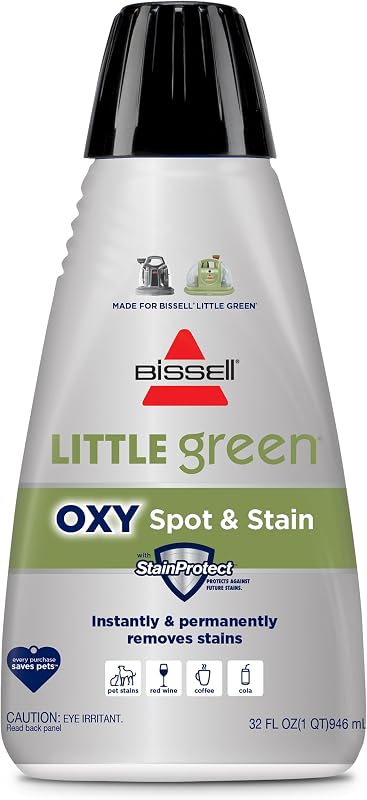
The choice between the Levoit Eleva 300X and the Blueair Blue 511 comes down to whether you prioritize diagnostic allergen control with modular maintenance or a featherweight, plug-and-play footprint built for quiet circulation. The Eleva 300X delivers multi-tier particulate monitoring and system-sealed filtration designed specifically to tackle complex domestic irritants, whereas the Blue 511 focuses strictly on mechanical minimalism, low power consumption, and zero-fuss bedroom operation.
Choose the Levoit Eleva 300X if you struggle with persistent indoor allergies and want live particulate tracking across three distinct particle bands alongside separate filter replacements. Choose the Blueair Blue 511 if you want an ultra-compact, whisper-quiet air cleaner that slots seamlessly onto a bedside table without complex menus or heavy housing.


Levoit Eleva 300X vs Blueair Blue 511 at a Glance
| Attribute | Levoit Eleva 300X | Blueair Blue 511 |
|---|---|---|
| Dimensions | 9.4 x 9.4 x 15.1 inches | 7.9 x 7.9 x 13.9 inches |
| Weight | 7.7 pounds | 5.24 pounds |
| Model Number | LAP-C341S-WUSZ | 3131000000 |
| Filtration Technology | 3-Stage Sealed HEPA (ASTM F3150-18) & DuoShield Carbon | HEPASilent Technology (tested on PM 2.5) |
| Particulate Sensing | 3-Channel Optical Sensor (PM1, PM2.5, PM10) | Not listed |
| Filter Architecture | Modular dual-filter (HEPA and Carbon replace separately) | Integrated single composite filter |
| Stated Filter Lifespan | Up to 2 years (GB/T18801 standard) | Not listed |
| Stated Coverage & Speed | Allergen-focused bedroom delivery (CADR basis) | 180 sq ft in 12.5 min / 432 sq ft in 30 min (AHAM AC-1) |
| Acoustic Benchmark | Not listed | Whisper sound pressure on low (~30 dB baseline) |
| Best For | Allergy sufferers wanting live air data and long-life modular filters | Compact bedrooms, dorms, and personal desks requiring silent simplicity |
Filtration System and Allergen Defense
Purifier engineering centers entirely on how air passes through the internal media and whether particles can bypass the seal. The Levoit Eleva 300X introduces a system-level sealed HEPA filtration assembly tested against the ASTM F3150-18 standard. In real-world living spaces, unsealed purifier frames often permit air leakage around the periphery of the filter cartridge, letting unfiltered dust slip straight back into the room. Levoit’s three-stage design isolates air movement through the primary physical barriers, ensuring that captured microscopic allergens remain locked inside the chassis. Furthermore, its DuoShield technology splits the HEPA layer from the activated carbon stage, allowing owners to customize and handle odor absorption separately from ultrafine mechanical capture.
The Blueair Blue 511 relies on the manufacturer’s proprietary HEPASilent technology. This method pairs mechanical filtration media with electrostatic charging, allowing air to flow across less dense physical fibers while still trapping airborne matter. Testing cited by the manufacturer indicates effective capture down to PM 2.5 ranges (specifically spanning 0.1 to 2.5 microns) over operational durations of up to 90 minutes. Because the internal media requires less mechanical resistance to pull air through, the motor works under reduced strain, keeping operational sound levels low. However, unlike the sealed enclosure testing published for the Eleva 300X, the Blue 511 listing does not cite whole-machine chamber certifications such as ASTM F3150-18. If your household struggles heavily during spring pollen surges or wildfire events, you might also compare larger units like the levoit eleva 300x vs winix 5500-2 to evaluate sealed stage mechanics.
When assessing this matchup specifically for seasonal sensitivities or household dander, the hardware difference becomes evident. The Eleva 300X offers a robust physical boundary designed to eliminate internal bypass, backed by customized carbon treatments that target specific household odors. The Blue 511 captures fine dander and dust efficiently for everyday domestic freshness, but its single-chassis filtration stack is aimed primarily at standard particulate clearing rather than severe multi-pollutant isolation. For households weighing the Levoit Eleva 300X or Blueair Blue 511 for allergies, the structural sealing of the Eleva gives it a decisive technical advantage.
Edge: Levoit Eleva 300X, due to its system-level sealed HEPA design verified by ASTM F3150-18 and independent DuoShield carbon separation.
Air Quality Monitoring and Sensor Capabilities
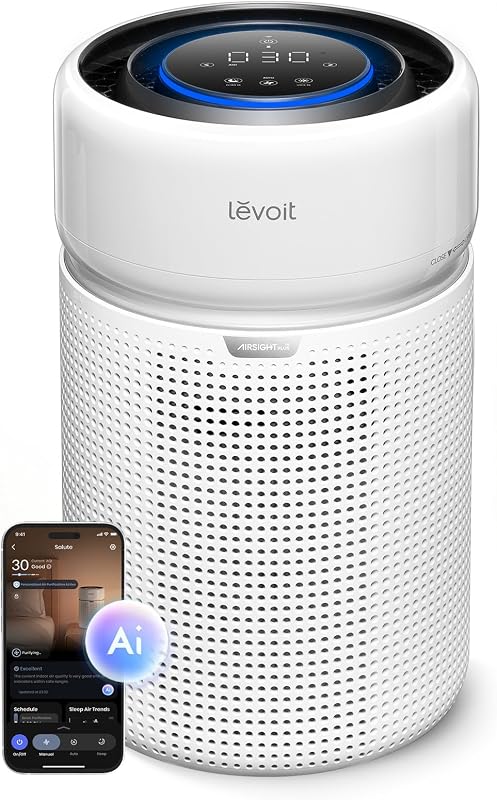
Understanding what is floating in your bedroom air dictates how quickly you adjust your machine’s fan speed. The Eleva 300X incorporates a 3-channel onboard diagnostic sensor array that simultaneously tracks PM1, PM2.5, and PM10 particulate levels. This distinction is critical for indoor environments. PM1 represents ultrafine combustion particles and smoke, PM2.5 covers common fine dust and biological aerosols, while PM10 accounts for coarse matter like mold spores, pollen grains, and large pet dander flakes. By separating these three particulate size categories, the Eleva 300X eliminates guesswork, showing whether a spike is caused by fine outdoor haze or heavy bedroom dust kicked up by changing the bed linens.
In contrast, the Blueair Blue 511 does not feature an onboard air quality sensor or multi-channel diagnostic display. Its engineering concept revolves strictly around plug-and-play operation. You turn the unit on, select your preferred fan speed manually, and allow it to run continuously without continuous air feedback. For users who prefer complete operational minimalism without glowing screens or dynamic automatic fan shifting, this absence removes complexity. However, it also means you will never know your ambient particulate concentration unless you pair the room with a standalone external particle counter. Shoppers examining modern diagnostic purifiers can look at how larger smart units behave in our levoit eleva 300x vs levoit core 400s breakdown.
From an operational standpoint, having real-time three-channel telemetry transforms how you manage room ventilation. When you open a window and outdoor dust rushes in, the Eleva 300X immediately displays which particle boundary has spiked. With the Blue 511, you must manually guess when to toggle between low and high speeds based purely on personal perception or routine schedule. The complete absence of monitoring hardware on the Blue 511 limits its functionality to basic continuous scrubbing rather than responsive purification.
Edge: Levoit Eleva 300X, thanks to its sophisticated 3-channel sensor that differentiates between PM1, PM2.5, and PM10 particles.
Filter Life and Maintenance Practicality
Filter replacement schedules directly dictate the ongoing maintenance routine and physical effort required over years of ownership. In any Levoit Eleva 300X review, the filter longevity stands out as a core design pivot. The unit features an extended lifespan rated for up to 2 years, based on GB/T18801 testing protocols measured to a 50% CADR decline when operating 12 hours daily on maximum speed. More importantly, the DuoShield architecture allows the HEPA component and the activated carbon element to be swapped on separate timetables. Activated carbon frequently saturates with odors and volatile compounds long before a mechanical HEPA filter becomes clogged with dust. Being able to change the carbon filter alone prevents premature disposal of perfectly functional particle media.
The Blueair Blue 511 relies on a unified filter layout built directly into its compact cylinder. The manufacturer listing does not publish a multi-year rating comparable to the GB/T18801 standard cited by Levoit. Instead, standard maintenance for the Blue series typically involves running the combined filter element until overall airflow declines or replacement reminders trigger, at which point the entire filter cartridge is discarded. Because the carbon and particle layers are integrated into a single physical unit, exposure to heavy cooking odors or pet smells requires replacing the complete assembly even if the particulate fibers still have service life remaining. If you want to see how this compact format compares against bigger modular frames, consider reviewing the levoit core 400s vs blueair blue 511 matchup.
When considering long-term ownership, the Levoit Eleva 300X filter life reduces the physical hassle of buying, unboxing, and fitting new cartridges every few months. Running a single main filter for up to 24 months under moderate daily use cuts down on residential waste and minimizes maintenance chores. The Blue 511 is simple to swap when the time comes-thanks to its straightforward drop-in form factor-but its combined structure lacks the granular maintenance efficiency of Levoit’s modular dual-filter system.
Edge: Levoit Eleva 300X, providing up to 2 years of verified filter life and independent replacement of HEPA and carbon layers.
Room Coverage and Airflow Delivery
Air circulation metrics show how quickly a machine turns over the air volume inside an enclosed space. The Blueair Blue 511 provides precise AHAM AC-1 Clean Air Delivery Rate (CADR) timeframes directly in its specification sheet. Operating on its highest fan speed, the Blue 511 can clean an 180-square-foot room in approximately 12.5 minutes, or turn over a 432-square-foot space in 30 minutes. Its retail listing highlights an overall service boundary capable of handling spaces up to 907 square feet over extended operational periods. These numbers demonstrate that despite its petite dimensions, the internal fan and low-resistance HEPASilent media drive consistent air turnover in standard bedrooms, personal offices, and college dorms.
The Levoit Eleva 300X specifies its target environment as bedroom air purification tuned specifically for allergen defense, utilizing GB/T18801 standardized CADR testing to establish its 50% airflow decline benchmark. While the Blue 511 publishes rapid single-turnover times for 180 and 432 square feet via AHAM benchmarks, the Eleva 300X leverages a deeper internal chassis measuring 9.4 inches across to draw air evenly through its sealed 3-stage barrier. You can see how Levoit sizes its broader family against premium alternatives in our levoit eleva 300x vs dyson tp07 comparison.
For small-to-average rooms, both machines circulate enough clean air to keep dust, dander, and stale odors in check. However, Blueair provides transparent, standardized turnaround metrics for quick room flushes, verifying that a typical bedroom can undergo rapid air exchanges in under 15 minutes on boost mode. While the Eleva 300X processes air thoroughly through a more tightly sealed enclosure, the Blue 511 offers clearly documented speed intervals across multiple room dimensions up to 907 square feet.
Edge: Blueair Blue 511, due to its documented AHAM AC-1 turnover metrics of 180 square feet in 12.5 minutes and broad coverage ratings up to 907 square feet.
Size, Weight, and Bedroom Placement
Physical footprint and acoustic intrusion play a huge role when selecting a purifier for a bedside nightstand or compact workspace. The Blueair Blue 511 is engineered explicitly as Blueair’s most compact air purifier. Measuring 7.9 x 7.9 x 13.9 inches and weighing an exceptionally light 5.24 pounds, the Blue 511 is remarkably easy to lift, reposition, and tuck into cramped quarters. Its low-speed acoustic output is benchmarked around 30 dB-the sound pressure of a soft whisper. Furthermore, its operational draw on low is comparable to an energy-efficient light bulb (defined in testing as an LED baseline of 40 watts consumption), making it an unobtrusive companion for light sleepers.
The Levoit Eleva 300X is noticeably more substantial. With dimensions of 9.4 x 9.4 x 15.1 inches and a weight of 7.7 pounds, it takes up more real estate on a dresser or floor corner. While still thoroughly manageable within a bedroom layout, the added bulk reflects its sealed casing, complex internal fan housing, and dual-filter modular bays. If you need a machine that can sit on an elevated bookshelf without overwhelming the structural load or visual space, the smaller footprint of the Blue 511 is distinctly superior. Those considering even larger units can examine the levoit vital 200s vs blueair blue 511 for wider contextual sizing.
Noise management during sleep is paramount. In evaluating the Blueair Blue 511 noise level, the combination of electrostatic charging and porous HEPASilent media allows the motor to push air quietly without the high-pitched buffeting common in densely packed HEPA boxes. The Eleva 300X is purpose-built for bedroom quietness as well, but its heavier frame and tight mechanical sealing demand more forceful air draw. For shoppers who want the absolute lightest, most low-profile unit for bedside placement, the Blue 511 holds a clear spatial edge.
Edge: Blueair Blue 511, offering a 5.24-pound lightweight frame, a narrower 7.9-inch profile, and whisper-quiet baseline operation.
Pros and Cons
Levoit Eleva 300X
Pros
- 3-channel PM1, PM2.5, and PM10 sensor
- System-level sealed HEPA per ASTM F3150-18
- Up to 2-year filter lifespan
- Modular separate HEPA and carbon filters
Cons
- Heavier 7.7-pound chassis
- Larger footprint than the Blue 511
View Levoit Eleva 300X on Amazon
Blueair Blue 511

Pros
- Ultra-light 5.24-pound compact build
- Cleans 180 sq ft in 12.5 minutes
- Low 30 dB whisper-quiet baseline
- Simple plug-and-play mechanical operation
Cons
- No onboard air quality sensor
- Combined filter lacks modular replacement
View Blueair Blue 511 on Amazon
Who Should Buy Each One
Choose the Levoit Eleva 300X If
- You suffer from seasonal or chronic respiratory allergies and require ASTM F3150-18 system-level sealed HEPA filtration to eliminate bypass.
- You want granular visibility into your indoor environment via a 3-channel sensor that separates PM1, PM2.5, and PM10 particles.
- You prefer a modular dual-filter system where the activated carbon can be replaced independently of the primary HEPA element.
- You want long-term convenience backed by up to 2 years of rated filter lifespan under standard daily use.
Choose the Blueair Blue 511 If
- You need a lightweight, compact purifier weighing just 5.24 pounds that fits easily onto small bedside tables or dorm desks.
- You prefer pure plug-and-play simplicity without complicated menus, digital telemetry screens, or multi-button setups.
- You want verified rapid room turnover capable of clearing an 180-square-foot room in roughly 12.5 minutes on high.
- You are a sensitive sleeper who prioritizes whisper-level acoustic output around 30 dB during overnight operation.
Final Verdict
When weighing the Levoit Eleva 300X vs Blueair Blue 511, the Levoit Eleva 300X emerges as the superior choice for allergy defense and technical performance. Its system-level sealed HEPA construction prevents microscopic particles from escaping around the cartridge boundaries, while its 3-channel optical sensor provides actionable insight into PM1, PM2.5, and PM10 contaminants. Combined with DuoShield modular filters that allow you to swap carbon and HEPA layers independently over an impressive 2-year lifespan, the Eleva 300X delivers comprehensive protection for demanding indoor environments.
The Blueair Blue 511 remains an outstanding selection for readers who value physical minimalism and plug-and-play simplicity above all else. If you do not need real-time particulate telemetry and simply want a lightweight 5.24-pound machine that operates at a quiet 30 dB whisper on low while cycling a 180-square-foot room every 12.5 minutes, the Blue 511 fits the brief effortlessly. For basic room air movement and small-footprint living, Blueair delivers dependable mechanical scrubbing, but Levoit takes the overall crown for thorough bedroom allergen defense.
Frequently Asked Questions
Does the Blueair Blue 511 display indoor air quality numbers?
No, the Blueair Blue 511 does not feature an onboard air quality sensor or digital readout. It is designed as a simple plug-and-play unit where you manually adjust fan speeds without automated particle detection or numeric pollution displays.
How does the 3-channel sensor on the Levoit Eleva 300X work?
The 3-channel optical sensor on the Levoit Eleva 300X measures three distinct particle sizes: PM1 (ultrafine smoke and fumes), PM2.5 (fine dust and combustion aerosols), and PM10 (pollen, coarse dust, and pet dander). This allows the purifier to detect and report both fine and coarse indoor pollutants accurately.
How often do you need to replace the filter on the Levoit Eleva 300X?
The Levoit Eleva 300X filter is rated to last up to 2 years based on GB/T18801 testing standards running 12 hours daily on maximum fan speed. Furthermore, its DuoShield system allows the activated carbon filter to be replaced independently from the main HEPA filter when odor saturation occurs.
Is Blueair Blue 511 worth it for a small bedroom or dorm room?
Yes, the Blueair Blue 511 is well suited for small bedrooms, offices, and dorm rooms. Weighing just 5.24 pounds with an 7.9-inch square footprint, it circulates air in an 180-square-foot space in approximately 12.5 minutes while operating at whisper-quiet sound levels around 30 dB on low.
What does system-level sealed HEPA filtration mean on the Levoit Eleva 300X?
System-level sealed filtration, certified under ASTM F3150-18 on the Levoit Eleva 300X, ensures that all air drawn into the purifier passes completely through the internal HEPA filter stages rather than leaking around the edges of the filter frame back into the room.
Can the activated carbon filter be replaced separately on the Blueair Blue 511?
No, the Blueair Blue 511 utilizes a single integrated filter assembly. When replacing the filter media, the combined particle and carbon layers are discarded together rather than serviced as independent modular components.