The single deciding factor between these two air purifiers comes down to room scale: the Coway Airmega 400 is engineered to circulate air across sprawling, open-concept floor plans up to 3,120 square feet, whereas the Winix 5500-2 is built to handle single large bedrooms and living areas up to 1,881 square feet.
Choose the Coway Airmega 400 if you want maximum cubic-foot airflow, dual air intakes, and true whole-home circulation from a single central placement. Choose the Winix 5500-2 if you need a lighter, compact unit featuring PlasmaWave technology to purify high-traffic family rooms and standard large master suites.
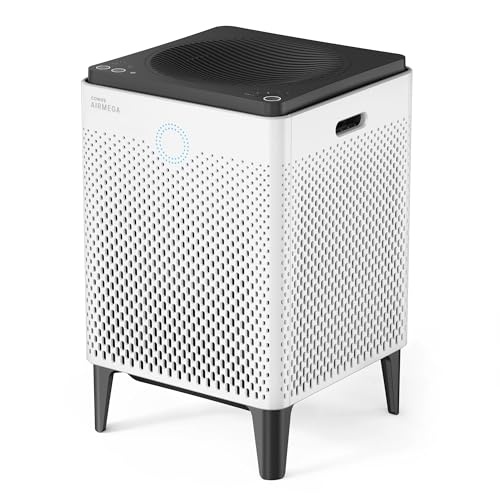

Coway Airmega 400 vs Winix 5500-2 at a Glance
| Feature | Coway Airmega 400 | Winix 5500-2 |
|---|---|---|
| Cleaning Coverage (60 Minutes) | Up to 3,120 sq. ft. | Up to 1,881 sq. ft. |
| Filtration Stages | HyperCaptive System (Pre-filter, Active Carbon, True HEPA) | 4-Stage System (Pre-filter, High Deodorization Carbon, True HEPA, PlasmaWave) |
| Particle Capture Claim | 99.97% of 0.3-micron particles (0.01-micron tested) | 99.99% of particles down to 0.01 microns |
| Sensor and Air Monitoring | Pollution and light sensors with colored AQI ring | Smart sensors with visual air quality representation |
| Operating Modes | Smart Mode, Eco Mode, Sleep Mode, Timer | Auto Mode, Sleep Mode |
| Minimum Noise Output | 22 dB | Not listed |
| Power Consumption | 66 watts | Not listed |
| Product Dimensions | 14.8 x 14.8 x 22.8 inches | 11.0 x 15.9 x 25.2 inches |
| Unit Weight | 24.7 pounds | 13.3 pounds |
| Certifications | CARB, ETL, Energy Star | Not listed |
| Best For | Large open layouts and whole floors | Individual bedrooms and enclosed living areas |
Room Coverage and Airflow Volume
Room coverage defines how rapidly an air purifier pulls air through its filters to scrub out airborne debris before it settles. When looking at the Coway Airmega 400 coverage, the manufacturer rates the machine to treat up to 3,120 square feet in 60 minutes. This substantial capacity is driven by a dual-intake architecture that draws stale air from both sides of the chassis simultaneously before channeling it through twin filter cartridges and exhausting clean air upward through the top grille. For homeowners with tall ceilings, continuous open floor plans, or connected kitchen-living room configurations, this volume of air movement prevents dead zones where fine dust and volatile chemicals linger.
By contrast, the Winix 5500-2 coverage area is specified at up to 1,881 square feet in one hour. While this is more than sufficient for large master bedrooms, basement suites, and standard apartment living rooms, it operates on a single directional airflow path. In a side-by-side assessment of coway airmega 200m vs 400 performance capacity, the 400 series represents an industrial tier of domestic air cleaning that moves far more air per cycle than compact single-intake machines. If you place both units in an expansive 1,500-square-foot open concept, the Airmega 400 will provide more frequent total air exchanges per hour, capturing airborne particles before they have time to settle on furniture or enter the respiratory tract.
When deciding on the Coway Airmega 400 vs Winix 5500-2 square footage requirements, matching the unit to your architectural layout prevents motor strain and underperformance. Running a smaller purifier in an oversized room means the fan must operate on high speed constantly, increasing noise and mechanical wear. The Airmega 400 easily manages vast zones without running flat-out, whereas the Winix unit delivers ideal turnover in enclosed spaces under 1,000 square feet where interior walls contain the airflow.
Edge: Coway Airmega 400 delivers an extra 1,239 square feet of hourly cleaning capacity, making it far superior for expansive, open layouts.
Filtration Stages and Allergen Removal
A purifier is only as dependable as its physical media, and both models employ specialized multi-barrier systems to intercept allergens, pet dander, and odors. The Airmega 400 utilizes Coway’s HyperCaptive filtration system, which integrates a washable mesh pre-filter, an active carbon filter, and a high-efficiency particulate air filter. According to the manufacturer data, this configuration reduces 99.97% of 0.3-micron airborne particles, including pollen and pet dander, while lab evaluations by Korea Conformity Laboratories confirm filtration down to 0.01 microns. Furthermore, the active carbon bed is tested under chamber standards to reduce harmful volatile organic compounds, smoke residues, and acetic acid within 30 to 60 minutes.
The Winix 5500-2 relies on a 4-stage air purification system comprising a pre-filter, a High Deodorization Carbon Filter, a True HEPA layer, and proprietary PlasmaWave technology. Winix states that this mechanism captures 99.99% of airborne particles down to 0.01 microns in size. The defining inclusion here is the PlasmaWave system, which generates an electrical discharge to break down pollutants at a molecular level without relying solely on mechanical filtration. Shoppers evaluating levoit core 400s vs coway airmega 400 often note that passive mechanical filtration relies entirely on filter surface area, whereas active elements like PlasmaWave work on impurities suspended in the air stream.
If you are deciding between the Coway Airmega 400 or Winix 5500-2 for allergies, both units provide medical-grade particulate capture that prevents pollen, microscopic mold spores, and pet allergens from recirculating. However, the Airmega 400 holds a physical advantage in sheer filter volume: because it features two identical, thick filter assemblies on opposing sides of the cabinet, it provides significantly more physical surface area for trapping heavy seasonal pollen and dander loads before clogging occurs.
Edge: Coway Airmega 400 wins on filter surface area with its dual-sided True HEPA and active carbon assemblies, despite the Winix unit’s PlasmaWave feature.
Automation, Sensors, and Energy Efficiency
Both purifiers operate with onboard sensors that monitor indoor air quality and shift fan settings automatically, but their software execution differs considerably. The Coway Airmega 400 includes an advanced Smart Mode with a unique Eco setting. Under normal Smart operation, the machine monitors particulate levels and continuously adjusts fan speeds between low, medium, and high. However, if the air quality monitor registers that the room remains clean for 30 consecutive minutes, the Eco mode turns the fan off entirely to prevent unnecessary power draw. The moment the pollution sensors register airborne dust or odors, the fan kicks back on automatically.
The Winix 5500-2 features built-in Smart Sensors that read particle concentrations and reflect real-time air conditions through a visual indicator light on the control console. In Auto Mode, the purifier modulates fan speeds up and down to match detected contaminants. However, the listing does not indicate an automatic motor shut-off mechanism equivalent to Coway’s Eco mode, meaning the fan runs continuously at its lowest setting even after room air has stabilized. For readers examining whether a coway airmega 200m vs winix 5500-2 matchup favors automation, smart cycling is a notable Coway hallmark that helps minimize filter loading and electricity usage.
Energy management on the Airmega 400 is further supported by an official Energy Star certification, ETL listing, and a stated power consumption of 66 watts at maximum draw. It also includes a programmable timer and a filter life indicator that calculates filter status based on processed air rather than an arbitrary calendar clock. The Winix listing notes app support on the updated 5510 model platform, giving modern users connected control, though its wattage and certification metrics are not specified in the official data.
Edge: Coway Airmega 400 takes the lead with its true fan-stopping Eco mode and documented Energy Star certification.
Size, Form Factor, and Placement Practicality
Physical footprint dictates where you can place an air purifier without creating an obstacle in your living space. The Coway Airmega 400 is a substantial, boxy appliance measuring 14.8 inches deep, 14.8 inches wide, and 22.8 inches tall, weighing in at 24.7 pounds. Because it pulls air through both the left and right exterior panels, you cannot push it flush against a wall or tuck it between tight furniture. It requires open clearance on both sides to allow unobstructed airflow into its dual pre-filters, effectively demanding a permanent floor position in a central hallway, room corner, or open living area.
In contrast, the Winix 5500-2 uses a traditional slim tower form factor measuring 11 inches deep, 15.9 inches wide, and 25.2 inches high. It weighs only 13.3 pounds, making it nearly half the weight of the Airmega. Moving the Winix between bedrooms, home offices, or living spaces is effortless, whereas shifting the Airmega requires heavy lifting. When comparing the levoit vital 200s vs coway airmega 400, buyers often face this exact trade-off: high-capacity dual-filter consoles take up serious real estate, while single-intake vertical towers slide unobtrusively beside nightstands and entertainment centers.
If your room lacks wide floor paths or you intend to rotate your air cleaner between multiple rooms throughout the week, the Winix unit offers vastly superior portability and a slimmer profile. The Airmega 400 is strictly meant to be set down in one designated primary space and left there permanently to manage broad household air currents.
Edge: Winix 5500-2 is significantly more practical for compact spaces due to its 13.3-pound weight and narrow 11-inch depth.
Noise Levels and Sleep Integration
Operating sound is critical for units positioned in bedrooms, nurseries, or home offices where high fan hum can disrupt sleep or concentration. The Coway Airmega 400 is officially rated down to an ultra-quiet 22 dB on its lowest setting. In addition to low baseline acoustics, its automated Sleep Mode utilizes integrated light and pollution sensors: when the unit detects that the room has remained dark and the air has stayed clean for three minutes, it automatically shifts the fan to its quietest operational threshold and dims the console illumination to prevent sleep disturbances.
The Winix 5500-2 also includes an automated Sleep mode that triggers when ambient light in the room dims, lowering the fan speed for quiet, energy-efficient night operation. However, the manufacturer data does not state an exact decibel rating for its low setting. In comparative listening scenarios across various units, such as the coway airmega 400 vs dyson tp07, dedicated low-speed sound dampening makes a massive difference for light sleepers. The Airmega 400’s wide cabinet allows for a larger internal blower wheel, which can move equivalent amounts of air at lower RPMs compared to smaller, high-velocity fan designs.
Both machines ensure that nighttime use does not flood a dark room with bright LED indicators. However, Coway’s combination of a verified 22 dB floor and a multi-condition trigger (verifying both dark ambient lighting and clean air for three minutes) makes its nighttime automation more sophisticated than a simple light-sensor toggle.
Edge: Coway Airmega 400 provides confirmed whisper-quiet operation backed by an official 22 dB minimum noise specification.
Pros and Cons
Coway Airmega 400
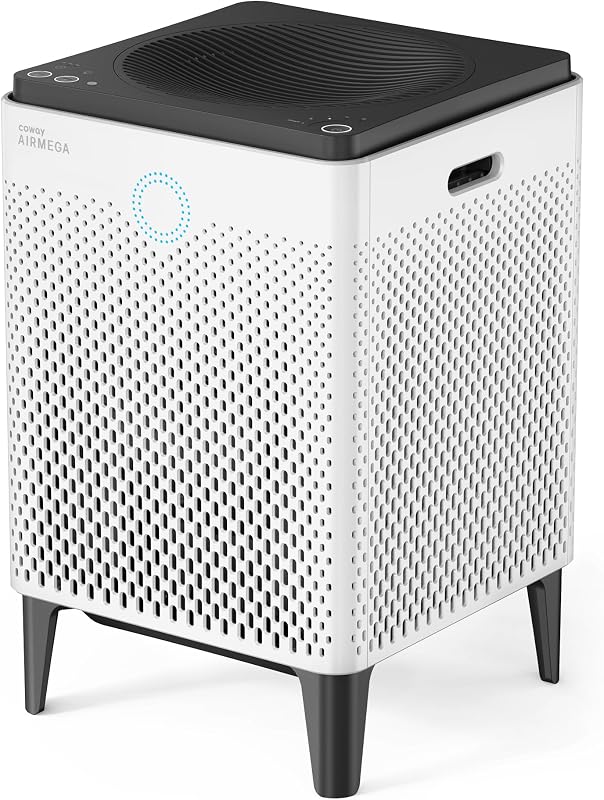
Pros
- Cleans up to 3,120 square feet hourly
- Dual-sided HyperCaptive True HEPA filtration
- Fan-stopping Eco mode saves energy
- Ultra-quiet 22 dB minimum sound rating
- Certified by Energy Star, CARB, and ETL
Cons
- Heavier cabinet weighing 24.7 pounds
- Wide square footprint requires open clearance
View Coway Airmega 400 on Amazon
Winix 5500-2
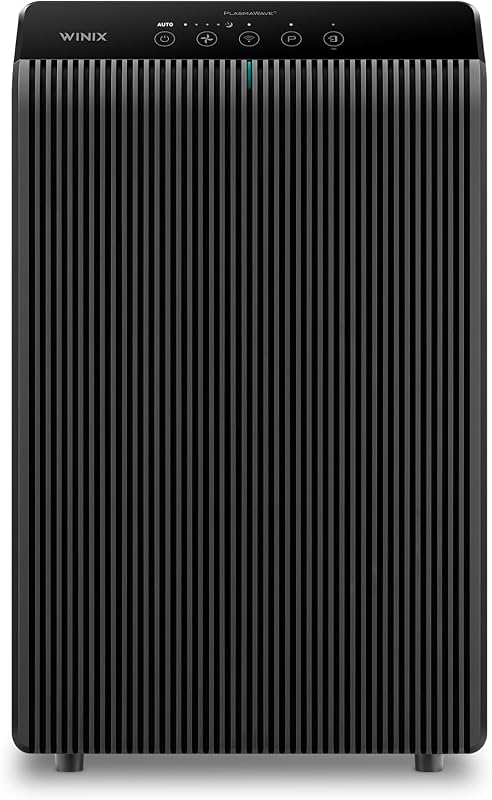
Pros
- Covers up to 1,881 square feet hourly
- PlasmaWave technology targets airborne impurities
- Lightweight 13.3-pound portable design
- Slim 11-inch profile fits against walls
- Automated smart sensors adjust fan speed
Cons
- Significantly lower coverage than Airmega 400
- Specific decibel and wattage figures not listed
Who Should Buy Each One
Choose the Coway Airmega 400 If
- You live in an open-concept house, loft, or multi-room apartment requiring up to 3,120 square feet of hourly air cleaning.
- You want dual-sided HyperCaptive filtration with thick carbon beds to handle cooking odors, smoke, and volatile organic compounds.
- You prefer an Eco mode that stops fan operation completely when the room air is verified clean.
- You require certified low-noise performance verified down to 22 dB for placement near quiet living zones.
Choose the Winix 5500-2 If
- You are purifying a standard master bedroom, enclosed basement, or apartment living room up to 1,881 square feet.
- You want a lightweight, 13.3-pound machine that is easy to pick up and move between different rooms.
- You prefer a slim footprint with an 11-inch depth that fits against walls without consuming extensive floor space.
- You want the added benefit of molecular pollutant breakdown via integrated PlasmaWave technology.
Final Verdict
For most homeowners seeking comprehensive protection across major living areas, the Coway Airmega 400 is the clear top performer. Its dual-intake HyperCaptive filter setup, certified 3,120-square-foot hourly reach, and energy-conserving Eco mode make it a true whole-home workhorse. When readers ask if the Coway Airmega 400 is worth it, the answer is yes if you have an open floor plan that smaller purifiers struggle to turn over. The extra capacity ensures quiet, low-speed maintenance of indoor air quality without the continuous high-speed strain typical of smaller units.
However, the Winix 5500-2 remains the superior choice for shoppers looking to purify dedicated large bedrooms or mid-sized suites. With an impressive 1,881-square-foot hourly capability, True HEPA media, and PlasmaWave pollutant treatment packed into a 13.3-pound chassis, it delivers outstanding utility without demanding excessive floor area. If you want a compact, maneuverable purifier that easily slides next to bedroom furniture, the Winix unit provides top-tier localized air cleaning.
FAQ
How does the Coway Airmega 400 coverage compare to the Winix 5500-2?
The Coway Airmega 400 cleans up to 3,120 square feet in 60 minutes using a dual-intake blower, while the Winix 5500-2 covers up to 1,881 square feet in the same time frame. This makes the Coway model significantly better suited for wide-open residential layouts and high ceilings.
Is the Coway Airmega 400 or Winix 5500-2 better for pet allergies?
Both purifiers capture fine allergens effectively, but the Coway Airmega 400 has greater filter surface area due to its dual True HEPA filters, capturing 99.97% of 0.3-micron particles. The Winix 5500-2 captures 99.99% of particles down to 0.01 microns and features PlasmaWave technology, which adds an active electronic layer to neutralize floating impurities.
Can the pre-filters on these models be washed?
The Coway Airmega 400 explicitly features washable pre-filters that trap large pet hair and dust before reaching the carbon and HEPA stages. Regular rinsing helps maintain maximum airflow and prolongs the lifespan of the internal filter cartridges.
How does Eco Mode work on the Coway Airmega 400?
On the Airmega 400, Eco Mode monitors your air quality and shuts the fan off entirely if the room stays purified for 30 minutes or longer. When the built-in pollution sensor detects new dust, smoke, or VOCs, the fan automatically powers back on to clean the space.
Does the Winix 5500-2 have a sleep mode?
Yes, the Winix 5500-2 features an automated sleep mode that activates when ambient lighting in the room is darkened. Once triggered, the unit adjusts fan speed to a whisper-quiet level and dims its indicator lights for undisrupted rest.
What certifications does the Coway Airmega 400 hold?
According to its technical specifications, the Coway Airmega 400 is Energy Star Certified, ETL Certified, and CARB Certified, ensuring strict compliance with electrical safety, energy efficiency, and low-ozone air standards.


