Choosing between the DeWalt DCF787 and the DeWalt DCF850 ultimately comes down to whether you require an ultra-compact, high-torque professional tool with multi-speed adjustability or a straightforward, ready-to-work impact driver kit with an included battery and charger.
Homeowners and weekend crafters should choose the DCF787 because it delivers dependable everyday fastening power in a complete package that works right out of the box. General contractors, cabinetmakers, and framing specialists should select the DCF850 because its shortened profile and elevated driving force squeeze into inaccessible framing bays while powering through dense lumber.
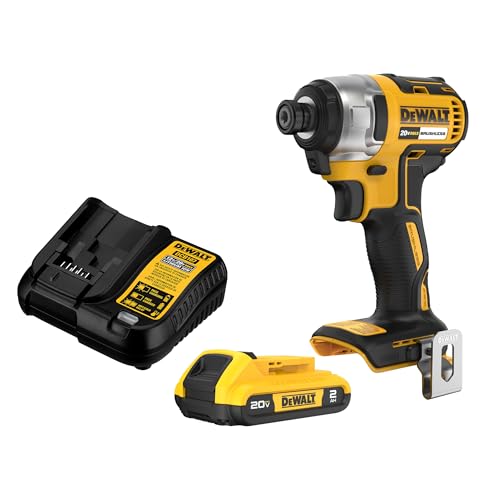

DeWalt DCF787 vs DCF850 at a Glance
| Attribute | DeWalt DCF787 | DeWalt DCF850 |
|---|---|---|
| Maximum Torque | 1,500 in-lb | 1,825 in-lb |
| Maximum Rotational Speed | 2,800 RPM | 3,250 RPM |
| Speed Modes | 1 Speed (Variable Trigger) | 3 Speeds (Variable Trigger) |
| Motor Power Output | 300 Watts | 336 Watts |
| Hex Chuck Size | 1/4 in (0.25 in) | 1/4 in (Accepts 1 in Bit Tips) |
| Work Light Setup | Single LED with 20-Second Delay | Integrated 3-LED Ring |
| Bare Tool Weight | Not listed | 2.2 lbs |
| Tool Dimensions | Not listed | 6.5 in L x 3 in W x 9 in H (8 in Tall) |
| Supplied Components | Driver, 20V Battery, Charger, Belt Hook | Driver, Belt Clip |
| Best For | General household fastening and basic DIY projects | Framing, decking, cabinetry, and tight-space trade work |
Fastening Torque and Driving Power
Fastening torque defines the rotational muscle an impact driver applies when overcoming resistance in tough materials. When examining DCF850 vs DCF787 torque, the mechanical ratings reveal a substantial performance gap. The DCF787 generates 1,500 in-lb of maximum torque supported by a 300-watt motor output. In practical applications, this provides plenty of power for everyday tasks such as driving drywall screws, securing 3-inch construction screws into wall studs, and assembling outdoor patio sets. It reliably handles light-to-medium fastening jobs without bogging down, making it a reliable standard-duty tool.
By contrast, the DCF850 is engineered to produce 1,825 in-lb of torque with an increased power rating of 336 watts. That additional 325 in-lb of driving force represents an advantage when powering broad-diameter lag screws into pressure-treated ledger boards or sinking structural fasteners into dense hardwoods. When evaluating dewalt dcf850 vs dcf887 performance benchmarks, high rotational muscle paired with a compact motor assembly allows the tool to maintain driver engagement without stalling under continuous loads. If you regularly build heavy decks or anchor framing lumber, the extra torque keeps fasteners moving smoothly into dense material.
The operational consequence of this torque differential shows up during prolonged, demanding builds. While the DCF787 handles smaller fasteners with ease, pushing it to sink long structural screws generates increased mechanical strain and slower seating times. The DCF850 operates with greater mechanical headroom, allowing it to complete heavy timber connections and masonry anchoring tasks faster and with less stress on internal components.
Edge: DeWalt DCF850 delivers 1,825 in-lb of torque and 336 watts of output to drive heavy structural fasteners with significantly less effort.
Motor Speed and Drivetrain Control
Impact driver rotational speed dictates how quickly fasteners sink into workpieces, while speed modes govern your ability to control that velocity without damaging the fastener or base material. The DCF787 operates with a single gear ratio that reaches a maximum speed of 2,800 RPM. Speed variation relies entirely on your trigger finger: pressing lightly produces slower rotation, and squeezing fully unleashes the tool’s maximum 2,800 RPM velocity. For broad DIY tasks, this straightforward configuration minimizes mechanical complexity and simplifies operation.
The DCF850 elevates performance by offering 3 dedicated speed settings alongside a higher maximum rotational ceiling of 3,250 RPM. In terms of DeWalt DCF850 vs DCF787 speed, the DCF850 drives standard exterior screws markedly faster at full throttle. More importantly, its 3-speed drivetrain enables precision work. Dropping the tool into its lowest speed setting limits rotational inertia, preventing delicate hardware from stripping out when installing cabinet hinges or electrical faceplates. As explored in the dewalt dcf845 vs dcf850 comparison, multi-gear electronic controls provide essential versatility across varying fastener gauges.
Relying solely on a single-speed trigger on the DCF787 requires consistent finger pressure, which can become fatiguing during repetitive assemblies where overdriving a fastener could ruin a workpiece. The DCF850 eliminates that risk through dedicated electronic speed caps, giving the user both raw driving pace on speed 3 and delicate placement on speed 1.
Edge: DeWalt DCF850 provides a faster top speed of 3,250 RPM and 3 selectable speed settings for refined control across diverse materials.
Size, Weight, and Maneuverability
Tool dimensions determine whether an impact driver can slip between joists or fit under low sink basins. The DCF787 vs DCF850 size difference is one of the most prominent contrasts between these two tools. While the DCF787 is categorized as a compact and lightweight tool designed for hard-to-reach areas, its physical shell retains a traditional impact driver profile. Its front-to-back length requires adequate clearance in front of the target fastener to position the tool perpendicular to the driving surface.
The DCF850 belongs to an ultra-compact generation of tools, featuring an external profile measuring 6.5 inches long, 3 inches wide, and 9 inches high, with an overall vertical clearance of 8 inches. Its bare weight sits at 2.2 pounds (with the listing also noting a 2.1-pound bare chassis). Its defining ergonomic feature is an abbreviated nose cone that accepts 1-inch bit tips directly inside the 1/4-inch hex anvil. Similar to spatial advantages highlighted in the dewalt dcf809 vs dcf850 analysis, this stubby form factor allows the tool to slide directly between 16-inch on-center studs, within framed HVAC chases, or between overhead ceiling joists without needing a 90-degree right-angle adapter.
For users who spend hours working in crawlspaces, underneath cabinetry, or reaching overhead on ladders, the compact geometry of the DCF850 significantly reduces physical strain. The DCF787 remains comfortable for open-bench assembly, but its longer nose limits maneuverability in tight corners where space is restricted.
Edge: DeWalt DCF850 is significantly more compact, lightweight at 2.2 pounds, and specifically engineered to accept 1-inch bit tips in tight working quarters.
Work Light and Low-Light Visibility
Adequate illumination on an impact driver prevents stripped screw heads, misaligned driver bits, and damaged work surfaces when operating in dim areas. The DCF787 incorporates an integrated LED work light featuring a 20-second delay after the trigger is released. This extended delay enables the light to serve as a secondary work lamp, staying illuminated while you reach into a fastener pouch for the next screw. However, because the DCF787 utilizes a single LED positioned on the tool body, the chuck and bit can cast a noticeable shadow directly across the screw head from certain angles.
The DCF850 addresses bit shadowing through an integrated 3-LED work light ring mounted directly around the perimeter of the 1/4-inch chuck. This tri-beam configuration projects light onto the fastener from three separate angles simultaneously, creating a shadow-free field of view right at the contact point. As noted in the dewalt dcf787 vs dcf845 review, radial light rings provide superior visibility when fastening fasteners in recessed cabinet boxes, crawlspaces, or unlit attic framing.
While the DCF787’s 20-second delay is convenient for navigating dark job areas between drives, the DCF850 provides cleaner, shadow-free illumination right where the driver bit connects with the fastener.
Edge: DeWalt DCF850 features a 3-LED perimeter light ring that eliminates casting shadows over the fastener head.
Included Components and Out-of-Box Readiness
When choosing between these models, the contents of the package dictate how quickly you can start working and whether additional purchases are required. The DCF787 (model DCF787D1) comes as a complete, ready-to-run system. The package includes the 1/4-inch impact driver, a 20V MAX 2.0Ah lithium-ion battery (model DCB203, with the listing table also referencing 1.3Ah capacity), a DCB107 charger, and a belt hook. If you do not currently own any 20V power tools, this kit provides everything required to charge the battery and start fastening immediately.
Conversely, the DCF850 (model DCF850B / DCF850B-NBX) is supplied as a bare tool, including only the impact driver and a belt clip. While the product listing indicates compatibility with up to 5Ah battery capacities, neither a battery nor a charger is included in the box. As pointed out in the dewalt dcf787 vs dcf809 evaluation, purchasing a bare tool makes sense primarily for users who already possess compatible 20V lithium-ion batteries and charging docks.
For DIY enthusiasts who need an all-inclusive setup without tracking down separate power accessories, the DCF787 offers turnkey convenience. The DCF850 targets existing tool platform owners seeking to upgrade an aging driver without accumulating redundant charging equipment.
Edge: DeWalt DCF787 includes a 20V battery and charging station right in the box for immediate use.
Application Suitability: Framing vs Everyday Assembly
The operational divergence between these tools becomes clearest when matching them to specific building tasks. Choosing a DeWalt DCF787 or DCF850 for framing projects highlights the impact of raw mechanical specs. Framing demands continuous driving of heavy-gauge wood screws into structural timbers. With a drilling capacity listed at 1 inch in wood and 1 inch in metal, paired with 1,825 in-lb of torque, the DCF850 handles framing lumber, subfloor screws, and metal tie brackets with rapid, consistent authority. Its compact head also slips easily between closely spaced studs to toenail framing components.
On the other hand, deciding between the DCF787 or DCF850 for DIY tasks around the home shifts the advantage toward simpler operation. The DCF787 listing specifies a wood drilling capacity of up to 2 inches, backed by 1,500 in-lb of torque. For hanging closet shelves, repairing wooden fences, hanging drywall, or assembling flat-pack furniture, the DCF787 delivers more than enough driving power. Because it avoids the higher rotational torque and aggressive initial impact cycles of industrial drivers, it reduces the likelihood of overdriving fasteners straight through softer materials like pine or drywall.
Contractors tackling decking, electrical rough-ins, and mechanical installations gain measurable speed and access from the DCF850. For general domestic upkeep, however, the DCF787 provides balanced performance that aligns well with routine home maintenance.
Edge: Tie. DeWalt DCF850 is superior for heavy framing and tight mechanical work, while DeWalt DCF787 is optimized for general household repairs and home maintenance.
Pros and Cons
DeWalt DCF787

Pros
- Complete kit with battery and charger
- Reliable 1500 in-lb brushless motor
- LED light with 20-second delay
- 2-inch wood drilling capacity
- Straightforward variable speed trigger
Cons
- Single speed mode lacks gear adjustability
- Lower 2800 RPM maximum rotational speed
- Single LED casts shadow over fasteners
DeWalt DCF850

Pros
- High 1825 in-lb fastening torque
- Rapid 3250 RPM maximum speed
- 3 selectable speed settings
- Ultra-compact body accepts 1-inch bit tips
- Shadow-free 3-LED work light ring
Cons
- Sold as bare tool without battery
- Charger not included in package
Who Should Buy Each One
Choose the DeWalt DCF787 If
- You need a complete kit containing a 20V battery, charger, and driver to start working immediately without buying separate accessories.
- Your primary workload consists of standard home DIY tasks, such as hanging drywall, assembling furniture, and repairing fences.
- You prefer a simple single-speed tool layout that relies strictly on variable trigger control without extra switches.
- You want a reliable 1,500 in-lb brushless motor that delivers dependable power for everyday maintenance projects.
Choose the DeWalt DCF850 If
- You regularly work inside cramped stud bays, between floor joists, or inside finished cabinetry where an ultra-short tool head is mandatory.
- You frequently drive heavy structural screws or lag bolts that benefit from 1,825 in-lb of torque and a 3,250 RPM top speed.
- You already own DeWalt 20V MAX batteries and want an upgraded bare tool to expand your collection.
- You need a 3-speed selector switch to limit driving power when handling delicate cabinet hardware or finishing trim.
Final Verdict
When evaluated across technical specs and mechanical capabilities, the DCF850 is the superior impact driver. It produces 1,825 in-lb of torque, spins up to 3,250 RPM, and incorporates a 3-speed transmission within an ultra-compact chassis that measures just 2.2 pounds and accepts 1-inch bit tips directly into the anvil. For tradespeople, remodelers, and woodworkers who already own compatible batteries, its compact design and high torque make it the most versatile and capable choice for demanding projects.
At the same time, the DCF787 remains a sensible choice for homeowners and general DIYers who need an out-of-the-box solution. It delivers a solid 1,500 in-lb of torque, a durable 300-watt brushless motor, and a 20-second delayed work light, all bundled with a 20V battery and charger. Unless your work routinely demands extreme compact clearance or maximum structural driving force, the DCF787 provides all the fastening power required for everyday home maintenance.
FAQ
Can the DeWalt DCF850 accept 1-inch bit tips directly?
Yes. The DCF850 features a 1/4-inch hex chuck specifically engineered to seat 1-inch bit tips directly inside the anvil. This design keeps the overall front-to-back tool length as short as possible, maximizing clearance in tight corners and cramped stud bays.
Does the DeWalt DCF787 come with a battery and charger?
Yes. The DCF787 kit (model DCF787D1) includes a 20V MAX lithium-ion battery, a DCB107 charger, a belt hook, and the impact driver. It provides a complete setup ready for immediate use out of the box.
Is the DeWalt DCF850 worth it for heavy framing and decking?
Yes. The DCF850 is well suited for framing and decking because it generates 1,825 in-lb of torque, 336 watts of power, and a top rotational speed of 3,250 RPM. This allows it to drive long timber screws and structural fasteners quickly and consistently.
How do the speed controls differ between the DCF787 and DCF850?
The DCF787 relies on a single-speed drivetrain governed by a variable-speed trigger, which varies output up to 2,800 RPM based on finger pressure. The DCF850 features 3 distinct electronic speed settings in addition to its variable-speed trigger, reaching up to 3,250 RPM on its highest setting for greater control across different materials.
Do both the DCF787 and DCF850 feature brushless motors?
Yes. Both impact drivers are equipped with brushless motors, which deliver improved runtime, higher mechanical efficiency, and extended tool durability compared to traditional brushed alternatives.
What is the weight difference between the DCF787 and DCF850?
The DCF850 has a listed bare tool weight of 2.2 pounds (with its product description also noting 2.1 pounds), giving it an exceptionally lightweight feel. The DCF787 listing specifies that it is compact and lightweight, but it does not list an exact bare tool weight.
How does the work light compare between the DCF787 and DCF850?
The DCF787 uses a single LED light equipped with a 20-second shutoff delay after trigger release. The DCF850 features an integrated 3-LED ring mounted around the perimeter of the chuck collar, casting light directly over the fastener from multiple angles to eliminate bit shadows.


