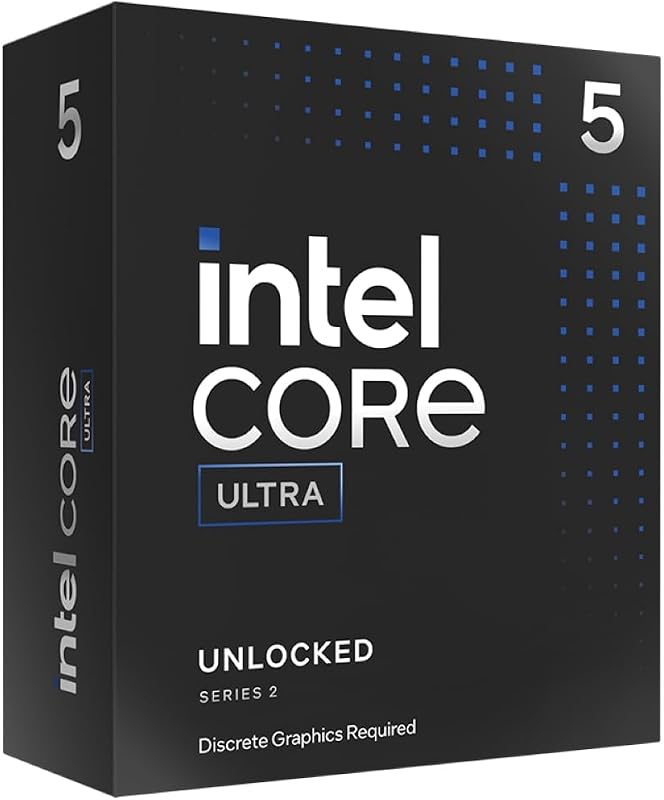
The fundamental divide between these two Zen 4 desktop processors comes down to compute density versus thermal efficiency: the Ryzen 7 7700X delivers eight high-frequency cores tuned for heavy multitasking at a 105-watt power envelope, whereas the Ryzen 5 7600 operates at a streamlined 65 watts and includes an AMD Wraith Stealth cooler directly in the package.
Builders assembling an energy-conscious gaming desktop should choose the AMD Ryzen 5 7600 to minimize thermal output and bypass the immediate need for aftermarket cooling hardware. Content creators and power users handling heavy multi-threaded production tasks should pick the AMD Ryzen 7 7700X for its higher clock ceiling and two additional processing cores.
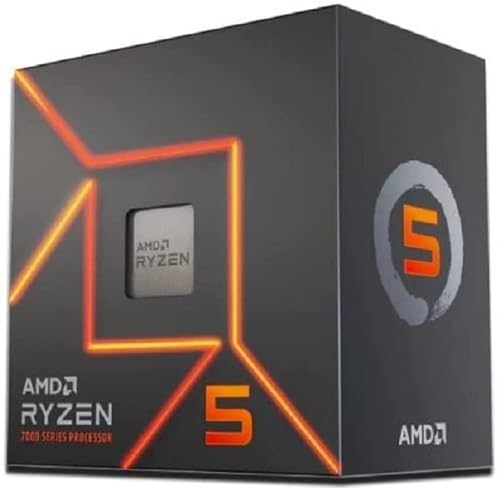
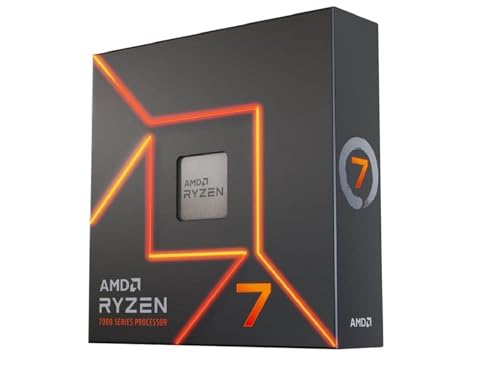
AMD Ryzen 5 7600 vs Ryzen 7 7700X at a Glance
| Feature | AMD Ryzen 5 7600 | AMD Ryzen 7 7700X |
|---|---|---|
| Processor Cores / Threads | 6 Cores / 12 Threads | 8 Cores / 16 Threads |
| Base Clock Speed | 3.80 GHz | 4.50 GHz |
| Max Boost Clock | 5.2 GHz | 5.4 GHz |
| Architecture & Process | Zen 4 (5 nm) | Zen 4 (5 nm) |
| Socket Compatibility | Socket AM5 | Socket AM5 |
| Thermal Design Power (TDP) | 65 Watts | 105 Watts |
| L3 Cache | 32 MB | 32 MB |
| Secondary Cache (L2) | 6 MB | 8 MB (listing also notes 40 MB secondary cache) |
| Included Cooler | AMD Wraith Stealth heatsink with fan | Cooler not included |
| Integrated Graphics | AMD Radeon Graphics | AMD Radeon Graphics |
| Best For | Balanced gaming and low-heat builds | Multithreaded creation and high-frequency workloads |
Core Architecture and Multithreaded Processing
The core configuration serves as the primary architectural dividing line when evaluating the Ryzen 7 7700X vs AMD Ryzen 5 7600. The Ryzen 5 7600 features 6 physical cores and 12 concurrent threads built on AMD’s 5 nm Zen 4 architecture. For modern gaming, standard office applications, and general desktop operations, 6 cores offer ample compute capacity to prevent operational bottlenecks. Most interactive applications prioritize fast single-thread throughput over sheer core count, meaning the 6-core structure easily handles background operating system utilities while dedicating substantial resources to active software windows.
In contrast, the Ryzen 7 7700X elevates multithreaded capacity by supplying 8 physical cores and 16 concurrent threads on the same Zen 4 architecture. When addressing whether to choose the AMD Ryzen 5 7600 or Ryzen 7 7700X for productivity, those two additional cores make an immediate operational impact. Video rendering, 3D scene compilation, code packaging, and heavy data compression scale predictably across available threads. The additional 4 concurrent processing threads on the Ryzen 7 7700X allow background export queues or streaming software to run without encroaching upon primary compute cycles, keeping system responsiveness crisp under heavy loads.
Understanding these hardware bounds helps clarify system design when looking across competing options like the amd ryzen 5 7600 vs ryzen 7 7700. With the Ryzen 5 7600, intense creative jobs will complete reliably, but the 12 available threads will experience maximum saturation far quicker than the 16 threads provided by the 8-core silicon. Selecting the 6-core processor preserves resources for other build components, but users running workstation software will feel the physical absence of those two extra Zen 4 cores during heavy multithreaded exports.
Edge: AMD Ryzen 7 7700X. Its 8-core, 16-thread structure delivers 33 percent more compute resources for multithreaded workflows and heavy processing demands.
Clock Speeds and Gaming Performance
Operating clock frequencies determine how rapidly individual cores execute instructions, directly influencing frame rates, physics calculations, and UI responsiveness. The Ryzen 5 7600 operates with a base frequency of 3.80 GHz and achieves a maximum boost clock of 5.2 GHz (with the listing also noting a 5.10 GHz overclocking speed). Because of the architectural efficiency inherent to Zen 4, these clock rates provide fast single-core response times. In standard titles, modern graphics cards are fed frames smoothly without latency spikes introduced by the processor cores.
On the higher tier, the Ryzen 7 7700X pushes factory operating frequencies significantly further, featuring a substantial 4.50 GHz base clock and a maximum boost clock of 5.4 GHz. In any detailed AMD Ryzen 7 7700X review, this higher baseline speed represents a key selling point. The manufacturer specifically highlights that this dominant processor delivers fast 100+ FPS performance in the world’s most popular games. That 200 MHz boost advantage, combined with a 700 MHz higher base clock, ensures that CPU-bound titles, competitive esports titles, and simulation software maintain high average frame rates and stable frame pacing.
Analyzing Ryzen 5 7600 vs 7700X gaming scenarios shows that both chips handle modern titles with ease, yet the 7700X maintains higher sustained operating clocks during extended play sessions. Similar frequency advantages can be observed when comparing higher-tier gaming models such as the amd ryzen 5 7600 vs ryzen 7 7800x3d. In scenarios where a high-refresh monitor demands rapid draw calls, the extra frequency overhead on the 7700X gives it a reliable statistical edge in synthetic tests and real-world gaming execution.
Edge: AMD Ryzen 7 7700X. A 5.4 GHz boost clock and elevated 4.5 GHz base frequency provide faster instruction throughput for high-refresh competitive gaming.
Power Consumption and Thermal Efficiency
Power consumption dictates power supply selection, system cooling requirements, and overall thermal output inside your chassis. The Ryzen 5 7600 is rated at an efficient 65 watts TDP. This modest electrical footprint means the chip draws minimal power under desktop idle and maintains disciplined power intake during full-core workloads. For small form factor enclosures, compact living room builds, or desktop configurations where low acoustic output is prioritized, a 65-watt component keeps system exhaust temperatures down and fan noise subdued.
The Ryzen 7 7700X increases factory power targets to an official rating of 105 watts. In evaluating Ryzen 5 7600 vs 7700X power consumption, the 7700X draws noticeable additional energy to sustain its 4.50 GHz base clock and 5.4 GHz peak frequencies across 8 cores. The 40-watt rated difference between these models alters thermal dynamics considerably. A 105-watt chip generates substantially more heat under sustained full-core processing loads, requiring continuous airflow through the PC case to prevent hot air from accumulating around sensitive internal components.
This power variance also informs choices between competing parts such as the amd ryzen 5 7600x vs ryzen 7 7700x. Builders who select the 65-watt Ryzen 5 7600 can comfortably utilize lower-capacity power supplies and modest chassis cooling without thermal throttling. Buyers of the 7700X must actively account for the 105-watt power draw by ensuring proper power delivery through the motherboard socket and maintaining sufficient fan curves across the PC chassis.
Edge: AMD Ryzen 5 7600. Its 65-watt TDP generates noticeably lower heat output and demands less continuous power from the system electrical supply.
Bundled Cooling and Out-of-the-Box Setup
The physical contents of the retail box dramatically impact setup ease and total parts acquisition. The Ryzen 5 7600 retail pack includes the AMD Wraith Stealth cooler, which features a matched heatsink with fan assembly. Because the chip operates within a 65-watt envelope, the bundled Wraith Stealth cooler provides adequate thermal dissipation for daily computing, gaming, and basic tasks right out of the box. Users do not need to research thermal compound, mounting brackets, or aftermarket compatibility before assembling their system.
The Ryzen 7 7700X ships strictly without a thermal solution in the packaging, marked explicitly as “Cooler not included” on the listing. Because the processor targets a 105-watt thermal ceiling and reaches clock speeds of 5.4 GHz, AMD expects builders to supply a dedicated cooling solution. That reality requires buyers to source a capable dual-tower air cooler or a closed-loop liquid cooler, expanding the overall hardware checklist and assembly complexity before the machine can boot safely.
When asking is Ryzen 7 7700X worth it, builders must weigh the convenience of the bundled cooler against their long-term performance goals. Similar out-of-the-box hardware differences appear when comparing related 65-watt and X-tier parts like the amd ryzen 5 7600 vs 7600x. For first-time PC builders or those looking to minimize separate hardware purchases, having a validated thermal solution included in the box provides unmatched assembly simplicity.
Edge: AMD Ryzen 5 7600. Including the AMD Wraith Stealth cooler in the retail packaging provides an immediate out-of-the-box thermal solution with zero extra purchases.
Platform Architecture and Memory Features
Examining the Ryzen 7600 vs 7700X specs reveals identical platform foundations across modern motherboard ecosystems. Both processors utilize AMD’s Socket AM5, transitioning away from legacy sockets to modern land grid array connectivity. Each processor natively supports cutting-edge DDR5 memory configurations, with the Ryzen 7 7700X explicitly listing DDR5-5200 support. Both chips also incorporate integrated AMD Radeon Graphics directly onto the 5 nm I/O die, allowing users to troubleshoot display output, run multi-monitor office setups, or operate the PC without installing an expensive discrete graphics card.
Next-generation expansion is another shared characteristic within this AM5 Ryzen 5 7600 vs 7700X comparison. Both processors can support PCIe 5.0 lanes on select 600 Series motherboards, ensuring compatibility with the fastest upcoming solid-state storage drives and high-bandwidth expansion cards. Furthermore, both chips feature unlocked multiplier controls, enabling user-driven overclocking adjustments via compatible motherboard firmware for those who wish to tune clock curves beyond factory ratings.
A closer look at cache specifications shows nuanced listing details. The Ryzen 5 7600 documents 38 MB total cache, consisting of 32 MB of L3 cache alongside 6 MB of L2 secondary cache. The Ryzen 7 7700X listing notes 32 MB L3 cache with 8 MB L2 secondary cache in its product description, while its key features reference 80 MB cache and 40 MB secondary cache specifications. These platform capabilities closely mirror those found on related desktop processors like the amd ryzen 7 7700 vs 7700x. Because both models utilize Socket AM5, Zen 4 architecture, PCIe 5.0 readiness, and integrated Radeon Graphics, their fundamental motherboard platform capabilities remain exceptionally balanced.
Edge: Tie. Both processors share the advanced Socket AM5 platform, DDR5 memory support, PCIe 5.0 compatibility on select 600 Series boards, and integrated Radeon Graphics.
Pros and Cons
AMD Ryzen 5 7600

Pros
- 65-watt energy-efficient TDP
- AMD Wraith Stealth cooler included
- 6 cores and 12 processing threads
- Up to 5.2 GHz max boost clock
- Modern Socket AM5 platform support
Cons
- Lower base clock at 3.80 GHz
- Fewer cores than the 7700X
View AMD Ryzen 5 7600 on Amazon
AMD Ryzen 7 7700X

Pros
- 8 cores and 16 processing threads
- High 5.4 GHz max boost clock
- Aggressive 4.50 GHz base frequency
- DDR5-5200 memory support listed
- Designed for 100+ FPS gaming
Cons
- Higher 105-watt power consumption
- Cooler not included in retail package
View AMD Ryzen 7 7700X on Amazon
Who Should Buy Each One
Choose the AMD Ryzen 5 7600 If
- You want a complete, out-of-the-box package that includes the AMD Wraith Stealth heatsink and fan assembly.
- You are building a compact or noise-sensitive desktop that benefits directly from a cool-running 65-watt TDP.
- Your primary computing objective is everyday PC gaming, where 6 cores and 12 threads provide plenty of processing power.
- You want to enter the modern Socket AM5 and DDR5 ecosystem without purchasing a separate aftermarket cooler.
Choose the AMD Ryzen 7 7700X If
- You regularly execute multithreaded productivity software such as video rendering, 3D modeling, or code compilation that scales across 16 threads.
- You want higher factory frequencies, reaching a 5.4 GHz boost clock and a 4.50 GHz base clock for competitive high-FPS gaming.
- You already own or plan to install a robust aftermarket air or liquid cooler capable of handling a 105-watt thermal ceiling.
- You run complex background applications, game capture tools, or streaming suites simultaneously while playing modern games.
Final Verdict
When reviewing the broader desktop landscape across an AMD Ryzen 5 7600 review, this 6-core processor establishes itself as the most practical choice for mainstream builders and dedicated gamers. Its 6-core, 12-thread Zen 4 architecture easily handles contemporary game engines without bottlenecking graphics hardware. Operating at a restrained 65 watts, it produces very manageable thermal levels that work seamlessly with the included AMD Wraith Stealth cooler. By packaging a dependable thermal solution directly in the box and delivering access to DDR5 and PCIe 5.0 on Socket AM5, the Ryzen 5 7600 provides a streamlined, trouble-free path to a modern desktop build.
However, the Ryzen 7 7700X stands out as the superior processor for performance enthusiasts, content creators, and power users who push their hardware past standard gaming workloads. With 8 cores, 16 threads, and boost frequencies stretching up to 5.4 GHz, it commands an undeniable performance lead in heavy multithreaded rendering and intense computing environments. While it demands a separate cooling solution to tame its 105-watt thermal output, the substantial gains in clock frequency and concurrent processing capacity make the Ryzen 7 7700X the rightful pick for anyone demanding uncompromised multi-core muscle.
FAQ
Does the AMD Ryzen 5 7600 come with a cooler in the box?
Yes, the AMD Ryzen 5 7600 retail pack includes an AMD Wraith Stealth cooler, which consists of a matched heatsink with fan that handles the processor’s 65-watt thermal output.
Does the AMD Ryzen 7 7700X include a thermal cooler?
No, the AMD Ryzen 7 7700X listing explicitly states that a cooler is not included. Because of its higher 105-watt power consumption, buyers must supply a separate aftermarket air or liquid cooling solution.
Can both processors run on the same Socket AM5 motherboards?
Yes, both the Ryzen 5 7600 and Ryzen 7 7700X utilize Socket AM5 and are compatible with select 600 Series motherboards featuring DDR5 memory and PCIe 5.0 support.
What is the difference in power consumption between these two processors?
The AMD Ryzen 5 7600 operates at a 65-watt TDP, whereas the AMD Ryzen 7 7700X is rated at 105 watts, which results in higher electrical draw and increased thermal output under full system load.
Do either of these processors have integrated graphics?
Yes, both processors feature integrated AMD Radeon Graphics on the chip, allowing basic display output and troubleshooting without needing a dedicated graphics card.
Are both processors unlocked for overclocking?
Yes, both the Ryzen 5 7600 and the Ryzen 7 7700X are unlocked for overclocking, allowing users with compatible AM5 motherboards to manually adjust operating frequencies.