The choice between the Asus TUF Gaming A15 and the Acer Predator Helios Neo 16 comes down to a fundamental generational divide in graphics horsepower, computational processing, and panel fidelity. While the TUF Gaming A15 focuses on delivering reliable 1080p gaming backed by a military-tested chassis, the Predator Helios Neo 16 steps into high-end enthusiast territory with a cutting-edge GPU, an ultra-fast 240Hz WQXGA panel, and high-performance neural processing hardware.
Mainstream players seeking a resilient machine for standard 1080p esports and everyday durability should choose the Asus TUF Gaming A15. Enthusiasts and competitive gamers who demand top-tier frame rates, modern ray tracing, and expansive visual clarity should choose the Acer Predator Helios Neo 16.


Asus TUF Gaming A15 vs Acer Predator Helios Neo 16 at a Glance
| Feature | Asus TUF Gaming A15 | Acer Predator Helios Neo 16 |
|---|---|---|
| Processor | AMD Ryzen 5 7535HS | Intel Core Ultra 9 275HX (Up to 13 NPU TOPS) |
| Graphics Processor | NVIDIA GeForce RTX 3050 (Up to 70W TGP) | NVIDIA GeForce RTX 5070 Ti (992 AI TOPS) |
| Dedicated Video Memory | 4 GB DDR5 SDRAM | 12 GB GDDR7 |
| Display Resolution & Refresh | 15.6-inch FHD (1920×1080), 144Hz | 16-inch WQXGA (16:10), 240Hz, 3ms Overdrive |
| Display Technologies | Adaptive-Sync, Anti-Glare | NVIDIA G-SYNC, Advanced Optimus, 100% DCI-P3, 500 nits |
| System Memory | 8 GB DDR5-5600MHz | 16 GB DDR5 |
| Storage Drive | 512 GB PCIe 4.0 NVMe SSD | 1 TB PCIe Gen 4 SSD |
| Cooling Hardware | Dual 84-blade Arc Flow Fans | 5th Gen AeroBlade 3D Fan Technology |
| Chassis Durability & Weight | MIL-STD-810H Tested, Spill Resistant, 7.00 lbs | Standard Clamshell, 4-Zone RGB, 6.00 lbs |
| Networking | Wi-Fi 6 | Killer Wi-Fi 6E |
| Best For | Everyday 1080p Gaming & Rugged Use | Competitive Esports & High-End Visual Fidelity |
Graphics Architecture and Ray Tracing Capabilities
Evaluating an acer predator helios neo 16 vs nitro v 15 shows how quickly dedicated GPU tiers diverge, and the gap here between the entry-level RTX 3050 and the enthusiast RTX 5070 Ti represents multiple hardware generations. The graphics processor determines not only baseline frame rates in current releases, but also whether a machine can support hardware-accelerated ray tracing, complex shaders, and neural frame generation. In modern gaming, dedicated video memory capacity often dictates whether high-resolution textures will render smoothly or cause severe frame drops.
In this RTX 3050 vs RTX 5070 Ti laptop comparison, the two machines operate on entirely different performance tiers. The Asus TUF Gaming A15 features an NVIDIA GeForce RTX 3050 Laptop GPU configured with up to 70W TGP via Dynamic Boost and 4GB of DDR5 video memory. This setup is tuned for standard 1080p competitive titles and modest graphical settings. In contrast, any Acer Predator Helios Neo 16 review must highlight its NVIDIA GeForce RTX 5070 Ti Laptop GPU. Built on NVIDIA Blackwell architecture, this GPU features 12GB of modern GDDR7 memory, 992 AI TOPS of computational power, and support for DLSS 4 with Multi Frame Generation, Ray Reconstruction, and Super Resolution.
The practical difference between 4GB and 12GB of VRAM cannot be overstated. While the TUF Gaming A15 will quickly reach its texture ceiling in modern cinematic releases, the Predator Helios Neo 16 easily handles full ray tracing environments and memory-heavy simulation titles. For gamers wondering is Acer Predator Helios Neo 16 worth it solely based on graphical endurance, the Blackwell architecture and triple the video memory ensure sustained viability in upcoming releases that 4GB GPUs cannot match.
Edge: Acer Predator Helios Neo 16, due to its advanced Blackwell GPU architecture, DLSS 4 support, and massive 12GB GDDR7 memory buffer.
Display Resolution, Refresh Rate, and Color Accuracy
The screen is the primary interface between hardware and player, making panel specifications critical for both competitive reaction times and immersive open-world exploration. A panel’s refresh rate dictates the maximum number of distinct frames presented per second, while variable refresh rate technologies ensure those frames align precisely with GPU output to eliminate visual tearing and distracting stutter. Gamers who compare high-end panels often cross-reference options like the asus proart p16 vs acer predator helios neo 16 to gauge where workstation color accuracy intersects with raw gaming speed.
Looking at the Acer Predator Helios Neo 16 vs Asus TUF A15 display matchup, the TUF Gaming A15 provides a 15.6-inch Full HD display running at 144Hz. It includes an anti-glare coating and incorporates Adaptive-Sync technology to minimize visual stuttering and tearing during gameplay. This makes it well-suited for fast-paced 1080p shooters where stable frame pacing takes precedence over sheer pixel density.
The Predator Helios Neo 16 substantially elevates the visual standard with a 16-inch WQXGA screen boasting a taller 16:10 aspect ratio. Operating at an ultra-smooth 240Hz refresh rate with a 3ms overdrive response time, the panel reaches 500 nits of brightness and covers up to 100% of the wide DCI-P3 color gamut. It integrates NVIDIA G-SYNC alongside NVIDIA Advanced Optimus, allowing seamless automatic GPU switching without restarting. Whether evaluating the Asus TUF Gaming A15 or Acer Predator Helios Neo 16 for competitive gaming, the Predator’s 240Hz panel delivers superior motion clarity, vastly superior brightness, and rich cinematic color reproduction.
Edge: Acer Predator Helios Neo 16, thanks to its faster 240Hz refresh rate, 500-nit WQXGA panel, 100% DCI-P3 color reproduction, and Advanced Optimus integration.
Processing Power and Multitasking Performance
A gaming laptop’s central processor orchestrates background services, game logic, physics computations, and system multitasking. As games become more complex, CPU multi-threading and modern AI coprocessors (NPUs) take on greater significance by handling operational overhead, voice cleanup, and stream management without siphoning resources away from rendering pipelines. Evaluating modern processing platforms, such as in the asus rog zephyrus g16 vs tuf gaming a15, reveals how memory capacity and processor architectures alter multitasking performance.
Under the hood, the TUF Gaming A15 vs Predator Helios Neo 16 specs highlight contrasting CPU tiers. The Asus TUF Gaming A15 is powered by an AMD Ryzen 5 7535HS processor coupled with 8GB of DDR5-5600MHz system memory. This 6-core processor handles Windows 11 system tasks, routine productivity, and popular gaming titles reliably, though the 8GB baseline memory configuration means intense multi-application workflows can saturate system memory quickly.
The Predator Helios Neo 16 incorporates an Intel Core Ultra 9 275HX processor alongside 16GB of high-speed DDR5 memory. This enthusiast chip features dedicated AI capabilities delivering up to 13 NPU TOPS, designed to offload audio optimization and background camera removal during live broadcasts. In any thorough Asus TUF Gaming A15 review, the Ryzen 5 provides competent baseline performance, but the Core Ultra 9 in the Predator offers vastly higher compute density and double the base RAM for demanding production and gaming multitasking.
Edge: Acer Predator Helios Neo 16, driven by its high-tier Intel Core Ultra 9 processor, integrated NPU acceleration, and double the baseline system RAM.
Storage Capacity and System Expandability
Modern gaming installations regularly surpass 100 gigabytes, making fast NVMe solid-state storage essential for loading assets rapidly and maintaining adequate library space. Beyond internal disk capacity, external expansion via high-speed peripheral ports dictates how easily a user can connect multi-monitor battle stations, external backup volumes, and dedicated streaming peripherals. Comparisons like the asus tuf gaming a15 vs acer swift go 14 demonstrate how performance laptops balance internal storage arrays against peripheral flexibility.
The Asus TUF Gaming A15 comes equipped with a 512GB PCIe 4.0 NVMe SSD operating over a PCIe x8 bus interface. While PCIe Gen4 speeds ensure rapid system boot sequences and brisk game load times, a 512GB drive fills up quickly when hosting several modern triple-A installations alongside the Windows 11 operating system. For external audio, the unit provides dedicated headphone compatibility.
The Predator Helios Neo 16 arrives with a 1TB Gen 4 SSD, doubling the internal storage right out of the box. This provides abundant room for expansive libraries without immediately requiring drive management. Furthermore, the listing explicitly details broad peripheral compatibility with external displays, external storage devices, mice, keyboards, and printers. When deciding between the Asus TUF Gaming A15 or Acer Predator Helios Neo 16 for gaming, the Predator provides immediate relief from storage constraints while accommodating full desktop setups.
Edge: Acer Predator Helios Neo 16, providing twice the internal SSD capacity and comprehensive peripheral compatibility.
Chassis Durability, Cooling Systems, and Portability
Laptops designed for high-performance workloads require robust thermal management to prevent thermal throttling, but physical durability and portable dimensions are just as critical for users who commute or travel. Buyers exploring cross-category hardware often analyze options like the acer swift go 14 vs predator helios neo 16 to weigh the balance between thermal bulk and overall portability.
Durability is where the Asus TUF Gaming A15 excels. Built to withstand punishing environments, the TUF chassis has undergone rigorous MIL-STD-810H testing, surviving drops, vibration, humidity, and extreme temperature swings. It also features spill-resistant construction and a dedicated TrackPoint. Thermally, Asus equips the chassis with dual 84-blade Arc Flow Fans designed to move high volumes of air without generating intrusive acoustic noise. However, this ruggedized shell brings the system weight up to 7.00 pounds, making it surprisingly hefty for a 15.6-inch clamshell.
The Acer Predator Helios Neo 16 approaches chassis engineering with an emphasis on thermal dissipation for its high-wattage components and custom aesthetics. It features 5th Gen AeroBlade 3D fan technology to manage thermals and sports a customizable 4-Zone RGB backlit keyboard. Despite housing a larger 16-inch panel and high-tier hardware within its 14.05 x 10.85 x 1.05-inch frame, the Predator weighs in at 6.00 pounds-a full pound lighter than the TUF. While the TUF offers certified military-grade resistance to physical shock, the Predator provides a lighter footprint and dedicated multi-zone RGB customization.
Edge: Asus TUF Gaming A15, thanks to verified MIL-STD-810H drop and environmental survival testing alongside spill-resistant hardware.
Network Connectivity and Wireless Performance
Online multiplayer gaming demands stable wireless throughput and minimal signal jitter. When physical Ethernet drops are unavailable, the quality of the internal wireless card determines whether players experience sudden packet loss during high-stakes competitive matches or smooth, uninterrupted connections.
The Asus TUF Gaming A15 includes standard Wi-Fi 6 wireless connectivity. Wi-Fi 6 delivers reliable transfer rates and handles crowded residential home networks efficiently compared to older standards, providing sufficient bandwidth for 1080p gaming sessions and everyday file downloads.
The Predator Helios Neo 16 raises the bar by integrating Killer Wi-Fi 6E technology. Operating over the less-congested 6GHz frequency band, Killer Wi-Fi 6E provides lower latency, reduced signal interference, and higher total bandwidth. For competitive gamers who rely exclusively on wireless links, this advanced networking module helps maintain stable ping rates during intense multiplayer gameplay.
Edge: Acer Predator Helios Neo 16, due to the integration of dedicated Killer Wi-Fi 6E networking hardware.
Pros and Cons
Asus TUF Gaming A15

Pros
- MIL-STD-810H military-grade drop and vibration toughness
- Spill-resistant keyboard construction
- Dual 84-blade Arc Flow cooling fans
- Adaptive-Sync prevents visual tearing at 144Hz
Cons
- Only 4GB video memory limits graphic settings
- Base 8GB RAM restricts heavy multitasking
- Heavier 7-pound chassis
View Asus TUF Gaming A15 on Amazon
Acer Predator Helios Neo 16
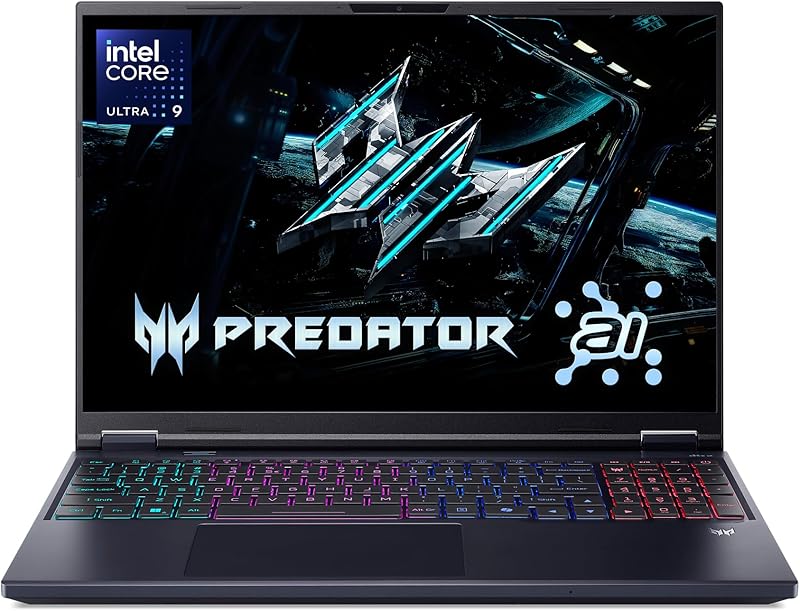
Pros
- NVIDIA RTX 5070 Ti with 12GB GDDR7
- 240Hz WQXGA panel with 500 nits brightness
- Intel Core Ultra 9 with 13 NPU TOPS
- 1TB Gen 4 SSD and 16GB DDR5 memory
- Advanced Killer Wi-Fi 6E networking
Cons
- Lacks military-grade shock drop testing
- No spill resistance specification listed
View Acer Predator Helios Neo 16 on Amazon
Who Should Buy Each One
Choose the Asus TUF Gaming A15 If
- You prioritize extreme physical durability, drop resistance, and spill-resistant keyboard construction certified by MIL-STD-810H standards.
- Your gaming needs center on mainstream 1080p titles and esports where the RTX 3050 GPU and 144Hz FHD Adaptive-Sync panel are fully sufficient.
- You want dual 84-blade Arc Flow Fans that optimize thermal performance without generating excessive fan noise.
- You need a dependable clamshell laptop equipped with a TrackPoint and dedicated anti-glare screen for everyday tasks.
Choose the Acer Predator Helios Neo 16 If
- You demand state-of-the-art graphical fidelity powered by the NVIDIA GeForce RTX 5070 Ti with Blackwell architecture and 12GB of GDDR7 memory.
- You play fast-paced competitive esports that benefit from a 16-inch WQXGA 240Hz display with a rapid 3ms overdrive response time and NVIDIA G-SYNC.
- You need the heavy compute density of the Intel Core Ultra 9 275HX processor with integrated NPU support for AI streaming and productivity workloads.
- You require double the base storage and memory, featuring a 1TB Gen 4 SSD and 16GB of DDR5 RAM out of the box.
Final Verdict
When weighing the Acer Predator Helios Neo 16 vs Asus TUF Gaming A15, the Predator Helios Neo 16 emerges as the clear winner for performance enthusiasts, competitive players, and heavy multitaskers. Acer has assembled an exceptional high-tier platform comprising an Intel Core Ultra 9 275HX processor, an NVIDIA GeForce RTX 5070 Ti Laptop GPU with 12GB of GDDR7 memory, and an expansive 16-inch 240Hz WQXGA display. With 16GB of DDR5 RAM, 1TB of Gen 4 storage, and Killer Wi-Fi 6E, it handles ray-traced modern blockbusters and rapid esports action with immense graphical overhead.
However, asking is Asus TUF Gaming A15 worth it leads to a very clear answer for users needing rugged, dependable computing. The TUF Gaming A15 delivers proven military-grade physical protection, dual 84-blade cooling fans, and a solid 144Hz FHD Adaptive-Sync display. For players focused primarily on popular esports, entry-level 1080p gaming, and a laptop that can survive drops, spills, and rough handling, the Asus TUF Gaming A15 remains a rugged and capable contender.
FAQ
What are the primary GPU differences between these two laptops?
The Asus TUF Gaming A15 utilizes an NVIDIA GeForce RTX 3050 Laptop GPU with up to 70W TGP and 4GB of DDR5 video memory. The Acer Predator Helios Neo 16 features an NVIDIA GeForce RTX 5070 Ti Laptop GPU powered by NVIDIA Blackwell architecture, featuring 12GB of GDDR7 memory, 992 AI TOPS, and DLSS 4 support.
How do the displays compare on the TUF Gaming A15 and Predator Helios Neo 16?
The TUF Gaming A15 features a 15.6-inch Full HD display with a 144Hz refresh rate, anti-glare finish, and Adaptive-Sync. The Predator Helios Neo 16 sports a 16-inch WQXGA 16:10 panel running at 240Hz with a 3ms overdrive response time, 500 nits brightness, 100% DCI-P3 coverage, NVIDIA G-SYNC, and NVIDIA Advanced Optimus.
Which laptop provides better durability for travel?
The Asus TUF Gaming A15 offers certified military-grade toughness, having passed MIL-STD-810H testing against drops, vibration, humidity, and extreme temperatures. It also features spill-resistant construction, making it more resilient to physical hazards than the standard clamshell of the Predator Helios Neo 16.
Which laptop is lighter to carry in a backpack?
The Acer Predator Helios Neo 16 is lighter, weighing 6.00 pounds, whereas the Asus TUF Gaming A15 weighs 7.00 pounds according to their official listing specifications.
What processors power the Asus TUF Gaming A15 and Acer Predator Helios Neo 16?
The TUF Gaming A15 is powered by an AMD Ryzen 5 7535HS processor, while the Predator Helios Neo 16 runs on an Intel Core Ultra 9 275HX processor equipped with an integrated NPU delivering up to 13 TOPS for AI-driven background tasks.
How much internal storage and memory do these models include?
The Asus TUF Gaming A15 comes with 8GB of DDR5-5600MHz RAM and a 512GB PCIe 4.0 NVMe SSD. The Acer Predator Helios Neo 16 includes 16GB of DDR5 memory and a larger 1TB Gen 4 SSD.


