The single deciding difference between these two headphones is acoustic enclosure: the Beyerdynamic DT 770 Pro features a closed-back acoustic design that seals sound in and blocks ambient noise, while the Philips SHP9500 utilizes an open-back architecture designed to deliver an airy, spacious audio presentation at the expense of external isolation.
Audio engineers and vocalists who need zero microphone bleed and focused monitoring should choose the DT 770 Pro, whereas casual desk listeners and multimedia enthusiasts seeking breathable, fatigue-free comfort should select the SHP9500.


Beyerdynamic DT 770 Pro vs Philips SHP9500 at a Glance
| Feature | Beyerdynamic DT 770 Pro | Philips SHP9500 |
|---|---|---|
| Acoustic System | Closed-back dynamic | Open-back dynamic |
| Impedance | 80 Ohm | 32 Ohm |
| Transducer Type | Custom-built diaphragms | 50mm neodymium drivers |
| Ear Cushion Material | Soft velour | Breathable fabric |
| Cable Length | 3m (9.8 ft) straight cable | 1.5m (4.9 ft) straight cable |
| Connector Type | 3.5mm with 1/4″ screw-on adapter | 3.5mm gold-plated connector |
| Manufacturing Origin | Handcrafted in Germany | Not listed |
| Serviceability | Replaceable pads, headband, and drivers | Not listed |
| Included Accessories | Drawstring storage bag, 1/4″ adapter | Not listed |
| Best For | Studio recording, vocal tracking, and isolation | Open-room listening, home office, and relaxed media |
Acoustic Architecture and Sound Isolation
Headphone enclosure determines how acoustic energy moves around your ears and whether sound escapes into your room. In any direct evaluation of DT 770 Pro vs SHP9500 open vs closed construction, physical isolation dictates where each model excels. A closed-back shell traps sound pressure inside the ear cup, creating a physical barrier between your ears and the surrounding environment. Conversely, an open-back frame allows air and acoustic waves to pass freely through the rear housing, resulting in zero acoustic isolation in either direction.
The DT 770 Pro relies on sealed earcups to ensure minimal sound leakage during critical recording applications. When tracking live instruments or recording vocal tracks inches away from sensitive condenser microphones, headphone bleed can easily ruin an otherwise perfect take. The closed construction of the DT 770 Pro seals around your ears, keeping your reference audio inside the cans and blocking unwanted environmental disturbances like computer fan hum. If your workstation shares space with other people or you frequently compare closed studio reference pairs like the beyerdynamic dt 770 pro vs akg k371, acoustic isolation is non-negotiable.
In stark contrast, the Philips SHP9500 provides no passive noise attenuation due to its open acoustic structure. Sound from your listening session will spill into the room, and you will clearly hear conversations, keystrokes, and household appliances around you. However, this design prevents internal acoustic resonance and ear canal pressure buildup. For private home offices where ambient noise is low and privacy is not a concern, the open structure provides a breathable environment that keeps your ears cool over multi-hour sessions.
Edge: Beyerdynamic DT 770 Pro provides superior passive noise isolation and leak prevention, making it practical for noisy rooms and live studio tracking.
Soundstage and Audio Presentation for Mixing and Gaming
Soundstage width and imaging precision heavily influence how audio engineers place elements in a stereo field and how gamers locate audio cues. The Philips SHP9500 features 50mm neodymium drivers set inside an open chamber engineered to align with the ear’s natural geometry. This configuration delivers an expansive, speaker-like soundstage where audio feels like it originates outside your head rather than directly between your ears. In any comprehensive Philips SHP9500 review, this natural sound distribution is praised for creating an effortless, non-fatiguing listening environment for casual media and wide-field gaming.
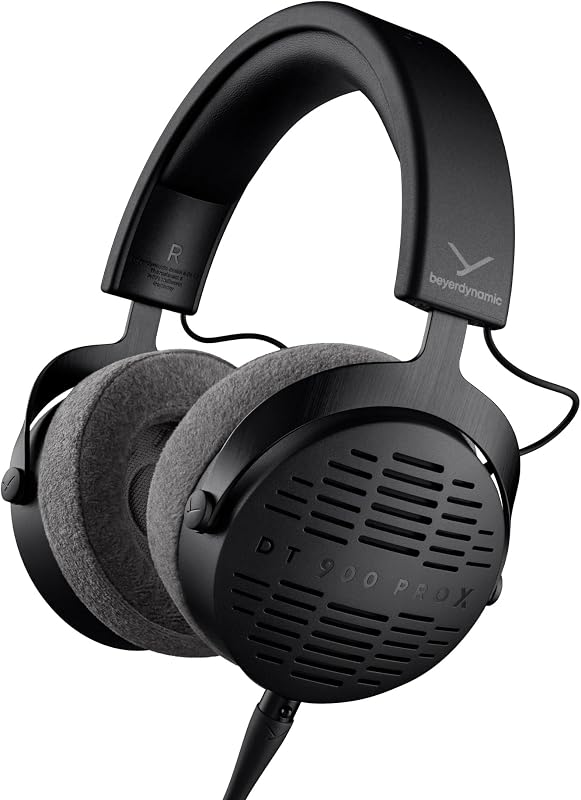
Studio monitors like the DT 770 Pro approach sound reproduction with a different engineering goal. Beyerdynamic engineered custom-built diaphragms to produce a balanced frequency response across all frequencies, tailored specifically for critical tracking, mixing, and mastering. While traditional closed-back headphones often sound congested, the Beyerdynamic DT 770 Pro 80 Ohm soundstage remains transparent and detailed, allowing engineers to isolate subtle background clicks, panning anomalies, and bass imbalances that might get lost in an open presentation. Shoppers considering alternative open-back mixing options often weigh the beyerdynamic dt 770 pro vs 900 pro x to see how newer driver architectures handle this balance.
When deciding whether to pick the Beyerdynamic DT 770 Pro or Philips SHP9500 for gaming, the choice depends on your environment and gaming priorities. The open SHP9500 excels in single-player exploratory games where ambient immersion and wide directional soundscapes matter most. However, if you game in a living room with background chatter or stream using an open condenser microphone, the DT 770 Pro provides the isolation necessary to prevent game audio from leaking into your voice chat while delivering punchy bass and micro-detail retrieval.
Edge: Philips SHP9500 takes the edge for sheer open soundstage width, while DT 770 Pro delivers superior analytical precision for critical tracking.
Power Demands and Source Compatibility
Impedance dictates how much electrical voltage a headphone requires to reach optimal listening volume and frequency stability. The Philips SHP9500 impedance is rated at 32 Ohms, meaning it is exceptionally easy to drive from virtually any output jack. Whether plugged directly into a laptop motherboard, a gaming controller 3.5mm port, or a smartphone, the SHP9500 reaches full operational volume without demanding dedicated amplification. For listeners who want plug-and-play simplicity without purchasing external desktop gear, the SHP9500 eliminates connectivity friction.
The DT 770 Pro version evaluated here features an 80 Ohm impedance rating. Beyerdynamic notes that while 32 Ohm versions exist for mobile devices and 250 Ohm versions serve high-powered studio rigs, the 80 Ohm variant acts as the versatile studio standard. It runs adequately on modern laptops and audio interfaces while remaining robust enough to handle the powerful output stages of professional mixing consoles without distorting. Those evaluating high-impedance studio gear often look at the sennheiser hd 660s2 vs beyerdynamic dt 770 pro to understand how different driver ratings respond to desktop amplifiers.
The trade-off between these two specifications is flexibility versus specialized power handling. If you connect your headphones strictly to standard consumer ports like gamepads and phones, the 32 Ohm SHP9500 guarantees sufficient headroom instantly. If your daily workflow involves a dedicated audio interface, mixing desk, or soundcard, the DT 770 Pro 80 Ohm design provides the headroom needed for professional monitoring environments.
Edge: Philips SHP9500 wins on power efficiency and universal plug-and-play compatibility with low-output consumer devices.
Build Quality, Longevity, and Serviceability
Longevity is a primary differentiator between consumer-grade headphones and professional studio tools. Beyerdynamic handcrafts the DT 770 Pro in Germany, backing it with over a century of manufacturing expertise and a 2-year warranty. What truly sets the DT 770 Pro apart in any Beyerdynamic DT 770 Pro review is modular serviceability. The ear cushions, padded headband, and even the internal drivers are designed to be replaced when worn down. This modular construction ensures that a working studio can maintain and repair the headphones over years of daily production rather than replacing the entire unit.
The Philips SHP9500 utilizes a construction focused on light desktop durability, featuring a headband reinforced with durable steel to provide tension across the crown. The ear cushions use a breathable cloth material, and the headband incorporates a double-layered cushion to distribute weight evenly. While the steel band gives the frame solid structural support, the product listing does not specify modular replacement parts for the drivers or headband padding. Listeners comparing open-back home headphones often cross-reference the beyerdynamic dt 900 pro x vs philips shp9500 to evaluate how build philosophies diverge across price tiers.
For rigorous studio tracking sessions where headphones are dropped, stretched, and passed between musicians, the rugged, repairable construction of the DT 770 Pro is substantially more robust. The SHP9500 provides adequate durability for stationary desk use, but it does not match the heavy-duty, serviceable standard established by Beyerdynamic’s German production line.
Edge: Beyerdynamic DT 770 Pro offers clearly superior build quality with modular, user-replaceable parts and a 2-year warranty.
Cable Design and Desktop Ergonomics
Cable length determines physical freedom at your workstation, and both models serve distinct environments through their included wire runs. The DT 770 Pro is equipped with a 3-meter (9.8-foot) straight single-sided cable. This long reach is designed specifically for recording booths and large mixing consoles, allowing audio professionals to move between outboard gear racks, drum kits, and mixing desks without yanking equipment off the table. It terminates in a 3.5mm mini-jack and includes a pre-installed gold-plated 1/4″ screw-on adapter to interface seamlessly with professional audio equipment.
While a 3-meter cable is essential in a tracking room, it can cause clutter on a standard computer desk. The Philips SHP9500 includes a 1.5-meter (4.9-foot) cable with gold-plated finishing. This compact length is suited for sitting directly in front of a desktop monitor, laptop, or keyboard without excessive cord slack tangling under your chair. For users working in tight spaces who do not need to pace around a studio control room, the SHP9500 cable length offers neat, convenient cable management right out of the box.
Comfort also plays a pivotal role in ergonomics. The DT 770 Pro utilizes plush velour ear pads that contour securely around your ears, creating the firm clamping force needed to maintain an acoustic seal. The SHP9500 utilizes breathable ear cups and a double-layered headband cushion paired with gentle clamping force. Those examining audiophile alternatives like the beyerdynamic dt 770 pro vs hifiman sundara frequently study how pad breathability balances against acoustic containment.
Edge: Tie. The DT 770 Pro is ideal for studio mobility and interface connectivity, while the SHP9500 offers practical cable management for compact computer desks.
Pros and Cons
Philips SHP9500

Pros
- Acoustic isolation prevents microphone bleed
- Handcrafted in Germany with serviceable parts
- Generous 3-meter studio cable reach
- Includes gold-plated screw-on 1/4-inch adapter
- Plush velour pads for long sessions
Cons
- 80 Ohm impedance benefits from audio interface
- Long 3-meter cable can clutter small desks
View Philips SHP9500 on Amazon
Who Should Buy Each One
Choose the Beyerdynamic DT 770 Pro If

- You record vocals, acoustic guitars, or podcasts and need zero headphone bleed into your microphone.
- You work in shared spaces, coffee shops, or loud rooms requiring passive ambient noise attenuation.
- You need a 3-meter long-reach cable and a screw-on 1/4″ adapter to move freely around a studio mixing console.
- You prioritize long-term investment value with fully serviceable, replaceable pads, headband, and drivers.
Choose the Philips SHP9500 If
- You listen exclusively in quiet, private environments where audio leakage will not disturb anyone.
- You want a wide, natural, speaker-like soundstage powered by large 50mm neodymium drivers.
- You plug straight into low-powered gear like laptops, phones, or gaming controllers without an external amplifier.
- You prefer a shorter 1.5m cable that stays tidy on a small home office workstation.
Final Verdict
When weighing the Philips SHP9500 vs Beyerdynamic DT 770 Pro, the right choice comes down to acoustic utility versus relaxed desktop listening. For general audio production, critical monitoring, and versatile studio tasks, the Beyerdynamic DT 770 Pro is the clear recommendation. Its closed-back design provides the essential acoustic isolation needed to eliminate microphone bleed, while its balanced frequency response and robust German construction make it an indispensable, serviceable tool for serious creators.
The Philips SHP9500 wins for listeners who want open-air desktop comfort and an expansive stereo field without managing studio-grade power demands. If you never record with open microphones, listen exclusively in a quiet room, and want an easy-to-drive 32 Ohm headphone for movies, gaming, and casual listening, the SHP9500 delivers an open, fatigue-free experience that closed headphones simply cannot mimic.
FAQ
Is Philips SHP9500 worth it for everyday home listening?
Yes, the Philips SHP9500 is an excellent option for quiet home environments where sound leakage is not an issue. Its open-back construction, 50mm drivers, and low 32 Ohm impedance provide wide stereo imaging and effortless compatibility with basic consumer gear.
Can you use the DT 770 Pro or Philips SHP9500 for mixing music?
When choosing between the DT 770 Pro or Philips SHP9500 for mixing, the DT 770 Pro is the standard studio choice. Its balanced frequency response across all frequencies and closed acoustic isolation allow you to detect subtle audio anomalies without ambient distractions.
Do I need a dedicated headphone amplifier for the Beyerdynamic DT 770 Pro 80 Ohm?
The 80 Ohm version of the DT 770 Pro is designed for universal studio use. While it can reach decent listening volume on modern laptops, it performs best when paired with an audio interface, dedicated soundcard, or headphone amplifier with enough voltage headroom.
Can I wear the Beyerdynamic DT 770 Pro for gaming?
Yes, the DT 770 Pro is well suited for gaming, particularly in louder environments or for content creators using external desk microphones. Its closed-back design keeps game audio from spilling into your stream microphone, and its velour ear pads offer long-lasting comfort.
Does the Philips SHP9500 leak sound into the room?
Yes, because the SHP9500 features an open acoustic system, audio escapes freely through the rear of the earcups. Anyone sitting nearby will clearly hear what you are playing at moderate to high volume levels.
What accessories are included with the Beyerdynamic DT 770 Pro?
The DT 770 Pro comes equipped with a pre-installed gold-plated 1/4″ (6.35mm) screw-on adapter fitted over its 3.5mm mini-jack, along with a drawstring storage bag for transport and dust protection.