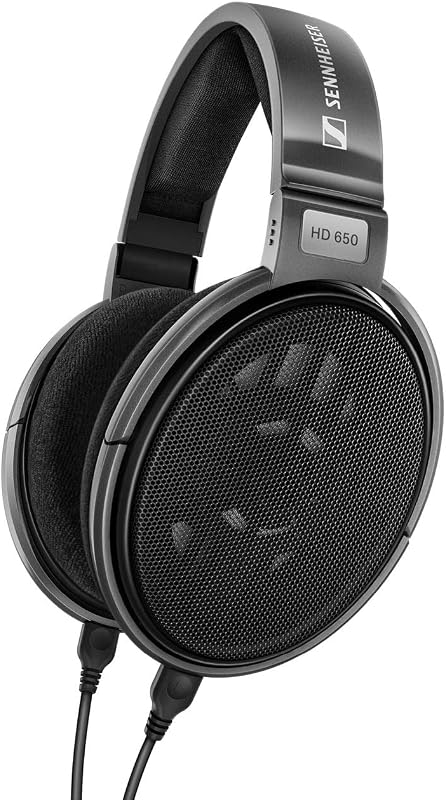
The fundamental distinction between these two studio headphones centers on acoustic enclosure architecture: the closed-back construction of the Beyerdynamic DT 770 Pro seals the ear to suppress outside noise and stop headphone audio from leaking into live recording microphones, while the open-back acoustic housing of the Beyerdynamic DT 900 Pro X allows air and sound to pass freely for a wide, natural soundstage. This structural difference dictates whether your studio setup prioritizes physical sound isolation or unrestrained spatial accuracy.
Tracking musicians, vocalists, and podcasters working in untreated or shared recording rooms should pick the Beyerdynamic DT 770 Pro for its superior sound isolation and reliable studio pedigree. Audio engineers, producers, and critical listeners focusing primarily on stereo mixing and mastering in quiet environments should select the Beyerdynamic DT 900 Pro X for its transparent acoustic imaging and lower driving impedance.


Beyerdynamic DT 770 Pro vs Beyerdynamic DT 900 Pro X at a Glance
| Feature | Beyerdynamic DT 770 Pro | Beyerdynamic DT 900 Pro X |
|---|---|---|
| Acoustic Design | Closed-back reference | Open-back reference |
| Transducer Driver | Custom-built dynamic diaphragm | STELLAR.45 driver |
| Rated Impedance | 80 ohm | 48 ohm |
| Cable Type | Fixed 3 m (9.8 ft) straight cable | Detachable mini-XLR cable |
| Connector Interface | 3.5 mm jack with 1/4 inch screw-on adapter | 3.5 mm jack with 1/4 inch adapter |
| Weight | Not listed | 12.2 ounces |
| Supplied Storage | Drawstring storage bag | Protective case |
| Noise Control | Passive acoustic seal | None |
| Country of Origin | Handcrafted in Germany | Made in Germany |
| Best For | Vocal tracking and live studio recording | Critical mixing, mastering, and editing |
Acoustic Enclosure and Soundstage Performance
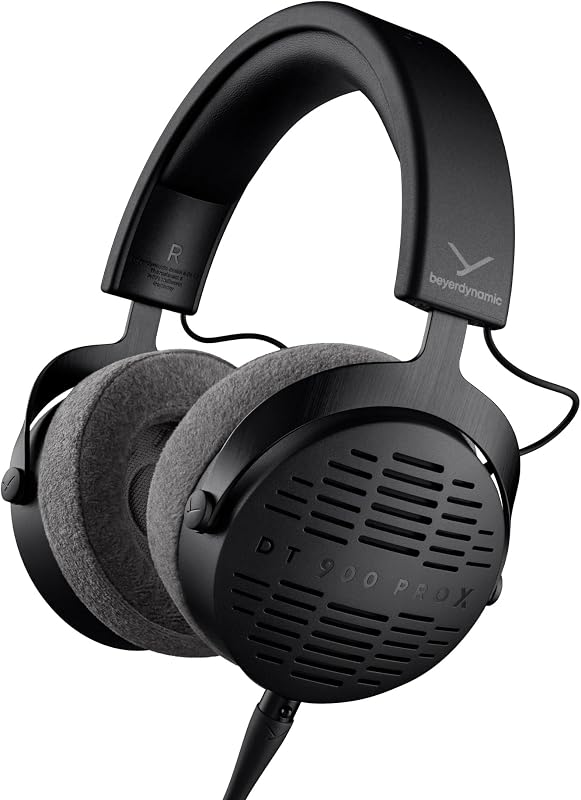
The physical housing of a studio headphone determines how sound waves propagate from the transducer to your eardrums and disperse into the surrounding environment. In a closed-back headphone, sealed acoustic earcups contain the audio energy within an isolated chamber. This architecture forms a mechanical boundary that stops acoustic reflections from escaping and prevents ambient environment noise from intruding into your monitoring feed. Conversely, an open-back headphone employs an acoustically transparent grille on the outer earcups, permitting pressure waves to vent outside naturally, which eliminates the internal resonance buildup commonly found inside sealed enclosures.
When comparing the Beyerdynamic DT 770 Pro vs DT 900 Pro X soundstage, these acoustic differences immediately influence critical audio evaluation. The DT 770 Pro delivers an exceptionally detailed and transparent soundstage for a closed design, maintaining tight acoustic control across all frequencies. However, the physical earcups inherently restrict perceived width compared to open designs. In contrast, the DT 900 Pro X features an open-back soundstage that provides expansive, natural imaging, allowing mix engineers to pinpoint exactly where instruments sit across the stereo panorama. Readers weighing spatial rendering against other open benchmarks often evaluate the sennheiser hd 660s2 vs beyerdynamic dt 900 pro x to understand how different open housings handle stereo depth.
This spatial behavior shapes whether you should deploy the DT 770 Pro or DT 900 Pro X for mixing without compromise. Mixing on the DT 900 Pro X provides an accurate sensation of distance and depth because the acoustic open-back architecture avoids the internal reflections that can occasionally mask subtle reverbs and panning placements. The DT 770 Pro controls resonances remarkably well through its custom dampening chambers, but engineers must remain mindful of closed-cup acoustic pressure during long evaluation sessions.
Edge: Beyerdynamic DT 900 Pro X for its natural acoustic imaging and wide soundstage that delivers superior spatial precision during stereo mixing.
Driver Architecture and Audio Resolution
Transducer design governs how accurately a studio headphone converts an incoming electrical signal into kinetic acoustic motion. Modern audio production requires drivers capable of rendering ultra-fast transient responses without breakup or harmonic distortion across wide dynamic shifts. Evaluating internal motor assemblies is essential when writing an objective Beyerdynamic DT 900 Pro X review, as driver geometry directly dictates clarity, separation, and tonal neutrality across the frequency spectrum.
The DT 770 Pro utilizes custom-built dynamic diaphragms developed through more than three decades of German studio manufacturing. These drivers are calibrated to provide a balanced frequency response suitable for tracking, mastering, and critical studio monitoring. The diaphragm delivers consistent performance across frequencies, reproducing impactful low end and crisp high-frequency detail. Its acoustic presentation has served as an industry benchmark for over 30 years in professional recording booths, establishing a proven acoustic baseline for tracking sessions.
On the other side, the DT 900 Pro X incorporates the proprietary STELLAR.45 driver, a flagship transducer engineered for high resolution and low distortion at any playback level. This driver structure combines a responsive voice coil and a lightweight diaphragm that reproduces subtle audio micro-details without distorting when pushed by demanding transient peaks. Those wondering is DT 900 Pro X worth it for modern production workflows will find that this transducer responds with remarkable speed. Shoppers comparing studio driver technologies often look at the beyerdynamic dt 900 pro x vs hifiman sundara to examine how dynamic transducers measure against planar magnetic options.
Edge: Beyerdynamic DT 900 Pro X for its STELLAR.45 driver that maintains lower distortion and higher resolution across varying playback levels.
Impedance and Source Compatibility
Impedance ratings determine the electrical voltage required to drive a pair of headphones to optimal working volumes. Audio equipment with varying output impedance requires carefully matched transducers to prevent frequency response deviations and inadequate listening volume. Examining DT 770 Pro vs DT 900 Pro X impedance figures reveals two very different hardware integration philosophies.
The DT 770 Pro featured in this comparison operates at 80 ohms. The manufacturer specifies that this 80-ohm configuration represents universal studio versatility, designed for robust workstation interfaces, mixing desks, and dedicated headphone outputs. While Beyerdynamic notes that 32-ohm versions exist for mobile gear and 250-ohm versions exist for high-powered setups, this specific 80-ohm model provides a balanced load for studio gear. When connected to very weak mobile outputs, an 80-ohm load can occasionally require higher volume knob positions to achieve adequate monitoring levels.
The DT 900 Pro X simplifies amplification requirements entirely through its 48-ohm drive. The product data highlights that this 48-ohm rating allows full listening volume from virtually any audio source, whether you connect directly to a laptop headphone jack, an entry-level audio interface, or a mobile phone, without requiring a dedicated headphone amplifier. When analyzing the DT 900 Pro X vs DT 770 Pro 80 ohm matchup, the 48-ohm system offers immediate plug-and-play flexibility across modern hybrid setups. Readers exploring drive requirements across different studio designs often study the beyerdynamic dt 770 pro vs philips shp9500 to see how low-impedance open designs compare in practical use.
Edge: Beyerdynamic DT 900 Pro X for its 48-ohm rating that achieves full volume and dynamic punch from any standard audio jack without an external amplifier.
Cable Design and Practical Usability
Cable connectivity directly impacts daily workflow and hardware longevity in busy creative environments. In demanding studio settings, accidental tugs, rolling chair snags, and routine transport put extreme stress on cable termination points. Comparing the DT 770 Pro vs DT 900 Pro X cable setups highlights an evolutionary shift in physical product design.
The DT 770 Pro features a single-sided, fixed 3-meter (9.8 ft) straight cable terminated with a 3.5 mm connector and a gold-plated 1/4-inch (6.35 mm) screw-on adapter. This generous cable length gives recording musicians and tracking engineers total freedom of movement around mixing desks, instrument racks, and vocal booths. However, because the cable is permanently hardwired into the left ear cup, a damaged cord requires physical disassembly and internal soldering or service center repair. For creators evaluating long-term studio wear, examining the audio-technica ath-m20x vs beyerdynamic dt 770 pro provides perspective on how fixed-cable studio standards handle regular workstation use.
The DT 900 Pro X resolves this maintenance vulnerability by featuring a detachable mini-XLR cable system. If the cable snags or wears down, you can instantly detach it and snap a fresh cable into place without opening the headphone chassis or touching a soldering iron. The package includes the removable mini-XLR cord along with a 1/4-inch adapter, making it easy to swap cables for different desk arrangements or pack the unit securely inside its supplied protective case. In a direct Beyerdynamic DT 900 Pro X vs DT 770 Pro practical handling assessment, this detachable interface offers clear operational convenience.
Edge: Beyerdynamic DT 900 Pro X for its detachable mini-XLR cable design that simplifies cable replacement and avoids permanent tethering.
Acoustic Isolation and Studio Tracking Utility
Acoustic isolation defines whether a pair of headphones can prevent sound from spilling into sensitive condenser microphones while blocking intrusive background noise from reaching the listener. In vocal recording booths and live tracking rooms, poor isolation can ruin an entire take by allowing click tracks and monitor mixes to bleed into live audio channels.
This is the core strength highlighted in any thorough Beyerdynamic DT 770 Pro review. The closed-back construction of the DT 770 Pro ensures minimal sound leakage, making it an undisputed industry favorite for vocal tracking, drum monitoring, and instrument recording. Coupled with iconic black velour ear pads that create a soft, breathable acoustic seal, the DT 770 Pro allows performers to monitor tracks at healthy studio levels without contaminating audio takes. Handcrafted in Germany with replaceable pads, headbands, and drivers, it offers the mechanical durability needed for intense studio schedules.
The DT 900 Pro X, by contrast, lists noise control as none. Because of its open-back architecture, audio radiates outward into the room, while background noises filter directly through the earcups. Attempting to track vocals or acoustic guitar while wearing the DT 900 Pro X risks significant microphone bleed from monitor clicks or playback tracks. Similarly, while exploring whether to pick the DT 770 Pro or DT 900 Pro X for gaming, the environment matters: gamers in noisy living rooms benefit from the DT 770 Pro passive seal, while gamers in isolated rooms may prefer the DT 900 Pro X for expansive directional awareness. Those weighing acoustic containment across studio alternatives can also examine the beyerdynamic dt 900 pro x vs akg k371 to understand how different closed and open options manage ambient isolation.
Edge: Beyerdynamic DT 770 Pro for its closed-back acoustic containment that prevents microphone bleed and isolates ambient room noise during tracking.
Pros and Cons
Beyerdynamic DT 770 Pro

Pros
- Closed-back acoustic seal prevents microphone bleed
- Generous 3-meter cable reach for studio mobility
- Fully serviceable design with replaceable parts
- Breathable velour ear pads for long sessions
Cons
- Fixed non-detachable cable complicates repairs
- Narrower soundstage than open-back headphones
View Beyerdynamic DT 770 Pro on Amazon
Beyerdynamic DT 900 Pro X
Pros
- Open-back soundstage delivers natural spatial imaging
- STELLAR.45 driver produces high resolution with low distortion
- Low 48-ohm impedance runs easily on any source
- Detachable mini-XLR cable simplifies replacement
Cons
- Zero acoustic isolation allows external sound in
- Audio leakage makes it unsuitable for vocal tracking
View Beyerdynamic DT 900 Pro X on Amazon
Who Should Buy Each One
Choose the Beyerdynamic DT 770 Pro If
- You record vocalists, acoustic guitarists, or podcasts near sensitive microphones where sound leakage would ruin the audio take.
- You work in shared or noisy environments where you need passive closed-back acoustic isolation to focus on your audio feed.
- You need a 3-meter (9.8 ft) straight cable that lets you move freely around outboard gear, tracking racks, and expansive mixing consoles.
- You prefer a time-tested German studio standard with fully serviceable and replaceable ear pads, headband padding, and internal drivers.
Choose the Beyerdynamic DT 900 Pro X If
- You specialize in reference mixing, mastering, or detailed stereo editing where a wide, natural open-back soundstage is essential.
- You run your audio directly from laptop headphone ports, mobile devices, or standard audio interfaces without a dedicated headphone amplifier.
- You prioritize a detachable mini-XLR cable system that makes routine cable replacement effortless and simplifies travel storage.
- You work in a private, quiet studio space where outward sound leakage and lack of noise isolation cause no disruption.
Final Verdict
For audio producers, mixing engineers, and media creators who primarily evaluate audio in dedicated, quiet environments, the Beyerdynamic DT 900 Pro X represents the superior choice. Its open-back acoustic housing eliminates internal earcup reflections, delivering an authentic stereo panorama with precise spatial separation. Combined with the low-distortion STELLAR.45 driver, an efficient 48-ohm impedance that runs effortlessly from laptops and basic interfaces, and a user-replaceable detachable mini-XLR cable, the DT 900 Pro X addresses the core functional demands of modern mixing desks.
However, the Beyerdynamic DT 770 Pro remains the essential studio standard whenever physical isolation is non-negotiable. If your daily workflow involves tracking live vocals, recording acoustic instruments near sensitive microphones, or monitoring audio in noisy shared spaces, the DT 770 Pro is the only viable option between the two. Its closed-back construction prevents click-track bleed, its 80-ohm universal impedance integrates cleanly with professional studio gear, and its 3-meter straight cable offers generous reach around tracking spaces.
FAQ
Can the DT 770 Pro be used for mixing and mastering
Yes, the DT 770 Pro provides a balanced frequency response that the manufacturer specifies for mixing, mastering, and critical studio monitoring. While open-back headphones offer a wider soundstage, the DT 770 Pro has been used as a reliable closed-back mixing and tracking reference across professional studios for over 30 years.
Does the DT 900 Pro X require a dedicated headphone amplifier
No, the DT 900 Pro X features a 48-ohm drive engineered to deliver full volume and dynamic range directly from any audio source. You can connect it straight to a laptop, mobile phone, or standard audio interface without needing an external amplifier.
Can you use the DT 900 Pro X for vocal recording
Using the DT 900 Pro X for vocal recording is generally not recommended because it has an open-back design with no noise control. Audio from the headphone drivers leaks freely through the outer grille and will likely bleed into sensitive condenser microphones during live vocal takes.
What is the difference between the cables on the DT 770 Pro and DT 900 Pro X
The DT 770 Pro includes a fixed, single-sided 3-meter (9.8 ft) straight cable with a screw-on 1/4-inch adapter. The DT 900 Pro X features a modern detachable mini-XLR cable system, allowing you to unplug and replace the cable quickly if it becomes damaged or worn.
Which model is better suited for gaming
The choice depends on your gaming environment. The DT 900 Pro X provides an expansive, natural soundstage with precise spatial imaging, making it excellent for directional audio in a quiet room. If you play in a noisy room or use a sensitive desktop microphone, the closed-back DT 770 Pro is better because it isolates ambient noise and stops game audio from leaking into voice chat.
Are parts replaceable on both headphone models
Yes, both models feature high serviceability. The DT 770 Pro listing specifies that you can replace the velour ear pads, headbands, and drivers to maintain performance over decades, while the DT 900 Pro X includes replaceable velour pads and a detachable mini-XLR cable for effortless hardware maintenance.