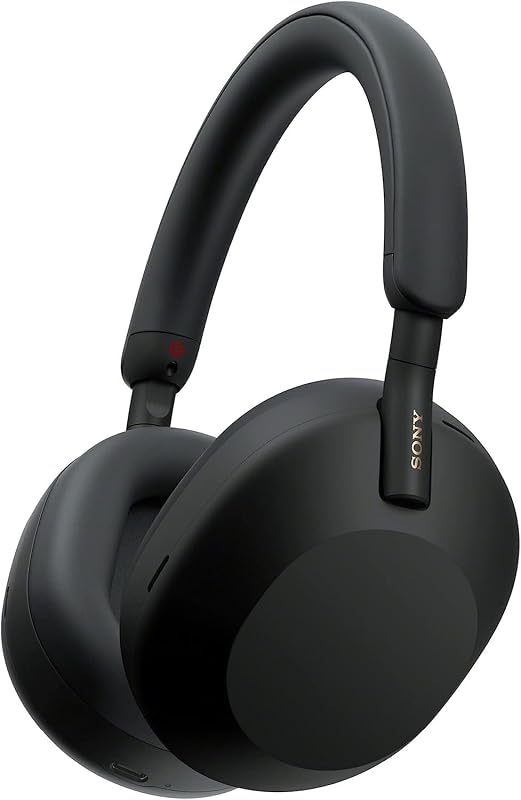
The single difference that decides the choice between the Sennheiser HD 660S2 and the Beyerdynamic DT 900 Pro X is source amplification and driver efficiency: the HD 660S2 features a high 300-ohm impedance engineered to scale with dedicated headphone amplifiers, whereas the DT 900 Pro X utilizes an efficient 48-ohm driver designed to achieve full listening volume straight from laptops, basic interfaces, or portable devices without secondary amplification equipment.
Dedicated home audiophiles who possess a high-output headphone amplifier and prioritize sub-bass detail with balanced cabling should choose the Sennheiser HD 660S2. Studio tracking engineers, mobile producers, and creators who need a versatile plug-and-play reference tool that works seamlessly across unamplified audio jacks should choose the Beyerdynamic DT 900 Pro X.


Sennheiser HD 660S2 vs Beyerdynamic DT 900 Pro X at a Glance
| Feature | Sennheiser HD 660S2 | Beyerdynamic DT 900 Pro X |
|---|---|---|
| Operating Principle | Open-back over-ear | Open-back over-ear |
| Impedance | 300 ohm | 48 ohm |
| Transducer Type | 42 mm dynamic with aluminum voice coil | STELLAR.45 driver |
| Low-Frequency Reach | Sub-bass specified down to 27.5 Hz | Not listed |
| Cable Connections | Detachable dual-entry (6.3 mm and 4.4 mm cables) | Detachable single-sided mini-XLR |
| Included Adapters | 6.3 mm to 3.5 mm adapter | 1/4-inch (6.35 mm) adapter |
| Weight | Not listed | 12.2 ounces |
| Manufacturing Location | Crafted in Germany & Ireland | Made in Germany |
| Included Storage | Carry pouch | Protective case |
| Manufacturer Warranty | 2 year manufacturer | 2 year manufacturer |
| Best For | Amplified HiFi listening and balanced desktop setups | Direct-drive studio mixing and flexible production |
Impedance and Amplification Requirements
The operational impedance rating determines what hardware you need to run your headphones effectively, defining the primary technical boundary in this comparison. The Sennheiser HD 660S2 impedance is rated at 300 ohms, a specification that demands substantial voltage swing from your playback chain. When driven by standard headphone outputs found on basic consumer laptops, smartphones, or basic USB recording interfaces, high-impedance headphones often suffer from limited maximum volume, compressed dynamics, and anemic bass reproduction. To experience the intended dynamic headroom of the HD 660S2, you must route it through a dedicated desktop amplifier or an audio interface engineered to handle high-impedance loads.
By contrast, the DT 900 Pro X impedance sits at an accessible 48 ohms, backed by the manufacturer’s low-impedance acoustic system. Beyerdynamic explicitly engineered this model to deliver full volume, high resolution, and low distortion from any source, including an auxiliary laptop jack, tablet, or mobile phone, eliminating the functional requirement for outboard headphone amplification. Readers evaluating the sennheiser hd 660s2 vs beyerdynamic dt 770 pro will recognize this fundamental divide between high-impedance studio legacy gear and modern, versatile drive systems.
In practice, choosing the DT 900 Pro X yields complete freedom of movement and equipment flexibility, allowing you to plug straight into whatever production machine is in front of you. Opting for the HD 660S2 commits you to a stationary listening environment or requires purchasing portable amplification gear to supply adequate driving power.
Edge: Beyerdynamic DT 900 Pro X, because its 48-ohm driver reaches optimal playback levels from any standard source without requiring an outboard amplifier.
Soundstage and Spatial Presentation
The open-back format inherently provides an expansive acoustic environment compared to sealed enclosures, yet how each manufacturer tunes spatial reproduction creates divergent user experiences. In the Beyerdynamic DT 900 Pro X vs Sennheiser HD 660S2 spatial assessment, both headphones rely on ventilated earcups that allow sound waves to bleed naturally outward, minimizing internal cabinet reflections. This acoustic openness generates a broad, three-dimensional sonic field that prevents the claustrophobic in-your-head effect common to sealed studio monitors.
Examining the HD 660S2 vs DT 900 Pro X soundstage characteristics reveals distinct spatial priorities between critical mixing and audiophile immersion. Beyerdynamic highlights an open-back soundstage characterized by wide, natural imaging that demonstrates exactly where individual sound elements sit within the stereo field. This precise channel separation assists audio engineers in pinpointing panning coordinates, track masking, and reverberant tails during critical listening checks. As detailed in the beyerdynamic dt 900 pro x vs hifiman sundara overview, open-back designs excel at separating overlapping frequency bands in a virtual room.
Sennheiser frames the spatial performance of the HD 660S2 around natural, high-fidelity reproduction tailored for immersive listening sessions. The open architecture works in tandem with angled oval earcups to present an organic, surrounding acoustic bubble rather than an overly exaggerated lateral field. Instruments and vocals sit naturally forward with distinct layering, making it easy to track individual musical lines across complex orchestral or acoustic arrangements.
Edge: Tie, as the DT 900 Pro X delivers pinpoint directional separation for technical analysis, while the HD 660S2 offers an organic, cohesive staging presentation for immersive enjoyment.
Transducer Technology and Low-End Performance
Driver design directly dictates transient speed, frequency accuracy, and low-end authority. The HD 660S2 features 42 mm transducers paired with an ultra-light aluminum voice coil. This voice coil reduction lowers moving mass, allowing the driver diaphragm to react swiftly to electrical signals and accurately track rapid audio transients. Sennheiser particularly emphasizes sub-bass capability on this model, documenting extended low-end performance capable of articulating notes from piano fundamentals at 27.5 Hz up through punchy bass drums between 45 and 60 Hz with controlled precision.
Beyerdynamic counters with its proprietary STELLAR.45 driver, a flagship transducer engineered from the ground up for low distortion and high resolution across varying volume levels. The transducer assembly utilizes strong magnetic flux and a resilient diaphragm design to maintain structural stability, preventing acoustic breakup when pushed to louder monitoring thresholds during active production sessions. Audio creators exploring the beyerdynamic dt 770 pro vs 900 pro x evolution will notice that the STELLAR.45 platform focuses heavily on clean, immediate transient recovery.
While the DT 900 Pro X achieves dependable neutrality and low distortion, the HD 660S2 explicitly targets physical sub-bass extension that is historically difficult to produce in an open-back framework. Listeners tracking low synth lines, pipe organs, or tuned kick drums gain quantifiable low-register definition from the Sennheiser driver architecture without encountering loose or muddy acoustic spill.
Edge: Sennheiser HD 660S2, due to its specialized voice coil assembly and explicit sub-bass tuning that reaches down to 27.5 Hz.
Studio Mixing and Critical Reference Workflow
Selecting whether to deploy the HD 660S2 or DT 900 Pro X for mixing hinges on how the headphones interface with real-world production environments. Beyerdynamic specifically created the DT 900 Pro X for mixing, mastering, and critical reference listening. The inclusion of the STELLAR.45 driver ensures that frequency response remains linear and distortion-free, allowing engineers to identify problem frequencies, harsh sibilance, or balance discrepancies without coloration flattering the audio stream. For comparisons with standard studio tools, see our look at the beyerdynamic dt 900 pro x vs akg k371.
The Sennheiser HD 660S2 is also designated by its manufacturer for music production alongside HiFi listening and gaming. Its rich midrange accuracy and detailed high-frequency reproduction ensure that vocal balances, acoustic instruments, and reverb textures can be evaluated with surgical scrutiny. However, working on mixes using the HD 660S2 requires keeping your monitoring setup tethered to high-output mixing consoles or outboard headphone amps, which limits field recording or remote laptop tracking.
Furthermore, Beyerdynamic equips the DT 900 Pro X with studio-standard hardware, including a secure mini-XLR detachable connection on a single earcup. Single-sided cable routing prevents cords from draping across keyboards, synthesizers, and desktop mixing surfaces. In contrast, the HD 660S2 uses dual-entry cabling that drops from both earcups, which can sometimes interfere with physical instrument play or studio workstation movements.
Edge: Beyerdynamic DT 900 Pro X, thanks to its mix-centric linear driver, low-impedance workflow adaptability, and single-sided studio cabling.
Gaming Performance and Long-Session Comfort
Comfort and directional imaging represent critical criteria for anyone considering the HD 660S2 or DT 900 Pro X for gaming or marathon listening blocks. Sennheiser equips the HD 660S2 with breathable, plush ear cushions and an open-back chassis configured to eliminate acoustic fatigue and heat buildup. The listing notes touch-style media controls integrated for media management, and the overall oval earpiece shape contours naturally around adult ears, distributing clamp force evenly over long stretches of play or desktop work.
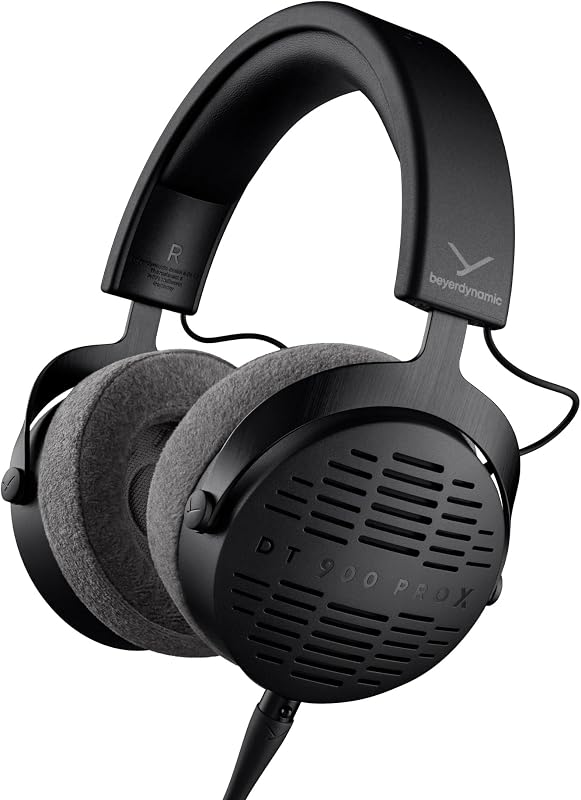
The DT 900 Pro X is built around Beyerdynamic’s robust studio chassis, finished in space grey with plush velour padding. The open-back acoustic design ensures airflow to keep ears cool through grueling editing or multiplayer sessions. In terms of mass, the DT 900 Pro X listing documents a total item weight of 12.2 ounces, giving it a solid, reassuring presence on the head. Sennheiser does not specify the precise weight for the HD 660S2 in its product specifications, though its lightweight aluminum voice coil is engineered to shave internal transducer weight.
When tracking spatial audio cues such as footsteps, approaching vehicles, or environmental background audio in competitive gaming titles, both models leverage open acoustic venting to construct a believable sense of distance. As seen when comparing the sennheiser hd 560s vs beyerdynamic dt 900 pro x, spatial accuracy in open headphones drastically improves environmental awareness over typical closed gaming headsets. The lightweight profile and contouring earcups of the Sennheiser give it a slight physical advantage for extended gaming marathons.
Edge: Sennheiser HD 660S2, because of its fatigue-reducing plush ear cushions and lightweight transducer assembly designed for marathon listening comfort.
Cable Versatility and Included Accessories
The hardware and connection options packaged in the box determine how quickly you can integrate these headphones into your signal chain. Sennheiser provides an extensive accessory bundle with the HD 660S2: a standard 1.8-meter cable terminated in an unbalanced 6.3 mm plug, a secondary 1.8-meter cable terminated in a balanced 4.4 mm Pentaconn connector, a 6.3 mm to 3.5 mm adapter, and a soft carry pouch. The inclusion of a dedicated 4.4 mm balanced cable is an enormous asset for modern audiophile desktop systems, enabling users to run balanced outputs from modern DAC/amp stacks out of the box.
Beyerdynamic takes a studio-focused approach to the DT 900 Pro X retail packaging. The package includes the DT 900 Pro X headphones, a detachable cable with a locking 3-pin mini-XLR connection that plugs into the left earcup, a 3.5 mm straight jack, a screw-on 1/4-inch (6.35 mm) adapter, and a protective carrying case. The inclusion of a robust protective case shields the headphone framework from transport scuffs during commutes between home and studio.
While the DT 900 Pro X offers a secure locking mini-XLR port and a protective case, it does not support balanced dual-cable drive systems due to its single-sided wiring architecture. The HD 660S2 dual-cable package accommodates both standard studio jacks and balanced audiophile gear without demanding aftermarket wiring purchases.
Edge: Sennheiser HD 660S2, because it supplies both standard 6.3 mm and balanced 4.4 mm audiophile cables right out of the box.
Pros and Cons
Sennheiser HD 660S2

Pros
- Extended sub-bass response down to 27.5 Hz
- Includes 4.4 mm balanced connection cable
- Ultra-light aluminum voice coil assembly
- Plush breathable cushions for fatigue-free sessions
Cons
- Demanding 300-ohm impedance requires dedicated amplifier
- Supplied with soft pouch rather than hard case
View Sennheiser HD 660S2 on Amazon
Beyerdynamic DT 900 Pro X
Pros
- Efficient 48-ohm drive runs on any source
- Low-distortion STELLAR.45 driver technology
- Detachable mini-XLR single-sided cable
- Supplied with protective carrying case
Cons
- Listing specifies noticeable weight at 12.2 ounces
- Lacks balanced cable connectivity in the box
View Beyerdynamic DT 900 Pro X on Amazon
Who Should Buy Each One
Choose the Sennheiser HD 660S2 If
- You own a dedicated desktop headphone amplifier or balanced DAC stack capable of driving 300-ohm loads.
- You want extended low-end response capable of resolving deep sub-bass frequencies down to 27.5 Hz.
- You prefer balanced connectivity and plan to utilize the included 4.4 mm audio cable without buying extra parts.
- Your primary use case is focused home HiFi music listening or immersive desktop media consumption.
Choose the Beyerdynamic DT 900 Pro X If
- You need reference-grade mixing and mastering headphones that run at full volume straight from standard laptop ports or interfaces.
- You prefer single-sided, detachable mini-XLR cabling that stays out of the way while playing instruments or operating mixers.
- You frequently travel between studios and require an included protective case for transit security.
- You want a dependable German-made studio workhorse built specifically for linear audio monitoring across multiple machines.
Final Verdict
When assessing whether an investment in these open-back headphones fits your workflow, the deciding factor rests entirely on your source equipment. In any detailed Sennheiser HD 660S2 review, the takeaway is clear: its 42 mm drivers, ultra-light aluminum voice coils, and 300-ohm impedance deliver astonishing sub-bass reach and refined acoustic realism, but only when paired with suitable amplification. For listeners with a dedicated headphone amplifier, the answer to is Sennheiser HD 660S2 worth it is a definite yes, as its deep bass response and balanced 4.4 mm cable integration deliver a premier desktop listening session.
Conversely, an objective Beyerdynamic DT 900 Pro X review reveals a modern studio monitoring design that prioritizes adaptability and low distortion. With its 48-ohm STELLAR.45 driver, single-sided mini-XLR cable, and included protective case, the DT 900 Pro X eliminates the hardware bottlenecks of high-impedance monitoring. When considering is Beyerdynamic DT 900 Pro X worth it for mobile production, content creation, and multi-source studio mixing, it stands as the superior, highly versatile reference tool for everyday workflows.
FAQ
Can the Beyerdynamic DT 900 Pro X be driven directly from a laptop or phone?
Yes. The Beyerdynamic DT 900 Pro X features a 48-ohm impedance rating specifically engineered to achieve full output volume and clear dynamics directly from consumer headphone jacks, including laptops, audio interfaces, and mobile devices, without needing a standalone headphone amplifier.
Do you need a dedicated amplifier for the Sennheiser HD 660S2?
Yes, optimal performance requires a dedicated amplifier. The Sennheiser HD 660S2 features a 300-ohm impedance, which demands higher output voltage than standard headphone jacks typically provide. An outboard headphone amplifier or high-output audio interface ensures the headphones deliver their full dynamic range and bass control.
What audio cables come included with the Sennheiser HD 660S2?
The Sennheiser HD 660S2 comes with two distinct 1.8-meter detachable cables: one terminated in an unbalanced 6.3 mm plug and one terminated in a balanced 4.4 mm plug. It also includes a 6.3 mm to 3.5 mm adapter to fit standard consumer mini-jacks.
Where are the Sennheiser HD 660S2 and Beyerdynamic DT 900 Pro X manufactured?
The Sennheiser HD 660S2 listing specifies that the headphones are crafted in Germany and Ireland. The Beyerdynamic DT 900 Pro X listing indicates that the unit is made in Germany.
Do either of these open-back headphones isolate outside room noise?
Open-back headphones inherently feature ventilated earcups that allow ambient room noise to enter and audio to leak outward. While the Sennheiser listing categorizes noise control under sound isolation due to its over-ear acoustic fit, both models are open-back designs intended for quiet listening environments rather than noisy commuter spaces.
What protective storage comes inside each box?
The Sennheiser HD 660S2 includes a soft carry pouch for basic dust protection. The Beyerdynamic DT 900 Pro X includes a dedicated protective case designed to guard the headphones during studio commutes and travel.