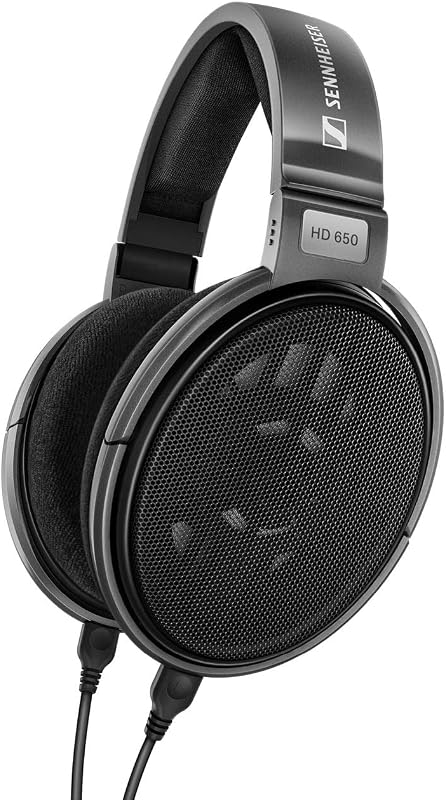
The single deciding factor between the Sennheiser HD 560S and the Beyerdynamic DT 770 Pro is acoustic enclosure design: the Sennheiser uses an open-back chassis that allows sound waves to expand naturally into the room for wide spatial realism, whereas the Beyerdynamic employs a closed-back architecture engineered to seal audio inside the cups and block ambient noise.
Choose the Sennheiser HD 560S if you mix or listen in a quiet environment and prioritize an analytical, expansive soundstage with angled acoustic drivers. Choose the Beyerdynamic DT 770 Pro if you need acoustic isolation to prevent microphone bleed during recording sessions or want a rugged studio workhorse with breathable velour ear cushions.


Sennheiser HD 560S vs Beyerdynamic DT 770 Pro at a Glance
| Feature | Sennheiser HD 560S | Beyerdynamic DT 770 Pro |
|---|---|---|
| Acoustic Design | Open-back | Closed-back |
| Form Factor | Over-ear | Over-ear |
| Transducer Technology | Polymer-blend membrane with linear excursion | Custom dynamic diaphragm |
| Driver Orientation | Ergonomic Acoustic Refinement (E.A.R.) angled drivers | Standard planar alignment |
| Impedance | Not listed | 80 Ohm |
| Cable Type and Length | Wired detachable cable | 3 m (9.8 ft) straight single-sided cable |
| Connector Hardware | 1/4-inch connector with adapter | 3.5 mm jack with 1/4-inch screw-on gold adapter |
| Ear Cushion Material | Over-ear acoustic padding | Iconic black velour pads |
| Manufacturing and Origin | Not listed | Handcrafted in Germany, fully serviceable |
| Warranty Coverage | 2-year manufacturer warranty | 2-year manufacturer warranty |
| Best For | Critical reference listening and quiet mixing desks | Studio vocal tracking, monitoring, and noisy spaces |
Acoustic Design and Soundstage Presentation
The acoustic architecture of open back vs closed back headphones represents the fundamental divide between these two studio monitoring staples. In an open-back design like the Sennheiser HD 560S, the outer earcups feature a permeable mesh grille that allows sound waves to radiate outward and dissipate freely. Sennheiser combines this open structure with Ergonomic Acoustic Refinement (E.A.R.) technology, which tilts the transducers slightly to mirror the natural geometry of human ears. When listening, instruments and ambient sound cues behave more like audio emanating from external studio monitor speakers placed in a treated room, resulting in lifelike depth, natural decay, and broad stereo separation.
Conversely, the Beyerdynamic DT 770 Pro seals the ear completely within solid acoustic earcups. Closed-back chambers trap sound energy inside the enclosure, which naturally bounds the spatial field. While the soundstage on the DT 770 Pro is engineered to be detailed and transparent for a closed headphone, it cannot match the sheer width and breathability of an open mesh ear cup. Instead, it pulls the audio closer to your ears, emphasizing pinpoint separation and forward instrument positioning rather than ambient room decay. Readers comparing different open and closed alternatives often examine the sennheiser hd 560s vs beyerdynamic dt 900 pro x to see how modern driver architectures alter spatial staging.
When evaluating HD 560S soundstage vs DT 770 Pro presentation, your physical listening room dictates the outcome. The open housing of the HD 560S trades noise rejection for an airy, boundary-free sound field that reduces ear fatigue caused by acoustic pressure buildup. The DT 770 Pro creates an intimate acoustic environment that focuses on localized transients rather than ambient reverberation.
Edge: Sennheiser HD 560S, because its open-back earcups and angled E.A.R. driver configuration produce a substantially wider, more lifelike acoustic soundstage.
Acoustic Isolation and Noise Leakage
Acoustic containment is the primary reason recording studios and broadcast booths rely on closed-back monitoring. When tracking vocals or acoustic instruments in close proximity to a sensitive condenser microphone, headphone bleed can ruin an otherwise pristine performance. The Beyerdynamic DT 770 Pro is purpose-built for this environment. Its solid outer cups and snug clamping pressure eliminate sound leakage, keeping backing tracks, metronome clicks, and cues entirely inside your ears. Simultaneously, the passive isolation blocks out distracting room sounds such as computer fans, exterior traffic, and HVAC noise.
The Sennheiser HD 560S offers no acoustic isolation whatsoever. Because the rear of the transducer is open to the ambient environment, every note, dialogue line, and transient will leak out into your immediate surroundings. If someone sits next to you in an office or home studio, they will clearly hear your monitor mix. More importantly, attempting to record live acoustic guitars or vocals while wearing the HD 560S will result in heavy playback bleed spilling directly into the active microphone.
For users working in multi-person environments, recording vocalists, or seeking isolation in shared apartments, the DT 770 Pro delivers dependable acoustic containment. The HD 560S requires an isolated, low-noise private workspace to perform properly without outside noise intruding into delicate listening sessions. Engineers exploring tracking headphones often compare closed designs in the beyerdynamic dt 770 pro vs akg k371 comparison to evaluate physical seal and sound containment.
Edge: Beyerdynamic DT 770 Pro, thanks to its closed-back architecture that virtually eliminates external bleed and isolates you from environmental noise.
Studio Mixing and Reference Audio Accuracy
Evaluating the Sennheiser HD 560S or Beyerdynamic DT 770 Pro for mixing depends on whether your audio workflow demands surgical acoustic neutrality or punchy monitoring dynamics. The Sennheiser HD 560S is tuned specifically as a reference tool meant to uncover the unvarnished truth in an audio file. Sennheiser outfitted the unit with a polymer-blend transducer membrane engineered for highly-linear excursion, yielding tight control over the entire frequency spectrum. The resulting response is flat, transparent, and revealing, ensuring that harsh high frequencies, cluttered midranges, and masked vocal harmonies are immediately noticeable for corrective EQ adjustments.
The Beyerdynamic DT 770 Pro (80 Ohm) serves as an established studio standard for control, recording, and critical monitoring across three decades of audio production. Its custom-built German diaphragms deliver a balanced frequency response that provides consistent performance across all audio frequencies. However, the closed enclosure introduces distinct low-end resonance and sub-bass presence that open-back headphones deliberately avoid. This gives the DT 770 Pro an energetic, commanding low-end foundation that helps beatmakers and tracking engineers gauge bass weight and low-frequency transients with punchy authority.
For mastering and fine surgical balance, an accurate Sennheiser HD 560S review must acknowledge that open drivers provide unmatched linear consistency without the bass-reflex coloration inherent to closed cups. Yet many producers who need to check mix energy and commercial low-end punch find the DT 770 Pro indispensable for cross-referencing. Those debating upgraded studio monitoring lines frequently weigh the sennheiser hd 660s2 vs beyerdynamic dt 770 pro when deciding between premium audiophile neutrality and professional tracking power.
Edge: Tie, as the HD 560S offers superior linear reference neutrality for surgical EQing, while the DT 770 Pro delivers unmatched transient punch and bass impact for tracking and monitoring.
Build Quality, Cable Ergonomics, and Long-Term Serviceability
Studio gear takes considerable physical punishment over years of daily production work, making construction materials and cable management critical buying factors. Beyerdynamic manufactures the DT 770 Pro handcrafted in Germany, drawing on a manufacturing heritage spanning over 100 years. The headphone is renowned for its industrial durability, utilizing a rugged spring-steel headband, thick protective earcups, and an architecture that is fully serviceable. Beyerdynamic makes virtually every component replaceable-including the headband padding, ear cushions, and individual drivers-allowing engineers to rebuild and maintain the headphones for decades rather than replacing the entire unit.
The DT 770 Pro comes equipped with a heavy-duty, single-sided 3-meter (9.8-foot) straight cable terminating in a 3.5 mm jack with a gold-plated 1/4-inch screw-on adapter. While this generous cable provides tremendous freedom of movement around mixing consoles and audio racks, it is permanently attached to the left ear cup. If the cable is snagged or pinched, replacing it requires desoldering and opening the headphone enclosure rather than performing a quick plug-and-play swap. Many studio operators researching newer designs review the beyerdynamic dt 770 pro vs 900 pro x specifically to balance traditional German serviceability against modern detachable cable systems.
The Sennheiser HD 560S features a lightweight composite construction with over-ear geometry, bundled with a wired cable that unplugs directly from the left earpiece. The packaging includes a standard 1/4-inch connector, cable, and owners manual. While the HD 560S does not offer the modular, all-metal structural components of the German studio classic, its detachable cable design protects against drop hazards and simplifies field replacement if the wire degrades. Sennheiser supports the unit with a comprehensive 2-year manufacturer warranty.
Edge: Beyerdynamic DT 770 Pro, for its handcrafted German construction, modular serviceable parts, and rugged studio-proven chassis.
Wearing Comfort and Long-Session Ergonomics
Comfort during marathon editing, mixing, and listening sessions is governed by ear cushion material, clamping tension, and thermal heat buildup. Beyerdynamic equips the DT 770 Pro with iconic black velour ear pads that are soft, breathable, and designed for fatigue-free editing during extended workdays in the studio booth. The thick velour fabric wicks moisture away from the skin better than synthetic leather alternatives, though the sealed earcups inevitably generate localized thermal warmth over multi-hour sessions due to the trapped acoustic enclosure.
The Sennheiser HD 560S takes a different approach to long-session comfort. Because the earcups are completely open to ambient air, air circulates naturally around your ears, preventing humidity and heat buildup. The lightweight chassis rests gently on the crown of the head, and the generously proportioned over-ear openings accommodate larger ear sizes without pressing against the pinna. The angled transducer alignment also creates natural internal depth inside the cup, ensuring ears do not press directly against the hard plastic driver grilles.
Both models provide excellent ergonomics for long-form listening, but they excel in different ways. The DT 770 Pro wraps your ears in plush, dense velour that cushions higher mechanical clamp pressure, which is necessary to maintain a tight acoustic seal. The HD 560S leverages physical ventilation and a feathery structure to disappear on your head. If you value cool, breathable earcups during long summer sessions, the HD 560S has an inherent thermal advantage. Listeners seeking lightweight open alternatives also look into the beyerdynamic dt 770 pro vs philips shp9500 to contrast pad materials and clamp balance.
Edge: Tie, as the plush velour padding of the DT 770 Pro cushions mechanical contact, while the open ventilation of the HD 560S prevents thermal buildup.
Gaming Performance and Spatial Immersion
Choosing the Sennheiser HD 560S or Beyerdynamic DT 770 Pro for gaming involves weighing directional pinpointing against immersion and isolation. In competitive gaming, open-back headphones are widely preferred because the wide, natural soundstage allows players to accurately judge the distance and verticality of enemy footsteps, reloads, and gunfire. The HD 560S and its angled E.A.R. drivers project cues in a three-dimensional sphere around the head, making spatial localization effortless and immediate without synthetic digital surround virtualization.
The Beyerdynamic DT 770 Pro (officially cataloged under video game audio applications) brings distinct advantages for immersive single-player titles and noisy gaming environments. The closed architecture delivers tactile low-frequency impact, making explosions, cinematic orchestral scores, and engine rumbles feel visceral and deep. Furthermore, if your gaming PC utilizes high-RPM cooling fans or you play in a living room with household noise, the passive isolation of the DT 770 Pro blocks those interruptions completely, keeping you immersed in the virtual world.
However, if competitive multiplayer rankings are your primary concern, the HD 560S provides superior situational awareness. Its linear polymer transducer membrane renders quiet sound cues clearly without letting overpowering bass explosions mask subtle positional footstep details. The DT 770 Pro remains the superior choice for streamers who use sensitive desktop microphones, as open-back leakage from the HD 560S can easily bleed into voice comms or broadcast feeds.
Edge: Sennheiser HD 560S, because its natural spatial soundstage and angled drivers provide superior three-dimensional positional audio for competitive gaming.
Pros and Cons
Sennheiser HD 560S

Pros
- Expansive open-back soundstage
- Angled E.A.R. drivers mimic studio monitors
- Linear polymer-blend transducer membrane
- Accurate reference sound profile
- Detachable cable design
Cons
- Zero acoustic noise isolation
- Heavy sound leakage into nearby microphones
View Sennheiser HD 560S on Amazon
Beyerdynamic DT 770 Pro

Pros
- Exceptional closed-back acoustic isolation
- Handcrafted in Germany with serviceable parts
- Soft and breathable velour ear cushions
- Generous 3-meter studio-reach cable
- Versatile 80 Ohm impedance rating
Cons
- Non-detachable fixed cable
- Narrower soundstage than open models
View Beyerdynamic DT 770 Pro on Amazon
Who Should Buy Each One
Choose the Sennheiser HD 560S If
- You produce music, edit podcasts, or mix audio in a quiet private room where sound leakage is not an issue.
- You want a wide, natural soundstage with angled acoustic drivers that recreate the spatial presentation of external studio monitors.
- You prioritize uncolored, linear frequency response across the entire audio spectrum to make surgical EQ and mastering adjustments.
- You play competitive multiplayer games and need pinpoint directional localization for footsteps and distant gunfire.
Choose the Beyerdynamic DT 770 Pro If
- You record live vocals, acoustic instruments, or broadcast dialogue near sensitive condenser microphones that pick up headphone bleed.
- You work in shared offices, open production studios, or noisy rooms that require strong passive acoustic isolation.
- You value rugged German craftsmanship with fully replaceable, serviceable components built for decades of heavy studio handling.
- You require a generous 3-meter studio cable to move freely around mixing consoles, synthesizer desks, and audio workstations.
Final Verdict
For most critical listeners, mixing engineers, and home audiophiles operating in quiet environments, the Sennheiser HD 560S is the more revealing reference headphone. Its open-back architecture, linear polymer transducer membrane, and angled driver placement deliver a wide, lifelike soundstage that closed headphones simply cannot reproduce. If your goal is to examine mixes with surgical transparency, enjoy spacious acoustic realism, or locate tactical sound cues in competitive gaming, the HD 560S represents a masterclass in accurate spatial reproduction.
However, the Beyerdynamic DT 770 Pro remains the indisputable victor whenever acoustic containment, physical durability, and versatile monitoring are paramount. If you record live performers, track vocals in a home studio, or need to block out loud surroundings, the DT 770 Pro isolates your audio with zero microphone bleed. Combined with handcrafted German serviceability, iconic velour ear cushions, and a robust 80-Ohm dynamic driver setup, it is a bulletproof studio investment built to survive decades of continuous use.
FAQ
Are the Sennheiser HD 560S or Beyerdynamic DT 770 Pro better for mixing audio?
The Sennheiser HD 560S is generally better for mixing and mastering because its open-back design prevents internal acoustic resonance, providing a more transparent, linear frequency response and an accurate spatial soundstage. However, the Beyerdynamic DT 770 Pro is indispensable for tracking instruments and monitoring bass weight without sound leaking into recording microphones.
Can the Beyerdynamic DT 770 Pro 80 Ohm be powered by a standard computer or phone jack?
The 80 Ohm rating of this DT 770 Pro model is specifically engineered for universal studio and workstation use. It can be driven to adequate listening volumes by most modern audio interfaces, laptops, and dedicated playback gear, though pairing it with a quality audio interface or headphone amp ensures optimal dynamic headroom.
Do the open-back earcups on the Sennheiser HD 560S leak sound into microphones?
Yes, the open-back earcups of the Sennheiser HD 560S allow sound waves to pass freely into the room. If you record vocals, voiceovers, or acoustic instruments using a nearby condenser microphone, the headphone playback will audibly bleed into your recording track.
Is the cable on the Beyerdynamic DT 770 Pro detachable?
No, the DT 770 Pro comes equipped with a fixed, single-sided 3-meter (9.8-foot) straight cable that is wired directly into the left ear cup. While the cable is not quick-detachable, the headphone is fully serviceable, allowing technicians to replace the wiring if necessary.
Is Beyerdynamic DT 770 Pro worth it for gaming?
The Beyerdynamic DT 770 Pro is an excellent option for gamers who need strong passive noise isolation to block out room noise and computer fans. Its energetic low-end delivers immersive bass for explosions and cinematics, and its closed design ensures your game audio will not bleed into your desk microphone during voice chat.
Is Sennheiser HD 560S worth it for casual music listening?
The Sennheiser HD 560S is highly rewarding for casual music listening if you enjoy detailed, natural, and spacious acoustics. Its open-back earcups create an immersive, out-of-head listening experience that makes live recordings, orchestral tracks, and acoustic genres sound remarkably lifelike, provided you listen in a quiet room.