The fundamental dividing line between the Audio-Technica ATH-M20x and the Sennheiser HD 650 is acoustic enclosure design: the ATH-M20x relies on a closed-back build that physically traps sound to prevent microphone bleed, while the HD 650 uses an open-back architecture designed to eliminate internal resonances and deliver reference-grade acoustic transparency.
Choose the ATH-M20x if you need dependable passive sound isolation and bass-forward monitoring for live vocal or instrument recording without audio leaking into sensitive studio microphones. Choose the HD 650 if your priority is critical mixing, mastering, or fatigue-free audiophile listening in a quiet room where low distortion and spacious imaging matter most.


Audio-Technica ATH-M20x vs Sennheiser HD 650 at a Glance
| Feature | Audio-Technica ATH-M20x | Sennheiser HD 650 |
|---|---|---|
| Acoustic Design | Closed-back, over-ear | Open-back, over-ear |
| Driver Size and Type | 40 mm dynamic drivers with rare earth magnets | Hand-selected matched dynamic driver elements |
| Voice Coil / Magnet System | Copper-clad aluminum wire voice coils, neodymium magnet | High-power neodymium magnets, optimized magnet system |
| Frequency Response | 15 Hz to 20,000 Hz | 10 Hz to 39,500 Hz (-10 dB) / 41,000 Hz |
| Total Harmonic Distortion | Not listed | 0.05 percent |
| Noise Control / Isolation | Passive sound isolation | Open acoustic design (no isolation) |
| Cable Type and Exit | Attached 9.8-foot straight cable, single-side left exit | Wired, dual-sided connection (listing does not specify length) |
| Included Plugs and Adapters | 3.5 mm mini-plug with 1/4-inch snap-on adapter | 3.5 mm jack plug and 1/4-inch connector |
| Included Bundle Accessories | Auray headphone holder, protective headphone case | Not listed |
| Manufacturer Warranty | Not listed | 2 years |
| Best For | Studio tracking, live recording, bass monitoring | Critical mixing, mastering, high-fidelity listening |
Acoustic Design and Sound Isolation
The acoustic enclosure defines how a headphone interacts with its environment, making the ATH-M20x vs HD 650 open vs closed back decision the most critical factor in your workflow. The ATH-M20x uses a sealed, circumaural design where solid earcups completely contour around the ears. This physical barrier blocks external ambient noise and prevents the headphone monitor mix from escaping into the room. In studio production, sound isolation is indispensable when tracking vocals, acoustic guitars, or live drums, as click tracks and cue mixes bleeding into sensitive studio microphones can ruin a take.
Conversely, the Sennheiser HD 650 features an open-back structure with exposed outer grilles. Sound waves generated by the drivers radiate outward into your room just as freely as they travel into your ears. Because there is no solid ear cup to reflect energy back toward the eardrum, open-back headphones prevent internal chamber reflections and eliminate the unnatural low-frequency buildup common to sealed earcups. However, this open design provides zero passive isolation: you will clearly hear keyboard clicks, room reflections, and computer fans, while anyone sitting near you will hear your audio playback clearly.
When assessing ATH-M20x vs HD 650 sound isolation, the practical applications could not be further apart. The ATH-M20x serves as a practical studio tool built to contain audio energy during active recording sessions. The HD 650 requires a controlled, quiet listening environment free from background distractions. For engineers considering other studio options in the closed lineup, exploring an audio-technica ath-m50x vs ath-m20x comparison provides further perspective on closed-back monitoring tiers.
Edge: Audio-Technica ATH-M20x for recording environments due to closed-back passive noise containment, while the Sennheiser HD 650 wins for quiet listening spaces where open acoustic airflow eliminates ear cup resonance.
Driver Construction and Harmonic Distortion
Driver engineering dictates how accurately a headphone translates an incoming electrical signal into physical sound pressure without introducing unwanted coloration. Audio-Technica equips the ATH-M20x with 40-millimeter dynamic drivers built around rare earth neodymium magnets and copper-clad aluminum wire (CCAW) voice coils. The lightweight voice coil design improves transient response and diaphragm movement, helping the driver reproduce sudden peaks in program material. However, the manufacturer listing does not publish a total harmonic distortion figure for the ATH-M20x, leaving its performance envelope defined by its tuning rather than low-distortion benchmarks.
Sennheiser engineers the HD 650 specifically to minimize mechanical and acoustic distortion across the entire audible spectrum. The listing notes hand-selected matched driver elements paired with specially designed acoustic silk to deliver precision damping. These highly optimized magnet systems reduce total harmonic distortion (THD) to an exceptionally low 0.05 percent. Matched driver pairs guarantee that the left and right channels respond identically across the spectrum, preserving a stable central image and pinpoint stereo separation.
For listeners balancing precision audio playback against studio monitoring budgets, driver damping and channel matching make a profound difference. The HD 650 driver assembly prevents mechanical distortion from masking subtle micro-details in high-resolution audio. Those exploring open-back alternatives might also examine an audio-technica ath-m20x vs sennheiser hd 560s overview to see how open driver technology scales across different series designs.
Edge: Sennheiser HD 650, which sets an industry benchmark with matched driver pairs, acoustic silk damping, and an ultra-low 0.05 percent THD specification.
Frequency Response and Mixing Accuracy
Frequency extension determines the range of tones a headphone can reproduce, directly affecting spectral balance during music production. Looking at the ATH-M20x vs HD 650 frequency response figures highlights distinct sonic objectives. The ATH-M20x covers a frequency range of 15 Hz to 20,000 Hz, with specific internal tuning for enhanced low-frequency performance. This low-end lift helps musicians feel the rhythm section, kick drum, and bass guitar during tracking sessions, providing energy and timing cues. However, that boosted bottom end can obscure mid-range balance when making precision EQ adjustments.
The HD 650 offers an expansive frequency response rated at 10 Hz to 39,500 Hz (-10 dB) and reaches up to 41,000 Hz. This extended bandwidth reaches far beyond the limits of human hearing, ensuring that audible harmonics remain linear, smooth, and free from steep phase shifts near the top of the spectrum. The natural balance of the HD 650 allows mastering engineers to identify harsh sibilance, muddy low-mids, or masking frequencies that closed monitoring headphones might emphasize or hide.
Deciding between the Audio-Technica ATH-M20x or Sennheiser HD 650 for mixing comes down to tonal neutrality. While the ATH-M20x provides clear tracking bandwidth, its bass-enhanced contour makes it tricky to evaluate final balance accurately. The HD 650 provides the smooth, uncolored midrange necessary for critical adjustments. Engineers weighing studio flagships often compare the audio-technica ath-m50x vs sennheiser hd 650 to balance closed-back punch against open-back mix translation.
Edge: Sennheiser HD 650, delivering a wide 10 Hz to 41,000 Hz response optimized for linear mix translation rather than bass enhancement.
Studio Tracking and Workflow Utility
When selecting between the ATH-M20x or HD 650 for studio tracking, mechanical utility and daily durability take center stage. Studio tracking is demanding on physical gear: headphones are constantly taken on and off, tossed on console desks, and worn by performers moving around vocal booths or drum kits. The ATH-M20x bundle includes an Auray COHH-1 padded headphone holder and a protective headphone case, making it easy to store the unit safely near a workstation or pack it for remote recording dates.
The Sennheiser HD 650 vs Audio-Technica ATH-M20x comparison in a live recording room reveals immediate practical constraints for the Sennheiser model. Because the HD 650 earcups are open to the air, placing them on a vocalist standing six inches from a high-gain condenser microphone will inevitably cause audible backing track bleed into the vocal track. For this reason, open-back headphones are rarely deployed in active tracking rooms. The HD 650 excels once recording is finished and the project moves to the editing, mixing, and mastering phases.
The ATH-M20x is purpose-built as an affordable, rugged studio workhorse that you can deploy across multiple recording stations without worrying about audio leakage or delicate handling. Those curious about modern open-back revisions for studio control rooms can evaluate the audio-technica ath-m20x vs sennheiser hd 660s2 comparison to see how open designs fit modern engineering desks.
Edge: Audio-Technica ATH-M20x, because its sound-isolating closed earcups and bundled storage accessories make it fully suited for live vocal and instrument tracking.
Cable Configuration and Physical Ergonomics
Ergonomics and cabling play an enormous role during multi-hour audio sessions. The ATH-M20x features a 9.8-foot straight cable that exits exclusively from the left earcup. A single-sided cable exit reduces physical clutter around your hands and instrument, while the generous 9.8-foot length lets performers move around an audio interface or drum stool comfortably. The cable terminates in a 3.5 mm mini-plug and includes a 1/4-inch snap-on adapter for connecting to mixers and audio interfaces. For ear positioning, the ATH-M20x earcups swivel 15 degrees, allowing the circumaural cushions to adapt to various head shapes.
The HD 650 uses a traditional over-ear design with rounded earpieces that rest comfortably around the ears, guided by clear “L” and “R” channel markings. It includes both a 3.5 mm jack plug and a 1/4-inch connector to integrate into dedicated desktop amplifiers, studio headphone distribution boxes, or stereo receivers. Sennheiser backs the HD 650 with a formal 2-year manufacturer warranty, offering extended protection for long-term ownership, whereas the ATH-M20x listing does not specify warranty coverage.
One trade-off with the ATH-M20x is that its 9.8-foot cable is permanently attached; if the wire snags or wears out, servicing requires internal repair. The HD 650 employs detachable wired connections that can be replaced if a pin or cable fails. Those comparing higher-tier models with modular detachable cables can also inspect the audio-technica ath-m50x vs sennheiser hd 660s2 to analyze modern studio cable standards.
Edge: Sennheiser HD 650, which includes a 2-year warranty and modular dual-connector flexibility, despite the convenient single-sided layout of the ATH-M20x.
Pros and Cons
Audio-Technica ATH-M20x

Pros
- Closed earcups provide effective passive sound isolation
- Tuned for enhanced low-frequency performance
- Includes Auray headphone holder and protective case
- Single-side 9.8-foot cable minimizes tangles
Cons
- Permanently attached cable cannot be disconnected
- Narrower acoustic soundstage due to closed build
View Audio-Technica ATH-M20x on Amazon
Sennheiser HD 650
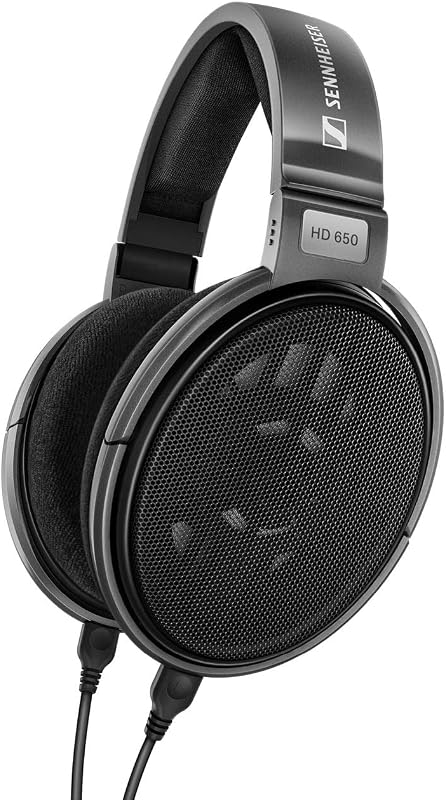
Pros
- Acoustic silk reduces THD to 0.05 percent
- Hand-selected matched dynamic driver elements
- Wide frequency response up to 41,000 Hz
- Comes with a 2-year manufacturer warranty
Cons
- Open-back design provides zero sound isolation
- Leaking audio bleeds into live studio microphones
View Sennheiser HD 650 on Amazon
Who Should Buy Each One
Choose the Audio-Technica ATH-M20x If
- You need closed-back acoustic isolation to prevent monitor bleed into live recording microphones.
- You want a single-sided 9.8-foot cable that stays out of your way when playing instruments or sitting at an audio interface.
- You need a complete studio tracking starter kit that includes an Auray headphone holder and protective travel case.
- You prefer enhanced low-frequency tuning to clearly track bass lines, kick drums, and rhythmic cues during performance.
Choose the Sennheiser HD 650 If
- You spend your time mixing, mastering, or editing audio in a quiet, dedicated control room or home studio.
- You require ultra-low distortion, matched driver elements, and precision acoustic silk damping for critical listening.
- You want an expansive frequency response extending up to 41,000 Hz for natural acoustic clarity and harmonic detail.
- You value the long-term reliability of a 2-year manufacturer warranty from Sennheiser.
Final Verdict
When completing an objective Audio-Technica ATH-M20x review against a dedicated Sennheiser HD 650 review, the winner depends entirely on whether your work happens on the performance side of the studio glass or in the engineer’s chair. The Sennheiser HD 650 is the superior analytical listening tool. Its open-back acoustic housing, matched drivers, 0.05 percent THD rating, and bandwidth reaching 41,000 Hz provide natural realism, wide stereo staging, and uncompromised mix balance. If your goal is critical audio evaluation, deciding is Sennheiser HD 650 worth it results in a clear affirmative for anyone working in a quiet space.
However, the HD 650 cannot perform the primary job of the Audio-Technica ATH-M20x: isolating audio in an active recording room. If you are tracking vocals, recording acoustic instruments, or monitoring podcasts near sensitive microphones, the closed-back design of the ATH-M20x is mandatory to eliminate headphone bleed. With its 40 mm drivers, 15 Hz to 20 kHz range, bass-enhanced tuning, and bundled Auray desk mount, asking is Audio-Technica ATH-M20x worth it yields an easy yes for studio tracking utility where physical sound containment is non-negotiable.
FAQ
Can you use the Sennheiser HD 650 for recording vocals in a studio?
The Sennheiser HD 650 is not recommended for tracking live vocals because of its open-back acoustic architecture. Because the outer ear cups are open grilles, audio from the headphone mix will escape and leak directly into sensitive vocal microphones, leaving unwanted backing tracks or metronome clicks on your vocal recording.
Do the Audio-Technica ATH-M20x headphones require a dedicated headphone amplifier?
The Audio-Technica ATH-M20x does not require a specialized external amplifier. Fitted with a standard 3.5 mm mini-plug and 40 mm dynamic drivers, the listing specifies that the ATH-M20x works easily with computer soundcards, mobile devices, audio interfaces, and mixers using the included 1/4-inch snap-on adapter.
Is the cable on the Audio-Technica ATH-M20x detachable?
The listing indicates that the Audio-Technica ATH-M20x comes with an attached 9.8-foot cable exiting from the left earcup. Because the cable is permanently fixed to the headphone housing, it cannot be unplugged or swapped out without disassembling the unit.
Why does the Sennheiser HD 650 feature an open-back design?
The open-back design of the Sennheiser HD 650 allows air and sound waves to pass freely through the outer grilles. This prevents acoustic energy from bouncing off interior ear cup walls, eliminating internal resonance and harmonic distortion to create a transparent, natural listening experience.
Which pair is better for tracking live instruments?
The Audio-Technica ATH-M20x is substantially better for tracking live instruments. Its closed-back circumaural earcups seal around the ears, providing passive sound isolation that keeps the monitor mix inside the headphones and prevents loud external instruments from overwhelming the performer.
Does the Audio-Technica ATH-M20x come with a quarter-inch adapter?
Yes, the Audio-Technica ATH-M20x listing confirms that a 1/4-inch snap-on adapter is included in the package alongside the native 3.5 mm mini-plug, allowing seamless connection to professional studio audio interfaces, hardware mixers, and receivers.

