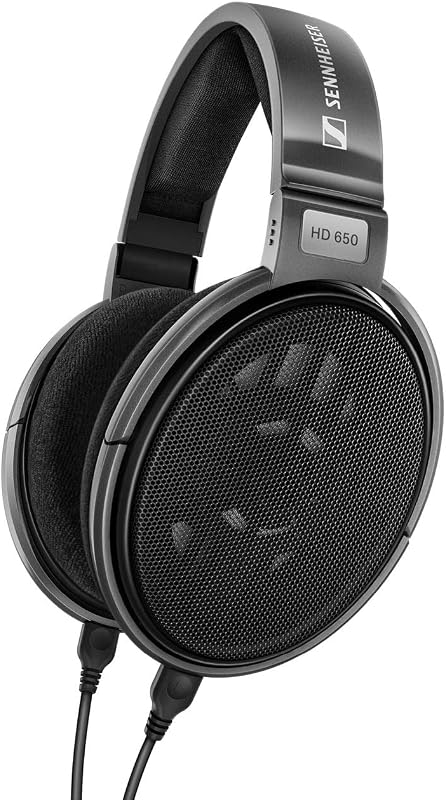
The core distinction that determines whether the Audio-Technica ATH-M50x or the Sennheiser HD 660S2 belongs in your workspace is the choice between closed-back isolation and open-back spatial resolution. The ATH-M50x uses a sealed, circumaural design paired with a low 38-ohm impedance, delivering a direct acoustic seal and effortless playback from any headphone jack, whereas the HD 660S2 employs an open-back architecture with a demanding 300-ohm impedance engineered to produce an expansive, high-fidelity soundstage when paired with dedicated amplification.
Choose the Audio-Technica ATH-M50x if you need robust passive noise isolation for studio tracking, mobile recording, or commuting without audio bleeding into nearby microphones. Choose the Sennheiser HD 660S2 if you do critical mixing, desktop gaming, or audiophile listening in a quiet room where wide stereo imaging and extended sub-bass transparency take precedence.


Audio-Technica ATH-M50x vs Sennheiser HD 660S2 at a Glance
| Feature | Audio-Technica ATH-M50x | Sennheiser HD 660S2 |
|---|---|---|
| Acoustic Design | Closed-back circumaural sound isolation | Open-back audiophile soundstage |
| Transducer Size | 45 mm large aperture drivers | 42 mm transducers |
| Voice Coil Material | Copper-clad aluminum wire | Ultra-light aluminum |
| Nominal Impedance | 38 ohm | 300 ohm |
| Sub-Bass Tuning | Deep, accurate bass response | Tuned for piano lows (27.5 Hz) to bass drums (45-60 Hz) |
| Earcup Articulation | 90-degree swiveling earcups | Fixed oval over-ear frame |
| Included Cables | Detachable cable (listing does not specify lengths) | 6.3 mm cable (1.8 m), 4.4 mm balanced cable (1.8 m), 6.3 mm to 3.5 mm adapter |
| Country of Origin | The listing does not specify | Germany & Ireland |
| Warranty Coverage | 2 year warranty on parts and labor | 2 year manufacturer warranty |
| Best For | Tracking, mobile production, and noisy environments | Critical mixing, mastering, and quiet desktop listening |
Acoustic Design and Environmental Sound Isolation
The primary consideration when evaluating Sennheiser HD 660S2 vs Audio-Technica ATH-M50x is how each pair interacts with your physical listening environment. The ATH-M50x relies on a closed-back circumaural frame that contours securely around the ears. This acoustic seal serves two vital purposes: it prevents external sounds from infiltrating your monitor mix, and it keeps audio playback inside the earcups from escaping into nearby recording microphones. In busy project studios, untreated home spaces, or shared rooms, this physical barrier is indispensable. For creators who also study closed studio alternatives, comparing the audio-technica ath-m20x vs beyerdynamic dt 770 pro shows how sealed designs control bleed across various driver configurations.
The HD 660S2 takes the exact opposite acoustic approach with an open-back earcup assembly. Air, ambient frequencies, and sound waves flow freely through the outer grilles of the earpieces. This open structure eliminates internal reflections and air pressure build-up, resulting in a natural, airy listening experience with a spacious soundstage that mimics sitting in front of stereo studio monitors. However, open earcups provide zero acoustic isolation. Any clatter in your room will be audible in your headphones, and your audio will leak into the room. If you intend to record vocals while wearing the HD 660S2 in front of a sensitive condenser, the microphone will inevitably capture your backing track.
Choosing between closed back vs open back studio headphones fundamentally dictates where and how you can work. The ATH-M50x lets you work on a crowded train, track a drum kit, or record vocal takes without noise interference. The HD 660S2 provides superior natural breathability and spatial openness, but demands a controlled, quiet room where outward acoustic spill will not disturb others or bleed into an open channel.
Edge: Audio-Technica ATH-M50x because its closed-back circumaural construction prevents mic bleed and blocks ambient environmental noise.
Impedance Demands and Amplification Requirements
Headphone impedance dictates what kind of hardware is required to deliver adequate volume, transient snap, and dynamic headroom. The ATH-M50x features a low nominal impedance of 38 ohm. With an impedance this low, the 45 mm drivers can reach substantial volume levels straight from the standard headphone outputs of laptops, audio interfaces, digital audio players, and portable field recorders without requiring an external headphone amplifier. This makes the ATH-M50x exceptionally versatile for producers who move frequently between different desks, field locations, and basic playback devices. Buyers looking across the M-Series line often look at the audio-technica ath-m50x vs ath-m20x to see how low-impedance designs scale across different tier levels.
The HD 660S2 features a high nominal impedance of 300 ohm, marking a significant engineering departure from portable monitoring gear. Driving a 300-ohm load requires an amplifier capable of swinging adequate voltage. While modern computer sound cards and basic interfaces might yield conversational listening volumes with the HD 660S2, they often struggle to drive the transducers properly, which can compromise dynamic range and bass control. To realize the full potential of its 42 mm transducers and ultra-light aluminum voice coil, the HD 660S2 requires a dedicated desktop headphone amplifier or a pro audio interface with a high-output headphone stage.
Understanding the ATH-M50x vs HD 660S2 impedance difference is critical before making an investment. The ATH-M50x offers immediate, plug-and-play simplicity across any playback device you own. The HD 660S2 requires dedicated upstream equipment, which creates an additional hardware requirement for users who do not already own a robust desktop amplification setup.
Edge: Audio-Technica ATH-M50x because its 38-ohm voice coils produce full dynamics and volume from any standard headphone jack without dedicated amplification.
Music Production, Tracking, and Mixing Performance
In music production environments, headphones serve different roles across recording, arranging, and balancing. When examining ATH-M50x vs HD 660S2 for music production, the ATH-M50x excels during the tracking phase. Its proprietary 45 mm large aperture drivers with rare earth magnets and copper-clad aluminum wire voice coils deliver a punchy, upfront presentation. The tight frequency response and direct bass impact give vocalists, drummers, and guitarists clear timing cues and immediate feedback while recording. Vocalists also benefit from the 90-degree swiveling earcups, which allow seamless one-ear monitoring during performance takes. If you record acoustic instruments or vocals using studio microphones, evaluating a setup like the rode podmic vs audio-technica at2020 highlights why closed-back tracking cans like the M50x are necessary to keep playback out of the signal chain.
When the workflow shifts to balancing stems and finalizing masters, deciding whether you need the ATH-M50x or HD 660S2 for mixing becomes paramount. The Sennheiser HD 660S2 is tuned specifically for critical acoustic evaluation. It renders low-end frequencies from piano lows at 27.5 Hz up to kick drum fundamentals at 45 to 60 Hz with precision, while maintaining clear midrange separation and detailed highs. Because the earcups are open, the stereo soundstage is wide and three-dimensional, allowing mix engineers to place instruments precisely across the stereo spectrum and identify masking issues that closed-back earcups can sometimes obscure.
The trade-off between these two models comes down to practical studio workflow. Any comprehensive Audio-Technica ATH-M50x review confirms its status as an industry tracking workhorse that handles energetic recording sessions without bleed. Conversely, an analytical Sennheiser HD 660S2 review highlights its role as a dedicated desktop mastering and mixing reference where subtle EQ shifts, reverb tails, and micro-dynamics must be heard with absolute clarity.
Edge: Sennheiser HD 660S2 because its expansive soundstage and deep, controlled low-end resolution provide superior accuracy for critical mixing decisions.
Gaming Performance and Spatial Soundstage
Spatial awareness and long-session comfort determine the value of ATH-M50x vs HD 660S2 for gaming. The open-back architecture of the HD 660S2 provides a natural acoustic field that sounds wide and open rather than confined inside your skull. In immersive single-player games and competitive multiplayer titles, this spacious soundstage helps gamers judge the distance and trajectory of ambient cues, weapon discharges, and approaching footsteps. The low-end tuning lets you feel the impact of deep explosions down to 27.5 Hz without muddying the rich mids where dialogue and footstep transients live.
The ATH-M50x offers a different set of advantages for gaming setups. Its closed-back sound isolation blocks domestic noises such as computer fan hum, street traffic, or loud roommates, letting you focus entirely on your game audio. The deep, punchy low-end response provides visceral feedback for action titles and cinematic cutscenes. However, the closed circumaural earcups present a narrower acoustic space, making sound cues feel closer to your ears rather than spread across a wide virtual horizon.
Thermal comfort also impacts marathon gaming sessions. The breathable, plush ear cushions of the HD 660S2 allow heat to escape naturally, preventing the ear fatigue and warmth common during multi-hour playthroughs. While the professional-grade earpad material on the ATH-M50x offers dependable physical durability, its sealed nature inherently traps heat around your ears during extended use.
Edge: Sennheiser HD 660S2 because its open soundstage and breathable plush ear cushions deliver superior spatial positioning and marathon comfort.
Build Quality, Ergonomics, and Cable Connectivity
The mechanical designs of these two headphones reflect their intended operational environments. The Audio-Technica ATH-M50x features a folding frame with 90-degree swiveling earcups, making it easy to collapse down into a compact package for transport in a gear bag. The headband and earpads utilize professional-grade materials built to endure rough handling in studios and on the road. The cable is fully detachable, allowing you to swap out damaged lines without replacing the headphones. For creators comparing entry-level studio hardware against premium open designs, exploring the audio-technica ath-m20x vs sennheiser hd 660s2 illustrates how frame rigidity and cable modularity evolve across product lines.
The Sennheiser HD 660S2 is crafted with expertly selected materials in Germany and Ireland, prioritizing desktop refinement and long-term durability over travel portability. The frame does not fold flat, emphasizing structural stability at a workstation. Its oval earpieces are fitted with plush, breathable cushions that contour comfortably over the ears without applying excessive clamping pressure. Sennheiser supplies a comprehensive set of connectivity accessories in the box, including a 1.8-meter 6.3 mm cable, a 1.8-meter 4.4 mm balanced cable, a 6.3 mm to 3.5 mm adapter, and a protective carry pouch.
Connectivity options give the HD 660S2 a noticeable advantage for high-end audio setups. The inclusion of a dedicated 4.4 mm balanced cable allows listeners to connect directly to balanced desktop headphone amplifiers and high-resolution DACs to minimize crosstalk. The ATH-M50x listing confirms a detachable cable design, but does not include balanced wiring options. For those considering other open-back studio options, our analysis of the audio-technica ath-m50x vs sennheiser hd 560s details how different open-back models compare to the M50x frame.
Edge: Sennheiser HD 660S2 because of its premium European construction and the inclusion of both 6.3 mm single-ended and 4.4 mm balanced cables.
Pros and Cons
Audio-Technica ATH-M50x

Pros
- Low 38-ohm impedance runs on mobile gear
- Circumaural earcups isolate external studio noise
- 90-degree swiveling earcups for one-ear monitoring
- 45 mm drivers with copper-clad aluminum coils
- Collapsible folding frame for travel storage
Cons
- Closed earcups trap heat during long sessions
- Narrower soundstage than open-back headphones
View Audio-Technica ATH-M50x on Amazon
Sennheiser HD 660S2

Pros
- Spacious, natural open-back soundstage
- Sub-bass extension down to 27.5 Hz
- Includes 4.4 mm balanced and 6.3 mm cables
- Breathable plush ear cushions prevent fatigue
- Crafted in Germany and Ireland
Cons
- High 300-ohm impedance requires dedicated amplification
- Open-back design leaks sound into microphones
- Zero passive isolation from room noise
View Sennheiser HD 660S2 on Amazon
Who Should Buy Each One
Choose the Audio-Technica ATH-M50x If
- You need closed-back acoustic isolation to prevent headphone bleed into studio microphones while recording vocals, drums, or acoustic instruments.
- You monitor audio primarily from standard laptop jacks, audio interfaces, or mobile devices without an external headphone amplifier.
- You require a rugged, portable design with 90-degree swiveling earcups that folds flat into a gig bag for field monitoring and travel.
- You work in noisy shared environments where ambient chatter and domestic sounds must be passively blocked.
Choose the Sennheiser HD 660S2 If
- You do critical mixing and mastering in a quiet studio space and need a spacious, natural soundstage to judge stereo placement and reverb depth.
- You own or plan to use a dedicated desktop headphone amplifier capable of driving a 300-ohm impedance load.
- You spend hours in continuous gaming or listening sessions and want breathable, plush ear cushions that prevent heat buildup.
- You use audio equipment with balanced outputs and want native 4.4 mm balanced cable connectivity out of the box.
Final Verdict
The Audio-Technica ATH-M50x remains the most sensible choice for the vast majority of working creators, musicians, and field engineers. Its closed-back circumaural design delivers the sound isolation necessary for tracking without bleed, while its 38-ohm impedance ensures high-output playback from any standard 3.5 mm or 6.3 mm output without extra hardware. When combined with its durable folding frame, swiveling earcups, and robust low-end response, the ATH-M50x serves as a dependable, multi-purpose tool that operates reliably across studio recording desks, mobile setups, and everyday environments.
The Sennheiser HD 660S2 wins decisively when your priority shifts to critical desktop evaluation, high-fidelity listening, and open-air realism. If you work in a quiet listening room and have an amplifier that can supply the power its 300-ohm voice coils require, its open-back architecture delivers an expansive soundstage, low-distortion clarity, and extended sub-bass resolution that closed-back headphones simply cannot match. For engineers seeking a dedicated mixing reference or gamers pursuing precise spatial placement, the HD 660S2 provides acoustic fidelity that makes the dedicated hardware requirement entirely worthwhile.
FAQ
What is the main ATH-M50x vs HD 660S2 impedance difference?
The Audio-Technica ATH-M50x has a low impedance of 38 ohm, allowing it to reach optimal volume and dynamics directly from laptops, mobile devices, and standard audio interfaces. The Sennheiser HD 660S2 has a high impedance of 300 ohm, which requires higher output voltage and typically demands a dedicated headphone amplifier or robust desktop interface to perform at its best.
Is Sennheiser HD 660S2 worth it for casual laptop listening?
If you only plan to plug directly into a basic laptop headphone jack, you will not experience the full dynamic capability of the Sennheiser HD 660S2 due to its 300-ohm impedance. Furthermore, its open-back design will leak audio into your surroundings and let ambient noise in. It delivers its full value when connected to a dedicated amplifier in a quiet environment.
Which model is better between the ATH-M50x or HD 660S2 for mixing?
The Sennheiser HD 660S2 is generally superior for critical mixing because its open-back design provides a wider, more natural stereo soundstage with minimal internal acoustic reflections. This allows you to place instruments precisely and assess sub-bass frequencies from 27.5 Hz to 60 Hz with high clarity. However, if you mix in noisy environments, the closed-back ATH-M50x offers the isolation needed to hear your work.
Can I use the Audio-Technica ATH-M50x for vocal recording without mic bleed?
Yes. The Audio-Technica ATH-M50x features circumaural earcups that contour around the ears to provide sound isolation. This closed-back seal prevents monitor playback from escaping the earcups and bleeding into sensitive vocal microphones during tracking sessions.
How do closed back vs open back studio headphones affect long listening sessions?
Closed-back headphones like the ATH-M50x trap air and body heat inside the earcups, which can lead to ear warmth during long stretches. Open-back headphones like the HD 660S2 allow continuous airflow through the outer grilles and utilize breathable plush cushions, resulting in cooler, fatigueless listening during marathon editing or gaming sessions.
Does the Sennheiser HD 660S2 come with balanced cables?
Yes. The Sennheiser HD 660S2 includes both a standard 1.8-meter 6.3 mm cable and a 1.8-meter 4.4 mm balanced cable in the box, alongside a 6.3 mm to 3.5 mm adapter and a carry pouch.
Are the earcups on the Audio-Technica ATH-M50x adjustable for single-ear monitoring?
Yes. The ATH-M50x is designed with 90-degree swiveling earcups, allowing DJs, vocalists, and sound engineers to easily perform one-ear monitoring during live performances and recording sessions.