The single difference that decides the choice between the Sennheiser HD 660S2 and the AKG K371 is acoustic architecture and driving power: Sennheiser provides an open-back audiophile experience demanding stationary high-voltage amplification, while AKG offers a closed-back studio monitoring design that isolates background noise and runs directly from any portable source.
Listeners building a dedicated desktop station for expansive, fatigue-free music appreciation should select the Sennheiser HD 660S2. Audio engineers, field recordists, and creators needing sound isolation, folding portability, and universal device pairing should select the AKG K371.


Sennheiser HD 660S2 vs AKG K371 at a Glance
| Feature | Sennheiser HD 660S2 | AKG K371 |
|---|---|---|
| Acoustic Design | Open-back | Closed-back |
| Transducer Size | 42 mm | 50 mm (titanium-coated) |
| Voice Coil Type | Ultra-light aluminum | Pure oxygen-free copper |
| Impedance | 300 ohm | 32 ohm |
| Frequency Response | 27.5 Hz (piano lows) to 60 Hz listed bass range | 5 Hz to 40 kHz |
| Sensitivity | Not listed | 114 dB |
| Cable Connections | 6.3 mm (1.8 m) and 4.4 mm balanced (1.8 m) | Mini-XLR to 3.5 mm (3 m coiled, 3 m straight, 1.2 m straight) |
| Folding Capability | Non-folding | 3-axis foldable notched headband |
| Manufacturing Location | Germany & Ireland | Not listed |
| Best For | Stationary audiophile listening and desktop gaming | Mobile studio tracking, mixing, and field monitoring |
Acoustic Design and Soundstage Presentation
Understanding the fundamental divide between open back vs closed back headphones is crucial before choosing either model. An open-back acoustic design utilizes ventilated earcups that allow sound waves generated by the rear of the transducer to radiate naturally outward into the room. This mechanical layout avoids the internal reflections and trapped pressure waves common in sealed enclosures, yielding an airy, natural presentation where instruments feel spread out across physical space rather than trapped directly against your eardrums.
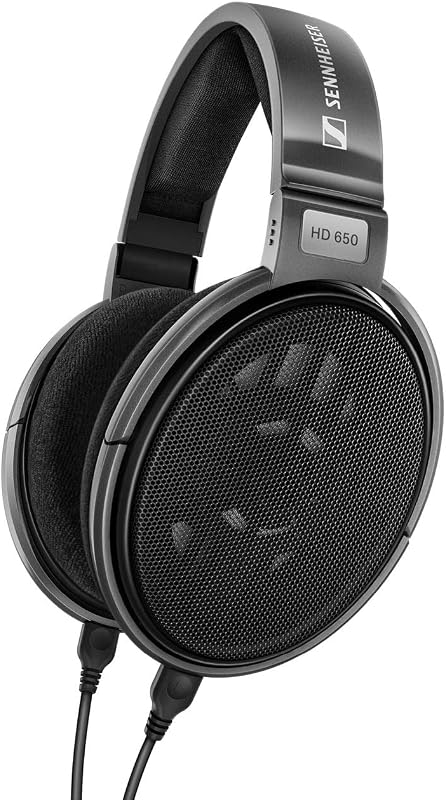
Sennheiser engineers the HD 660S2 specifically around this ventilated concept, employing 42 mm transducers inside an open mesh earcup. In practical use, the Sennheiser HD 660S2 soundstage produces remarkable spatial separation, placing orchestral sections, vocal layers, and ambient effects in distinct locations outside the listener’s head. By contrast, the AKG K371 relies on a sealed, closed-back enclosure designed to isolate the listener from outside distractions while preventing sound from spilling into the room. While AKG tunes the internal acoustic chamber to match an expansive reference target, the physical boundary of sealed plastic cups inherently confines the stereo image closer to the center of your skull.
This structural contrast dictates where each model functions best. The open cups on the HD 660S2 let room chatter, computer fan hum, and street noise pass directly through to your ears, while leaking whatever you play to anyone sitting nearby. Similar spatial trade-offs exist across other open reference models, as seen in our comparison of the sennheiser hd 660s2 vs philips shp9500. The K371 acts as a physical acoustic barrier, making it ideal for tracking vocals or recording instruments near sensitive condenser microphones where audio bleed would ruin a recording.
Edge: Sennheiser HD 660S2 for natural spatial width, transparent instrument placement, and an expansive acoustic image.
Impedance and Amplification Requirements
Headphone impedance and electrical sensitivity dictate the type of source gear required to deliver clean volume, accurate dynamics, and low-distortion transient peaks. High-impedance designs demand higher output voltage from specialized headphone amplifiers or professional audio interfaces to control voice coil movement properly. Low-impedance headphones operate with minimal voltage swing, drawing current easily from everyday consumer headphone ports, laptop outputs, and portable audio players.
Analyzing the HD 660S2 vs K371 impedance numbers reveals entirely divergent operational philosophies. Sennheiser rates the HD 660S2 at 300 ohms, driving its 42 mm dynamic transducer with an ultra-light aluminum voice coil. When connected to a standard smartphone adapter or basic laptop jack, the HD 660S2 often sounds quiet, compressed, and lacking in low-end impact because typical consumer outputs lack the voltage swing to drive a 300-ohm load. Unlocking the full performance of the HD 660S2 requires a dedicated desktop headphone amplifier or a high-output audio interface. Source power dynamics remain a primary consideration in this series, mirroring observations made when comparing the sennheiser hd 560s vs 660s2.
Conversely, AKG equips the K371 with a low 32-ohm impedance and a sensitive 114 dB rating. Its 50 mm titanium-coated transducers and pure oxygen-free copper voice coils reach deafening studio monitoring levels from practically any device equipped with a 3.5 mm jack. Whether plugged into a portable field recorder on location, an audio mixer on stage, or a tablet on an airplane, the K371 maintains full dynamics and punch without requiring auxiliary amplification hardware.
Edge: AKG K371 for universal plug-and-play compatibility across consumer ports and battery-powered field gear.
Audio Tuning and Studio Mixing Accuracy
Accurate audio production demands a balanced frequency response where no single band masks another. Content creators and sound engineers rely on headphones to expose harsh vocal sibilance, detect phase issues, and evaluate sub-bass energy accurately before sending tracks to commercial distribution.
The AKG K371 is engineered precisely to match the AKG reference response curve, providing an acoustic target calibrated for neutral, balanced studio performance. With an ultrawide frequency response spanning 5 Hz to 40 kHz, the K371 reproduces deep sub-bass frequencies that many studio monitors roll off. Its 50 mm titanium-coated drivers deliver tight low-end transients without muddying the vocal range, making it a reliable tool for tracking, video editing, and field recording. Contrasting studio gear often highlights different approaches to acoustic neutrality, as shown in the audio-technica ath-m50x vs sennheiser hd 660s2 analysis.
Sennheiser approaches tuning from a hi-fi reference perspective. While earlier generations in the 600 series were known for rolling off deep sub-bass, the HD 660S2 listing specifies extended low-end capabilities capable of resolving notes from piano fundamental lows at 27.5 Hz through bass drums between 45 Hz and 60 Hz. Combined with ultra-low-distortion mids and smooth high-frequency detail, the HD 660S2 delivers an intimate, highly resolving listening experience. When deciding between the Sennheiser HD 660S2 or AKG K371 for mixing, the K371 offers the closed isolation and sub-bass reach needed for live tracking and mastering balance, whereas any detailed Sennheiser HD 660S2 review confirms that the open Sennheiser excels at revealing mid-range nuance and natural vocal timbre in quiet mixing rooms.
Edge: AKG K371 for professional tracking isolation and extended 5 Hz to 40 kHz frequency coverage.
Cabling, Portability, and Hardware Flexibility
Cable configurations and mechanical frame durability dictate whether a pair of headphones remains confined to a single desk or serves as a rugged companion on location. Professional studio workflows demand sturdy, replaceable connectors and varied cable lengths to accommodate consoles, instruments, and mobile gear racks.
AKG builds the K371 with a heavy emphasis on mobile production. The left earcup features a secure, professional mini-XLR jack, and AKG packages three separate cables in the box: a 3-meter coiled cable for studio instrument tracking, a 3-meter straight cable for workstation editing, and a compact 1.2-meter straight cable for portable monitoring on the move. A threaded 3.5 mm to 6.5 mm (1/4″) adapter and a protective pouch complete the bundle. Furthermore, the K371 features a 3-axis notched headband mechanism that folds both earcups inward, collapsing the unit into a compact profile for easy transport inside a gear bag.
Sennheiser takes a stationary audiophile approach with the HD 660S2. The headphone uses a dual-entry detachable cable system connecting to each earcup with Sennheiser’s proprietary two-pin connectors. The package includes a 1.8-meter 6.3 mm unbalanced cable, a 1.8-meter 4.4 mm balanced Pentaconn cable, and a 6.3 mm to 3.5 mm adapter with a carry pouch. The inclusion of a 4.4 mm balanced cable is an exceptional asset for desktop audiophiles running balanced headphone amplifiers. However, the HD 660S2 features a fixed, non-folding frame crafted in Germany and Ireland, meaning it occupies substantial space on a desk or inside luggage. Similar structural differences appear when evaluating the sennheiser hd 660s2 vs beyerdynamic dt 770 pro.
Edge: AKG K371 for its folding 3-axis headband mechanism and versatile three-cable bundle.
Ergonomics, Fit, and Gaming Immersion
Physical comfort during extended listening sessions depends heavily on pad material, clamp force, and heat retention. Over multi-hour sessions, heat buildup and excessive pressure around the jawline or crown can cause significant physical fatigue.
The Sennheiser HD 660S2 features plush, breathable velour-style ear cushions and a well-padded headband frame. Because the earcups are completely open to the outside room, air circulates freely around your ears, preventing the heat and sweat accumulation common to synthetic leather pads. When evaluating the Sennheiser HD 660S2 or AKG K371 for gaming, the HD 660S2 holds a distinct advantage for desk-bound players in quiet environments. Its open acoustic soundstage provides natural spatial depth, allowing players to pinpoint footsteps, gunshots, and environmental cues with lifelike precision. These spatial qualities mirror gaming performance discussed in the sennheiser hd 660s2 vs beyerdynamic dt 900 pro x breakdown.
The AKG K371 utilizes plush oval earcups mounted on an ergonomic headband, featuring slow-retention foam cushions that create a tight seal against the head. This seal is necessary to generate deep sub-bass and provide acoustic isolation, but it traps body heat over extended listening periods. However, in noisy gaming tournaments, shared dormitories, or streaming setups where room noise would enter an open headphone, the passive isolation of the K371 keeps distracting background sounds out of your ears.
Edge: Sennheiser HD 660S2 for breathable ear cushions, superior ventilation, and expansive spatial awareness.
Pros and Cons
Sennheiser HD 660S2

Pros
- Spacious open-back soundstage
- Crafted in Germany and Ireland
- Balanced 4.4 mm cable included
- Breathable plush ear cushions
- Accurate sub-bass extension to 27.5 Hz
Cons
- Requires dedicated amplifier for 300 ohms
- No noise isolation leaks audio
- Rigid non-folding frame
View Sennheiser HD 660S2 on Amazon
AKG K371

Pros
- Easy 32-ohm drive from any device
- Wide 5 Hz to 40 kHz response
- Closed-back acoustic isolation
- Foldable 3-axis notched headband
- Three detachable mini-XLR cables included
Cons
- Narrower soundstage than open designs
- Closed ear pads trap body heat
Who Should Buy Each One
Choose the Sennheiser HD 660S2 If
- You listen primarily at a dedicated desk equipped with a high-voltage headphone amplifier or balanced DAC output.
- You want a wide, natural soundstage with plush, breathable cushions that eliminate thermal buildup during long listening or gaming sessions.
- You demand precise mid-range resolution and refined low-end detail from piano lows at 27.5 Hz to bass drums at 60 Hz without needing acoustic isolation.
- You appreciate European precision manufacturing, with components crafted in Germany and Ireland backed by a 2-year warranty.
Choose the AKG K371 If
- You need closed-back acoustic isolation to prevent mic bleed while recording vocals, instruments, or podcasts.
- You want a set of 32-ohm studio monitor headphones that connect directly to laptops, phones, and field recorders without external amplification.
- You require a portable, 3-axis folding design with coiled and straight mini-XLR cables included for mobile production work.
- You depend on an extended 5 Hz to 40 kHz frequency response tuned strictly to an industry-standard acoustic reference curve.
Final Verdict
For audio enthusiasts asking is Sennheiser HD 660S2 worth it, the answer comes down to your listening space and power equipment. If you possess a dedicated headphone amplifier and listen in a quiet room, the HD 660S2 offers an elevated tier of spatial refinement, vocal presence, and open-air realism. Its 42 mm drivers, 300-ohm impedance, and included 4.4 mm balanced cable cater directly to stationary audiophiles, desktop gamers, and critical mixing editors who value an airy, fatigue-free presentation over physical isolation.
On the other hand, anyone evaluating whether is AKG K371 worth it for dynamic studio production, field recording, or traveling content creation will find the AKG to be the far more versatile tool. In the AKG K371 vs Sennheiser HD 660S2 comparison, the K371 wins decisively on practical utility: its 32-ohm impedance runs off anything, its closed-back earcups block ambient noise, its three included cables cover every studio scenario, and its folding frame packs down into any bag. Unless you have a dedicated amp and a silent room for open-back listening, the K371 delivers the most adaptable performance for everyday creators.
FAQ
Do the Sennheiser HD 660S2 headphones leak sound into the room?
Yes, the Sennheiser HD 660S2 features an open-back acoustic design that allows sound to pass freely through the exterior grilles. Anyone sitting near you in a quiet room will hear your playback, and room noises will easily pass into your ears.
Can the AKG K371 run directly from a laptop or phone without a headphone amplifier?
Yes, the AKG K371 features an optimal 32-ohm impedance and a high sensitivity rating of 114 dB. These specifications allow standard headphone jacks on laptops, audio interfaces, and mobile devices to drive them to full volume and dynamics without extra amplification.
Which model is better for recording vocals with a microphone?
The AKG K371 is the better option for vocal recording because its closed-back earcups isolate sound and prevent backing tracks from bleeding into a sensitive microphone. The open grilles on the Sennheiser HD 660S2 leak audio that open microphones will capture.
What cables are included in the box with each headphone?
The Sennheiser HD 660S2 includes a 1.8-meter 6.3 mm cable, a 1.8-meter 4.4 mm balanced cable, and a 6.3 mm to 3.5 mm adapter. The AKG K371 comes with three detachable mini-XLR cables: a 3-meter coiled cable, a 3-meter straight cable, a 1.2-meter straight cable, and a 3.5 mm to 6.5 mm adapter.
Do either of these headphones fold up for travel?
Only the AKG K371 folds. It features a 3-axis notched headband mechanism that collapses the earcups inward for compact storage inside its protective pouch. The Sennheiser HD 660S2 uses a rigid, non-folding audiophile frame designed for desktop use.
Where are the Sennheiser HD 660S2 and AKG K371 manufactured?
According to manufacturer specifications, the Sennheiser HD 660S2 is crafted with materials manufactured in Germany and Ireland. The product listing for the AKG K371 does not specify its manufacturing country.