The single performance difference that settles the choice between these two reference headphones is sub-bass extension versus mid-frequency intimacy. The older model concentrates its acoustic energy into a lush, vocal-forward midrange with a soft low-end roll-off, whereas the newer edition incorporates a redesigned transducer surround and voice coil that reaches deep into the sub-bass octaves while preserving the line’s trademark clarity.
Listeners who focus primarily on acoustic recordings, vocal purity, and a legendary, fatigue-free listening profile should choose the Sennheiser HD 650. Audio enthusiasts who demand modern sub-bass punch, enhanced spatial definition for gaming and media, and balanced 4.4 mm connectivity right out of the box should choose the Sennheiser HD 660S2.


Sennheiser HD 650 vs HD 660S2 at a Glance
| Feature | Sennheiser HD 650 | Sennheiser HD 660S2 |
|---|---|---|
| Transducer Architecture | Hand-matched dynamic drivers with acoustic silk damping | 42 mm dynamic transducers with ultra-light aluminum voice coil |
| Frequency Response Specification | 10 – 39,500 Hz (-10 dB) / 10 – 41,000 Hz | Sub-bass specified from 27.5 Hz (piano lows) to 45-60 Hz (bass drums); upper range not listed |
| Total Harmonic Distortion (THD) | 0.05 percent | Not listed |
| Rated Impedance | Not listed | 300 ohm |
| Included Cables and Adapters | 3.5 mm jack plug and 1/4″ (6.3 mm) connector | 6.3 mm cable (1.8 m), 4.4 mm balanced cable (1.8 m), 6.3 mm to 3.5 mm adapter |
| Manufacturing Location | Not listed | Crafted in Germany and Ireland |
| Ear Cushion and Cup Design | Rounded shape with circumaural open-back design | Oval shape with breathable plush ear cushions |
| Included Storage | Not listed | Carry pouch included |
| Manufacturer Warranty | 2 years | 2 year manufacturer |
| Best For | Vocal purists, jazz, classical, and relaxed reference listening | Modern multi-genre listening, desktop gaming, podcasters, and studio mixing |
Low-End Extension and Bass Dynamics
The low-frequency response serves as the sharpest functional distinction between these two audiophile designs. In traditional open-back dynamics, producing deep sub-bass without acoustic leakage or severe distortion has always posed an engineering hurdle. The HD 650 addresses the low end through a high-power neodymium magnet system designed to optimize efficiency and minimize intermodulation distortion. Its low-end tuning offers a warm mid-bass elevation that transitions smoothly into the lower midrange, giving bass guitars, cellos, and baritone voices natural presence. However, the energy drops off gradually when asked to reproduce the deepest sub-bass fundamentals below 50 Hz, leaving sub-audible rumbles feeling polite rather than physical.
By contrast, the HD 660S2 focuses directly on overcoming open-back bass limitations. Sennheiser engineered its 42 mm transducers and ultra-light aluminum voice coil to deliver deep, controlled bass with distinct authority. The product specifications highlight clear note reproduction reaching all the way down to piano lows at 27.5 Hz and visceral kick drum punch between 45 and 60 Hz. In contemporary electronic music, hip-hop, film scores, and modern games, this redesign produces low-end texture and impact that the older model cannot match. For listeners comparing the low-frequency behavior of open designs against closed-back alternatives, our sennheiser hd 660s2 vs beyerdynamic dt 770 pro comparison demonstrates how driver venting influences sub-bass speed and seal.
Evaluating HD 650 vs HD 660S2 bass performance comes down to musical preference. The classic model delivers an organic, bloat-free mid-bass warmth that cushions classic rock and small-ensemble jazz tracks, ensuring that no sudden transient distracts from the melody. The updated model provides genuine low-end reach, tracking the lowest octaves of synthesized basslines and acoustic grand pianos with modern control. It avoids muddying the mid-band because its voice coil maintains strict discipline over driver travel.
Edge: Sennheiser HD 660S2 wins on low-end performance by delivering genuine sub-bass extension down to 27.5 Hz and dynamic punch on modern percussion without introducing distortion.
Midrange Clarity and Vocal Timbre
Midrange reproduction is the cornerstone of the 600-series lineage. The HD 650 earned its multi-decade status among audiophiles specifically because of its uncanny ability to present human vocals with natural decay, realistic body, and zero grain. A core technical element behind this performance is its specially designed acoustic silk, which provides uniform damping across the entire frequency range and reduces total harmonic distortion to an impressive 0.05 percent. When evaluating vocal tracks through the HD 650, female sopranos, tenor harmonies, and acoustic guitars sound forward, lush, and intimately positioned in front of the listener.
The HD 660S2 handles the midrange with a slightly more neutral and linear distribution. Its 42 mm drivers provide rich mids, but they do not push the 1 kHz to 3 kHz vocal region as far forward as the classic predecessor. Vocals sit neatly aligned within the surrounding instrumental arrangement rather than leaping ahead of the mix. This provides greater separation between center-channel vocalists and rhythm elements, which proves advantageous for listeners who want to dissect complex multitrack arrangements. For additional context on how studio headphones present midrange balance, explore our audio-technica ath-m50x vs sennheiser hd 660s2 head-to-head analysis.
When compiling any thorough Sennheiser HD 650 review, the intoxicating warmth of its midrange remains its standout trait. It flatters older recordings, hides harsh vocal sibilance, and imparts a cohesive musical glow that makes marathon listening sessions effortless. The HD 660S2 offers cleaner technical separation between vocalists and instruments, but it trades away a fraction of that euphonic mid-band warmth in favor of balanced clarity across the entire audible spectrum.
Edge: Sennheiser HD 650 takes the midrange category for vocal purists thanks to its specialized acoustic silk damping and exceptionally silky, lifelike vocal intimacy.
Soundstage Width and Spatial Imaging
Open-back circumaural designs naturally present music with an airy, out-of-head sensation, yet these two headphones voice that space quite differently. The HD 650 employs hand-selected matched driver elements to guarantee that both ear cups mirror each other in phase and frequency response. This tight matching yields a stable, centered phantom image, but the overall stage size remains famously compact. It creates what audiophiles often describe as a three-blob presentation-left, center, and right-where musical elements feel close to the listener rather than projecting outward across a broad holographic stage.
In contrast, the listing for the HD 660S2 specifically promotes an audiophile-grade open-back sound with a spacious soundstage designed for immersive listening, gaming, and podcasting. The refined transducer housing and airflow venting permit sound waves to disperse more freely, pushing ambient cues, reverb trails, and room reflections farther from the ears. This wider acoustic landscape gives instruments room to breathe, clarifying directional cues when tracking fast-moving targets in competitive video games or identifying layered background instruments in an orchestral recording. Those curious about alternative open-back soundstage designs can consult our sennheiser hd 660s2 vs beyerdynamic dt 900 pro x breakdown.
In examining Sennheiser 650 vs 660S2 soundstage capabilities, the newer model provides sharper spatial cues and a more convincing sense of acoustic distance. While the HD 650 excels at intimate jazz clubs and chamber music where proximity adds emotional weight, the HD 660S2 handles grand concert halls, ambient synthesizers, and desktop virtual environments with greater width and positioning accuracy.
Edge: Sennheiser HD 660S2 takes the soundstage category by offering a wider spatial field and more precise positional imaging for multi-instrumental tracks and gaming.
Cable Package and Amplification Requirements
Connecting high-end headphones to modern source gear requires the right termination options, and the accessory packs included with these two models reflect their respective launch eras. The HD 650 listing specifies a single wired configuration terminating in a 3.5 mm jack plug alongside an included 1/4-inch (6.3 mm) connector. The listing does not specify cable length or include secondary wiring options. While a 3.5 mm termination allows connection to standard headphone jacks, the hand-matched drivers still demand high-voltage amplification to reach their dynamic potential, even though the listing does not publish an exact impedance rating.
The HD 660S2 comes prepared for modern balanced headphone amplifiers. Its package includes two distinct 1.8-meter detachable cables: an unbalanced cable with a 6.3 mm stereo plug, and a balanced cable terminating in a 4.4 mm Pentaconn connector. It also includes a 6.3 mm to 3.5 mm adapter and a protective carry pouch. The listing explicitly rates the HD 660S2 at 300 ohm impedance, an engineering shift back to higher nominal resistance that stabilizes voice coil damping. The included 4.4 mm balanced cable allows listeners to take immediate advantage of balanced headphone amplifiers and high-resolution digital audio players without purchasing expensive aftermarket cables. Readers evaluating entry-level open-back connectivity can also review our sennheiser hd 660s2 vs philips shp9500 article for a perspective on detachable single-ended wiring.
Having a native balanced cable included in the box is a major convenience for anyone operating modern desktop DAC/amp stacks or balanced portable players. While the HD 650 can accept aftermarket balanced wiring due to its modular two-pin ear cup connectors, the HD 660S2 eliminates that secondary expense by supplying both single-ended and balanced configurations straight from the factory.
Edge: Sennheiser HD 660S2 wins decisively on connectivity with its included 4.4 mm balanced cable, 6.3 mm cable, 3.5 mm adapter, and dedicated storage pouch.
Driver Engineering and Distortion Control
Examining the internal driver components reveals two distinct philosophies for achieving clean acoustic output. The HD 650 relies on a highly optimized magnet system designed to minimize harmonic and intermodulation distortion. High-power neodymium magnets deliver maximum efficiency to drive the diaphragm uniformly. Its acoustic silk precision damping controls diaphragm resonance across the entire 10 to 39,500 Hz (-10 dB) frequency bandwidth (specified alternatively as 10 to 41,000 Hz in the listing), achieving a documented total harmonic distortion figure of 0.05 percent. This rigorous damping controls unwanted treble peaks, eliminating metallic glare and producing the relaxed, natural sound that made the headphone famous.
The HD 660S2 employs a revised 42 mm dynamic transducer paired with an ultra-light aluminum voice coil. Aluminum reduces the moving mass of the motor assembly compared to traditional copper windings, enabling the diaphragm to respond more rapidly to steep transient attacks and fine micro-dynamic shifts in the upper register. Sennheiser specifies that this revised motor system delivers precise highs and deep sub-bass simultaneously, balancing energetic treble detail against articulate low-end fundamentals. Although the listing does not publish a specific numerical THD percentage for the 660S2, its driver behavior emphasizes speed and dynamic impact across the frequency extremes.
Both headphones demonstrate exceptional acoustic engineering, but they serve different listening priorities. The HD 650 prioritizes strict mechanical damping to ensure that no frequency region ever sounds harsh or aggressive. The HD 660S2 utilizes lower moving mass to retrieve subtle instrumental textures and high-frequency sparkle that can occasionally sound slightly recessed on the older model.
Edge: Tie. The HD 650 provides documented 0.05 percent THD through its acoustic silk damping, while the HD 660S2 provides lower moving mass and faster transient response via its ultra-light aluminum voice coil.
Build Quality, Ergonomics, and Long-Session Comfort
Audiophile headphones must remain comfortable across multi-hour listening sessions, and both models utilize proven circumaural form factors designed to distribute weight evenly around the ears. The HD 650 features a rounded earpiece shape with an open-back acoustic structure that keeps the ears cool. Its user manual instructions note that users should pull the ear cups down until they rest comfortably around the ears, ensuring the cups remain uncovered for optimal sound quality. The chassis utilizes durable composite materials and comes backed by a 2-year warranty from Sennheiser Pro Audio.
The HD 660S2 refines the fit by specifying an oval earpiece shape lined with breathable, plush ear cushions. The listing highlights its exceptional comfort and open-back airflow, specifically designed for fatigueless listening during extended desk work, gaming sessions, and studio production. Furthermore, the listing notes that the HD 660S2 is crafted with expertly selected materials in Germany and Ireland for durability, elegance, and long-lasting performance, carrying a 2-year manufacturer warranty from Sonova. If you are curious how open-back build standards contrast with studio workhorses, see our sennheiser hd 660s2 vs akg k371 comparison.
In real-world use, both models deliver outstanding long-term durability. Sennheiser headphones are renowned for modular parts that can be swapped when worn down over years of use. The HD 660S2 holds a subtle aesthetic and tactile advantage with its oval ear pads and dual-country European manufacturing pedigree, but the core wearing experience remains exceptionally close between the two.
Edge: Tie. Both models offer lightweight open-back chassis, plush breathable padding, two-year warranty coverage, and comfortable clamping geometry designed for long listening sessions.
Pros and Cons
Sennheiser HD 650
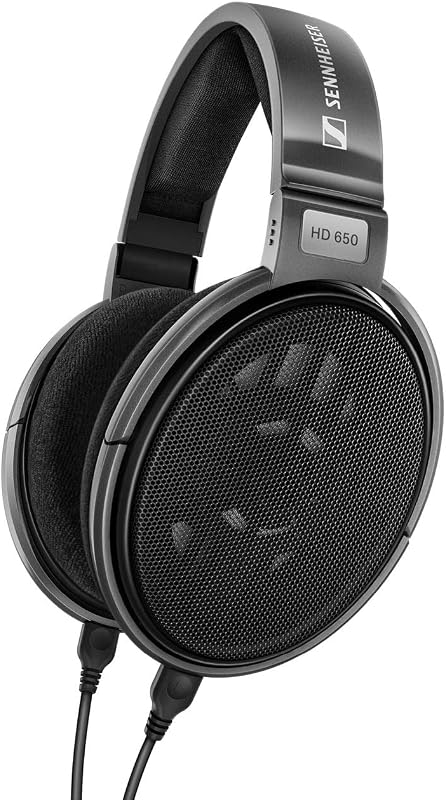
Pros
- Acoustic silk damping reduces THD to 0.05 percent
- Hand-selected matched dynamic driver elements
- Lush and fatigue-free vocal midrange
- High-power neodymium magnets for efficiency
Cons
- Rolls off below 50 Hz sub-bass
- No balanced 4.4 mm cable included
- Narrower and more intimate soundstage
View Sennheiser HD 650 on Amazon
Sennheiser HD 660S2

Pros
- Deep sub-bass extension down to 27.5 Hz
- Includes balanced 4.4 mm and 6.3 mm cables
- Ultra-light aluminum voice coil with 42 mm drivers
- Crafted in Germany and Ireland
- Spacious soundstage for gaming and production
Cons
- Demanding 300-ohm impedance requires dedicated amp
- Less vocal-forward mid-range than the HD 650
View Sennheiser HD 660S2 on Amazon
Who Should Buy Each One
Choose the Sennheiser HD 650 If
- Your music library consists primarily of vocal-centric acoustic tracks, choral works, classic rock, and jazz ensembles where midrange realism takes precedence over deep sub-bass.
- You prefer a warm, forgiving sound signature that softens harsh mastering, digital compression artifacts, and sharp treble spikes without inducing listening fatigue.
- You want a proven acoustic design backed by specially engineered acoustic silk damping that documents total harmonic distortion down to an incredible 0.05 percent.
- You connect exclusively to standard single-ended headphone equipment using 3.5 mm or 1/4-inch audio jacks and have no immediate need for balanced cables.
Choose the Sennheiser HD 660S2 If
- You listen to diverse, modern music genres like electronic, hip-hop, metal, or modern pop that require tactile low-end extension down to 27.5 Hz and punchy 45-60 Hz kick drum dynamics.
- You plan to connect to a balanced headphone amplifier or modern digital audio player and want an included 4.4 mm Pentaconn cable right out of the box.
- You need a versatile open-back headset for desktop gaming, streaming, or media consumption where wider soundstage staging and pinpoint imaging are essential.
- You value modern European manufacturing, with components expertly crafted in Germany and Ireland, paired with plush, breathable oval cushions and an included carry pouch.
Final Verdict
For the majority of modern headphone enthusiasts, the HD 660S2 represents the more versatile, technically complete package. By engineering the 42 mm transducers and ultra-light aluminum voice coil to resolve deep sub-bass notes down to 27.5 Hz, Sennheiser eliminated the traditional low-end compromise of the 600-series family. It delivers greater impact on bass drums, sharper spatial imaging for gaming and mixing, and modern out-of-the-box flexibility thanks to the included 4.4 mm balanced cable. If you listen across a wide variety of contemporary music genres or spend your hours switching between gaming, music production, and critical listening, the HD 660S2 justifies its position as the premier choice.
At the same time, the HD 650 retains a timeless character that prevents it from ever being truly obsolete. Its hand-matched drivers and acoustic silk damping yield an intimate, organic vocal reproduction and ultra-low 0.05 percent harmonic distortion that modern re-tunings do not attempt to replicate. If your listening habits center on human voices, acoustic string instruments, and long, relaxed evenings free of upper-frequency glare, the HD 650 remains an unmatched classic. Deciding between the Sennheiser HD 660S2 vs 650 ultimately rests on whether your ears crave the sub-bass impact and spatial precision of a modern transducer or the pure vocal intimacy of an analog legend.
FAQ
Is the HD 660S2 an upgrade from the HD 650?
Yes, an HD 660S2 upgrade from HD 650 provides noticeable improvements in sub-bass extension, high-frequency transient speed, and spatial soundstage width. While the HD 650 maintains an intimate, vocal-focused presentation with a natural sub-bass roll-off, the HD 660S2 reaches lower fundamentals down to 27.5 Hz and comes bundled with a 4.4 mm balanced cable for modern amplification setups.
How does the bass compare between the HD 650 and HD 660S2?
In a direct comparison of HD 650 vs HD 660S2 bass, the HD 660S2 reaches significantly lower into the sub-bass region while maintaining tight control through its ultra-light aluminum voice coil. The HD 650 focuses its energy in the mid-bass and lower midrange, creating a warm, organic character that rolls off below 50 Hz, whereas the HD 660S2 delivers tactile energy on bass drums between 45 and 60 Hz.
Which headphone is better for gaming, the HD 650 or HD 660S2?
When choosing the HD 650 or HD 660S2 for gaming, the HD 660S2 is the superior option. Its open-back acoustic tuning creates a more spacious soundstage and sharper positional imaging, allowing gamers to detect spatial cues and environmental audio with greater accuracy than the intimate, narrower presentation of the HD 650.
Should audio engineers choose the HD 650 or HD 660S2 for mixing?
When deciding between the HD 650 or HD 660S2 for mixing, the HD 660S2 provides a more complete view of modern audio projects because it reproduces deep sub-bass frequencies and fast high-frequency transients. The HD 650 remains an exceptional tool for checking vocal timbre and midrange balance, but engineers working on multi-genre commercial tracks will benefit from the broader low-end extension of the 660S2.
How does the soundstage differ between the Sennheiser 650 and 660S2?
Evaluating the Sennheiser 650 vs 660S2 soundstage reveals that the HD 660S2 provides a wider, more expansive acoustic field with greater separation between instruments. The HD 650 features a notoriously intimate soundstage that places vocalists directly in front of the listener, which suits acoustic music but limits spatial depth compared to the 660S2.
Is the HD 660S2 worth it over older models?
Deciding if the HD 660S2 is worth it depends on your current setup and music preferences. If you listen to modern genres that rely on sub-bass notes, want balanced 4.4 mm connectivity without buying aftermarket cords, or use your headphones for gaming and mixing alongside music, the technical upgrades in the HD 660S2 make it a worthwhile investment.
What accessories come in the box with each headphone?
The HD 650 listing specifies the headphones with a 3.5 mm jack plug and a 1/4-inch connector. The HD 660S2 includes a comprehensive bundle consisting of a 1.8-meter 6.3 mm cable, a 1.8-meter 4.4 mm balanced cable, a 6.3 mm to 3.5 mm adapter, and a protective carry pouch.


