The single operational difference that decides the choice between the Coway Airmega 400 and the Blueair Blue 511 is room scale: Coway engineered a high-output console built to circulate air across open-concept layouts up to 3,120 square feet, while Blueair designed an ultra-compact cylindrical unit meant strictly for targeted single rooms and personal spaces up to 907 square feet.
Homeowners who need autonomous whole-home air cleaning with integrated sensors and multi-stage gas filtration should invest in the Coway Airmega 400, while renters or dorm residents looking for a lightweight, plug-and-play desktop purifier should purchase the Blueair Blue 511.

Coway Airmega 400 vs Blueair Blue 511 at a Glance
| Feature | Coway Airmega 400 | Blueair Blue 511 |
|---|---|---|
| Maximum Stated Coverage | Up to 3,120 sq. ft. in 60 minutes | Up to 907 sq. ft. (432 sq. ft. in 30 minutes) |
| Filtration System | HyperCaptive (Pre-filter, Active Carbon, HEPA) | HEPASilent Technology |
| Particle Capture Rating | 99.97% of 0.3 micron particles (0.01 micron ultra-fine tested) | Tested on PM 2.5 (0.1 to 2.5 microns) |
| Sensors & Automation | Smart Mode, Eco Mode, Sleep Mode, AQI Indicator | Not listed (Plug-and-play manual control) |
| Minimum Noise Level | 22 dB | Not listed (Sound pressure on low; whisper reference ~30 dB) |
| Power Consumption | 66 watts | Not listed (Compared to 40-watt LED bulb) |
| Product Dimensions | 14.8 x 14.8 x 22.8 inches | 7.9 x 7.9 x 13.9 inches |
| Weight | 24.7 pounds | 5.24 pounds |
| Certifications | CARB, ETL, Energy Star | AHAM AC-1 (CADR testing standard) |
| Best For | Open-concept spaces, large homes, severe allergies | Bedrooms, dorm rooms, home offices, compact spaces |
Room Coverage and Air Changes
The primary factor when evaluating air purifiers is how many times the machine can exchange the air within a given floor area. Clean Air Delivery Rate standards dictate that proper air purification requires continuous volume movement to prevent airborne particles from settling on surfaces. A unit undersized for a space will fail to maintain clean air thresholds, while an oversized purifier in a compact room simply cleans the room faster at lower fan speeds.
Looking at the Coway Airmega 400 coverage area, the unit is rated to clean spaces up to 3,120 square feet in 60 minutes. This substantial output makes it suitable for expansive living areas, high-ceiling lofts, and interconnected floor plans. In comparison, examining the Blueair Blue 511 square footage shows it is engineered for personal, compact quarters. The Blue 511 listing specifies that it quickly cleans a 432-square-foot space in 30 minutes, or a smaller 180-square-foot room in roughly 12.5 minutes on its highest fan speed, with an overarching listing maximum rating of up to 907 square feet. When analyzing broader brand architectures such as coway vs blueair, this pair represents the extreme opposite ends of their respective capacity lineups.
If you are deciding between the Coway Airmega 400 or Blueair Blue 511 for large rooms, the numbers clearly indicate that the Blueair unit cannot replace a central whole-home air cleaner. Placing the Blue 511 in an open 1,500-square-foot living room leaves the space under-filtered, whereas the Airmega 400 generates enough airflow to cycle through large volumes several times per day without running at maximum strain.
Edge: Coway Airmega 400, because its 3,120-square-foot hourly coverage dwarfs the modest 432-to-907-square-foot limits of the Blueair unit.
Filtration Technology and Contaminant Capture
Filtration efficiency determines how effectively an air purifier captures fine airborne irritants like pollen, pet dander, mold spores, and volatile organic compounds (VOCs). Mechanical separation relies on dense physical fibers, while chemical sorption requires treated activated carbon to capture gases and odors that pass directly through particulate screens.
The Coway Airmega 400 employs a three-part HyperCaptive Filtration System consisting of a washable pre-filter, an activated carbon filter, and an authentic HEPA filter. According to product testing data, this configuration reduces 99.97% of 0.3-micron particles, captures ultra-fine particles down to 0.01 microns per KCL testing under SPS-KACA standards, and uses tested activated carbon to reduce harmful gases, VOCs, and acetic acid within 30 to 60 minutes. Shoppers comparing high-output units against models like the coway airmega 400 vs honeywell hpa304 will find this multi-layer carbon and true HEPA arrangement consistent with heavy-duty air cleaning.
Conversely, the Blueair Blue 511 relies on Blueair’s proprietary HEPASilent technology. This setup combines mechanical filtration with an electrostatic charge to clean incoming particles. The manufacturer states that the Blue 511 was tested on PM 2.5 particles (measuring between 0.1 and 2.5 microns) for up to 90 minutes. However, the listing does not specify whether the Blue 511 contains an activated carbon pellet stage for severe chemical or VOC abatement, nor does it carry the same industrial particulate test certifications published for the Coway platform.
Edge: Coway Airmega 400, due to its verified multi-stage HyperCaptive system featuring certified 0.3-micron HEPA efficiency, dedicated VOC reduction, and 0.01-micron ultra-fine particle capture.
Automation, Sensors, and Operating Modes
Autonomous operation transforms an air purifier from a manual utility into an effortless appliance. Built-in air quality sensors actively read the ambient environment, raising fan speeds during cooking or dust spikes and dropping back down once the room is clean to preserve component life and reduce energy use.
In this Coway Airmega 400 review category, the unit delivers advanced automation. It features an integrated Air Quality Monitor that reads local particle levels and adjusts operation automatically through Smart Mode. When the surrounding air remains clear for 30 minutes, the Airmega triggers Eco Mode, turning the fan completely off until pollutants are detected. Additionally, its light and pollution sensors monitor ambient darkness; if the room is dark and clean for 3 minutes, Sleep Mode engages automatically, lowering fan output to limit sound and light intrusion. Those familiar with automation battles such as the coway airmega 400 vs winix 5500-2 will recognize these features as standard Coway flagships.
The Blueair Blue 511 takes an entirely manual approach. The manufacturer describes it around plug-and-play simplicity. The listing does not specify an automatic sensor mode, air quality indicator, sleep timer, or eco shutoff mechanism. Users must walk over to the Blue 511 and manually cycle through settings when conditions change. For buyers who want set-and-forget home maintenance, the lack of an air quality sensor on the Blue 511 requires constant hands-on adjustments.
Edge: Coway Airmega 400, offering intelligent Smart, Eco, and Sleep modes driven by onboard particulate and ambient light sensors.
Noise Levels and Bedroom Suitability
Acoustic performance dictates whether an air purifier can reside comfortably in living zones and sleeping areas. Air purifiers draw air across internal filters via motorized impellers, inevitably producing air rush and motor hum at high speeds. The secret to quiet operation is a low baseline decibel rating on low speeds.
When comparing the Coway Airmega 400 vs Blueair 511 noise level, both units excel at their lowest settings through different acoustic approaches. The Airmega 400 explicitly rates its lowest operational noise level at 22 dB. Combined with its automated Sleep Mode that throttles the fan down in darkness, the Airmega operates well below conversational thresholds. Because the Coway has massive filter surface areas, it can move significant amounts of air at gentle, low-rpm fan speeds without straining the motor.
The Blueair Blue 511 listing notes low noise levels, referencing a baseline where sound pressure on low is quieter than a typical whisper (noted at 30 dB). Its smaller physical chamber means that pushing high volumes through the compact cylinder will produce a more noticeable air rush on maximum speed when clearing a 180-square-foot room in 12.5 minutes. When picking a Coway Airmega 400 or Blueair Blue 511 for bedroom nightstands, the physical footprint often dictates comfort as much as pure decibels.
Edge: Tie, as the Coway reaches an ultra-quiet 22 dB baseline on low, while the Blueair offers silent, non-intrusive sound pressure suited for compact bedside spaces.
Size, Weight, and Placement Flexibility
Physical proportions determine where a machine can fit without cluttering living pathways. Large floor consoles require dedicated clear zones around their air intakes to function correctly, while compact tower designs can easily rest on shelves, desks, or nightstands.
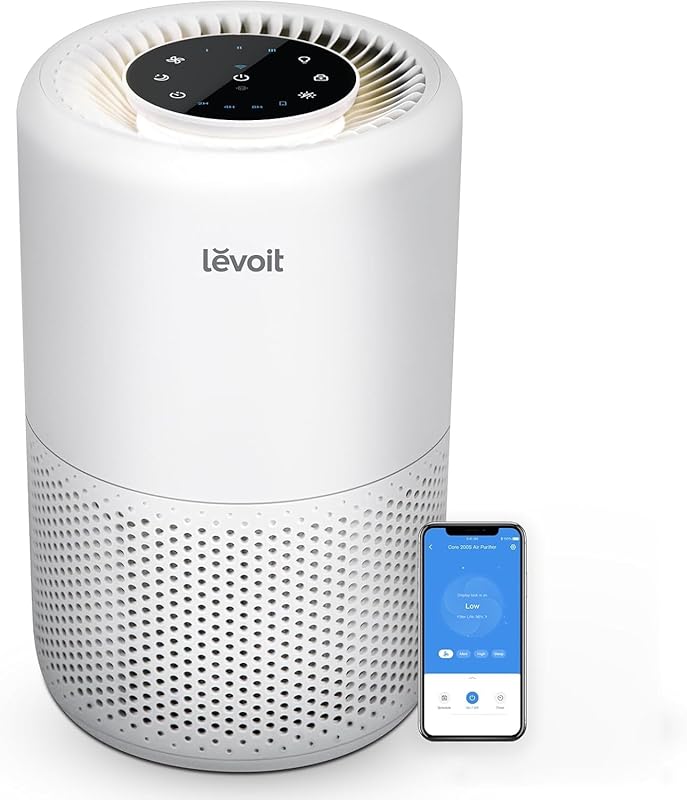
The Blueair Blue 511 is engineered intentionally as Blueair’s most compact air purifier. Measuring 7.9 inches deep, 7.9 inches wide, and 13.9 inches high, with a weight of only 5.24 pounds, it is effortless to carry between rooms. It easily rests on a nightstand, end table, or dorm desk without overwhelming the furniture. Readers considering compact bedroom cleaners can also reference the coway airmega 200m vs blueair blue 511 to see how the 511 stacks up against mid-sized models.
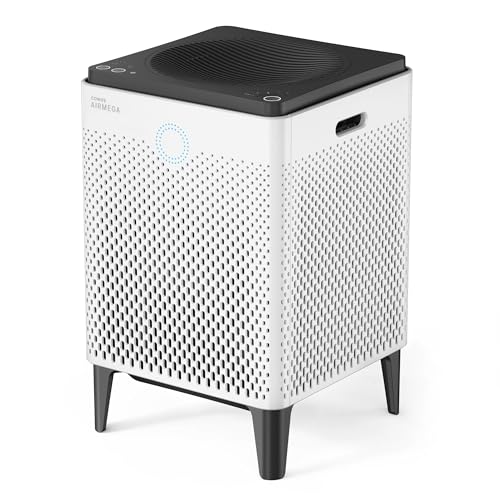
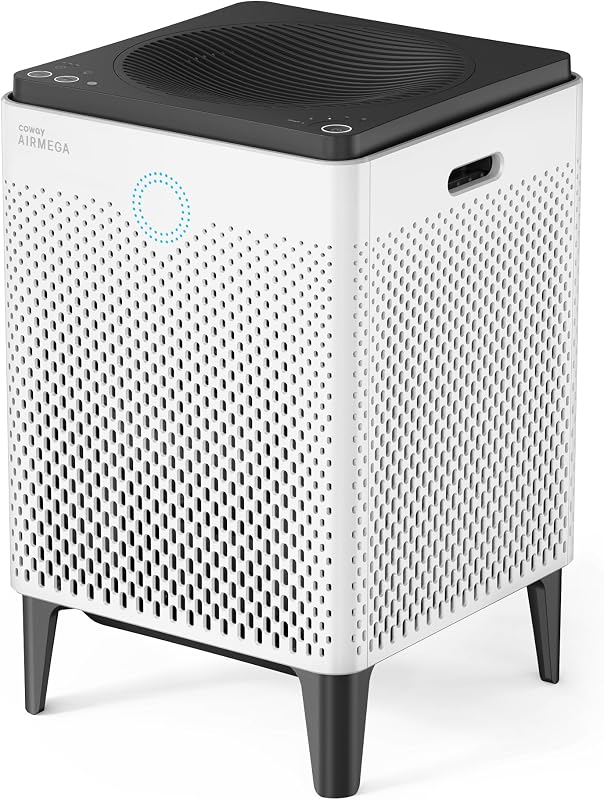
The Coway Airmega 400, by contrast, is a dedicated heavy floor console. Its dimensions measure 14.8 inches deep, 14.8 inches wide, and 22.8 inches tall, weighing in at a substantial 24.7 pounds. You cannot place the Airmega 400 on a dresser or desk; it requires open floor real estate with clearance on both sides to accommodate its dual-suction intake grills. Moving it between floors is an intentional chore compared to picking up the featherweight Blueair.
Edge: Blueair Blue 511, thanks to its tiny 5.24-pound footprint and versatile tabletop form factor.
Power Consumption and Operating Efficiency
Because air purifiers should run continuously to keep allergens suppressed, overall power draw directly impacts household electrical loads. Motor efficiency and smart shutoff functions dictate whether a unit operates efficiently over months of continuous use.
The Coway Airmega 400 operates at a maximum rated wattage of 66 watts. To mitigate energy waste, it holds an official Energy Star Certification alongside CARB and ETL compliance. Its primary efficiency weapon is Eco Mode: if the onboard sensors detect that room air quality has remained clean for 30 minutes, the internal fan shuts down entirely, stopping electricity waste until particulates trigger a restart. This dynamic cycling prevents the 66-watt motor from spinning pointlessly in pristine spaces.
The Blueair Blue 511 listing notes an energy consumption level comparable to a 40-watt LED light bulb. Because it lacks an automated shutoff sensor, the Blue 511 will run continuously at whatever manual fan speed you select until turned off by hand. Those looking at compact options can check the levoit core 400s vs blueair blue 511 for other low-wattage alternatives.
Edge: Tie, as the Coway integrates an automated power-saving Eco Mode with Energy Star certification, while the Blueair features an inherently small motor with light-bulb-equivalent draw.
Pros and Cons
Coway Airmega 400
Pros
- Cleans up to 3,120 square feet
- HyperCaptive true HEPA and carbon filtration
- Automated Smart, Eco, and Sleep modes
- Low 22 dB minimum sound level
- Real-time air quality indicator
Cons
- Heavy 24.7-pound cabinet
- Requires dedicated floor space
- Higher 66-watt maximum power draw
View Coway Airmega 400 on Amazon
Blueair Blue 511

Pros
- Lightweight 5.24-pound compact design
- HEPASilent electrostatic and mechanical filtration
- Cleans 180 square feet in 12.5 minutes
- Simple plug-and-play operation
- Small 7.9-inch tabletop footprint
Cons
- Lacks air quality sensors and auto modes
- Unsuitable for open large-scale rooms
- Listing does not specify dedicated carbon filter
View Blueair Blue 511 on Amazon
Who Should Buy Each One
Choose the Coway Airmega 400 If
- You need to clean large open-concept floor plans or multi-room suites up to 3,120 square feet.
- You prefer autonomous operation with automated fan speeds, air quality monitors, and Eco shutoff.
- You require tested reduction of VOCs, odors, and fine airborne particles down to 0.01 microns.
- You have dedicated floor space to accommodate a substantial 24.7-pound console.
Choose the Blueair Blue 511 If
- You are purifying an individual small bedroom, dorm, or compact office up to 432 square feet.
- You want a lightweight, 5.24-pound purifier that easily sits on a desk, shelf, or nightstand.
- You favor simple, single-button manual operation without complex settings or Wi-Fi pairings.
- You want a secondary, dedicated air purifier to supplement central HVAC in a private room.
Final Verdict
When assessing whether the Coway Airmega 400 is worth it, the answer depends entirely on your square footage requirements. The Coway Airmega 400 is the clear winner for open layouts, large living rooms, and whole-level air purification. Its 3,120-square-foot coverage rating, certified HyperCaptive multi-stage filtration, onboard particle sensors, and intelligent Eco and Sleep modes make it an effortless, high-powered appliance for maintaining whole-home air quality.
Conversely, evaluating if the Blueair Blue 511 is worth it comes down to room scale and simplicity. The Blue 511 remains the superior option for shoppers seeking an unobtrusive air cleaner for an individual bedroom, study, or small nursery. It trades away large coverage areas and automated sensors in exchange for a lightweight 5.24-pound footprint, whisper-quiet operation, and reliable particulate capture across modest spaces up to 432 square feet.
FAQ
Can the Blueair Blue 511 clean an entire house?
No, the Blueair Blue 511 is engineered for small rooms, private offices, and dorms. While its listing states an upper limit of up to 907 square feet, its standard performance cleans 432 square feet in 30 minutes or 180 square feet in 12.5 minutes, making it insufficient for open multi-room layouts.
Does the Coway Airmega 400 turn completely off when the air is clean?
Yes, the Coway Airmega 400 features an Eco Mode. When the built-in pollution sensors detect that the room’s air has remained purified for 30 minutes or more, the fan stops spinning entirely to conserve power, automatically restarting when airborne contaminants are detected.
How do the filters differ between these two air purifiers?
The Coway Airmega 400 uses a HyperCaptive system combining a washable pre-filter, an activated carbon filter for VOCs and odors, and a true HEPA filter capturing 99.97% of 0.3-micron particles. The Blueair Blue 511 uses HEPASilent technology combining mechanical and electrostatic filtration tested on PM 2.5 particles.
Can I place the Coway Airmega 400 on a nightstand or desk?
No, the Coway Airmega 400 is a large floor console measuring 14.8 by 14.8 by 22.8 inches and weighing 24.7 pounds. It is designed to sit on the floor with open clearance on its intake sides, whereas the 5.24-pound Blueair Blue 511 is compact enough for tabletops.
Does the Blueair Blue 511 have an automatic air quality sensor?
The Blueair Blue 511 product listing does not specify an automatic air quality monitor or smart mode. It operates via straightforward, manual plug-and-play controls rather than sensor-driven fan modulation.
Which purifier is better for eliminating cooking odors and pet smells?
The Coway Airmega 400 is better equipped for odors because its HyperCaptive filtration includes a dedicated activated carbon filter tested by KCL to reduce harmful gases, VOCs, and odors within 30 minutes, an explicit feature not detailed on the Blue 511 listing.