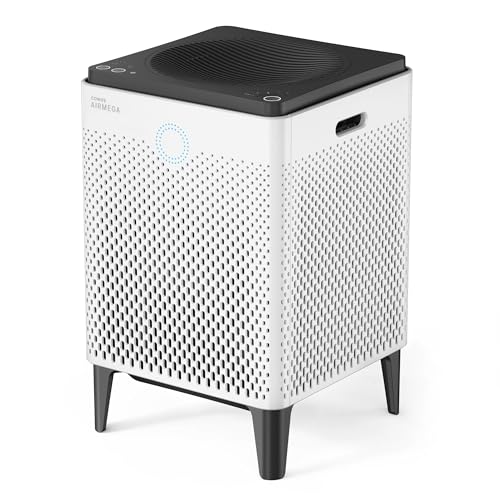
The decisive difference between the Coway Airmega 400 and the Honeywell HPA304 is automation: the Airmega 400 uses onboard air quality monitoring and automated fan modes to clean up to 3,120 square feet dynamically, whereas the HPA304 relies entirely on manual fan selection and standard timers to treat spaces up to 2,250 square feet.
Choose the Coway Airmega 400 if you want set-and-forget air cleaning that scales across expansive open floor plans. Choose the Honeywell HPA304 if you want a straightforward, manually controlled console engineered for dedicated room air exchanges.

Coway Airmega 400 vs Honeywell HPA304 at a Glance
| Feature | Coway Airmega 400 | Honeywell HPA304 |
|---|---|---|
| Maximum 60-Minute Coverage | 3,120 sq. ft. | 2,250 sq. ft. |
| High-Frequency Exchange (4.8x ACH) | Not listed | 465 sq. ft. |
| Filtration Stages | Washable Pre-Filter, Active Carbon, True HEPA | Honeywell HEPA Filter |
| Particle Capture Standard | 99.97% down to 0.3 microns (tested to 0.01 µm) | 99.97% down to 0.3 microns |
| Air Quality Monitoring | Real-time AQI with color indicator | Not listed |
| Operating Modes | Smart Mode, Eco Mode, Sleep Mode, Manual | Manual speeds |
| Minimum Noise Rating | 22 dB | Not listed |
| Rated Power Consumption | 66 watts | Not listed |
| Timer Options | Timer included (listing does not specify steps) | 2, 4, or 8 hours |
| Dimensions (D x W x H) | 14.8 x 14.8 x 22.8 inches | 20.08 x 10.83 x 22.32 inches |
| Weight | 24.7 pounds | 17.0 pounds |
| Warranty | 5-Year Limited | 5-Year Limited |
| Best For | Hands-off open-concept purification | Simple manual room maintenance |
Room Coverage and Air Exchange Rates
Coverage specifications define whether an air purifier can adequately turn over air in your intended space. The Coway Airmega 400 coverage area is rated by the manufacturer to clean interior layouts up to 3,120 square feet every 60 minutes. This substantial volumetric capacity makes it suitable for expansive open-concept living rooms, connected hallways, and combined kitchen-living spaces where air circulation must cover high square footage without dividing walls stopping airflow.
In contrast, the Honeywell HPA304 square footage is specified for 2,250 square feet in one hour, but Honeywell also provides a high-cadence rating: circulating the air up to 4.8 times per hour in an enclosed space up to 465 square feet. This 4.8-air-changes-per-hour baseline corresponds to standard allergy-grade specifications, ensuring airborne particles do not linger. When assessing the coway airmega 400 vs dyson tp07 or similar broad-area units, airflow volume dictates whether an open floor plan receives thorough ventilation or merely localized treatment near the intake vents.
If your room measures beyond 2,000 square feet, the extra volume capacity of the Airmega 400 provides the circulation needed to prevent dead air zones. The HPA304 focuses on heavy air turnover within smaller footprints while retaining the ability to cover larger footprints when run for full hourly cycles. For buyers deciding between the Coway Airmega 400 or Honeywell HPA304 for large rooms, maximum square footage capacity tilts the advantage toward Coway.
Edge: Coway Airmega 400 delivers nearly 900 square feet more coverage per hour to handle larger open-concept environments.
Sensor Technology and Automated Control
Automated responsiveness separates simple air circulators from smart air management consoles. The Airmega 400 includes an integrated air quality monitor that continuously samples surrounding particulate levels. When set to Smart Mode, the unit adjusts its internal fan speeds dynamically based on detected pollution levels. It also features Eco Mode, which halts the fan entirely if the room stays purified for 30 consecutive minutes, restarting automatically as soon as contaminants reappear.
The Honeywell HPA304 operates through a direct manual approach. Kaz and HoneywellPluggedIn built the console with touch controls, a control panel dimmer, and selectable shut-off timers for 2, 4, or 8 hours, but the listing does not specify an air quality sensor or automated speed adjustment. To clear sudden particulate spikes from cooking, smoke, or outdoor drafts on the HPA304, you must physically interact with the console to raise the fan speed.
Living with manual controls means the purifier either runs at a fixed speed all day or depends on user intervention. The automated intelligence of the Airmega 400 manages ambient air without daily tinkering, conserving power when clean and ramping up instantly when air quality drops. If you want comparable hands-off performance in smaller formats, checking comparisons like the levoit core 400s vs coway airmega 400 illustrates how essential integrated sensors have become for modern purifiers.
Edge: Coway Airmega 400 due to its integrated air quality monitor, Smart Mode speed adaptation, and energy-conserving Eco Mode.
Filtration Stages and Contaminant Removal
Filtration structure determines how effectively a unit removes irritants over time. The Coway Airmega 400 utilizes a proprietary HyperCaptive Filtration System consisting of three distinct layers: a washable pre-filter for pet hair and coarse debris, an activated carbon filter to capture odors and volatile organic compounds (VOCs), and an authentic HEPA filter. Coway’s data shows particle capture rates of 99.97% for 0.3-micron particles, with third-party testing by Korea Conformity Laboratories (KCL) demonstrating capture down to 0.01-micron ultra-fine particles, alongside specific reduction of acetic acid and harmful gases within 30 to 60 minutes.
The Honeywell HPA304 features a certified Honeywell HEPA Filter engineered to capture up to 99.97% of airborne allergens and microscopic particles measuring 0.3 microns and larger. The listing emphasizes capturing dust, pollen, pet dander, dust mite debris, and smoke. While Honeywell’s listing mentions odor reduction, it does not detail a separate washable pre-filter or specialized granular carbon stage in the provided specifications, focusing primarily on true mechanical particulate capture for allergen reduction.
When selecting the Coway Airmega 400 or Honeywell HPA304 for allergies, both models deliver the baseline 99.97% efficiency at 0.3 microns required for dust mite and pollen remediation. However, the Airmega 400 provides independent testing verification down to 0.01 microns and specific gas-phase reduction protocols. Readers studying the levoit vital 200s vs coway airmega 400 will recognize the distinct benefit of combining true particulate capture with dedicated VOC mitigation.
Edge: Coway Airmega 400 for its three-stage HyperCaptive design, washable pre-filter, and independently tested capture down to 0.01 microns.
Filter Maintenance and Operating Lifecycle
A thorough Coway Airmega 400 vs Honeywell HPA304 filter replacement analysis highlights practical differences in ongoing maintenance. The Airmega 400 uses washable pre-filters that trap bulky airborne fibers before they strike the delicate inner media. Washing these pre-filters regularly extends the operational lifespan of the main filtration block. An onboard filter life indicator tracks airflow and run duration to notify you exactly when replacement is mandatory.
The Honeywell HPA304 also incorporates a filter change indicator and reset function on its upper touch deck. Honeywell notes that buyers must always purchase genuine Honeywell replacement air purifier filters to preserve efficiency and performance. Because the HPA304 lacks a dedicated washable pre-screen in the product specifications, the consumable filters handle all particulate collection directly, which can accelerate maintenance schedules in homes with shedding pets or high dust accumulation.
Both manufacturers protect their components with a 5-year warranty, demonstrating substantial confidence in motor reliability and structural housing integrity. Nevertheless, the physical design of the Airmega 400 pre-filter saves time and reduces waste by allowing users to vacuum or wash away coarse dust instead of forcing the disposable media to bear the full debris load from day one.
Edge: Coway Airmega 400 because its washable pre-filter protects consumable media from premature clogging.
Acoustics and Nighttime Operation
Operational sound levels determine whether an air purifier can reside comfortably in a bedroom or home office. The Coway Airmega 400 noise level drops down to a quiet 22 dB on its lowest setting. Furthermore, the unit includes an automated Sleep Mode equipped with light and pollution sensors. When the room remains dark and the air clean for three consecutive minutes, the purifier dims its indicator lights and drops power consumption and fan speed to whisper-quiet thresholds.
The Honeywell HPA304 is described as a quiet air purifier by the manufacturer and includes a touch-activated control panel dimmer, which helps eliminate harsh glare when positioned near a bed. However, the listing does not specify a minimum decibel rating or automated ambient light sensing. Any adjustment to fan speeds or control illumination before sleeping must be configured manually via the top panel.
While the HPA304 offers the necessary dimmer switch to accommodate dark bedrooms, the Airmega 400 manages nighttime transitions automatically. Those evaluating compact alternatives like the coway airmega 400 vs blueair blue 511 frequently notice that light-activated sleep transitions eliminate the inconvenience of re-configuring appliances before going to bed.
Edge: Coway Airmega 400 due to its certified 22 dB low-speed rating and light-sensor-driven automated Sleep Mode.
Cabinet Footprint, Weight, and Form Factor
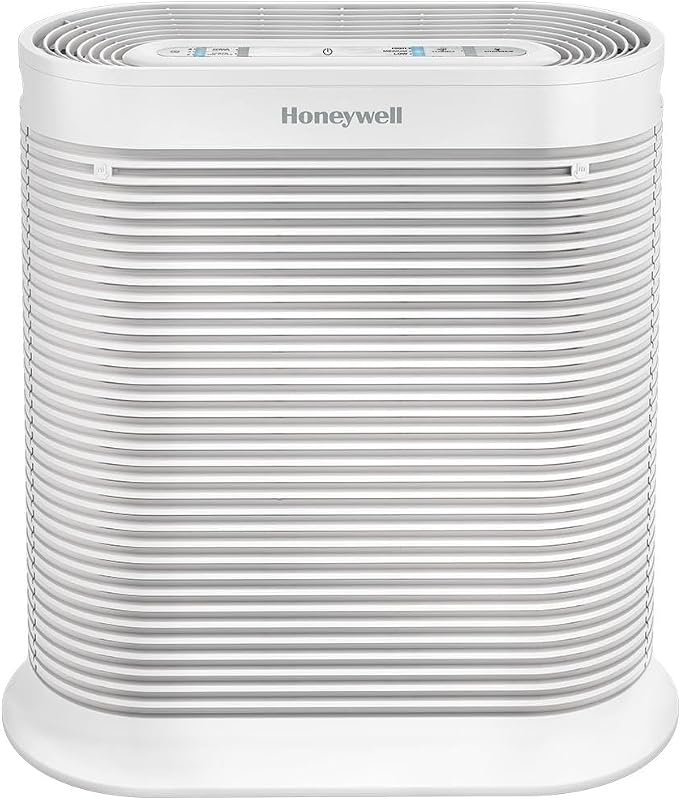
Physical proportions dictate how easily an air purifier blends into domestic furniture arrangements. The Honeywell HPA304 features a wide, relatively shallow profile measuring 20.08 inches long, 10.83 inches wide, and 22.32 inches high. Weighing 17 pounds, it is substantially lighter than the Coway, making it straightforward to move between bedrooms or up and down staircases when localized purification demands shift.
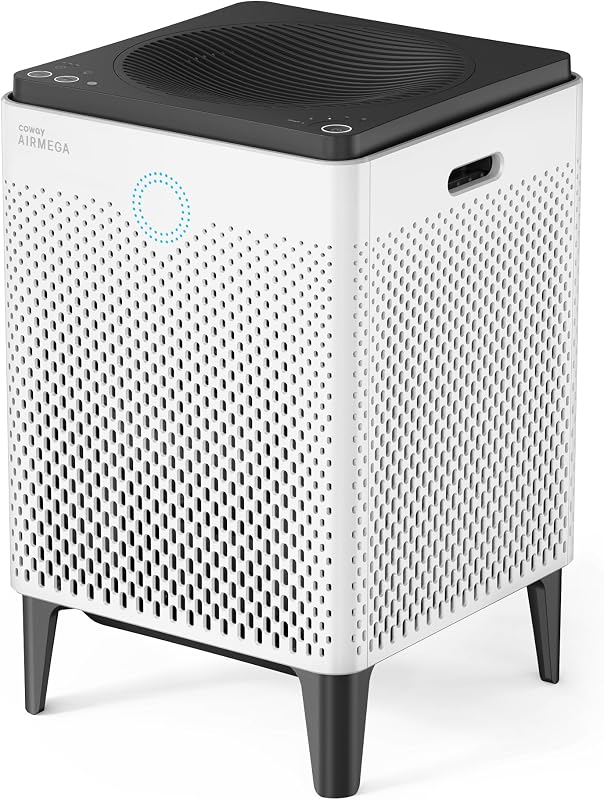
The Coway Airmega 400 is constructed as a substantial square pillar measuring 14.8 inches deep, 14.8 inches wide, and 22.8 inches high. At 24.7 pounds, the Airmega is 7.7 pounds heavier than the Honeywell. Its cubic structure pulls air through dual lateral intakes, requiring adequate clearance on multiple sides rather than sitting flush against baseboards.
For shoppers balancing floor estate, the HPA304’s slimmer 10.83-inch depth fits more naturally against walls or next to dressers in standard bedrooms. The Airmega 400 demands dedicated open placement to leverage its symmetrical airflow architecture. Examining comparative layouts in the coway airmega 200m vs honeywell hpa304 reveals that Honeywell consoles remain easier to position within tighter floor layouts.
Edge: Honeywell HPA304 for its narrower depth profile and 7.7-pound lighter weight, simplifying room-to-room handling.
Pros and Cons
Coway Airmega 400
Pros
- Covers up to 3,120 sq ft
- Automated Smart and Eco modes
- Quiet 22 dB minimum sound level
- Washable pre-filter included
- Tested down to 0.01 micron particles
Cons
- Heavy 24.7 pound unit weight
- Wide cubic footprint
View Coway Airmega 400 on Amazon
Honeywell HPA304
Pros
- 8 air changes per hour in 465 sq ft
- Lightweight 17 pound cabinet
- Slimmer 10.83-inch depth profile
- 2, 4, or 8 hour timer settings
- 5-year warranty protection
Cons
- No automated air quality sensors
- No washable pre-filter listed
View Honeywell HPA304 on Amazon
Who Should Buy Each One
Choose the Coway Airmega 400 If
- You need automated air cleaning across large, open-concept rooms up to 3,120 square feet.
- You prefer a hands-off device that adjusts fan speeds based on real-time pollution and light levels.
- You want washable pre-filters to catch pet hair and reduce the load on main HEPA media.
- You place high priority on ultra-quiet operation down to 22 dB in living spaces or bedrooms.
Choose the Honeywell HPA304 If
- You want straightforward manual controls without navigating complex automated features.
- You are purifying dedicated enclosed rooms up to 465 square feet with 4.8 air changes per hour.
- You need a lighter, 17-pound unit that is easy to carry between floors or rooms.
- You want set-duration timers (2, 4, or 8 hours) with a simple panel dimmer for bedroom use.
Final Verdict
For most households seeking comprehensive air purification, the Coway Airmega 400 is the superior machine. Its 3,120-square-foot hourly capability, three-stage HyperCaptive filtration system, and ultra-quiet 22 dB baseline make it exceptionally capable across varied residential layouts. The standout value lies in its automated Smart, Eco, and Sleep modes, which eliminate guesswork by monitoring air quality continuously and adjusting performance without manual intervention.
The Honeywell HPA304 remains a practical, viable option when your priority is dedicated allergen reduction within standard enclosed rooms. With its certified 4.8 air changes per hour in 465-square-foot spaces, lightweight 17-pound frame, and intuitive manual timer interface, it provides dependable particle filtration for users who want clean air without relying on electronic air sensors.
FAQ
Does the Honeywell HPA304 have an air quality sensor or auto mode?
The listing does not specify an air quality sensor, AQI display, or automated speed adjustment for the Honeywell HPA304. Operating speeds are controlled manually using the touch interface, supported by an auto shut-off timer (2, 4, or 8 hours) and a control panel dimmer.
Coway Airmega 400 or Honeywell HPA304 for allergies: which is better?
Both purifiers capture 99.97% of airborne particles down to 0.3 microns, including pollen, pet dander, and dust mite debris. The Coway Airmega 400 holds an edge for whole-house allergy sufferers because of its broader 3,120-square-foot coverage, washable pre-filters, and laboratory testing verifying capture of ultra-fine particles down to 0.01 microns.
How do the Coway Airmega 400 vs Honeywell HPA304 filter replacement requirements differ?
The Coway Airmega 400 combines a washable pre-filter with a multi-stage HEPA and activated carbon system, using an electronic filter indicator to notify you when service is due. The Honeywell HPA304 uses genuine Honeywell HEPA replacement filters, featuring its own filter change indicator and manual reset button on the upper control deck.
What is the Honeywell HPA304 square footage capacity compared to the Coway Airmega 400 coverage area?
The Honeywell HPA304 cleans up to 2,250 square feet in 60 minutes and is rated to cycle air 4.8 times per hour in rooms up to 465 square feet. The Coway Airmega 400 cleans spaces up to 3,120 square feet in 60 minutes, providing greater air moving capacity for large, open floor plans.
Is Honeywell HPA304 worth it for basic room air cleaning?
The Honeywell HPA304 is worth considering if you want a lighter, 17-pound purifier from a recognized brand with a 5-year warranty, reliable mechanical HEPA performance, and simple timed controls that do not depend on automated sensor calibrations.
What certifications do these air purifiers carry?
The Coway Airmega 400 listing specifies Energy Star, CARB (California Air Resources Board), and ETL certifications, alongside testing via Korea Conformity Laboratories and SGS. The Honeywell HPA304 listing specifies manufacture by Kaz under the HoneywellPluggedIn brand and includes a 5-year manufacturer warranty.