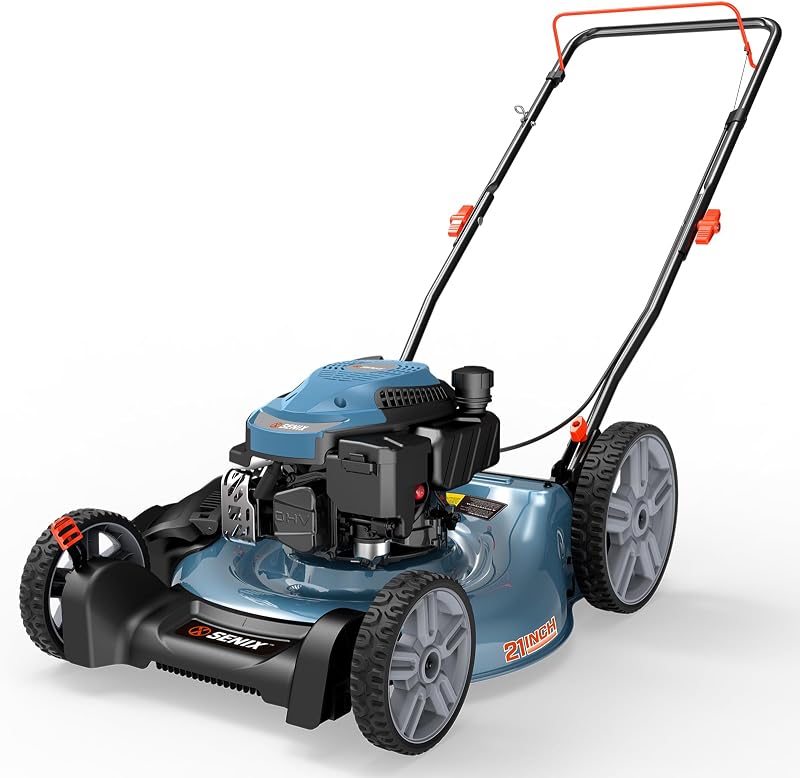
The single deciding factor between the Cub Cadet XT1 LT46 and the Toro TimeCutter 42 is the fundamental trade-off between straight-line mowing width and zero-turn agility. The Cub Cadet provides an expansive 46-inch cutting deck powered by a twin-cylinder engine platform designed to sweep across wide open yard sections with steady traction, whereas the Toro relies on a 42-inch dual-blade deck paired with lap-bar steering that spins in place to navigate tightly packed landscaping.
Homeowners managing rolling, open acreage or uneven ground should pick the Cub Cadet XT1 LT46 for its stable tractor stance and wide-swath cutting efficiency. Property owners with fenced yards, intricate garden beds, and numerous tight obstacles should choose the Toro TimeCutter 42 to slash trim time and pivot effortlessly without reversing.


Cub Cadet XT1 LT46 vs Toro TimeCutter 42 at a Glance
| Feature | Cub Cadet XT1 LT46 | Toro TimeCutter 42 |
|---|---|---|
| Mower Platform | Enduro Series Lawn Tractor | TimeCutter SS Zero-Turn Riding Mower |
| Cutting Deck Width | 46 Inches | 42 Inches |
| Engine Architecture | Kohler 7000 Series Twin Cylinder (20HP – 26HP range) | Toro Branded Single Cylinder |
| Steering Mechanism | Traditional Front-Axle Steering Wheel | Dual-Lever Hydrostatic Lap Bars |
| Spark Plug Configuration | Two Spark Plugs (25 132 23-S / KH-25-132-23-S) | Single Spark Plug (Champion RC12YC) |
| Oil Service Capacity Listed | 64 oz. (Two 32 oz. Bottles SAE 10W-30) | 2 Quarts (Toro 10W-30 #38260) |
| Cutting Blades Included in Kit | Not listed | Set of 2 Blades (Part 137-1999-03P) |
| Air Filtration Setup | Cartridge Filter with Pre-Filter (32 083 10-S) | Cartridge Air Filter Kit (136-7809) |
| Best For | Expansive yards, gentle slopes, and wide open passes | Obstacle-rich lawns, tight fence gates, and perimeter agility |
Cutting Deck Width and Open-Acreage Efficiency
Cutting width directly dictates how many passes you must make to finish an acre of turf. The Cub Cadet XT1 LT46 cutting width measures 46 inches, providing a noticeable advantage on open expanses of lawn where you can drive in long, unbroken lines. A wider deck reduces total travel distance across a typical suburban or rural property, saving machine run hours over a full cutting season. When evaluating the cub cadet xt1 lt42 vs lt46, the four extra inches of the 46-inch model demonstrate clear time savings across large flat lawns.
By contrast, the Toro TimeCutter 42 cutting width measures 42 inches across its two-blade setup. While four inches narrower than the XT1, the compact shell of the 42-inch housing allows the machine to slip through narrow garden gates, squeeze between closely planted shade trees, and clear narrow corridors that a 46-inch lawn tractor deck cannot traverse. In wide areas, the Toro requires more parallel passes to cover identical square footage, but it makes up ground whenever the lawn requires complex maneuvering rather than simple back-and-forth passes.
When assessing this matchup strictly by raw deck coverage per linear pass, the extra four inches of the XT1 LT46 clear more grass with every rotation. If your lawn consists primarily of broad swathes without confining boundary fences, the broader deck provides a noticeable physical efficiency boost.
Edge: Cub Cadet XT1 LT46 delivers four inches of extra cutting swath for fewer passes across wide open turf.
Maneuverability and Trimming Precision
Maneuverability is the central operational divide between a conventional lawn tractor and a true zero-turn machine. The Toro TimeCutter 42 zero turn vs Cub Cadet XT1 comparison highlights completely different steering systems. The TimeCutter relies on dual lap bars that control independent hydrostatic rear wheel drives. Pushing one lever forward while pulling the other back causes the machine to pivot directly on its center axis with a true zero-degree turning radius. This eliminates the multi-point turns normally required when reaching fence corners or looping around landscape islands.
The Cub Cadet XT1 LT46 employs a traditional steering wheel linked to front mechanical steering linkage. While the Enduro Series platform provides responsive tracking, any conventional front-steer tractor inevitably leaves an uncut circle of grass at the center of a full-lock turn. Operators must loop wide, back up, or return later with a string trimmer to clean up missed patches around retaining walls, mailbox posts, and circular flowerbeds. As explored in our cub cadet xt1 lt42 vs toro timecutter 42 analysis, the zero-turn platform eliminates nearly all follow-up trimming work.
The operational agility of the TimeCutter drastically shortens mowing sessions in residential yards crowded with playsets, bird baths, ornamental shrubs, and curved borders. The time lost to the smaller 42-inch deck is rapidly recovered because the machine never stops, shifts into reverse, or pauses to line up for the next cut.
Edge: Toro TimeCutter 42 spins on a zero-degree radius to navigate tight yard features without three-point turns.
Engine Architecture and Power Platform
Engine configuration governs power delivery, operational balance, and cutting stamina through dense or tall grass. The Cub Cadet XT1 LT46 is engineered around the Kohler 7000 Series KT715-KT745 twin-cylinder overhead valve engine family, which spans 20 to 26 horsepower depending on the exact factory production batch. Twin-cylinder engines balance reciprocating mass across two opposing pistons, resulting in significantly lower vibration through the frame, more consistent torque under heavy cutting loads, and ample reserve power to spin a broad 46-inch dual-blade deck without bogging down in damp spring growth.
The Toro TimeCutter 42 specified here (including models 74705, 74711, and 75740) is powered by a Toro-branded single-cylinder engine platform. While single-cylinder engines provide dependable basic power and use less fuel on moderate grass, they produce higher mechanical vibration than an opposed twin. Under heavy loads or taller weeds, a single-cylinder powerplant experiences steeper RPM drops when the deck blades encounter thick patches. The difference in engine refinement is clearly evident when undertaking a demanding cub cadet xt1 lt46 vs husqvarna yth18542 tractor comparison.
The twin-cylinder Kohler platform on the XT1 LT46 supplies superior torque reserves and noticeably smoother operation during lengthy mowing sessions. While it requires servicing two spark plugs instead of one, the added horsepower potential and mechanical balance make it a substantially more robust power source.
Edge: Cub Cadet XT1 LT46 provides twin-cylinder Kohler power with higher torque reserves and less engine vibration.
Slopes, Hills, and Rough Terrain Handling
Traction dynamics change dramatically when mowing transitions from flat lawns to undulating acreage. Deciding between the Cub Cadet XT1 LT46 or Toro TimeCutter 42 for hills requires a clear understanding of steering architecture. The XT1 LT46 features positive front-wheel mechanical steering paired with front weight bias. Because the front wheels are mechanically locked to the steering wheel, they hold a directional line across sidehills and maintain steering control even when descending moderate inclines.
The Toro TimeCutter 42, like all conventional lap-bar zero-turns, uses free-floating front caster wheels that provide no mechanical directional hold. Steering is achieved purely by varying torque to the rear drive wheels. When traversing side slopes or damp banks, gravity pulls the front caster wheels downhill, causing the front end to drift. To keep the machine straight, the operator must constantly over-correct with the uphill control lever, which can cause the downhill drive wheel to lose traction or slide, potentially damaging the turf.
When considering the Cub Cadet XT1 LT46 or Toro TimeCutter 42 for rough terrain, the traditional tractor chassis again proves more forgiving. The tractor layout distributes weight evenly, and its front axle oscillates across ruts and dips without throwing the mower off course. For properties with steep banks, drainage ditches, or bumpy fields, the tractor platform offers predictable handling that a residential zero-turn cannot match.
Edge: Cub Cadet XT1 LT46 delivers superior steering control and stability across hills and rough ground.
Maintenance Requirements and Consumable Kits
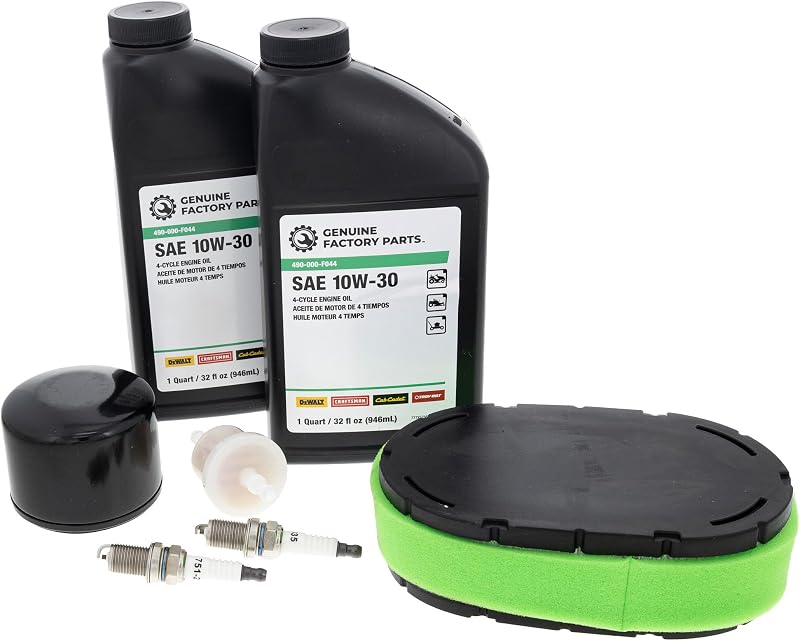
Routine maintenance keeps cutting equipment running cleanly season after season. The Cub Cadet OEM maintenance kit (Part Number 490-950-F051) outlines the service profile for the XT1 LT46. Keeping this machine in top shape involves servicing a Kohler-spec air filter cartridge with a foam pre-filter (32 083 10-S), an engine oil filter (12 050 01-S), an inline fuel filter (25 050 22-S), two 32-ounce bottles of SAE 10W-30 engine oil (totaling 64 ounces), and two spark plugs (25 132 23-S) for its dual-cylinder block. Performing complete engine tune-ups requires stocking parts tailored to twin-cylinder maintenance routines.
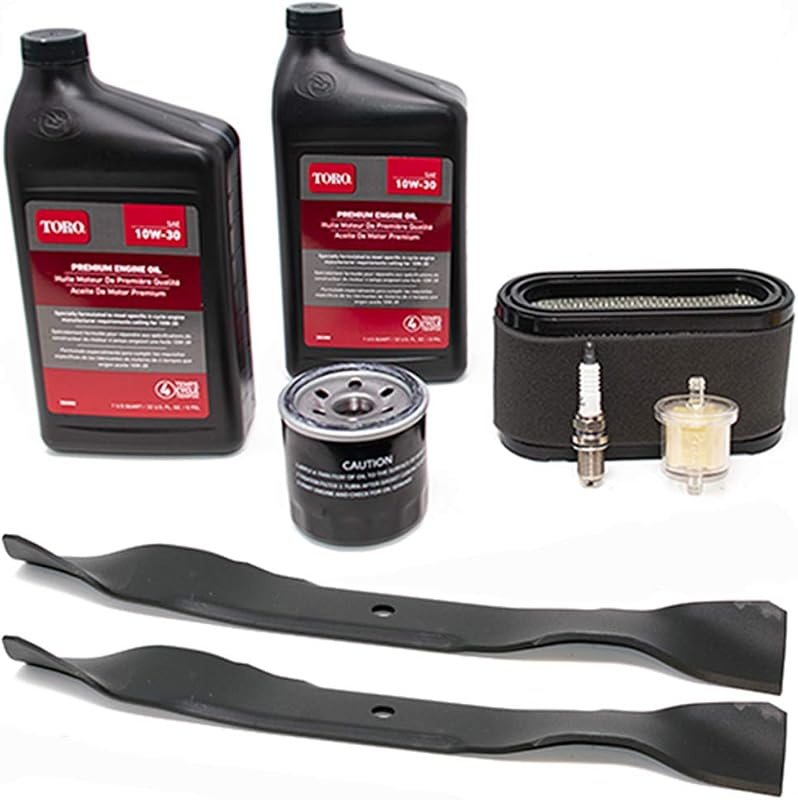
The Toro TimeCutter SS tune-up kit highlights a simpler single-cylinder service routine but adds cutting hardware into the package. It includes a genuine Toro air filter (136-7809), an engine oil filter (136-7848), an inline fuel filter (133-1563), two quarts of Toro 10W-30 engine oil (38260), a single Champion RC12YC spark plug, and a matched set of two 42-inch cutting blades (Part 137-1999-03P). Having blades included alongside primary engine consumables simplifies seasonal prep, ensuring that deck cutting performance is refreshed at the same time the oil is changed.
Because the Toro engine runs on a single cylinder, it requires only one spark plug to inspect and replace. However, both units share standard oil and fuel filter maintenance. The inclusion of replacement cutting blades in standard Toro service kits gives it an edge for complete pre-season renewal. Similar service simplicity is a focal point when reviewing the john husqvarna ts 120 vs cub cadet xt1 lt46 matchup.
Edge: Toro TimeCutter 42 requires only a single spark plug and packages fresh cutting blades directly with service consumables.
Operator Ergonomics and Control Systems
The interface between operator and machine dictates physical comfort over long mowing sessions. The Cub Cadet XT1 LT46 features a classic automotive layout: an ergonomically angled steering wheel, a contoured high-back seat, and foot-pedal hydrostatic speed control. This familiar setup allows the operator to rest their arms naturally and hold a line across wide acreage with minimal physical effort. For operators unaccustomed to industrial equipment, the steering wheel inspires immediate confidence.
The Toro TimeCutter 42 replaces the steering wheel and foot pedals with dual padded lap bars. Driving a zero-turn requires continuous hand engagement, as forward motion, braking, turning, and reversing are all controlled through arm movement. While this provides instantaneous control over exact deck positioning, it requires both hands to remain on the bars at all times. Operators cannot take a hand off the steering to brush away a low branch without altering their mowing trajectory.
Choosing between these two interfaces comes down to personal ergonomics. Operators mowing sprawling acreage often prefer the relaxed posture of the XT1 tractor steering wheel, whereas operators navigating tight yards prefer the quick-acting responsiveness of the TimeCutter lap bars.
Edge: Tie. Traditional steering-wheel comfort on open ground balances against reactive lap-bar precision in tight spaces.
Pros and Cons
Cub Cadet XT1 LT46
Pros
- Wide 46-inch cutting deck
- Smooth Kohler twin-cylinder power
- Stable front-wheel steering on slopes
- Automotive-style steering wheel comfort
Cons
- Cannot perform zero-degree turns
- Requires wider gate clearance
- Two spark plugs to service
View Cub Cadet XT1 LT46 on Amazon
Toro TimeCutter 42
Pros
- True zero-degree pivot maneuverability
- Compact 42-inch deck fits gates
- Single spark plug maintenance
- Includes blades in service kit
Cons
- Single cylinder engine architecture
- Caster wheels drift on steep slopes
- Requires continuous two-hand operation
View Toro TimeCutter 42 on Amazon
Who Should Buy Each One
Choose the Cub Cadet XT1 LT46 If
- Your property features rolling hills, drainage swales, or uneven ground where front-wheel steering control is essential.
- You have large, wide-open lawn expanses where a 46-inch cutting deck reduces the total number of mowing passes.
- You prefer the smooth running balance, lower vibration, and higher torque output of a twin-cylinder Kohler engine.
- You favor a traditional automotive-style steering wheel and foot pedal over dual-lever lap bars.
Choose the Toro TimeCutter 42 If
- Your yard is packed with obstacles such as landscaping beds, trees, playsets, and tight fencing.
- You need to navigate through narrow gates or restricted corridors that cannot accommodate a 46-inch mower deck.
- You want to eliminate manual string trimming around yard fixtures by spinning directly around them.
- You prefer a simple single-cylinder engine layout with streamlined single-plug tune-up procedures.
Final Verdict
For most suburban and rural homeowners managing properties with varied terrain, rolling slopes, and broad open lawns, the Cub Cadet XT1 LT46 is the superior choice. Its twin-cylinder Kohler engine delivers heavy-duty torque and low-vibration performance, while its traditional steering wheel and front-axle geometry keep the mower tracking safely across uneven surfaces and inclines. A thorough Cub Cadet XT1 LT46 review confirms that its 46-inch cutting width clears expansive acreage quickly, proving that is Cub Cadet XT1 LT46 worth it for anyone prioritizing power, stability, and straight-line efficiency over compact agility.
The Toro TimeCutter 42 wins decisively for flat properties with dense landscaping, boundary fences, and intricate obstacles. In any Toro TimeCutter 42 review, its true zero-degree turning radius stands out as a massive time-saver that eliminates tedious three-point turns and drastically cuts secondary weed trimming. If you have flat ground and narrow entry gates, this Toro TimeCutter 42 zero turn vs Cub Cadet XT1 matchup proves that is Toro TimeCutter 42 worth it for turning obstacle courses into quick, fluid mowing routines.
FAQ
Is the Cub Cadet XT1 LT46 or Toro TimeCutter 42 better for hills?
The Cub Cadet XT1 LT46 is substantially safer and more stable on hills and slopes. Its front wheels are mechanically steered by a steering wheel, which prevents the front end from sliding downhill. The Toro TimeCutter 42 uses unpowered, freely castering front wheels that can lose directional grip on slopes, making the Cub Cadet the clear choice for rolling terrain.
What are the cutting deck widths of the Cub Cadet XT1 LT46 and Toro TimeCutter 42?
The Cub Cadet XT1 LT46 cutting width is 46 inches, making it wide enough to clear open lawns in fewer passes. The Toro TimeCutter 42 cutting width is 42 inches, which offers a narrower profile designed to navigate narrow access gates and squeeze between tightly spaced trees.
What engine types power these two riding mowers?
The Cub Cadet XT1 LT46 platform uses a Kohler 7000 Series twin-cylinder engine (KT715 through KT745, ranging from 20 to 26 horsepower) with two spark plugs. The Toro TimeCutter 42 detailed in these specifications utilizes a Toro-branded single-cylinder engine that runs on a single Champion RC12YC spark plug.
How does maintenance differ between the Cub Cadet XT1 LT46 and Toro TimeCutter 42?
The Cub Cadet XT1 LT46 requires servicing two spark plugs and filling 64 ounces of 10W-30 oil along with its dual-stage air filter and fuel filter. The Toro TimeCutter 42 requires only one spark plug and two quarts of 10W-30 oil, and complete tune-up kits frequently bundle a replacement set of two 42-inch cutting blades alongside the standard filters.
Can the Toro TimeCutter 42 fit through a standard yard gate?
With its 42-inch cutting deck, the Toro TimeCutter 42 easily clears standard residential gates that are 48 to 54 inches wide, provided the discharge chute is lifted or accounted for. The Cub Cadet XT1 LT46, with its wider 46-inch deck, requires wider clearance and may not fit through compact residential access gates.
Does the Cub Cadet XT1 LT46 have a zero-turn radius?
No, the Cub Cadet XT1 LT46 is a traditional lawn tractor that uses front-axle mechanical steering. While it features a tight turning radius for a tractor, it cannot spin on its own axis like the Toro TimeCutter 42 zero-turn mower, meaning it cannot make complete zero-point pivot turns.