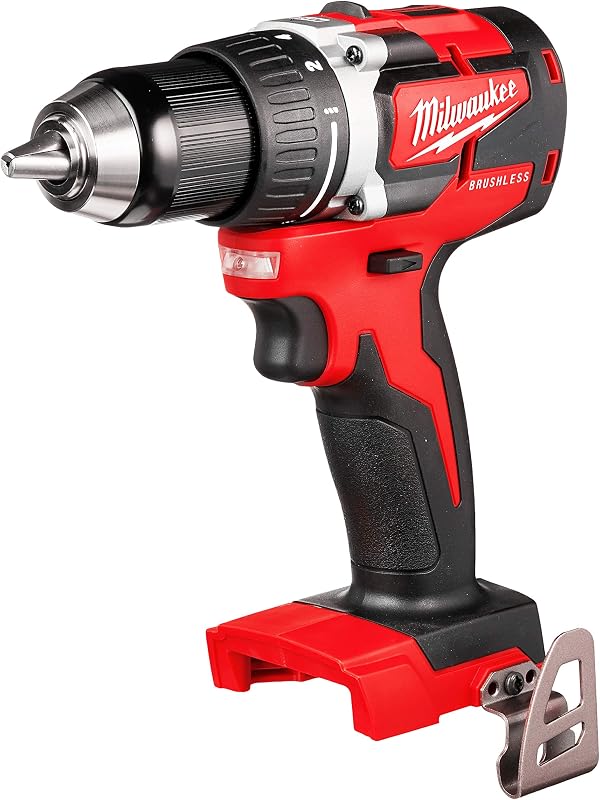
The decisive difference between the DeWalt DCD771 and the DeWalt DCD806 comes down to mechanical capability and intended workload: the DCD771 is a compact drill driver engineered strictly for standard screwdriving and non-masonry drilling, while the DCD806 is a high-output brushless hammer drill built with a dedicated percussive mechanism and active anti-rotation bind-up protection for tough jobsite materials like concrete and block.
Choose the DeWalt DCD771 if you want an all-in-one starter package with batteries and a charger for household assemblies, light woodworking, and everyday maintenance. Choose the DeWalt DCD806 if you need high-speed hammer drilling through masonry, heavy-duty bit retention, and professional-grade electronic safety for demanding construction tasks.

DeWalt DCD771 vs DeWalt DCD806 at a Glance
| Feature | DeWalt DCD771 | DeWalt DCD806 |
|---|---|---|
| Tool Class | Cordless Drill Driver | Cordless Hammer Drill |
| Motor Type | High-Performance Motor (300 UWO) | XR Brushless Motor |
| Speed Range | 2-Speed (0-450 / 0-1,500 RPM) | 2-Speed (0-650 / 0-2,000 RPM) |
| Torque Output | 530 to 650 in-lb | Not listed (Up to 109% more power) |
| Chuck Construction | 1/2-Inch Single Sleeve Ratcheting | 1/2-Inch All-Metal Ratcheting |
| Hammering Mechanism | No | Yes |
| Anti-Bind Safety | Mechanical Clutch Only | ANTI-ROTATION System with Red LED |
| Wood Drilling Capacity | 30 mm | Not listed |
| Metal Drilling Capacity | 13 mm | Not listed |
| Work Light | Integrated Work Light | 3-Position 70-Lumen LED with Auto-Shutoff |
| Kit Inclusions | Two 1.3Ah Batteries, Charger, Bag | Bare Tool Only |
| Best For | Home DIY and Light Fastening | Heavy Masonry and Jobsite Construction |
Drilling Versatility and Masonry Capability
The primary consideration when comparing these two tools is whether your workload includes masonry, brick, mortar, or poured concrete. A standard cordless drill rotates a cutting bit to slice cleanly through ductile materials like timber, plastics, and mild metals. A hammer drill introduces a mechanical percussion system that pulses the spinning chuck forward along its axis, pulverizing brittle aggregate while the flutes clear away stone dust. Without an active hammer mechanism, attempting to push a carbide masonry bit into foundation block or brick generates friction and heat rather than penetration, dulling the accessory and risking motor burnout.
Examining the manufacturer specifications highlights this functional divide clearly. The DCD771 listing explicitly notes that the tool is suitable for home repairs, light construction, wood drilling up to 30 millimeters, and metal drilling up to 13 millimeters, while warning directly that it is not suitable for drilling into concrete or masonry. In contrast, the DCD806 is an authentic hammer drill built specifically to tackle dense stone surfaces alongside standard materials. Those weighing a purchase between the dewalt dcd777 vs dcd806 or considering the DCD771 will find that answering the question of dewalt dcd771 or dcd806 for concrete is straightforward: the DCD771 cannot handle masonry work by design, leaving the DCD806 as the sole candidate for structural anchoring and masonry wall plugs.
For DIY homeowners who only install interior drywall anchors, hang curtain rods, and assemble flat-pack cabinets, a percussive hammer function adds unnecessary internal weight and mechanical bulk. However, if your projects involve fixing exterior spigots, running electrical conduit into brick facades, or securing ledger boards to concrete basement walls, having that hammer mode is non-negotiable. Choosing the DCD771 forces you to purchase or borrow a separate hammer drill the moment a masonry task arises, whereas the DCD806 covers the entire spectrum from delicate cabinetry drilling to hard stone drilling seamlessly.
Edge: DeWalt DCD806 because its dedicated hammer mode allows it to drill through masonry and concrete surfaces that the DCD771 cannot penetrate.
Motor Technology, Power, and Torque Output
Motor engineering dictates how a cordless tool responds when a fastener meets maximum resistance or an auger bit catches in dense framing lumber. Power delivery in DeWalt cordless tools is quantified through Unit Watts Out (UWO), torque ratings, and brushless motor efficiencies. In heavy-duty fastening, higher torque and wattage output prevent the motor from stalling, maintain rotational momentum through timber knots, and protect internal windings against thermal overload during prolonged, continuous operation.
The mechanical difference here is substantial. In any comprehensive dewalt dcd771 review, you will find that the tool is powered by a high-performance motor rated at 300 UWO, generating listed torque figures between 530 and 650 in-lb. This provides ample twisting force for driving three-inch deck screws, drilling pilot holes, and sinking cabinet hardware without hesitation. Conversely, a rigorous dewalt dcd806 review reveals that the DCD806 utilizes an advanced XR brushless motor engineered to deliver up to 109% more power than preceding standard models, along with claims of up to 25% more power over competing commercial alternatives. When evaluating dewalt dcd771 vs dcd806 torque, the brushless motor of the DCD806 operates with electronic commutation rather than carbon brushes, reducing mechanical friction, eliminating spark wear, and maintaining steady power output across demanding tasks.
This power variance dictates what accessories each drill can reliably spin. The DCD771 handles standard twist bits, light spade bits, and everyday structural fasteners without issue, making it a dependable domestic workhorse. But when driving wide self-feeding wood augers, large hole saws for plumbing cutouts, or long masonry bits through concrete, the DCD771 will rapidly hit its thermal and mechanical limits. The DCD806 brushless hammer drill provides the raw output necessary to power through dense framing lumber and stubborn anchors, making it capable of producing up to 175 holes per charge on demanding jobsites.
Edge: DeWalt DCD806 due to its brushless XR motor design that provides up to 109% more power output for high-demand drilling applications.
Transmission Speeds and Drilling Productivity
Rotational speed, measured in revolutions per minute (RPM), determines both drilling pace and clean cutting action. In high-speed drilling, spinning a small-diameter bit quickly results in neat, splinter-free entrance and exit holes in wood and prevents excessive heat buildup when working with mild steel. Conversely, low gear settings deliver high torque at reduced rotational speeds, which is critical for driving large screws smoothly without stripping the screw heads or snapping driver bits.
Evaluating dewalt dcd771 rpm vs dcd806 highlights clear differences in gearing and operational flexibility. The DCD771 features a 2-speed transmission delivering 0 to 450 RPM in low gear and 0 to 1,500 RPM in high gear. This provides sufficient control for general residential tasks, but its top-end rotational speed lags behind modern commercial tools. By comparison, the DCD806 employs a high-speed transmission paired with a variable-speed trigger, operating from 0 to 650 RPM in its first setting and reaching up to 2,000 RPM in its second setting. Shoppers researching the dewalt dcd771 vs dcd800 line or the DCD806 will note that having an extra 500 RPM on tap significantly reduces cycle times when drilling dozens of holes in sequence.
The speed advantage of the DCD806 translates directly into increased productivity on the job. When boring pilot holes through wood or chewing through light metal framing, the 2,000 RPM ceiling cuts through material considerably faster than the 1,500 RPM limit of the DCD771. Furthermore, the DCD806 provides a higher low-speed floor of 650 RPM, which speeds up medium-diameter drilling tasks while retaining ample torque through its brushless drive system. While 1,500 RPM remains perfectly adequate for casual DIY repairs, the DCD806 substantially reduces drilling time across high-volume trade workflows.
Edge: DeWalt DCD806 because its 2,000 RPM high gear and 650 RPM low gear offer significantly faster drilling and broader operational speed control.
Safety Systems and Chuck Durability
As power and torque figures climb, tool safety and bit retention become paramount operational concerns. When a drill bit catches on a hidden nail, a knot in dense lumber, or reinforcing rebar inside masonry, the rotational torque instantly transfers from the spinning bit to the tool body. Without an active safety intervention, this sudden bind-up can violently wrench the operator’s wrist or throw the user off balance, presenting a genuine physical hazard during overhead drilling or ladder work.
The DCD806 introduces an advanced electronic safeguard: the integrated ANTI-ROTATION System. This system continuously monitors the rotational acceleration of the tool chassis. If a sudden, violent twist or bit lockup occurs, the onboard sensors instantly shut off motor power to protect the user’s wrist, while a red LED indicator illuminates on the base to signal that the safety system engaged. The DCD771 lacks any electronic rotation-sensing safety system, relying entirely on a standard adjustable mechanical slip clutch to break torque. For users drilling into unpredictable materials, dewalt dcd806 anti rotation provides a level of reactive injury prevention that the older DCD771 cannot match, an advantage similar to modern safety features highlighted in comparisons like dewalt dcd771 vs dcd996.
Chuck construction also marks a clear dividing line in long-term durability. The DCD771 utilizes a 1/2-inch single-sleeve ratcheting chuck featuring a composite outer collar, which is lightweight and easy to tighten by hand for domestic tasks. The DCD806 steps up to a heavy-duty 1/2-inch all-metal ratcheting chuck designed to provide maximum bit gripping retention under the punishing vibrations of hammer drilling. The all-metal sleeve resists scuffs, drops, and bit slippage when working with large masonry or hole-boring shanks, ensuring far greater physical resilience on active construction sites.
Edge: DeWalt DCD806 because of its electronic ANTI-ROTATION shutoff system and rugged all-metal ratcheting chuck.
Work Lighting, Jobsite Features, and Kit Contents
A cordless drill is rarely used exclusively on well-lit workbenches; it frequently ends up inside dark vanity cabinets, under floor joists, or inside unfinished utility closets. Effective illumination and smart tool tracking transform daily usability. Simultaneously, what arrives inside the product box dictates whether you can begin working right away or need to source separate power supplies and charging hardware before turning a single screw.
The DCD806 shines in workspace illumination and fleet management. It features a 3-position adjustable LED work light capable of delivering 70 lumens of brightness, complete with an auto-shutoff function to preserve battery life when the tool sits idle. Additionally, the DCD806 includes a dedicated pocket that is TOOL CONNECT CHIP READY, allowing contractors to install a DEWALT chip (sold separately) to track tool location and manage jobsite inventory through the DEWALT Site Manager mobile application. Readers evaluating compact alternatives such as dewalt dcd771 vs dcd777 or dewalt dcd771 vs dcd801 will appreciate that the DCD806 brings true modern commercial features to the 20V platform.
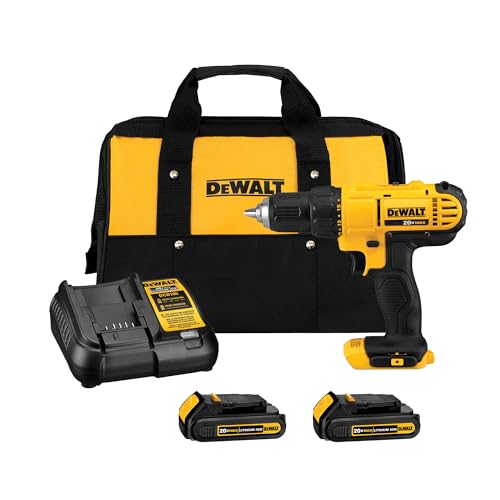
Where the DCD771 gains ground is in out-of-the-box readiness. The DCD771 listing represents a complete kit (DCD771C2) that includes the drill driver, two 20V MAX 1.3Ah compact lithium-ion batteries, a compatible charger, and a contractor storage bag. The DCD806 (DCD806B) is sold strictly as a bare tool, requiring buyers to supply their own 20V MAX batteries and charger. For an entry-level homeowner or DIYer who does not already own compatible power packs, the DCD771 kit eliminates the logistical hassle of buying batteries and chargers separately, making it fully operational right out of the box.
Edge: DeWalt DCD771 for immediate out-of-the-box readiness with two batteries, a charger, and a bag included.
Pros and Cons
DeWalt DCD771

Pros
- Includes two batteries charger and contractor bag
- Lightweight ergonomic design fits tight spaces
- Delivers 300 UWO for everyday household fastening
- Simple 2-speed transmission for DIY drilling
Cons
- Not suitable for concrete or masonry drilling
- Lower maximum rotational speed at 1500 RPM
- Single-sleeve chuck has plastic outer collar
DeWalt DCD806

Pros
- Dedicated hammer mechanism for drilling masonry
- XR brushless motor with up to 109% more power
- ANTI-ROTATION safety system with red LED indicator
- Fast 2-speed transmission reaching 2000 RPM
- Durable 1/2-inch all-metal ratcheting chuck
Cons
- Sold as bare tool without battery or charger
- Heavier build than basic compact drill drivers
Who Should Buy Each One
Choose the DeWalt DCD771 If
- You need a complete starter kit containing two batteries, a charger, and a contractor bag without having to purchase power accessories separately.
- Your projects revolve around basic home maintenance, such as assembling flat-pack furniture, hanging shelves, cabinetry, and installing drywall anchors.
- You drill exclusively in wood (up to 30 mm), mild metals (up to 13 mm), and plastics, with zero intention of boring into concrete, brick, or mortar.
- You prefer a lightweight, compact tool body for quick screwdriving tasks where high-torque hammer mechanisms are completely unnecessary.
Choose the DeWalt DCD806 If
- You require a dedicated hammer drilling mechanism to drill cleanly into concrete foundations, brick exteriors, and stone masonry.
- You need top-tier drilling speeds up to 2,000 RPM and brushless power to drive large hole saws, self-feed bits, and heavy fasteners.
- You value active jobsite safety features like the ANTI-ROTATION System with its red LED indicator to prevent wrist twists during severe bit bind-ups.
- You already own DeWalt 20V MAX batteries and want a commercial-grade tool with an all-metal chuck, 70-lumen adjustable lighting, and Tool Connect readiness.
Final Verdict
For professional contractors, remodelers, and ambitious DIYers, the DeWalt DCD806 is the superior power tool across nearly every performance metric. Its brushless XR motor, high-speed 2,000 RPM transmission, rugged all-metal ratcheting chuck, and active ANTI-ROTATION bind-up shutoff make it exceptionally capable on demanding jobsites. Crucially, its dedicated hammer drill function eliminates the material boundaries of standard drill drivers, allowing you to tackle concrete, brick, and block anchors with confidence.
On the other hand, the DeWalt DCD771 remains an outstanding choice when determining dewalt dcd771 or dcd806 for home use. If your project list is confined to indoor repairs, hanging wall decor, repairing wooden cabinetry, and light construction, the DCD771 provides reliable 300 UWO performance in a package that includes two batteries, a charger, and a storage bag. Unless your upcoming tasks involve heavy masonry drilling or high-volume commercial hole cutting, the DCD771 gives everyday homeowners everything necessary to handle routine maintenance efficiently.
FAQ
Can the DeWalt DCD771 drill into concrete or brick?
The DeWalt DCD771 is not designed for drilling into concrete, brick, mortar, or masonry. Its official product specifications explicitly state that it is not suitable for masonry applications. The tool lacks an internal percussive hammer mechanism, which is necessary to fracture hard stone aggregate, so attempting to drill concrete with it will merely overheat the bit and place extreme stress on the motor.
Is the DeWalt DCD806 worth it over the DCD771?
When asking is dewalt dcd806 worth it, the answer depends on your project requirements and existing tool collection. The DCD806 provides up to 109% more power, a faster 2,000 RPM top speed, an all-metal chuck, an anti-rotation safety shutoff, and hammer drilling versatility. If you need to drill into concrete or drive large bits, the performance and safety advantages of the DCD806 make it well worth choosing, provided you already have or plan to acquire DeWalt 20V batteries.
How does the ANTI-ROTATION System on the DeWalt DCD806 work?
The ANTI-ROTATION System on the DCD806 monitors the rotational motion and sudden angular acceleration of the drill chassis during operation. If a bit jams or binds in tough lumber or masonry, the system senses the sudden twist and instantly cuts power to the motor before the tool can violently wrench your wrist. A red LED indicator illuminates on the tool base to notify you that the anti-rotation protection has engaged.
Does the DeWalt DCD806 include a battery and charger?
The DeWalt DCD806 listing is sold as a bare tool (model DCD806B). It does not include a battery, charger, or carrying case. It is intended for users who already participate in the DeWalt 20V MAX battery platform or those who plan to purchase high-capacity batteries separately. The DCD771 listing (DCD771C2), by contrast, includes two 1.3Ah batteries, a charger, and a contractor bag.
What are the maximum drilling capacities of the DeWalt DCD771?
According to its manufacturer specifications, the DeWalt DCD771 has a maximum drilling capacity of 30 millimeters in wood and 13 millimeters in mild metal. It is designed for pilot holes, fasteners, brackets, drywall anchors, and light-duty maintenance work across non-masonry substrates.
How do the chucks differ between the DCD771 and DCD806?
The DCD771 is equipped with a 1/2-inch single-sleeve ratcheting chuck featuring a composite plastic sleeve, which is well-suited for hand tightening during everyday light-duty fastening. The DCD806 features a heavy-duty 1/2-inch all-metal ratcheting chuck engineered to withstand the intense impact vibrations of hammer drilling and provide superior bit gripping strength under heavy loads.
Why is the work light better on the DeWalt DCD806?
The DCD806 features an adjustable 3-position LED work light that produces up to 70 lumens of output, allowing you to angle the beam directly onto your work area and utilize an auto-shutoff feature to conserve battery power. The DCD771 features a basic integrated work light that provides localized illumination without the multi-position aiming or 70-lumen output of the newer model.