The decisive difference between the DeWalt DCF787 and the DeWalt DCF888 comes down to integrated digital connectivity versus traditional mechanical simplicity. The DCF888 features built-in Tool Connect Bluetooth technology that offers asset tracking, tool diagnostics, programmable operating modes, and customizable torque settings through a mobile application, whereas the DCF787 is a straightforward, trigger-operated brushless driver designed to drive fasteners without digital setup or software pairing.
Choose the DCF787 if you need a reliable, fuss-free impact driver for everyday workshop tasks, basic home maintenance, and standard carpentry. Choose the DCF888 if you manage equipment across commercial jobsites, oversee multiple tool users, or need precise digital control over RPM, torque, and lighting behavior.
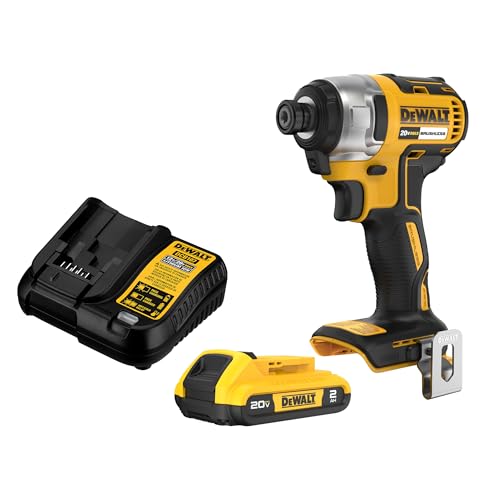

DeWalt DCF787 vs DeWalt DCF888 at a Glance
| Feature | DeWalt DCF787 | DeWalt DCF888 |
|---|---|---|
| Motor Type | Brushless | Brushless |
| Maximum Torque | 1,500 in-lbs | 1,825 in-lbs |
| Maximum Rotational Speed | 2,800 RPM | 3,250 RPM |
| Bluetooth Connectivity | Not listed | Integrated Tool Connect |
| Programmable Operating Modes | Not listed | Default Home mode plus 3 customizable modes |
| Precision Drive Setting | Not listed | Available in Speed 1 |
| Tool Head Length | Not listed | 5.3 inches |
| Bare Tool Weight | Not listed | 2.8 lbs |
| LED Work Light | Single LED with 20-second delay | Programmable brightness and shut-off delay |
| Included Kit Batteries | One 20V MAX battery (DCF787D1) | Two DCB203 2.0Ah XR batteries (DCF888D2) |
| Best For | Everyday domestic fastening and basic shop tasks | Commercial jobsite management and precision fastening |
Tool Connect Bluetooth and Jobsite Management
Asset management and loss prevention represent a significant operational burden on busy commercial jobsites. The DeWalt DCF888 addresses this directly by integrating DeWalt Tool Connect Bluetooth hardware into the base of the impact driver. By pairing the tool with a smartphone or tablet via a button press on the tool foot, tradespeople and fleet managers gain access to real-time inventory diagnostics. The app records the street address where the tool was last detected within Bluetooth range, provides internal coin cell battery status, tracks motor operating temperatures, records total runtime, and even logs the number of trigger pulls over the life of the tool. Furthermore, the software allows managers to set an alert that automatically disables the driver whenever it wanders out of range, neutralizing the incentive for jobsite theft.
By comparison, the DeWalt DCF787 contains no wireless communication hardware, diagnostic tracking, or digital security provisions. It is a traditional cordless power tool that relies entirely on physical security and manual inventory logs. For single operators working out of a private garage or dedicated workshop, the absence of smart electronics removes unnecessary complexity; there are no apps to install, no coin cell batteries to monitor, and no wireless pairing steps required before you start driving screws. However, on multi-crew construction projects where tools regularly migrate between floors and vehicles, the lack of digital oversight makes tracking missing inventory much harder.
When considering whether the dewalt dcf887 vs dcf888 or the DCF787 fits your workflow, assess how much time you spend tracking lost gear. The DCF888 transforms a standalone driver into an auditable digital asset, while the DCF787 remains strictly a mechanical fastening tool.
Edge: DeWalt DCF888 provides advanced Bluetooth tracking, loss prevention, and comprehensive internal diagnostics that the DCF787 completely lacks.
Fastening Torque and Heavy-Duty Driving Power
Rotational force determines how effectively an impact driver sinks long structural timber screws, lag bolts, and stubborn masonry anchors without stalling or stripping drive heads. In any evaluation of dewalt dcf787 vs dcf888 torque, the specifications reveal a notable performance disparity. The DCF888 produces up to 1,825 in-lbs of maximum torque, putting it squarely in the upper tier of compact 20V fastening tools. That output allows it to drive heavy fasteners through dense framing lumber, engineered subflooring, and metal framing members with rapid hammer engagement and minimal strain on the motor.
The DCF787 listing specifies a maximum torque rating of 1,500 in-lbs (with an anomalous table entry of 1500 ft-lb that the primary product description clarifies as 1,500 in-lbs). While 1,500 in-lbs is ample force for driving 3-inch drywall screws, assembling cabinet carcasses, securing deck planks, and fastening mechanical brackets, it runs out of muscle sooner when tackling wide-diameter lag screws or ledger structural hardware. In prolonged structural framing tasks, the lower torque ceiling forces the driver to hammer longer to seat each screw, which generates more motor heat and drains battery capacity faster.
For buyers evaluating the dewalt dcf787 vs dcf845 alongside this pair, torque output remains a key dividing line. The 325 in-lb advantage of the DCF888 translates directly into faster cycle times and cleaner fastener seating under high-resistance loads.
Edge: DeWalt DCF888 delivers 1,825 in-lbs of torque compared to the 1,500 in-lbs produced by the DCF787, giving it more driving muscle for heavy-duty fasteners.
Rotational Speed and Precision Drive Settings
Motor speed influences how quickly an impact driver completes repetitive driving tasks, while fine speed control prevents over-driving or snapping small screws. Looking at dcf787 vs dcf888 rpm, the DCF888 reaches a maximum rotational speed of 3,250 RPM, compared to the 2,800 RPM maximum of the DCF787. That 450 RPM gap produces noticeably faster screw installation when hanging hundreds of drywall sheets or fastening extensive runs of corrugated metal roofing.
Speed control mechanisms separate these tools even further. The DCF787 relies entirely on a conventional variable-speed trigger mechanism. Feathering the trigger modulates spindle speed, but maintaining a slow, steady RPM requires delicate finger pressure, which can lead to hand fatigue and occasional fastener cam-out during delicate trim installation. The listing for the DCF787 does not mention any electronic speed modes or mechanical gear selectors.
In contrast, the DCF888 features advanced speed management. It comes programmed with a default Home mode and three programmable custom profiles configured through the Tool Connect app. More importantly, it features dewalt dcf888 precision drive in speed 1. Precision Drive introduces a short operational pause before impact engagement begins, giving the user complete control when seating delicate brass screws, small machine fasteners, or finished woodworking hardware without damaging work surfaces. Readers comparing alternatives like the dewalt dcf787 vs dcf887 will recognize Precision Drive as one of DeWalt’s most refined fastening technologies.
Edge: DeWalt DCF888 wins due to its 3,250 RPM top speed, programmable mode profiles, and dedicated Precision Drive control in speed 1.
Tool Ergonomics, Compact Profile, and LED Illumination
Physical balance and work-area illumination dictate how comfortable an impact driver feels during long overhead shifts or when fastening deep inside dark utility cabinets. The DCF888 listing provides concrete architectural dimensions: it features a compact head length of just 5.3 inches from front to back and weighs 2.8 pounds without the battery installed. This short front-to-back length lets the tool slip between standard 16-inch-on-center wall studs and into cramped crawl spaces without awkward angling.
The product data for the DCF787 emphasizes a compact and lightweight footprint designed for hard-to-reach areas, but the listing does not specify exact physical dimensions or bare-tool weight. Both tools employ 1/4-inch hex chucks that accept standard quick-change driver bits. While both tools comfortably manage overhead tasks, the verified 5.3-inch length of the DCF888 gives commercial installers predictable clearance in tight recesses.
Work-area lighting also shows distinct differences. The DCF787 features a standard LED work light positioned around the chuck that stays illuminated for 20 seconds after the trigger is released, giving users adequate visibility to inspect fastener placement in low light. The DCF888 expands upon this by making the LED light fully customizable through the Tool Connect software. Users can adjust both the output brightness and the shut-off delay interval to preserve battery life or turn the driver into a temporary stationary task light. Those evaluating compact alternatives like the dewalt dcf787 vs dcf850 will find that the DCF888 offers exceptional optical control.
Edge: DeWalt DCF888 takes the edge with an exact 5.3-inch compact head length and fully customizable LED brightness and delay intervals.
Kit Components and Battery System Value
Because cordless drivers require a steady supply of lithium-ion cells to remain functional, the components included inside the kit box significantly impact continuous work capability. The DeWalt DCF787 kit (model DCF787D1) includes one DCF787 1/4-inch impact driver, one DCB203 20V MAX 2.0Ah compact battery (the specifications table notes 1.3 Ah while the kit description lists the DCB203 2Ah pack), one DCB107 charger, and a belt hook. Having only one battery means that once the pack is depleted, all fastening work stops until the battery is recharged on the DCB107 station.
The DeWalt DCF888 kit (model DCF888D2) provides a more comprehensive out-of-the-box professional package. It includes the DCF888 Tool Connect impact driver, two DCB203 2.0Ah XR brushless lithium-ion battery packs, a compatible charger, and a hard kit box for organized jobsite transport. Operating with two batteries allows continuous rotation: one battery powers the tool while the second replenishes on the charger, eliminating project downtime on demanding jobs. The listing also notes that the brushless motor delivers up to 75% more runtime compared to older 18V NiCad brushed motors.
For tradespeople weighing the dewalt dcf809 vs dcf888, the inclusion of dual batteries and a protective hard case makes the DCF888 kit immediately ready for heavy, all-day field service without purchasing supplemental power packs.
Edge: DeWalt DCF888 provides a superior kit layout containing two 2.0Ah XR batteries and a heavy-duty kit box compared to the single battery kit of the DCF787.
Pros and Cons
DeWalt DCF787

Pros
- Brushless motor for extended runtime
- Compact build for tight spaces
- Single LED with 20-second delay
- Simple variable-speed trigger operation
Cons
- Lower maximum torque at 1500 in-lbs
- No Tool Connect Bluetooth features
- Only one battery included in kit
DeWalt DCF888
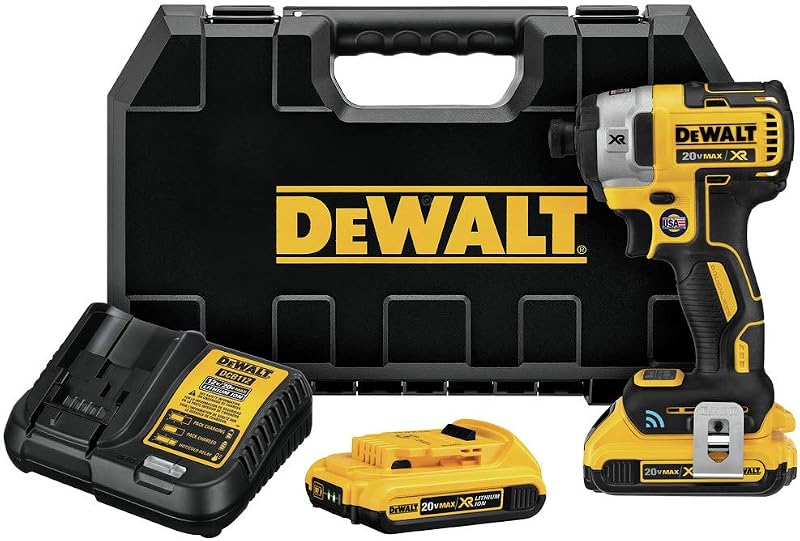
Pros
- Integrated Tool Connect Bluetooth tracking
- Higher torque output at 1825 in-lbs
- Fast 3250 RPM rotational speed
- Precision Drive mode for delicate fasteners
- Includes two 2.0Ah XR batteries
Cons
- Requires app pairing for full customization
- More complex setup than basic drivers
Who Should Buy Each One
Choose the DeWalt DCF787 If
- You want a simple, standalone brushless impact driver for home remodeling, deck building, and weekend DIY tasks without connecting to smartphone apps.
- You prefer standard variable-speed trigger modulation over complex programmable operating modes.
- Your projects do not involve high-resistance structural lag screws where exceeding 1,500 in-lbs of torque is necessary.
- You do not need to track tools across shared commercial job sites or monitor digital internal tool diagnostics.
Choose the DeWalt DCF888 If
- You run a commercial crew and need Bluetooth tracking, last-seen street address location logging, and out-of-range security lockouts.
- You require higher driving power and speed, utilizing 1,825 in-lbs of torque and 3,250 RPM for heavy structural fastening.
- You perform delicate trim or finished cabinetry work where Precision Drive in speed 1 prevents surface damage and fastener stripping.
- You want two 2.0Ah XR batteries in the box to support all-day driving without waiting on a single pack to charge.
Final Verdict
The DeWalt DCF888 stands out as the superior, higher-performing impact driver across virtually every objective technical metric. With 1,825 in-lbs of torque, a top speed of 3,250 RPM, a compact 5.3-inch head length, and specialized Precision Drive control, it handles heavy framing and delicate finish work with equal proficiency. The integrated Tool Connect system adds unique commercial value by tracking tool locations, recording runtime telemetry, and allowing custom digital speed profiles directly from a mobile device. Paired with two 2.0Ah XR batteries in the standard kit, it is built from the ground up for commercial trade demands.
The DeWalt DCF787 remains an excellent choice for DIY enthusiasts, woodworkers, and homeowners who prioritize basic mechanical reliability over connected tech. Its 1,500 in-lbs of torque and 2,800 RPM brushless motor offer more than enough strength to handle routine domestic repairs, fence construction, and furniture assembly. If you do not require digital asset management, app-based customization, or extreme fastening power, the DCF787 delivers pure DeWalt brushless utility in an uncomplicated package.
FAQ
Does the DeWalt DCF787 feature Bluetooth or Tool Connect tracking?
No. The DCF787 has no integrated Bluetooth hardware or Tool Connect capabilities. It operates purely as a standard cordless tool without wireless diagnostic reporting or mobile app pairing.
Can the DeWalt DCF888 be used without the mobile application?
Yes. The DCF888 functions as a standard, high-output impact driver straight out of the box using its default Home mode. The Tool Connect mobile app is only required if you want to modify custom speeds, adjust light delay settings, track tool diagnostics, or monitor asset location.
What is the benefit of Precision Drive on the DCF888?
Precision Drive operates in speed 1 on the DCF888 to provide enhanced control during delicate fastening tasks. It introduces a brief pause before impacting starts, preventing small screw heads from stripping, snapping, or over-driving into finished materials.
How do the maximum torque ratings compare between these two drivers?
The DCF888 produces up to 1,825 in-lbs of torque, while the DCF787 produces 1,500 in-lbs. This gives the DCF888 an advantage of 325 in-lbs when driving large fasteners into dense lumber or masonry anchors.
What batteries come included with each driver kit?
The DCF787D1 kit includes a single 20V MAX 2.0Ah battery (with a 1.3Ah spec noted in the product details table) and a DCB107 charger. The DCF888D2 kit includes two DCB203 2.0Ah XR brushless batteries, a charger, and a kit box.
How does the tool disable feature work on the DCF888?
Through the Tool Connect app, you can configure an out-of-range security alert. When enabled, this feature renders the DCF888 inoperable if it is taken outside the Bluetooth range of your authorized mobile device, deterring jobsite theft.


