The core difference between DeWalt and Ryobi comes down to dedicated jobsite fastening torque versus broad residential tool versatility. DeWalt builds its 20V MAX system around mechanical output, offering higher rotational torque, metal gear transmission speeds, and compact drill dimensions engineered for framing, deck building, and frequent woodworking. Ryobi designs its 18V ONE+ system around universal platform convenience, powering an extensive selection of household, hobby, and garden equipment from a single interchangeable battery pack.
Carpenters, trade workers, and serious woodworkers tackling heavy assembly should invest in DeWalt for superior torque and compact tool heads. Homeowners and routine DIY maintainers should choose Ryobi to access a vast ecosystem that covers lighting, property care, and general repairs on a unified platform.

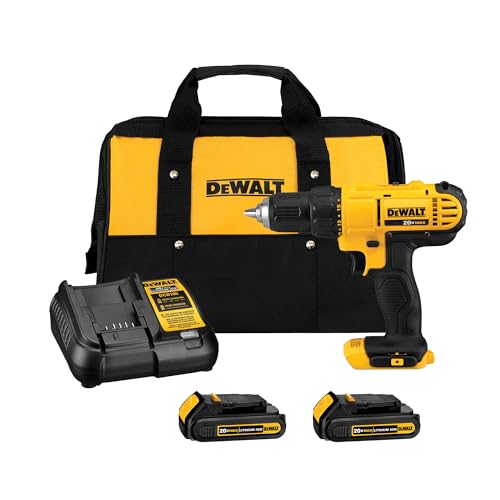


DeWalt vs Ryobi at a Glance
| Feature | DeWalt | Ryobi |
|---|---|---|
| Nominal Platform Voltage | 20 volts | 18 volts |
| Impact Driver Max Torque | 1,700 in-lb | Not listed |
| Drill Driver Max Torque | 530 to 650 in-lb | Not listed |
| Drill Chuck Size and Type | 1/2-inch single sleeve ratcheting | Not listed |
| Drill Power Output | 300 Unit Watts Out (UWO) | Not listed |
| Total Platform Ecosystem Size | Not listed | 225+ ONE+ tools |
| Standard Starter Battery Capacity | 1.3 Ah | 2.0 Ah |
| Battery Charge Speed | Not listed | Under 1 hour (0 to 100%) |
| Dedicated Lighting Output | Not listed | 280 lumens (500-foot beam) |
| Manufacturer Warranty | 3-year limited warranty | 3-year limited warranty |
| Best For | Demanding carpentry and structural fastening | Whole-home maintenance, yard work, and DIY |
Fastening Torque and Motor Power Output
Motor power and rotational torque dictate how effortlessly a cordless system drives long screws, bores through dense framing lumber, and cuts through sheet metal. When evaluating dewalt vs makita or other contractor tools, mechanical output under load determines whether a motor stalls or maintains forward momentum. In a direct DeWalt vs Ryobi drill driver assessment, the motor architecture reflects the intended operating environment of each brand.
The DEWALT 20V MAX Cordless Drill and Impact Driver Combo Kit demonstrates this mechanical strength by pairing the DCD771 drill driver with the DCF88M2 impact driver. The impact unit generates 1,700 in-lb of torque, providing the rotational punch required to drive lag screws and structural fasteners into treated timber without stripping screw heads. The companion DEWALT 20V Max Cordless Drill Driver Set features a motor delivering 300 Unit Watts Out (UWO) paired with a dual-speed transmission running at 0-450 RPM and 0-1,500 RPM. This dual-speed gearbox produces between 530 and 650 in-lb of torque, capable of drilling up to 30 millimeters in wood and 13 millimeters in metal.
In contrast, the provided product listings for Ryobi center on platform connectivity, battery intelligence, and utility equipment rather than detailing standalone drill torque figures. While Ryobi equipment delivers fade-free cordless output engineered for general tasks, the catalog data leaves mechanical torque specs unlisted for direct side-by-side verification against DeWalt’s 1,700 in-lb benchmark. For projects requiring documented fastening force and high drilling capacities, DeWalt provides published performance metrics that handle demanding work.
Edge: DeWalt delivers verified high-torque output with 1,700 in-lb on its impact driver and 300 UWO on its drill driver.
Battery Platform Versatility and System Breadth
Investing in a cordless tool system is an investment in a specific battery architecture. The range of tools compatible with a single battery pack dictates whether a user must purchase multiple chargers or can streamline their entire workshop around one standard interface. Looking at the Ryobi 18V vs DeWalt 20V platform architecture reveals two fundamentally distinct approaches to catalog development.
The Ryobi One+ 18V Lithium Ion 2.0ah Battery and Charger Kit highlights an ecosystem built on universal utility. Ryobi connects this single 18V platform to more than 225 tools across diverse applications. A homeowner can remove the battery from an impact tool and immediately insert it into an inflator, plumbing drain auger, chemical sprayer, work light, or lawn trimmer. When comparing battery performance, such as in our analysis of a 2.0ah vs 5.0ah battery, ecosystem flexibility often matters just as much to homeowners as raw cell density.
DeWalt operates an extensive 20V MAX system tailored primarily to building trades, carpentry, mechanical fabrication, and jobsite contracting. However, the listing documentation provided for DeWalt does not state a unified ecosystem count for consumer lifestyle and yard appliances. Ryobi deliberately expands into residential lifestyle categories that trade-focused manufacturers rarely address, making the ONE+ platform exceptionally practical for full-property upkeep.
Edge: Ryobi wins for ecosystem breadth with over 225 compatible tools spanning DIY construction, residential cleaning, and yard maintenance.
Tool Ergonomics and Maneuverability in Tight Spaces
Working inside floor joists, between wall studs, or under sink plumbing requires compact dimensions and balanced weight distribution. Oversized tool housings cause premature wrist fatigue and make straight-line fastener alignment difficult when clearance is restricted. Handling characteristics often decide whether a homeowner prefers DeWalt or Ryobi for DIY assemblies.
DeWalt engineers its core 20V drill and impact housings for tight clearances. The DCF88M2 impact driver measures just 5.55 inches in overall length and weighs 2.8 pounds, allowing it to slip easily between narrow stud bays. The DCD771 drill driver measures 7.5 inches in length and weighs 3.6 pounds. Both tools feature ergonomic grip profiles that center mass over the hand. The impact driver incorporates a 1/4-inch hex chuck with one-handed bit loading that accepts 1-inch bit tips, while the drill utilizes a 1/2-inch single-sleeve ratcheting chuck that clamps down securely on round and hex drill shanks.
Ryobi emphasizes lightweight materials across its equipment, utilizing ABS plastic construction for utility tools such as the 8.8-ounce PCL660B light, while its 2.0Ah battery pack adds 1.9 pounds to any bare tool. However, the manufacturer data does not specify head lengths or chuck grip mechanisms for a directly comparable Ryobi drill model. DeWalt’s documented 5.55-inch profile and ratcheting chuck mechanism give users a proven ergonomic setup for restricted spaces.
Edge: DeWalt offers documented compact dimensions with a 5.55-inch impact driver head and secure 1/2-inch ratcheting chuck.
Workspace Illumination and Visibility
Visibility directly impacts project precision and operator safety. Working inside unfinished basements, dark closets, attic crawlspaces, or under vehicle dashboards requires reliable illumination that points directly at the work surface. Choosing DeWalt or Ryobi for home use often involves deciding between integrated tool lighting and high-output area lighting.
DeWalt tackles visibility by integrating LED work lights directly into the base of its power tools. Both the drill driver and the impact driver in the DCK240C2 kit feature built-in LEDs with a 20-second shutoff delay. When the trigger is pulled, the work area illuminates immediately, and the beam remains active for 20 seconds after releasing the trigger. This allows the user to inspect screw depth, check drill bit marks, or locate fasteners without continuously running the motor, much like the setup seen in our dewalt dwe7485 vs dw745 tool workspace evaluations.
Ryobi approaches illumination with dedicated lighting equipment, exemplified by the RYOBI PCL660B ONE+ 18V Cordless LED Flash Light. This tool delivers 280 lumens of output, casting a beam up to 500 feet. It features a 130-degree pivoting head that directs light at odd angles across an entire room or workbench, running for up to 22 hours on a single battery charge. While DeWalt’s integrated LEDs are convenient for quick fastening, Ryobi provides superior standalone lighting utility that illuminates entire job areas during extended repairs or power outages.
Edge: Ryobi provides superior area illumination with dedicated 280-lumen output, a 130-degree pivoting head, and 22-hour runtime.
Charging Technology and Battery Monitoring
Battery monitoring and charge turnaround times govern workflow efficiency. A dead battery pack without a charge indicator forces a user to guess remaining capacity before climbing a ladder or starting a cut. Comparing the charging engineering between these two brands illustrates how modern battery intelligence minimizes workflow interruptions.
The Ryobi PSK005 18V 2.0Ah kit incorporates advanced charging management via its proprietary IntelliPort technology. The system monitors cell conditions, conserves energy, and protects battery cells from degradation during storage, bringing a fully depleted battery to 100 percent charge in under an hour. Furthermore, the 2.0Ah lithium-ion pack features an integrated onboard LED fuel gauge, allowing the user to check remaining power reserves at the press of a button. For projects demanding continuous pacing, similar to our evaluations in the dewalt dcs380 vs milwaukee 2720-20 teardown, real-time power monitoring is essential.
DeWalt packages its DCD771C2 kit with two 1.3Ah XR lithium-ion batteries and a dedicated charger. However, the manufacturer listing does not state a sub-one-hour recharge duration, nor does it specify an onboard LED fuel gauge on these entry-tier 1.3Ah packs. While the inclusion of two batteries ensures one pack can charge while the other is in use, Ryobi’s under-one-hour charging cycle, cell conditioning circuitry, and integrated fuel gauge provide superior battery feedback.
Edge: Ryobi leads with under-one-hour rapid charging, IntelliPort cell conditioning, and an integrated LED fuel gauge.
Build Materials and Heavy Work Limitations
Durability under harsh conditions determines whether a cordless tool platform survives accidental drops, outdoor temperatures, and heavy friction. A comprehensive DeWalt review and Ryobi review must examine where each manufacturer sets its engineering boundaries and operational limitations.
DeWalt builds its tools with heavy-duty polymer blends, brushed motor housings, and metal ratcheting chuck components. Backed by a 3-year limited warranty, the DCD771 drill driver is engineered for home repairs, DIY projects, light construction, and drilling into wood, plastic, and light metal. However, the product specification explicitly outlines structural limitations: the tool is not suitable for drilling into concrete, brick, or masonry, nor is it designed for heavy-duty industrial fabrication. Understanding these boundaries prevents tool burnout when tackling structural tasks, as discussed in our dewalt dwe7491rs vs dw745 comparison.
Ryobi constructs its tools with impact-resistant ABS plastic, finished in its signature high-visibility green styling. Backed by a 3-year manufacturer warranty, Ryobi’s 18V 2.0Ah battery incorporates professional-grade lithium-ion cells engineered for extreme weather performance and fade-free power delivery. While Ryobi components handle rough household use and outdoor temperatures reliably, DeWalt’s metal chuck construction and 300 UWO motor withstand higher continuous mechanical loads across light construction duties.
Edge: DeWalt offers superior physical durability for drilling and light construction, backed by a metal ratcheting chuck.
Pros and Cons
DeWalt
Pros
- Higher nominal 20V platform power
- High torque output up to 1700 in-lb
- Compact ergonomics for tight workspace access
- Integrated work lights with 20-second delay
Cons
- Base kits bundle smaller 1.3Ah batteries
- Standard drill models unsuitable for masonry drilling
View DEWALT 20V MAX Cordless Drill on Amazon
Ryobi
Pros
- Extensive ONE+ compatibility across 225 tools
- Batteries include integrated LED fuel gauge
- Fast battery recharge under one hour
- Engineered for extreme weather battery operation
Cons
- Lower 18V maximum system voltage
- Many specialty tools sold strictly without battery
View RYOBI PCL660B ONE+ 18V Cordless LED on Amazon
Who Should Buy Each One
Choose DeWalt If

- You need verified fastening torque up to 1,700 in-lb for driving structural screws and building decks.
- You frequently work in tight cabinets or framing spaces requiring a compact 5.55-inch impact driver head.
- You drill into light metals up to 13 millimeters or bore 30-millimeter holes in dense timber.
- You require a heavy-duty 1/2-inch ratcheting chuck that firmly locks drill bits during high-resistance drilling.
Choose Ryobi If

- You want a single 18V battery platform that powers over 225 home, garden, hobby, and cleaning tools.
- You value fast battery turnaround with chargers that replenish packs in under one hour.
- You need integrated battery fuel gauges to monitor your remaining charge level at all times.
- You require versatile area lighting with multi-angle pivoting heads and runtimes up to 22 hours.
Final Verdict
For users prioritizing mechanical fastening power, drilling torque, and compact tool dimensions, DeWalt is the superior choice. The DCD771 drill and DCF88M2 impact driver deliver verified jobsite metrics, including 1,700 in-lb of impact torque, 300 UWO of drilling power, and a short 5.55-inch tool profile. When your primary tasks involve building, framing, and light construction, DeWalt’s focused engineering and metal ratcheting components justify making it your core cordless platform.
Ryobi wins for users seeking comprehensive home maintenance versatility. With more than 225 tools operating on the 18V ONE+ battery platform, homeowners can transition effortlessly from drilling pilot holes to trimming hedges and illuminating large workspaces with a 280-lumen pivoting light. Supported by rapid sub-one-hour charging and onboard battery fuel gauges, Ryobi offers the ideal unified platform for everyday DIYers managing a wide range of residential projects.
FAQ
Can DeWalt 20V batteries be used on Ryobi 18V power tools?
No, DeWalt 20V MAX batteries are not natively compatible with Ryobi 18V ONE+ power tools. Each manufacturer uses proprietary terminal connections, physical locking tabs, and battery communication electronics designed exclusively for its own tool platform.
Can the DeWalt 20V compact drill penetrate concrete or brick?
No, the DeWalt DCD771 compact drill driver is not suitable for concrete or masonry drilling. The product specifications state that it is designed for wood up to 30 millimeters, plastic, and light metal up to 13 millimeters, and lacks a hammer mechanism for masonry work.
How many tools run on the Ryobi 18V ONE+ battery platform?
The Ryobi 18V ONE+ platform powers over 225 compatible tools. This extensive lineup covers basic drilling and fastening, cutting, plumbing, cooling, high-output lighting, and outdoor power equipment such as trimmers and edgers.
How fast does the Ryobi 18V 2.0Ah battery recharge?
The Ryobi 18V 2.0Ah lithium-ion battery charges from zero to 100 percent in under one hour when connected to its compatible fast charger equipped with IntelliPort technology.
Do DeWalt cordless drills include built-in work lights?
Yes, DeWalt cordless drill drivers and impact drivers in the 20V MAX lineup feature integrated LED work lights. These lights include a convenient 20-second delay that keeps the work area illuminated after releasing the trigger switch.
Which brand is better for general home maintenance and DIY projects?
Ryobi is generally better suited for broad home maintenance due to its massive 225+ tool catalog that spans property care, hobby tasks, and light repairs on a single battery system. However, for DIYers primarily focused on carpentry, deck building, and frequent structural driving, DeWalt’s higher torque output offers better mechanical performance.


