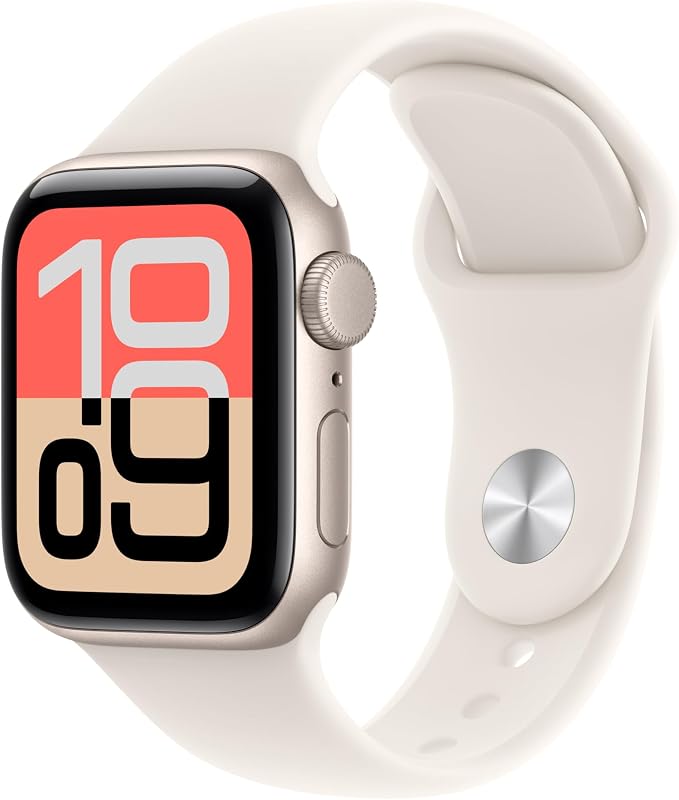
The fundamental divide between the Fitbit Versa 4 and the Garmin vívoactive 6 comes down to daily connected communication versus advanced, subscription-free athletic training metrics. The Versa 4 prioritizes seamless wrist-based communication with Bluetooth phone calling and integrated Google tools, whereas the vívoactive 6 emphasizes deeper training analysis, extensive multi-satellite tracking, and energy monitoring that operates entirely without a paid membership tier.
Choose the Fitbit Versa 4 if you want a sleek, square smartwatch that takes phone calls directly from your wrist and supports everyday lifestyle apps. Choose the Garmin vívoactive 6 if you demand up to 11 days of battery life, advanced workout recovery metrics, and dedicated athletic coaching without ongoing subscription fees.
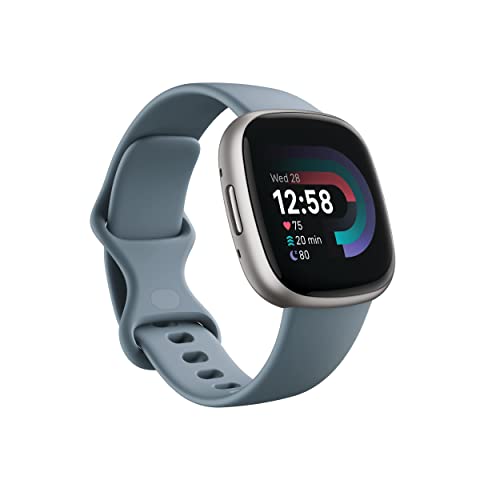

Fitbit Versa 4 vs Garmin vívoactive 6 at a Glance
| Feature | Fitbit Versa 4 | Garmin vívoactive 6 |
|---|---|---|
| Case Material | Stainless steel | Fiber-reinforced polymer |
| Case Shape | Square | Round (42mm) |
| Display Type | Touchscreen (Modern style) | Bright AMOLED touchscreen |
| Battery Life | 6+ days | Up to 11 days (smartwatch mode) |
| Satellite Positioning | Built-in GPS | GPS, GLONASS, Galileo, QZSS |
| Sports and Exercise Apps | 40+ exercise modes | 80+ sports apps |
| On-Wrist Calling | Yes (Bluetooth calls via wrist) | Not listed |
| Recovery and Energy Metrics | Daily Readiness Score (requires Premium) | Body Battery, Recovery Time, HRV Status |
| Water Resistance | 50 meters | 50 meters |
| Best For | Casual fitness tracking and wrist communication | Dedicated training, endurance sports, and recovery analytics |
Sports Profiles and Workout Tracking
When assessing Garmin vívoactive 6 vs Versa 4 fitness tracking, the gap in depth between general physical activity monitoring and structured training becomes apparent immediately. The Versa 4 comes equipped with 40+ exercise modes, automatic workout detection, and Active Zone Minutes to help you measure effort relative to your cardiovascular zones. It records exercise tracks via built-in GPS and generates a workout intensity map in the companion app. For general gym sessions, cardio equipment, and weekend bicycle rides, these tools provide accessible data that helps casual movers gauge their exertion without overwhelming them with performance formulas.
In contrast, the vívoactive 6 functions as a comprehensive training companion featuring more than 80 built-in indoor and GPS sports applications. Along with standard disciplines like running, walking, and swimming, the Garmin watch includes specialized profiles for mobility, HIIT, and golf. Athletes working through gym routines benefit from on-screen animated workouts for strength, cardio, HIIT, yoga, and Pilates that display proper exercise form directly on the bright AMOLED display. Runners and walkers can lean on free Garmin Coach adaptive training plans that adjust targets dynamically based on daily recovery, alongside tailored daily suggested walking workouts. Similar training distinctions appear when weighing the fitbit charge 6 vs garmin vívoactive 6 for active conditioning.
Deciding between the Fitbit Versa 4 or Garmin vívoactive 6 for running reveals a stark difference in tactical workout analysis. While the Versa 4 plots pace, distance, and heart rate zones, the vívoactive 6 incorporates workout benefit analytics to clarify how a specific training session impacts aerobic and anaerobic energy systems. It also calculates recovery time, explicitly advising how many hours of rest your muscular and cardiac systems need before your next heavy effort. For structured athletic improvement, Garmin delivers a much broader sports utility suite.
Edge: Garmin vívoactive 6 provides double the activity profiles, on-screen animated form demonstrations, adaptive training plans, and post-workout recovery insights.
Recovery, Sleep, and Health Analytics
Both manufacturers position their wearables as whole-body health monitors, but they take sharply contrasting paths regarding data accessibility. A thorough Fitbit Versa 4 review must highlight that several of its most valuable health features require an ongoing subscription. The Versa 4 features a Daily Readiness Score that examines heart rate variability, recent activity, and sleep patterns to signal whether you should exercise or prioritize rest. However, this score and the comprehensive personalized Sleep Profile require a paid Fitbit Premium membership after the included 6-month trial concludes. The listing specifies that the health metrics dashboard and SpO2 features are subject to regional availability.
The vívoactive 6 delivers its advanced recovery suite natively, requiring no recurring membership fees to unlock full functionality. Its hallmark recovery system, Body Battery energy monitoring, models your internal energy reserves on a scale from 1 to 100 by calculating the continuous interplay of stress levels, active workouts, resting heart rate, and sleep quality. Crucially, the vívoactive 6 incorporates automatic nap detection, directly factoring midday rest periods into your overall Body Battery replenishment. It also generates a morning report summarizing sleep score, recovery metrics, and Heart Rate Variability (HRV) status to indicate physiological equilibrium.
Comparing Fitbit Versa 4 vs vívoactive 6 sleep tracking highlights unique strengths on both sides. The Versa 4 delivers reliable sleep stage analysis (deep, light, and REM sleep), an overall Sleep Score, and a smart wake alarm that vibrates during lighter sleep windows. The vívoactive 6 counters with personalized sleep coaching that suggests exact sleep duration targets alongside sleep stages, nap tracking, and HRV status. Shoppers exploring other brand matchups, such as the fitbit sense 2 vs garmin vívoactive 6, will recognize Garmin’s persistent edge in delivering advanced sleep coaching and HRV metrics without paywalls.
Edge: Garmin vívoactive 6 wins by offering Body Battery energy tracking, HRV status, nap detection, and personalized sleep coaching without requiring a paid subscription.
Battery Life and Display Technology
Battery longevity remains a vital consideration for anyone who dislikes frequent charging cables. When examining Fitbit Versa 4 vs Garmin vívoactive 6 battery life, Garmin holds a substantial mathematical and operational advantage. The Versa 4 provides a respectable 6+ day battery life under standard conditions, which easily outlasts standard daily-charge smartwatches. This runtime ensures you can track sleep across a workweek without placing the device on the nightstand every evening.
Nevertheless, Garmin vívoactive 6 battery life sets a significantly higher standard by providing up to 11 days of continuous operation in smartwatch mode. This extended endurance allows users to track over a week of continuous daytime activity, nocturnal sleep metrics, and satellite-guided outdoor sessions before needing a recharge. For multi-day camping trips, travel itineraries, or continuous health tracking, fewer charging interruptions yield fewer gaps in physiological data collection. Similar battery dynamics exist when comparing devices like the fitbit inspire 3 vs garmin vívoactive 6, where specialized fitness devices stretch runtime well past general-purpose alternatives.
The visual presentation on the wrist also differs markedly between these two form factors. The vívoactive 6 features a bright, circular AMOLED touchscreen housed within a 42mm casing, offering high contrast, vivid color saturation, and sharp readouts for workout animations and text notifications. The Versa 4 utilizes a modern square touchscreen display framed by an ambient light sensor that adjusts panel brightness automatically based on your surroundings. Both screens provide excellent legibility, but Garmin pairs its AMOLED technology with nearly double the overall endurance.
Edge: Garmin vívoactive 6 offers almost double the operating longevity with up to 11 days of battery life compared to the Versa 4’s 6+ days.
Smart Features and Wrist Communication
Everyday convenience and smartphone integration represent the Versa 4’s most convincing advantage over the competition. The Versa 4 incorporates an on-wrist speaker and microphone setup, allowing users to take Bluetooth phone calls directly from the wrist when paired with an Android or iOS smartphone. Users can also view and respond to text messages, review app notifications, and make contactless purchases via Fitbit Pay or Google Wallet. The platform incorporates Amazon Alexa for hands-free voice commands and offers Google Maps navigation directly on the screen (with the listing noting Google Maps functionality for Android, and iOS availability coming Spring 2023).
The vívoactive 6 functions primarily as a notification hub rather than an interactive wrist communicator. It alerts users to incoming phone calls, incoming text messages, emails, and app alerts directly from a paired smartphone. It also incorporates a Find My Phone utility to locate misplaced handsets. However, the listing does not specify any internal speaker or microphone hardware, meaning you cannot answer and conduct voice calls directly through the watch face. Those seeking voice assistants and full lifestyle integration often cross-shop wearables like the fitbit versa 4 vs apple watch se to weigh standalone calling convenience against athletic tracking.
For users who spend their days away from their desks, driving, or handling household chores, the ability to take a voice call directly on the Versa 4 without fishing a phone out of a pocket is a major practical benefit. Garmin keeps users informed of incoming digital communications, but Fitbit delivers a far more versatile wrist-based communication terminal.
Edge: Fitbit Versa 4 dominates smart functionality with on-wrist Bluetooth calling, Amazon Alexa, and built-in Google services.
Build Quality, Materials, and Satellite Navigation
External hardware choices highlight different manufacturing philosophies. The Versa 4 features a case constructed from stainless steel paired with a soft silicone strap and a modern square aesthetic. The metal chassis provides a reassuring density, resistance to impacts, and an executive profile that transitions effortlessly into formal wear. Its environmental specifications are remarkably robust, with an operating temperature window between -14° and 113°F and an operating altitude rated up to 28,000 feet. Both devices feature water resistance rated to 50 meters, making them equally safe for surface swimming and showering.
The vívoactive 6 opts for an athletic, weight-conscious construction utilizing a fiber-reinforced polymer case with a classic tang buckle silicone strap in a 42mm round form factor. Polymer construction avoids excessive wrist heft during high-cadence running or vigorous cross-training sessions, though it lacks the cool, metallic feel of stainless steel. For those assessing whether a Garmin vívoactive 6 review justifies the design trade-off, the watch trades metal density for superior multi-satellite hardware.
Satellite positioning hardware is another area of divergence. The Versa 4 relies on a standalone built-in GPS receiver to log geographic coordinates, elevation, and outdoor movement paths. The vívoactive 6 connects to four distinct global navigation satellite constellations: GPS, GLONASS, Galileo, and QZSS. Accessing multiple satellite systems allows the Garmin to maintain line-of-sight signal acquisition beneath dense forest canopies, between towering urban structures, or across varied topography where single-network GPS units can suffer signal drift.
Edge: Tie. The Versa 4 features a premium stainless steel case and high-altitude tolerance, while the vívoactive 6 features multi-GNSS satellite support across four constellations.
Pros and Cons
Fitbit Versa 4

Pros
- On-wrist Bluetooth phone calls
- Premium stainless steel case
- Google Wallet and Google Maps integration
- Built-in Amazon Alexa voice assistant
Cons
- Daily Readiness requires paid Premium
- Single-constellation GPS only
- Shorter battery life than vívoactive 6
Garmin Vívoactive 6

Pros
- Up to 11 days of battery life
- Subscription-free Body Battery and HRV metrics
- Over 80 built-in sports apps
- Multi-satellite support including Galileo and GLONASS
- Automatic daytime nap detection
Cons
- No on-wrist Bluetooth phone calling
- Polymer case instead of stainless steel
View Garmin vívoactive 6 on Amazon
Who Should Buy Each One
Choose the Fitbit Versa 4 If
- You want to answer and conduct phone calls directly from your wrist via Bluetooth without grabbing your smartphone.
- You prefer a square smartwatch aesthetic crafted from stainless steel rather than a sporty polymer build.
- You rely heavily on Google services like Google Wallet and Google Maps directly integrated into your wearable interface.
- You want simple, intuitive fitness metrics like Active Zone Minutes and Daily Readiness without wading through complex athletic analytics.
Choose the Garmin vívoactive 6 If
- You want extensive battery longevity of up to 11 days to minimize downtime and continuous charging cycles.
- You want deep physiological tracking, including Body Battery, HRV status, recovery time, and automatic nap detection without paying a subscription.
- You participate in diverse athletic disciplines and want 80+ sports apps, on-screen animated form workouts, and Garmin Coach adaptive training.
- You run, hike, or cycle outdoors where multi-system satellite coverage (GPS, GLONASS, Galileo, QZSS) improves tracking accuracy.
Final Verdict
The Garmin vívoactive 6 emerges as the superior choice for active individuals, runners, and fitness enthusiasts who demand serious physiological tracking. Its ability to provide comprehensive recovery data-including Body Battery energy monitoring, continuous HRV status, automatic nap logging, and recovery hours-without demanding a monthly subscription fee gives it immense long-term utility. Add in up to 11 days of battery life, a vibrant AMOLED display, and four global satellite systems, and the vívoactive 6 proves to be an outstanding instrument for long-term physical wellness and conditioning.
The Fitbit Versa 4 remains the better alternative for shoppers who want a lifestyle-focused smartwatch that prioritizes on-wrist communication and Google ecosystem convenience. With integrated Bluetooth calls, a sleek stainless steel housing, and built-in voice assistance via Amazon Alexa, the Versa 4 excels as an everyday companion. If casual workout logging and phone call access matter more to you than endurance metrics and recovery coaching, the Versa 4 serves those routine needs admirably.
FAQ
Can you make and receive phone calls on the Garmin vívoactive 6?
The Garmin vívoactive 6 listing specifications do not include an on-wrist microphone or speaker for conducting phone calls. It allows you to receive notifications for incoming calls, texts, and app alerts from a paired phone, but you cannot speak directly through the watch. If on-wrist voice calls are an essential feature, the Fitbit Versa 4 provides that functionality via Bluetooth.
Does the Fitbit Versa 4 require a monthly subscription to track workouts?
Basic workout tracking, heart rate monitoring, step counts, and 40+ exercise modes do not require a paid membership on the Versa 4. However, advanced features such as the Daily Readiness Score, comprehensive historical trends in the health metrics dashboard, and the personalized Sleep Profile require a paid Fitbit Premium membership after the included 6-month promotional trial ends.
Is Garmin vívoactive 6 worth it over the Fitbit Versa 4 for serious runners?
Yes. The vívoactive 6 offers significantly more depth for runners, including multi-system satellite support (GPS, GLONASS, Galileo, QZSS), Garmin Coach adaptive training plans, post-run workout benefit feedback, and specific recovery time recommendations. In comparison, the Versa 4 logs pace and routes via standard GPS but lacks specific running workout analysis and rest intervals.
How do the battery ratings compare between these two smartwatches?
The Garmin vívoactive 6 delivers up to 11 days of battery life in standard smartwatch mode. The Fitbit Versa 4 provides 6+ days of battery life on a single charge. While the Versa 4 performs well compared to single-day smartwatches, the vívoactive 6 offers nearly double the operating window between charges.
Are both smartwatches safe to wear while swimming?
Yes. Both the Fitbit Versa 4 and the Garmin vívoactive 6 feature a water resistance rating of 50 meters. Both devices support swimming exercise tracking in pool environments and can be worn safely in the shower or during rainy outdoor workouts.
Can the Garmin vívoactive 6 detect naps automatically?
Yes. The vívoactive 6 features automatic nap detection, which tracks the duration of your daytime naps and factors that rest directly into your Body Battery energy scores and sleep coaching recommendations. The Versa 4 logs standard nocturnal sleep stages but does not feature dedicated nap recovery modeling.