When deciding between desktop processing options, the single difference that determines the choice for most buyers is the presence of onboard display silicon versus extreme multicore throughput. The Intel Core i7-12700K integrates Intel UHD Graphics 770 directly into the package, allowing an immediate dual-display workstation to function without requiring a dedicated add-in board. In direct contrast, the Intel Core i7-14700KF entirely omits integrated graphics, demanding a discrete graphics card to produce any video signal while providing an upgraded 20-core architecture capable of reaching 5.6 GHz clock speeds.
Buyers needing an out-of-the-box business workstation that handles daily multitasking and multi-screen workflows without the complexity of an add-in video card should choose the Core i7-12700K. Builders seeking maximum compute throughput for modern 3D rendering, intensive data processing, and frame-rate-focused gaming with a dedicated GPU should select the Core i7-14700KF.


Intel Core i7-12700K vs i7-14700KF at a Glance
| Feature | Intel Core i7-12700K | Intel Core i7-14700KF |
|---|---|---|
| Processor Architecture | 12 Cores (8 P-cores + 4 E-cores) | 20 Cores (8 P-cores + 12 E-cores) |
| Thread Count | 20 Threads | 28 Threads |
| Max Turbo Frequency | Up to 5.0 GHz | Up to 5.6 GHz |
| Integrated Display Logic | Intel UHD Graphics 770 | None (Discrete graphics required) |
| Cache Configuration | 25MB Intel Smart Cache | 33 MB Cache |
| Base Power Profile | Not listed | 125 Watts Base Power |
| Platform Memory Support | DDR5 (Supports up to 5600 MHz) | DDR4 and DDR5 Support |
| Socket and Chipset Compatibility | LGA 1155 listed / Desktop Tower platform | LGA 1700 (Intel 600 and 700 Series) |
| Video Output Interfaces | HDMI 2.1 and DisplayPort 1.4a | Not listed (requires discrete GPU) |
| Best For | Standalone productivity and multi-display office setups | Dedicated GPU gaming setups and intensive multithreaded workloads |
Processing Cores and Multithreaded Architecture
Core counts and architectural topology dictate how efficiently a processor distributes complex rendering routines, background processes, and heavy multithreaded application suites. Under the hood, analyzing the 12700k vs 14700kf specs reveals a substantial evolution in how Intel assigns compute resources across hybrid dies. The Core i7-12700K features a total of 12 physical cores arranged in an 8 Performance-core and 4 Efficient-core split, providing 20 concurrent threads managed by Intel Smart Cache. In contrast, the Core i7-14700KF expands the layout significantly to 20 physical cores, blending 8 Performance-cores with 12 Efficient-cores to deliver 28 parallel processing threads.
For users evaluating real-world computing behavior, this tripling of Efficient-cores from 4 up to 12 marks a noticeable leap during heavy background multitasking and prolonged thread saturation. While the Performance-cores on both chips execute the most demanding primary threads, the eight additional Efficient-cores on the Core i7-14700KF capture secondary tasks like background asset compression, live streaming encoders, and file extraction without interrupting primary workflows. Readers assessing our intel core i7-12700k vs i7-14700k analysis will recognize how this architectural broadening elevates throughput in multi-core compilation tasks where total thread count is king.
Choosing between these two configurations ultimately reflects how many simultaneous compute threads your typical software pipeline demands on a daily basis. The Core i7-12700K delivers plenty of computational headroom for office automation, dense business software suites, and general productivity. However, creators running heavy compilation loops, structural simulations, or concurrent media transcoding will find the 28-thread envelope of the 14th Gen chip far better equipped to avoid scheduling bottlenecks.
Edge: Intel Core i7-14700KF because its 20-core and 28-thread topology provides eight additional Efficient-cores for superior multithreaded scalability.
Clock Speeds and Gaming Responsiveness
Single-threaded clock speed remains one of the primary drivers of snappiness in operating system navigation, software launch responsiveness, and per-frame compute performance in fast-paced video games. The Core i7-12700K reaches a peak boost frequency of up to 5.0 GHz across its Performance-cores, which ensures crisp system execution across modern software suites. Meanwhile, the Core i7-14700KF pushes single-core performance thresholds further, leveraging Intel Turbo Boost Max Technology 3.0 to achieve peak operating frequencies reaching up to 5.6 GHz out of the box.
When choosing between the i7-12700k or i7-14700kf for gaming, that 600 MHz frequency delta translates into tangible benefits when pushing high refresh rates in CPU-limited gaming environments. Modern competitive game engines rely heavily on single-thread compute pipelines to calculate complex physics calculations, animation states, and draw calls before routing instructions to the graphics card. As detailed in our intel core i7-14700k vs i7-14700kf breakdown, pairing high boost speeds with the 14700KF processor’s expanded 33 MB cache architecture minimizes cache misses, sustaining higher minimum frame rates in high-speed titles.
Any standard i7-12700k vs 14700kf benchmark comparison underscores that both chips easily clear the baseline required for modern 60-frame-per-second gameplay across contemporary triple-A titles. However, the higher clock ceiling and expanded low-latency cache of the Core i7-14700KF provide an extra performance margin for esports enthusiasts seeking sustained 240 Hz output. The Core i7-12700K holds firm for general gaming, but it cannot match the peak single-core responsiveness of the refined 14th Gen silicon.
Edge: Intel Core i7-14700KF due to its higher 5.6 GHz Turbo Boost Max frequency and larger 33 MB cache capacity.
Integrated Display Capabilities and Graphics Requirements
The operational divide between these two processors centers directly on their graphical display subsystems, impacting total build requirements and physical connectivity options. The Core i7-12700K comes equipped with integrated Intel UHD Graphics 770 silicon embedded directly on the die, enabling full video output capabilities straight from the motherboard rear I/O. In stark contrast, the “F” suffix on the Core i7-14700KF signifies that it completely lacks integrated display hardware, meaning that the machine will produce a black screen unless paired with a separate discrete graphics card.
Having onboard display logic creates substantial utility for business desktop environments, troubleshooting scenarios, and compact multi-monitor setups. With the Core i7-12700K, users gain native support for dual-screen workspaces through onboard HDMI 2.1 and DisplayPort 1.4a interfaces without spending hardware resources or space on an add-in PCIe GPU. Conversely, buyers investigating i7-14700kf integrated graphics must understand that the chip cannot boot to a desktop display on its own, compelling the installation of a dedicated graphics card from AMD, NVIDIA, or Intel to facilitate any visual computing task.
This fundamental difference shifts how each component fits into a wider hardware setup during initial assembly and long-term maintenance. In an extensive i7-14700kf vs intel core i7-12700k comparison, the presence of Intel UHD Graphics 770 serves as a reliable failsafe if a primary discrete graphics card fails or requires replacement during troubleshooting. For dedicated gamers and workstation operators who always plan to run high-end graphics hardware regardless, this omission on the Core i7-14700KF is irrelevant, but for general computing, the 12700K offers unmatched out-of-the-box display versatility.
Edge: Intel Core i7-12700K because its integrated Intel UHD Graphics 770 supports multi-monitor output without the requirement of a dedicated graphics card.
Productivity Workloads and Content Creation Efficiency
Heavy productivity workloads like 3D animation rendering, 4K multi-stream video editing, structural simulation, and code compilation stress every facet of CPU hardware from thread dispatching to internal memory registers. Deciding between the i7-12700k or i7-14700kf for productivity involves analyzing whether your applications rely primarily on quick bursts of single-threaded calculations or broad multithreaded capacity across all available cores. An in-depth intel core i7-12700k review shows that its 20 threads easily manage Adobe creative suites, office productivity packages, and intermediate audio engineering sessions with effortless stability.
Nevertheless, as production projects grow in scope and data volume, the extra compute clusters on the Core i7-14700KF make a profound operational difference. With 28 threads supported by an upgraded 33 MB cache, the 14th Gen chip completes heavy export queues, texture baking passes, and raytracing tasks noticeably faster than its 12th Gen sibling. For creative professionals who also consult our intel core i7-13700k vs i7-14700kf review, the higher clock thresholds and dense thread matrix make this processor an exceptional engine for heavy computational workloads.
Software pipelines that support modern multithreaded scaling will effortlessly utilize every single thread that the 14700KF can throw at them. While the Core i7-12700K remains an exceptionally reliable workhorse for business productivity and standard creative tasks, the raw thread headroom of the 14700KF shaves meaningful minutes off prolonged computational runs. That time savings makes a compelling argument for serious content creators whose workflows involve continuous computational rendering.
Edge: Intel Core i7-14700KF because its 28 parallel threads and larger 33 MB cache substantially accelerate intensive creative rendering and compiling workflows.
Platform Compatibility and Thermal Considerations
Motherboard platform architecture and thermal design parameters play a decisive role in determining overall system stability, upgrade paths, and chassis airflow requirements. The Core i7-14700KF specifies a 125W processor base power profile, operating natively within the LGA 1700 ecosystem across Intel 700-series and Intel 600-series chipset motherboards (with potential BIOS update requirements on older boards). Furthermore, it provides flexible memory controller support, handling both high-speed DDR5 memory configurations as well as legacy DDR4 platforms, alongside PCIe 5.0 and PCIe 4.0 data lanes.
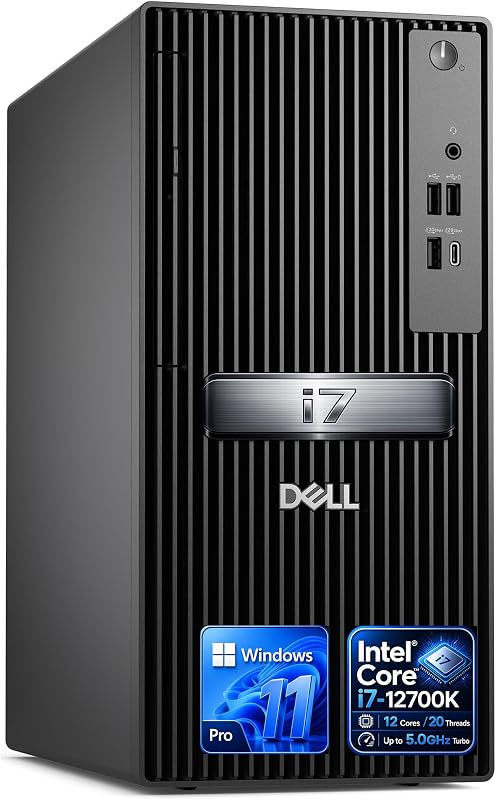
On the other hand, the Core i7-12700K model data highlights compatibility within dedicated pre-configured desktop enclosures, citing high-speed 5600 MHz DDR5 memory support, integrated USB 3.2 Gen 2 Type-C ports, and hardware TPM security modules for enterprise environments. While the listing notes an LGA 1155 socket spec in its bullet table, the processor family operates with DDR5 platform technology to deliver high-bandwidth data handling. Prospective upgraders asking intel core i7-14700kf vs i9-14900k questions must keep in mind that extracting sustained 5.6 GHz frequencies from the 14700KF requires an aggressive liquid or dual-tower air cooler capable of dissipating heat well beyond the 125W base envelope.
Evaluating whether an i7-14700kf review reveals clear superiority over the 12700K comes down to your willingness to manage power draw and cooling demands. The Core i7-12700K operates with more conservative thermal demands in a standard office chassis, making it simpler to cool with compact heatsinks. When asking is i7-14700kf worth it, users who already possess a robust cooling solution, an LGA 1700 motherboard with updated firmware, and a dedicated GPU will find that the newer architecture unlocks elite performance without having to rebuild their entire chassis setup.
Edge: Intel Core i7-14700KF for its dual DDR4/DDR5 flexibility, PCIe 5.0/4.0 bandwidth support, and expansive compatibility across modern 600 and 700 series platforms.
Pros and Cons
Intel Core i7-12700K
Pros
- Built-in Intel UHD Graphics 770
- Dual 4K monitor support via HDMI and DP
- 12 cores and 20 processing threads
- Supports high-speed 5600 MHz DDR5 RAM
Cons
- Lower 5.0 GHz maximum turbo boost
- Fewer total cores than 14th Gen
View Intel Core i7-12700K on Amazon
Intel Core i7-14700KF

Pros
- 20 cores and 28 threads
- High 5.6 GHz Turbo Boost Max 3.0
- Substantial 33 MB cache memory
- Supports both DDR4 and DDR5 memory
Cons
- Requires discrete graphics card to boot
- 125W base power requires strong cooling
View Intel Core i7-14700KF on Amazon
Who Should Buy Each One
Choose the Intel Core i7-12700K If
- You need an all-in-one desktop setup that boots immediately using integrated Intel UHD Graphics 770 without requiring a discrete graphics card.
- You want native dual-screen workstation capability utilizing onboard HDMI 2.1 and DisplayPort 1.4a outputs directly on the rear I/O panel.
- You run general office applications, multitasking business suites, and everyday computing tasks that do not require more than 12 cores or 20 threads.
- You prioritize hardware security features like a hardware TPM chip and pre-configured enterprise management in an office desktop form factor.
Choose the Intel Core i7-14700KF If
- You already own or plan to install a high-performance discrete graphics card for gaming, 3D modeling, or GPU rendering.
- You demand top-tier frame rates and responsiveness powered by single-core clock speeds reaching up to 5.6 GHz with Turbo Boost Max 3.0.
- You frequently run heavy multithreaded workflows like video editing, batch transcoding, or software compiling that benefit directly from 20 cores and 28 threads.
- You are building or upgrading an LGA 1700 platform and want the versatility to run either DDR4 or high-bandwidth DDR5 memory.
Final Verdict
For the vast majority of gaming enthusiasts, software developers, and demanding content creators who already utilize a dedicated graphics card, the Core i7-14700KF is the superior processing powerhouse. Its expansive 20-core, 28-thread architecture delivers a massive multi-threaded uplift over previous generations, while its 5.6 GHz peak boost clock and 33 MB cache provide stellar gaming frame rates. If your system incorporates a discrete GPU and a capable thermal dissipation solution, the 14700KF represents a far more future-ready and capable engine for modern digital workloads. Those considering even higher-tier silicon can also explore our intel core i7-14700kf vs i9-13900k analysis to gauge top-end performance scaling.
Conversely, the Core i7-12700K remains the smarter and more practical selection for business users, corporate deployments, and standalone workstation builders who want plug-and-play simplicity. Thanks to its integrated Intel UHD Graphics 770 engine, it delivers multi-monitor display capabilities without adding hardware bulk, extra heat, or the cost of a dedicated graphics card. For users whose workloads prioritize dependable multitasking, dual-monitor office efficiency, and solid day-to-day productivity over extreme 28-thread rendering runs, the Core i7-12700K delivers exactly what is required.
FAQ
Does the i7-14700KF feature integrated graphics?
No, the Intel Core i7-14700KF does not contain integrated processor graphics. The “F” designation in Intel processors indicates that onboard display hardware is completely absent, which means the host system requires a discrete graphics card to output a visual signal to your monitor.
Can the i7-12700K run multiple monitors without a dedicated graphics card?
Yes, the Intel Core i7-12700K features built-in Intel UHD Graphics 770, which supports dual-monitor output straight from the motherboard rear I/O. Compatible systems equipped with this processor provide dual 4K monitor support through onboard HDMI 2.1 and DisplayPort 1.4a connections.
Is the i7-14700KF compatible with older 600-series motherboards?
Yes, the Core i7-14700KF is physically and architecturally compatible with both Intel 700-series and Intel 600-series chipset motherboards utilizing the LGA 1700 socket. However, older 600-series motherboards typically require a motherboard BIOS update before they can recognize and boot with a 14th Gen processor.
Which processor delivers better overall gaming performance?
The Intel Core i7-14700KF delivers noticeably superior gaming performance thanks to its higher maximum boost clock speed of up to 5.6 GHz and its expanded 33 MB cache. These enhancements allow it to sustain higher minimum and average frame rates in fast-paced titles, provided the system is paired with a dedicated graphics card.
What is the base wattage profile of the i7-14700KF?
The Intel Core i7-14700KF features a processor base power rating of 125 watts. Because it can boost up to 5.6 GHz under heavy computational or gaming loads, builders should ensure they pair the processor with a robust cooling solution to maintain optimal thermal stability.
Does the i7-14700KF support both DDR4 and DDR5 memory?
Yes, the Intel Core i7-14700KF features a flexible memory controller that supports both DDR4 and DDR5 memory standards, depending on the specific motherboard installed. This allows builders to either carry forward an existing DDR4 memory kit or adopt high-frequency DDR5 memory for greater memory bandwidth.