When choosing between the iRobot Roomba i3+ and the iRobot Roomba j7+, the decisive difference comes down to front-facing optical obstacle avoidance versus mechanical and surface-tracking navigation. The Roomba j7+ integrates PrecisionVision Navigation using an onboard camera to identify and actively steer clear of everyday floor hazards such as charging cables, socks, and pet waste in real time, whereas the Roomba i3+ relies on reactive physical contact and downward-facing optical sensors to vacuum in tidy parallel rows.
Choose the iRobot Roomba i3+ if you keep a tidy floor, want a longer battery life of up to 180 minutes, and prefer multi-level power adjustments for straightforward floor cleaning. Choose the iRobot Roomba j7+ if you share your home with pets or busy family members where cords, shoes, and unexpected floor clutter require reliable, hands-off visual navigation.
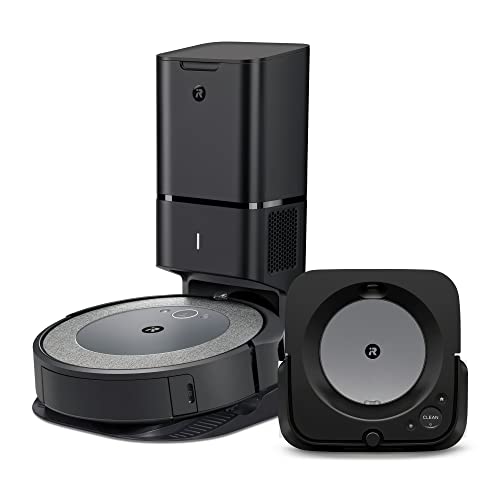

iRobot Roomba i3+ vs Roomba j7+ at a Glance
| Feature | iRobot Roomba i3+ | iRobot Roomba j7+ |
|---|---|---|
| Navigation Type | Straight-line row navigation with tracking sensors | PrecisionVision Navigation with camera |
| Obstacle Avoidance | Reactive navigation around large furniture | Active detection of cords, shoes, socks, and pet waste |
| Pet Waste Guarantee | Not listed | P.O.O.P. (Pet Owner Official Promise) included |
| Battery Life | Up to 180 minutes | Up to 120 minutes |
| Power Levels | 3 power levels | 1 power level |
| Cleaning System | Premium 3-Stage Cleaning with 10x suction | 3-Stage Cleaning with 10x suction |
| Brushes and Cleaning Path | Edge cleaning brush (width not listed) | Dual Multi-Surface Rubber Brushes (7-inch path) |
| Self-Emptying Base | Clean Base (holds up to 60 days) | Clean Base (holds up to 60 days) |
| Smart Map Management | Imprint Smart Maps (room-by-room) | Imprint Smart Maps (multiple maps for multiple levels) |
| Voice Assistant Support | Amazon Echo and Alexa | Amazon Alexa, Google Home, Siri |
| Best For | Pre-tidied homes needing long runtimes | Busy, pet-friendly homes with floor clutter |
Obstacle Avoidance and Hazard Detection
The primary architectural divide in this irobot roomba i3+ vs j7 comparison centers on how each machine encounters floor clutter. The Roomba j7+ features a front-mounted camera paired with PrecisionVision Navigation, allowing the vacuum to interpret images as it moves. The listing indicates that the system actively recognizes and steers clear of common household hazards, including dropped charging cords, shoes, socks, and pet accidents. To back this up, iRobot includes the Pet Owner Official Promise (P.O.O.P.), which guarantees a replacement unit if the machine fails to avoid solid pet waste. This active vision model changes how you use a robot vacuum because it eliminates the tedious requirement to scan every room for stray items before initiating a cleaning cycle.
By comparison, the Roomba i3+ does not possess an obstacle-detecting camera. It depends on physical bump sensors and integrated floor-tracking sensors to guide its movement. While the specifications note that it navigates around furniture smoothly, it cannot distinguish between a table leg and a phone charging cable on the carpet. If the i3+ drives over a light item like a USB wire or a sock, the roller mechanism will attempt to pull it into the cleaning head, which typically triggers a brush stall and pauses the cleaning run until manual intervention frees it.
When assessing whether the irobot roomba i7+ vs j7+ line of visual intelligence is needed, your daily floor habits provide the answer. For buyers deciding between the Roomba i3+ or j7+ for pets, the Roomba j7+ obstacle avoidance offers unmatched security against catastrophic pet messes and tangled cables. The i3+ provides complete cleaning consistency, but only if the floor is consistently cleared of loose articles prior to the run.
Edge: iRobot Roomba j7+. Its PrecisionVision camera and pet mess guarantee actively prevent jams and cleaning accidents without requiring you to pick up small objects first.
Navigation and Smart Mapping Technology
Smart mapping dictates how effectively a vacuum navigates your home and how specifically you can target cleaning jobs. The Roomba j7+ utilizes Imprint Smart Mapping driven by its visual sensors. According to its specifications, the j7+ stores multiple maps for different levels of your home, and allows for targeted spot cleaning the moment a mess occurs. When crumbs fall in the dining room, you can dispatch the vacuum to clean that individual room or zone through the app or by voice command, without forcing the machine to clean surrounding living spaces.
The Roomba i3+ also features Imprint Smart Maps powered by iRobot Genius, enabling room-by-room navigation and scheduling. It maps the floor plan and cleans systematically in straight lines back and forth rather than bouncing randomly. When its battery drops during a large run, it docks, recharges, and resumes cleaning right where it stopped. However, the listing specifications focus on single-map room cleaning rather than multi-level floor plan storage, making it less versatile for multi-story residences where the vacuum must be carried between distinct floors.
In analyzing irobot roomba i3+ vs i7+ navigation architectures alongside this matchup, the Roomba i3+ vs j7+ navigation difference boils down to environmental awareness. The Roomba i3+ maps floors using reactive tracking sensors, which work reliably in both lit and dark rooms without requiring ambient light. The Roomba j7+ pairs its mapping capabilities with visual recognition, allowing you to trigger targeted spot cleanings directly around known mess zones. For multi-story households, the multi-map storage on the j7+ delivers greater day-to-day flexibility.
Edge: iRobot Roomba j7+. It supports multi-level map storage and on-demand spot cleaning for specific zones, whereas the i3+ focuses on broader room-by-room cycles.
Battery Life and Runtime Performance
Runtime dictates how much square footage a robot vacuum can process before needing to return to its docking station. On this front, the technical specifications reveal a noticeable divergence. The Roomba i3+ listing specifies a lithium-ion battery delivering up to 180 minutes of runtime on a single charge. This extended three-hour operational window allows the vacuum to cover sprawling single-floor layouts or expansive carpeted areas in a continuous run before seeking its Clean Base dock.
In contrast, the Roomba j7+ technical data lists a battery life of up to 120 minutes. While two hours is generally ample for standard apartments and mid-sized single-floor areas, larger layouts will require the machine to recharge mid-cycle. Both models utilize recharge-and-resume functionality, which means neither robot will leave an assigned job unfinished. When the battery depletes, each machine navigates back to the Clean Base, refills its battery capacity, and picks up exactly where the vacuum paths ended.
However, the 60-minute runtime surplus of the Roomba i3+ means fewer interrupted cycles and faster overall job completions in larger homes. If you have an extensive footprint that usually stretches standard robot vacuum batteries to their limits, the longer runtime of the i3+ cuts down the hours required to complete scheduled whole-home maintenance.
Edge: iRobot Roomba i3+. Its 180-minute runtime provides a full hour of extra cleaning time per charge over the 120-minute battery of the j7+.
Suction Power and Cleaning Mechanics
Core vacuum performance determines whether pet hair, grit, and dust get pulled deep from carpet fibers or simply swept along hard floors. Both the Roomba i3+ and the Roomba j7+ feature iRobot’s 3-Stage Cleaning System that delivers 10x the Power-Lifting Suction compared to the legacy Roomba 600 series. This suction rating ensures that both vacuums lift embedded dirt, debris, and animal shedding effectively across hardwood, tile, and medium-pile rugs.
Where the mechanics differ in the listing details is in user adjustability and brush design. The Roomba i3+ listing specifies three distinct power levels, providing operational control over suction intensity depending on floor type or debris volume. It also highlights an integrated Dirt Detection sensor, which detects concentrated patches of floor debris and prompts the robot to focus its cleaning passes over those specific spots until cleared. The package also integrates with wet cleaning workflows via the included Braava jet m6 bundle described in the Side A listing data.
The Roomba j7+ lists a single power level, automating its power delivery rather than requiring user-selected modes. It explicitly highlights Dual Multi-Surface Rubber Brushes that flex to adjust to different floor textures while preventing pet hair from wrapping around the core roller system. It also features a dedicated 7-inch cleaning path width alongside an Edge-Sweeping brush designed to clear debris out of wall baseboards and tight corners. In this Roomba i3+ vs Roomba j7+ cleaning head matchup, both lift identical core suction amounts, but the i3+ gives you three manual power levels, while the j7+ leans on specialized rubber rollers to resist hair tangles.
Edge: Tie. Both models deliver 10x power-lifting suction relative to entry-level units; the i3+ offers three adjustable power levels and Dirt Detection, while the j7+ features flexible dual rubber rollers and a 7-inch cleaning path.
Smart Home Integration and Automated Scheduling
Modern robot vacuums rely heavily on their underlying software platforms to minimize daily user effort. The Roomba j7+ operates on the updated iRobot OS ecosystem, which pairs with an expansive list of smart controllers. The listing confirms compatibility with Amazon Alexa, Google Home, Siri, smartphones, and tablets, allowing voice commands via virtually every major smart ecosystem. It also includes automated geofencing triggers that recognize when your smartphone leaves the house, automatically cleaning your floors while you are away and pausing the machine the moment you return.
The Roomba i3+ relies on iRobot Genius intelligence, which similarly provides away-from-home automated scheduling routines and personalized cleaning cadence suggestions during seasonal allergy or pet shedding periods. However, its voice integration specifications are centered around Amazon Echo and Alexa-enabled hardware, without native Siri integration mentioned in the technical specs. Both models connect directly via the iRobot Home app to view cleaning histories, schedule daily runs, and organize room priorities.
For smart homes evaluating an irobot roomba i3+ vs combo j9+ or j7+ upgrade, voice platform flexibility plays an important role. If your household relies on Apple HomeKit and Siri shortcuts or Google Home smart speakers to orchestrate appliances, the j7+ provides broader out-of-the-box controller compatibility. The i3+ offers the essential scheduling automation and geofencing functions, but within a more tailored smart assistant environment.
Edge: iRobot Roomba j7+. It supports Siri, Google Home, and Alexa controllers alongside proactive iRobot OS automation routines.
Self-Emptying Clean Base Performance
Both models come equipped with the Clean Base Automatic Dirt Disposal, transforming routine floor cleaning into an automated, hands-off appliance task. The Clean Base pulls debris from the robot’s onboard dustbin using internal suction every time the unit finishes a cleaning run or fills its internal compartment. The technical data confirms that both Clean Base systems utilize enclosed disposable bags that store up to 60 days of dirt, dust, and pet hair, letting you bypass daily bin maintenance entirely.
The Roomba i3+ specification highlights that its enclosed disposal bag captures 99% of micro-particles as small as 0.7 microns. This dense particulate filtration prevents fine allergens, dander, and dust from exhausting back into your living room during the evacuation cycle. When the bag reaches capacity after roughly two months of use, you discard the sealed bag directly into the trash without releasing dust clouds into the room.
The Roomba j7+ listing confirms the same 60-day enclosed bag capacity and dust-sealing mechanism, ensuring hands stay clean throughout routine replacements. Because both robots utilize equivalent 60-day capacity Clean Base technology and enclosed bags, automated maintenance intervals and hands-free convenience are functionally identical between both systems.
Edge: Tie. Both the i3+ and j7+ feature self-emptying Clean Base docks that store up to 60 days of debris inside enclosed disposal bags.
Pros and Cons
Irobot Roomba i3+

Pros
- 180-minute extended battery life
- Three selectable cleaning power levels
- Dirt Detection sensor targets heavy messes
- 60-day Clean Base automatic dirt disposal
Cons
- Lacks visual obstacle avoidance camera
- No pet waste avoidance guarantee
View iRobot Roomba i3+ on Amazon
Irobot Roomba j7+

Pros
- PrecisionVision camera identifies and avoids hazards
- Guaranteed pet waste avoidance with P.O.O.P. promise
- Stores multiple maps for multi-level homes
- Compatible with Siri, Google Home, and Alexa
Cons
- Shorter 120-minute battery runtime
- Single automated power level
View iRobot Roomba j7+ on Amazon
Who Should Buy Each One
Choose the iRobot Roomba i3+ If
- You live in a home with large, open floor plans that benefit from the 180-minute extended battery life.
- You maintain pre-tidied floors where shoes, stray clothing, and power cables are routinely put away.
- You want granular control over cleaning intensity using three distinct power levels.
- You primarily use Amazon Alexa or standard app scheduling to run your smart appliances.
Choose the iRobot Roomba j7+ If
- You have pets and need the security of the Pet Owner Official Promise (P.O.O.P.) to prevent pet waste spreading.
- You have daily clutter like laptop chargers, shoes, and stray socks that would trap standard robot vacuums.
- You live in a multi-story home that requires saving multiple smart maps across different levels.
- You want comprehensive voice automation across Apple Siri, Google Home, and Amazon Alexa.
Final Verdict
For most households shopping in the automated vacuum space, the irobot roomba i7+ vs j7 discussion is settled by visual intelligence. When comparing the iRobot Roomba j7+ vs i3+, the Roomba j7+ emerges as the superior everyday appliance. Its PrecisionVision Navigation eliminates the most frustrating failure point of robotic cleaning: unexpected jams caused by everyday cables, misplaced socks, and pet accidents. With the added backing of the P.O.O.P. guarantee, multi-floor map storage, and broad smart home integration across Siri, Google Home, and Alexa, the j7+ provides true hands-off operation that requires zero prep work before running a cleaning cycle.
The Roomba i3+ remains an exceptional option for households that do not struggle with floor clutter. If your living areas are consistently tidy, the i3+ gives you the exact same 10x Power-Lifting suction system, straight-row Imprint Smart Mapping, and a 60-day self-emptying Clean Base, while rewarding you with an extra hour of continuous runtime via its 180-minute battery. However, if unorganized floors and pet hazards are part of your daily life, the camera-guided obstacle detection of the j7+ makes it well worth choosing.
FAQ
Does the Roomba j7+ clean better than the Roomba i3+ on carpets?
Both models share the same fundamental suction architecture. The listing specifications confirm that both the Roomba i3+ and the Roomba j7+ feature the Premium 3-Stage Cleaning System with 10x the Power-Lifting Suction compared to the Roomba 600 series. However, the j7+ specifically includes Dual Multi-Surface Rubber Brushes designed to adjust across varying textures without hair tangles, while the i3+ includes three selectable power levels and Dirt Detect sensors to focus on high-traffic areas.
Can the Roomba i3+ avoid pet waste?
No. The Roomba i3+ relies on tactile bump sensors and floor-tracking optical sensors rather than an obstacle-identifying camera. The listing does not include pet waste detection for the i3+. If avoiding pet accidents is your top requirement, only the Roomba j7+ includes PrecisionVision Navigation and the official Pet Owner Official Promise (P.O.O.P.) guarantee.
Is Roomba j7+ worth it over the i3+ for small apartments?
Whether the upgrade makes sense depends on floor clutter rather than square footage. While an apartment will not require the 180-minute battery of the i3+, tight spaces often have concentrated charging cords, pet bowls, and dropped laundry. If those hazards exist in your apartment, the obstacle avoidance on the j7+ prevents recurring stoppages.
Can the Roomba i3+ store maps for multiple floors?
The listing specifications for the Roomba i3+ highlight room-by-room Imprint Smart Mapping, but do not specify multi-level map storage. The Roomba j7+ explicitly notes that its Imprint Smart Mapping system stores multiple maps for cleaning across each level of your home.
How do the Clean Base systems compare between both models?
Both models use an enclosed-bag Clean Base Automatic Dirt Disposal dock that holds up to 60 days of debris. The i3+ listing notes that its bag captures 99% of particles down to 0.7 microns, while the j7+ listing highlights an enclosed bag system that keeps dust out of sight. Their practical emptying capacity and maintenance intervals are identical.
Do both vacuums work with Apple Siri and Google Assistant?
The Roomba j7+ specifications list compatibility with Amazon Alexa, Google Home, and Siri via voice and touch commands. The Roomba i3+ specifications specifically list compatibility with Amazon Echo and Alexa devices, but do not list native Siri support.