When selecting memory for a desktop build, the single difference that decides the choice for most builders is physical clearance versus heat sink mass: the Kingston Fury Beast DDR4 utilizes a compact, low-profile heat spreader tailored to fit under cramped CPU coolers, whereas the Patriot Viper Steel DDR4 employs a substantial aluminum heat shield intended for open desktop builds with unrestricted socket space.
Choose the Kingston module if your chassis has limited vertical clearance or uses an overhanging dual-tower CPU heatsink. Choose the Patriot module if your build accommodates standard-height components and prioritizes a dense single-module capacity with robust metal thermal dissipation.

Kingston Fury Beast DDR4 vs Patriot Viper Steel DDR4 at a Glance
| Feature | Kingston Fury Beast DDR4 | Patriot Viper Steel DDR4 |
|---|---|---|
| Memory Generation | DDR4 | DDR4 |
| Form Factor | 288-Pin DIMM | 288-Pin UDIMM (listed with 240-pin spec) |
| Module Capacity Listed | 8 GB (Single Module) | 16 GB (Single Module) |
| Rated Speed | 3200 MHz | 3200 MHz |
| CAS Latency | CL16 | CL16 (Tested 16-20-40) |
| Operating Voltage | 1.35 V | 1.35 V |
| Heat Spreader Type | Low-profile heatsink | Custom aluminum heat shield |
| Overclocking Support | Intel XMP, AMD Ryzen, Plug N Play (2666 MHz) | Intel XMP 2.0, AMD platform tested |
| Warranty | Lifetime warranty | Not listed |
| Best For | Cramped cooler clearance and automated setup | Spacious builds wanting dense 16 GB single-stick memory |
Heat Spreader Design and Cooler Clearance
Physical clearance is one of the most critical factors when assembling a custom desktop, particularly if you rely on large air cooling towers. The Kingston Fury Beast DDR4 features a low-profile heat spreader that keeps the overall height of the DIMM tightly trimmed. This compact footprint prevents the top of the RAM module from colliding with the intake fan or lower fins of bulky twin-tower CPU coolers. System builders assembling compact micro-ATX or mini-ITX systems frequently prioritize low-profile modules to ensure effortless access to memory slots without having to unmount the entire cooling assembly during maintenance or component swaps, a consideration frequently examined in our corsair vengeance lpx ddr4 3200 vs kingston fury beast ddr4 analysis.
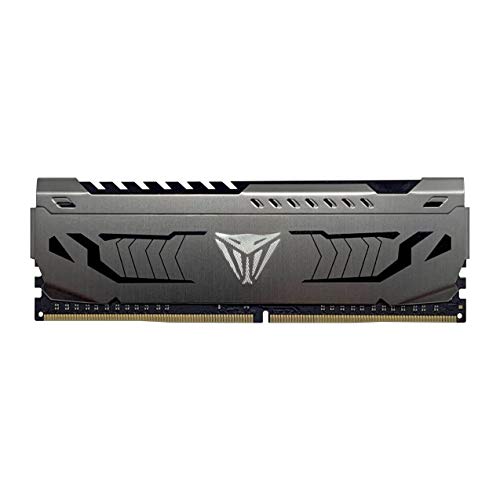
The Patriot Viper Steel DDR4 takes an entirely different approach by incorporating an aggressive, heavy-duty aluminum heat shield. The module features an expressive, angular profile designed to maximize thermal conductivity through passive dissipation. The thicker aluminum plates pull heat directly away from the DRAM chips during extended desktop rendering or gaming sessions. However, this extended metal construction adds physical height and thickness. While the striking design provides aggressive styling behind tempered glass, builders working in restricted cases must measure clearance around their CPU cooler brackets before installation.
Evaluating Kingston Fury Beast DDR4 height against the bulkier aluminum armor of the Viper Steel demonstrates a straightforward operational trade-off. Kingston engineered its module for universal physical compatibility across nearly any PC configuration, minimizing mechanical interference at the expense of metal surface area. Patriot opted for thermal mass and custom design elements, providing an aluminum shield suited for mid-tower and full-tower cases where overhead socket obstruction is not a concern.
Edge: Kingston Fury Beast DDR4 due to its low-profile heat spreader that guarantees compatibility beneath restrictive CPU coolers.
Module Capacity and System Memory Configuration
Memory density per slot dictates the operational ceiling for multitasking, media production, and modern gaming workloads. The specific Patriot Viper Steel DDR4 listing provides a single 16 GB UDIMM module running at 3200 MHz. Deploying a single 16 GB stick leaves adjacent DIMM slots entirely unoccupied on dual-channel motherboards, giving builders an immediate path to expand up to 32 GB or 64 GB in the future without replacing existing hardware. For memory-heavy workflows such as high-resolution video production or heavy tabbed browsing while gaming, beginning with a native 16 GB module offers substantial breathing room, similar to configurations reviewed in our crucial ballistix ddr4 vs patriot viper steel ddr4 breakdown.
Conversely, the Kingston Fury Beast DDR4 configuration featured here supplies a single 8 GB module. While Kingston manufactures Fury Beast modules in capacities spanning 4 GB through 32 GB and kits up to 128 GB, this particular single-stick package provides an entry-level capacity point. An 8 GB module is capable of driving light desktop duties, office multitasking, and esports titles, but it leaves modern triple-A gaming systems limited if run alone. Operating a solitary 8 GB stick also restricts the system to single-channel bandwidth until a matching stick is installed to activate dual-channel mode.
When considering Kingston Fury Beast DDR4 or Patriot Viper Steel DDR4 for gaming out of the box, the Viper Steel holds a definitive capacity advantage based on listing specifications. The 16 GB allocation handles modern background background processes and modern game engines without forcing aggressive page file paging. Those considering whether is Patriot Viper Steel DDR4 worth it will appreciate that this single-stick solution offers double the capacity of the competing 8 GB Kingston module right from the start.
Edge: Patriot Viper Steel DDR4 because it delivers 16 GB of memory on a single stick compared to the 8 GB capacity of the Kingston module.
Memory Timings and Latency Performance
Memory latency governs how rapidly the DRAM responds to requests issued by the CPU memory controller. Both memory modules in this comparison feature a baseline CAS Latency of CL16 at their rated 3200 MHz frequency, operating on a standard desktop DDR4 operating voltage of 1.35 volts. At 3200 MHz, a CAS latency of 16 represents the recognized sweet spot for DDR4 platforms, maintaining a tight balance between raw bandwidth and access delay for both modern Intel Core and AMD Ryzen architectures.
The primary differentiation in performance specifications lies in the transparency of the listed sub-timings. The Patriot Viper Steel DDR4 publishes complete tested timings of 16-20-40. Having these timings explicitly detailed enables enthusiasts and system tweakers to understand the exact access latencies of the module before tweaking BIOS parameters, a subject explored in our kingston fury beast ddr4 vs crucial ballistix ddr4 side-by-side. The Kingston Fury Beast DDR4 listing confirms a primary CAS Latency of CL16, noting that the broader Fury Beast product family supports latencies ranging from CL15 to CL19 depending on specific speeds and profiles, though full secondary timings for this individual module are omitted from the basic listing.
From an end-user computing perspective, Patriot Viper Steel DDR4 timings and Kingston’s CL16 rating perform essentially on par during daily workloads and gaming sessions. Both operate at 3200 MHz using 1.35 volts, meaning neither side presents a substantial real-world latency advantage over the other. The Patriot listing gives more technical clarity upfront with its 16-20-40 rating, but both chips deliver identical CL16 responsiveness when clocked at their rated target frequencies.
Edge: Tie because both desktop modules operate at 3200 MHz with a CAS Latency of CL16 at 1.35 volts.
Overclocking Profiles and Platform Compatibility
Achieving rated memory speeds on modern desktop motherboards requires reliable overclocking profile integration. The Patriot Viper Steel DDR4 comes equipped with Intel XMP 2.0 support. When installed into a compatible motherboard, users enter the BIOS, enable the XMP profile, and the system automatically applies the 3200 MHz frequency, 1.35 V operating voltage, and 16-20-40 timings. Patriot explicitly notes compatibility testing across both Intel and AMD desktop platforms, ensuring smooth XMP profile adoption on Ryzen systems, as also highlighted in our g.skill trident z neo ddr4 vs patriot viper steel ddr4 guide.
The Kingston Fury Beast DDR4 matches this Intel XMP-ready capability and AMD Ryzen readiness, but adds an exclusive convenience feature: Plug N Play automatic overclocking. According to Kingston product documentation, the module will automatically overclock to the highest published speed allowed by the system BIOS, running up to 2666 MHz right out of the box without requiring manual user intervention inside the BIOS settings. For builders who prefer not to alter motherboard firmware settings, this automated hand-off ensures elevated operational frequencies above basic JEDEC defaults.
One compatibility consideration highlighted in the Kingston Fury Beast DDR4 listing involves legacy Intel platforms. The manufacturer specifies that certain older Intel chipsets prior to the 8th Generation lack the microcode necessary to support 16 Gbit density DRAM modules, necessitating a BIOS update from the motherboard vendor. Overall, however, Kingston’s combination of Intel XMP certification, official Ryzen readiness, and Plug N Play support provides a slightly more versatile integration experience for novice system builders.
Edge: Kingston Fury Beast DDR4 due to its Plug N Play automatic overclocking functionality alongside XMP and AMD Ryzen readiness.
Warranty Coverage and Manufacturing Reliability
Long-term operational dependability is vital for desktop RAM, as memory corruption can cause unpredictable system crashes, blue screens, and data loss. Kingston backs the Fury Beast DDR4 with 100 percent factory testing at rated operational speeds. Furthermore, the listing explicitly details a manufacturer lifetime warranty alongside a guaranteed EU spare parts availability duration of one year. This level of post-purchase protection provides builders with assurance that Kingston will service or replace the module should hardware defects arise down the road, an advantage often cited in any comprehensive Kingston Fury Beast DDR4 review.
The Patriot Viper Steel DDR4 listing indicates thorough validation, stating the memory module is tested across recent Intel and AMD platforms for reliable, fast operation. In terms of hardware build, its heavy aluminum heat spreader protects the underlying PCB and surface-mounted components from accidental physical impact during installation. However, unlike Kingston, the Amazon listing for the Viper Steel does not explicitly specify warranty terms or coverage lengths, leaving potential buyers to verify terms independently through external manufacturer channels, as observed in our g.skill trident z neo ddr4 vs kingston fury beast ddr4 comparison.
When weighing a Kingston Fury Beast or Patriot Viper Steel purchase strictly on listing clarity and support terms, Kingston establishes clear superiority. While Patriot produces durable hardware with robust aluminum packaging, Kingston provides written validation of lifetime warranty coverage and comprehensive factory testing directly in the product specifications.
Edge: Kingston Fury Beast DDR4 thanks to its explicitly stated lifetime warranty and complete factory speed testing.
Pros and Cons
Kingston Fury Beast DDR4

Pros
- Low-profile heat spreader for tight clearance
- Plug N Play auto-overclocking at 2666 MHz
- Backed by manufacturer lifetime warranty
- Ready for Intel XMP and AMD Ryzen
Cons
- Single module limited to 8 GB capacity
- May require BIOS update on pre-8th Gen Intel
View Kingston Fury Beast DDR4 on Amazon
Patriot Viper Steel DDR4

Pros
- 16 GB single-module capacity
- Heavy-duty aluminum heat shield design
- Explicit tested timings of 16-20-40
- Intel XMP 2.0 automated overclocking
Cons
- Taller heat shield risks cooler clearance issues
- Warranty duration not specified in listing
View Patriot Viper Steel DDR4 on Amazon
Who Should Buy Each One
Choose the Kingston Fury Beast DDR4 If
- You are building in a compact micro-ATX or mini-ITX chassis with tight vertical clearances.
- Your CPU cooling solution utilizes a broad twin-tower air heatsink that overhangs the motherboard DIMM slots.
- You want Plug N Play automated overclocking up to 2666 MHz without entering the motherboard BIOS to adjust settings.
- You prioritize verified lifetime warranty protection and full factory testing stated directly by the manufacturer.
Choose the Patriot Viper Steel DDR4 If
- You want a single 16 GB high-capacity stick to leave additional motherboard slots open for future memory upgrades.
- You operate a mid-tower or full-tower desktop chassis with abundant space around the CPU socket.
- You prefer an aggressive, solid aluminum heat spreader to manage heat dissipation during intensive workloads.
- You want predefined, fully listed XMP 2.0 tested timings of 16-20-40 for transparent system configuration.
Final Verdict
For most desktop builders assembling standard gaming and productivity systems, the Patriot Viper Steel DDR4 stands out as the practical selection due to its superior 16 GB module capacity and heavy-duty aluminum heat spreader. Supplying double the memory volume of its counterpart on a single stick, it gives modern applications sufficient operational memory while maintaining 3200 MHz frequency, CL16 latency, and broad Intel and AMD compatibility via XMP 2.0.
The Kingston Fury Beast DDR4 claims the victory whenever physical clearance and automated setup take precedence. Its ultra-slim, low-profile heat spreader fits effortlessly beneath massive air coolers that obstruct competing memory shields, while its Plug N Play functionality and guaranteed lifetime warranty deliver unparalleled ease of use and long-term peace of mind for compact and low-clearance desktop configurations.
FAQ
Can Kingston Fury Beast DDR4 run alongside Patriot Viper Steel DDR4 in the same PC?
While both modules share a 3200 MHz frequency rating and CL16 latency at 1.35 V, mixing an 8 GB Kingston module with a 16 GB Patriot module is not recommended. Mismatched capacities and sub-timings force motherboards to run memory in asymmetrical flex mode, which can compromise dual-channel performance and system stability.
Does Patriot Viper Steel DDR4 support AMD Ryzen processors?
Yes. The Patriot Viper Steel DDR4 listing confirms testing across AMD and Intel platforms. Motherboards that support XMP or DOCP can easily load the 3200 MHz profile to run the module at its rated speed on AMD Ryzen hardware.
How does Plug N Play overclocking work on the Kingston Fury Beast DDR4?
Kingston’s Plug N Play functionality allows the memory module to automatically boot at the highest speed permitted by the system BIOS up to 2666 MHz without requiring manual profile activation or voltage adjustments inside firmware menus.
Will the Kingston Fury Beast DDR4 fit beneath large dual-tower air coolers?
Yes. The Kingston Fury Beast DDR4 features a low-profile heat spreader specifically designed to avoid mechanical interference with broad CPU heatsinks and low-clearance chassis frames.
What are the tested timings for Patriot Viper Steel DDR4 at 3200 MHz?
The listing specifies tested timings of 16-20-40 when running at its rated 3200 MHz speed with XMP 2.0 enabled at 1.35 volts.
Do these memory modules require higher voltage than standard JEDEC DDR4?
Both the Kingston Fury Beast DDR4 and Patriot Viper Steel DDR4 operate at 1.35 volts to maintain their 3200 MHz CL16 performance profiles, which is higher than the standard baseline JEDEC DDR4 voltage of 1.2 volts.
Why does the Kingston Fury Beast listing mention Intel 8th Gen chipsets?
Kingston notes that certain older Intel chipsets manufactured prior to the 8th Generation were not originally programmed to support higher-density 16 Gbit DRAM chips, meaning older motherboards may require a BIOS update before recognizing the module.