The primary division between an outdoor cooker fueled by compressed hardwood and one fueled by liquid petroleum boils down to convection wood smoking versus fast multi-burner heat. A wood-fired pellet pit functions like an outdoor convection oven, circulating aromatic hardwood smoke at strictly governed temperatures across long cooking sessions, whereas a conventional propane grill relies on direct gas burners beneath deflector shields to generate immediate, localized heat for quick searing and charring.
You should choose a pellet grill if you want hands-off, low-and-slow smoked barbecue with authentic wood-fired flavor on large cuts of meat. You should choose a gas grill if you prioritize rapid weekday preheating, instant heat adjustment across multiple distinct cooking zones, and total independence from an electrical wall outlet.


Pellet Grill vs Gas Grill at a Glance
| Feature | Pellet Grill | Gas Grill |
|---|---|---|
| Fuel Source | Compressed hardwood food-grade pellets | Liquid propane (or natural gas) |
| Cooking System | Fan-forced convection with direct flame slide | Direct gas combustion with heat deflectors |
| Operating Temperature Range | 180°F to 500°F (up to 1,000°F direct flame) | Low simmer to high-heat dedicated sear |
| Burner Configuration | Single central firepot with electric igniter | 3 independent stainless steel burners |
| Temperature Regulation | Digital thermostat (5°F increments) | Manual analog valve control knobs |
| Power Dependency | Requires standard electrical outlet | Completely cordless / battery or mechanical ignition |
| Internal Temperature Monitoring | Integrated meat probe ports and digital readouts | Hood-mounted analog thermometer |
| Warranty Coverage | 5-year manufacturer warranty | Up to 10-year limited warranty |
| Best For | Low-and-slow barbecue, roasting, and wood-fired flavor | Fast weeknight cooking, direct searing, and multi-zone cooking |
Flavor and Cooking Method
The core distinction in any discussion of pellet vs gas grill flavor comes down to combustion chemistry. A pellet cooker burns all-natural compressed hardwood inside a small central firepot, using an integrated draft fan to circulate smoke and heat around an indirect heat deflector. This indirect convection setup envelops pork shoulders, briskets, and ribs in a steady bath of wood-fired smoke, creating a noticeable reddish smoke ring and tender bark. For outdoor cooks evaluating an electric smoker vs pellet smoker, the wood pellet mechanism delivers genuine wood combustion that imparts noticeable cedar, hickory, or fruitwood notes that no clean-burning gas can replicate on its own.
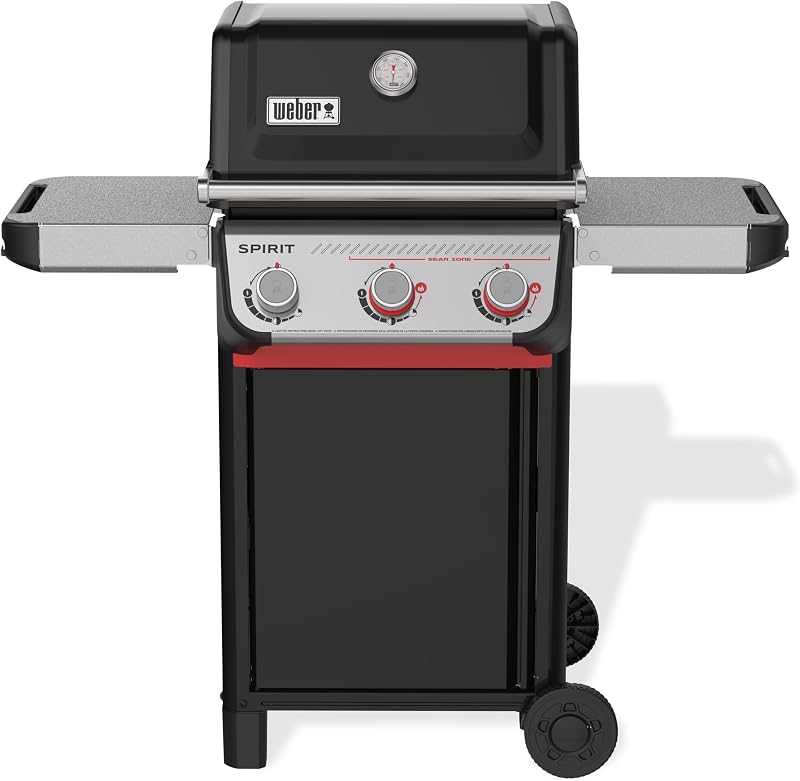
A propane grill relies on clean-burning petroleum gas that combusts almost completely into water vapor and carbon dioxide. While burning gas produces very little flavor of its own, gas cookers generate grilled taste through high-heat conduction and radiant fat vaporization. In advanced units like the Weber Spirit E-325 Gas Grill, angled stainless steel Flavorizer Bars sit directly over three individual burners. When meat drippings strike these red-hot metal shields, they instantly flash into aromatic vapor and rise back into the meat, producing classic backyard barbecue flavor without heavy wood smoke. However, when evaluating a pellet grill or gas grill for smoking, the gas flame simply lacks the carbon-rich combustion compounds required to produce true southern-style barbecue bark.
Cookers like the Pit Boss 500 FB2 Series advertise 8-in-1 cooking versatility, giving you the ability to smoke, bake, braise, roast, grill, barbecue, chargrill, and sear inside a single alloy steel chamber. Because its fan-forced convection moves heat evenly across its 518-square-inch 2-tier cooking surface, you can roast whole chickens or bake wood-fired pizzas with minimal hot spots. A traditional gas cooker, by contrast, concentrates its high heat upward directly from the burners, requiring you to actively flip food to avoid burning the surface while waiting for the interior to cook through.
Edge: Pellet grill. The automated combustion of hardwood pellets delivers authentic, deep wood smoke flavor and convection baking performance that clean propane combustion cannot duplicate.
Temperature Control and Automation
Precision heat management represents one of the strongest selling points in modern outdoor cooking. When assessing pellet grill vs gas grill temperature control, the operational styles could not be more different. Pellet cookers use automated digital controllers that measure internal temperatures using ambient resistance thermometers. The controller then commands a motorized auger to feed pellets into the firepot and throttles the induction fan to maintain your target setting. On the 500 FB2 Series, this digital control runs from 180°F to 500°F in tight 5°F increments, completely freeing the cook from babysitting air dampers or fuel trays.
Gas grills operate through manual mechanical valves that control the flow of fuel from the propane tank to the burner tubes. Cookers like the Megamaster Propane 3 Burner Gas Grill supply three independent 10,000 BTU burners, offering 30,000 total BTUs of heating power across three discrete control knobs. Adjusting the flame height requires physical intervention and monitoring through the hood-mounted gauge. External elements like blustery wind or falling ambient temperatures alter internal heat levels, meaning the user must adjust the burner valves manually to compensate throughout the cook.
The automated design of a pellet smoker also excels at meat internal temperature tracking. Units such as the tabletop Pit Boss 150 and the larger 500 FB2 Series include dedicated meat probe ports alongside an included meat probe. This setup allows you to read your internal food temperature directly on the digital display without lifting the lid and dumping heat. When exploring an offset smoker vs pellet smoker, this push-button automation eliminates the constant wood-splitting, damper balancing, and coal-shoveling needed to hold low temperatures over a twelve-hour smoke.
Edge: Pellet grill. Digital thermostatic regulation in 5°F increments and integrated internal probe ports make low-temperature management entirely hands-off compared to manual gas valve adjustments.
Preheating Speed and Everyday Convenience
While pellet grills offer superb automation for prolonged cooking, gas grills dominate when your schedule demands quick results. Lighting a propane grill takes seconds: you twist open the cylinder valve, turn a burner knob, and activate the ignition. On the Spirit E-325, Snap-Jet ignition lets you light each individual burner with one hand, getting all three burners up to cooking temperatures within 10 to 15 minutes. This near-instant responsiveness makes a gas cooker unmatched for quick Tuesday night chicken breasts, hot dogs, or sliced vegetables.
A pellet smoker requires a deliberate, multi-step startup sequence. When you turn on a cooker like the 150 tabletop grill, an electric igniter rod must heat up to glowing temperatures while the auger primes the burn pot with compressed sawdust. The grill must build an active ember base before the fan ramps up to drive the chamber temperature toward your target setting. Once cooking finishes, pellet grills must run an automatic cool-down cycle to burn off leftover fuel and cool the firepot safely, adding time to the shutdown routine that gas users bypass simply by closing a knob.
Cleaning routines also separate the two formats in daily operation. A gas cooker burns off grease against angled deflectors and channels the rest downward into a grease tray with a slide-out catch pan. Pellet cookers create fine wood ash during combustion. While units like the Megamaster feature a porcelain steel firebox that wipes clean easily, pellet grill firepots accumulate unburned ash that must be vacuumed out every few cooks to prevent ignition errors. When evaluating a charcoal vs gas grill, propane retains its reputation as the fastest, least labor-intensive option for spontaneous outdoor dinners.
Edge: Gas grill. Instant push-and-turn ignition, 10-minute preheating, and zero mechanical cool-down cycles make gas cookers far more practical for fast, everyday meals.
Searing Performance and High-Heat Cooking
Direct heat transfer is essential for achieving a deep, caramelized crust on steaks, chops, and burgers. The question of whether to choose a pellet grill or gas grill for searing hinges on grate temperatures and burner construction. Propane grills excel at high-heat grilling because meat sits directly over active gas flames baffled only by thin metal shields. The Spirit E-325 includes Boost Burners that unleash 40% more power across a dedicated Sear Zone, pairing that concentrated heat with heavy porcelain-enameled cast-iron grates that store and transfer thermal energy directly into the meat.
Traditional pellet cookers struggle to sear because their metal drip pans block direct radiant heat, leaving food to cook solely through indirect convection air currents. However, modern designs like the Pit Boss Flame Broiler system bypass this limitation. Both the 150 tabletop unit and the 500 FB2 Series feature a sliding metal plate operated by an external lever. Sliding the plate open exposes meat directly to the wood-fired firepot flame, reaching surface temperatures all the way up to 1,000°F for direct steakhouse-style grill marks.
Despite this high-temperature flame broiler feature, the searing footprint on a pellet grill remains limited to the small opening directly above the central burn pot. The Megamaster 3-burner gas grill, by comparison, spreads 30,000 BTUs across its entire 434-square-inch cooking surface. This allows you to sear six to eight steaks simultaneously across wide grates, or shut off one burner to create a true two-zone cooking setup. In head-to-head brand comparisons like weber vs traeger, the ability to rapidly sear food across the entire cooking surface remains an inherent structural strength of gas designs.
Edge: Gas grill. Although direct-flame sliding plates let pellet grills sear over a small central area, multi-burner gas grills deliver wider high-intensity heat zones and cast-iron grates for uniform searing across the whole cooking surface.
Fuel Efficiency, Storage, and Practical Versatility
Fuel logistics present notable practical trade-offs between these two cooker types. Examining gas vs pellet grill fuel efficiency involves weighing hopper capacities and electrical hookups against standard propane tanks. Pellet grills rely on continuous mechanical power to spin the auger and run the draft fan. The tabletop Pit Boss 150 holds 7 pounds of hardwood pellets in its hopper, while the larger freestanding 500 FB2 uses a compact 5-pound hopper. During high-heat cooking at 450°F to 500°F, pellet consumption rises significantly, requiring you to refill smaller hoppers during prolonged sessions.
A gas grill runs on standard 20-pound liquid propane tanks that store enough fuel to handle weeks of typical weekday grilling sessions without a refill. The Megamaster gas grill uses three 10,000 BTU burners that draw fuel efficiently without requiring any exterior electricity. You can place a propane grill anywhere on an open patio, a detached dock, or a tailgate venue without hunting for an outdoor electrical outlet, extension cords, or a portable inverter generator.
Pellet grills are also vulnerable to fuel degradation from environmental moisture. If hardwood pellets are left inside an unsealed hopper during humid or rainy weather, they absorb ambient water, swell up, and turn into wet sawdust that can jam the steel auger mechanism. For readers weighing whether a propane vs natural gas grill or pellet system suits their lifestyle, liquid petroleum remains completely weatherproof, immune to moisture spoilage, and ready to light instantly after months of storage.
Edge: Gas grill. Propane requires no electrical wall connections, will not spoil from rain or humidity, and standard tanks provide hours of reliable fuel without frequent hopper top-ups.
Pros and Cons
Pellet Grill

Pros
- Authentic hardwood wood-fired flavor
- Automated digital temperature control
- Fan-forced indirect convection cooking
- Flame broiler slide reaches 1,000°F
- Built-in internal meat probe ports
Cons
- Requires electrical wall outlet or generator
- Slower preheat and startup cycles
- Regular firepot ash vacuuming required
View Pit Boss 150 Wood Pellet Grill on Amazon
Gas Grill

Pros
- Instant push-and-turn flame ignition
- Independent multi-burner heat zones
- Completely cordless propane operation
- Rapid 10-minute preheating
- Wide high-heat direct searing grates
Cons
- Lacks natural wood-smoked flavor
- Manual valve knobs require monitoring
View Megamaster Propane 3 Burner Gas Grill on Amazon
Who Should Buy Each One
Choose the Pellet Grill If
- You want rich, authentic wood smoke flavor on briskets, ribs, and pulled pork without tending an open firebox all day.
- You prefer set-it-and-forget-it digital temperature automation that dials in heat from 180°F to 500°F in 5°F increments.
- You value convection versatility for baking, roasting, and smoking meats evenly using integrated internal probe tracking.
- You have convenient access to an outdoor 110V/120V electrical outlet on your deck, patio, or travel campsite.
Choose the Gas Grill If
- You cook mostly quick weeknight dinners like burgers, steaks, fish fillets, and chicken breasts that benefit from rapid 10-minute preheating.
- You want distinct, multi-zone temperature controls across 3 independent burners to cook delicate sides and hot meats simultaneously.
- You need a completely cordless outdoor cooker that operates anywhere without extension cords or battery generators.
- You prefer minimal cleanup routines with porcelain grease management trays that avoid frequent ash vacuuming.
Final Verdict
Deciding between a pellet grill and a gas grill comes down to how you spend your time around the fire. If your outdoor cooking centers on low-and-slow barbecue traditions where wood smoke is essential, a pellet cooker is the superior choice. Products like the Pit Boss 500 FB2 and the portable Pit Boss 150 automate the hardest parts of pitmaster barbecue, managing airflow, pellet delivery, and internal meat temperatures so you can produce tender smoked meats with zero guesswork.
For the majority of busy home cooks, however, a multi-burner gas grill remains the more practical everyday outdoor appliance. The instant push-turn ignition, high-heat searing zones, and rapid preheat times of grills like the Weber Spirit E-325 and Megamaster 3-Burner suit spontaneous weekday meals. If you want hassle-free weeknight dinners with broad searing capabilities and no electrical cords, choose a gas grill; if you treat outdoor cooking as a flavor-driven weekend craft, invest in a pellet smoker.
FAQ
Can a pellet grill completely replace a gas grill?
A pellet grill can handle most tasks of a gas grill, including roasting, baking, and cooking everyday meats, but it cannot match the preheating speed of propane. Models with a sliding flame broiler can sear meat directly over an open firepot up to 1,000°F, but the searing area is smaller than a three-burner gas grid, and the machine requires an electrical outlet to operate.
Do pellet grills produce true barbecue smoke rings?
Yes. Because pellet grills burn real hardwood pellets composed of compressed clean sawdust, the combustion process releases nitric oxide and carbon monoxide. These gases react with the myoglobin in raw meat to form an authentic pink smoke ring just like traditional offset smokers or a kamado vs pellet grill setup.
Can gas grills create authentic wood smoke flavor?
Gas grills burn clean propane, which produces no natural wood smoke flavor on its own. While you can place an aftermarket smoker box filled with wood chips over the burners, the open venting and high airflow of a gas grill dissipate the smoke quickly, producing a lighter aroma rather than deep wood smoke penetration.
Does a pellet grill require an electrical outlet to run?
Yes. Every pellet grill requires electrical power to run its digital control board, ignite the heating element during startup, turn the motorized fuel auger, and power the convection draft fan. If you cook away from home with a portable unit like the Pit Boss 150, you will need a 110V/120V power outlet, an automotive inverter, or a portable battery power station.
Which grill is easier to clean after cooking?
A gas grill is generally easier to maintain between cooks. High burner heat quickly carbonizes grease drippings on porcelain-coated grates, which you can brush off, while remaining grease drains cleanly into a removable slide-out grease tray. Pellet grills require you to wipe down a broad indirect metal deflector plate and regularly vacuum wood ash out of the bottom firepot to keep the igniter working properly.
Is a pellet grill worth it for everyday cooking?
A pellet grill is worth it if you appreciate wood-fired convection roasting and enjoy cooking ribs, pork roasts, or whole poultry. However, if your routine consists of quick 20-minute dinners like burgers and hot dogs right after work, the multi-step startup cycle, slower preheating, and mandatory post-cook cool-down cycle make a gas grill the more convenient everyday option.