The single difference that decides the choice between a smart thermostat and a programmable thermostat is whether you need continuous automated adjustments driven by remote internet connectivity or prefer a self-contained, offline unit running a fixed schedule. A smart thermostat actively responds to your presence, HVAC health, and mobile commands through Wi-Fi, whereas a standard programmable thermostat relies on set clock intervals programmed directly into a wall-mounted interface.
Choose a smart thermostat if you maintain an irregular schedule and want the convenience of changing temperatures from your phone or voice assistant. Choose a programmable thermostat if you prefer an uncomplicated, internet-independent device that follows a predictable daily routine without software updates or network management.
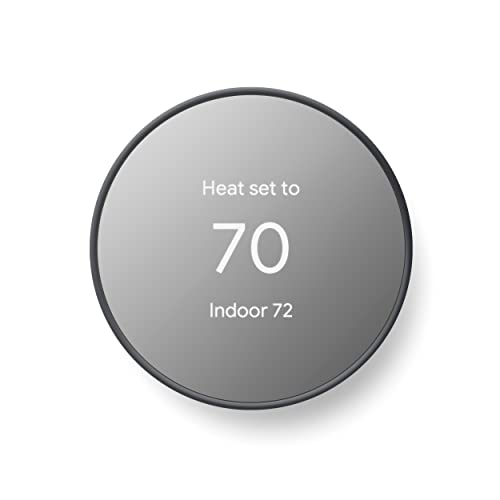


Smart Thermostat vs Programmable Thermostat at a Glance
| Feature | Smart Thermostat | Programmable Thermostat |
|---|---|---|
| Connectivity | Wi-Fi (2.4 GHz and 5 GHz), Bluetooth Low Energy | No Wi-Fi, Wired only |
| Control Methods | Google Home app, voice assistants, on-device touch/button | On-device touchscreen or push button |
| Voice Assistant Integration | Google Assistant, Amazon Alexa, Matter-certified assistants | None |
| Scheduling Options | App-based scheduling, automated away setback, Savings Finder | 7-day individual, 5-2 day weekday/weekend, or non-programmable |
| Diagnostic Monitoring | HVAC health monitoring with mobile alerts and maintenance reminders | On-screen air filter change reminders |
| Power Architecture | 24V low-voltage, battery backup included (AAA or A batteries) | 24V hardwired or battery-operated (AA batteries) |
| C-Wire Necessity | Optional for standard setups; required for heat pump and zoned setups | Not required when operating via battery power |
| System Memory Protection | Cloud-synced profiles and internal battery backup | Permanent day and time backup during power outages |
| Best For | Connected households seeking mobile access and automated efficiency | Homeowners seeking offline reliability and set-and-forget schedules |
Remote Connectivity and Wireless Control
The primary technical divide in the smart thermostat vs programmable thermostat wifi debate centers on how commands reach your heating and cooling equipment. A modern smart thermostat connects directly to your residential local area network over 2.4 GHz or 5 GHz Wi-Fi bands, accompanied by Bluetooth Low Energy for initial onboarding. By integrating with mobile platforms such as the Google Home app, devices like the Google Nest Thermostat enable users to view real-time ambient readings, alter temperature targets, and switch HVAC modes from a smartphone, tablet, or laptop from anywhere in the world. Voice control compatibility with Amazon Alexa and Matter-certified ecosystems further allows hands-free climate adjustments throughout the home.
By contrast, an offline programmable thermostat operates in total isolation from external networks. Devices such as the Honeywell Home 7 Day Programmable Touchscreen Thermostat feature strictly self-contained circuitry that lacks wireless transceivers. Any modification to target setpoints, fan modes, or schedule blocks requires physical interaction with the wall-mounted touchscreen or button interface. While this eliminates the ability to adjust your home temperature while commuting or traveling, it completely removes external points of failure such as dropped wireless connections, router reboots, cloud service interruptions, or app authentication updates. The evaluation mirrors the broader choice between smart and traditional home gear, much like choosing between a smart scale vs regular scale where digital telemetry is weighed against mechanical independence.
Operating an internet-dependent system demands reliable home network infrastructure to realize its full utility. Without working internet and Wi-Fi, the smart unit loses its remote control capability, automated weather factoring, and mobile push notifications, functioning merely as a standard digital wall controller. The programmable thermostat never experiences degraded functionality due to poor wireless signal strength or router firmware updates, maintaining strict fidelity to its programmed internal timer indefinitely.
Edge: Smart thermostat for users prioritizing anywhere-access and smart home voice integration, though programmable thermostats win for complete network isolation.
Scheduling Flexibility and Automated Adjustments
Schedule implementation marks a fundamental difference between smart and programmable thermostat architectures. A programmable thermostat uses time-based logic. With models like the Honeywell Home 7 Day unit, homeowners create customized heating and cooling cycles tailored day-to-day, across weekend blocks, or uniformly across the entire week. A simpler option like the Honeywell Home X2P Programmable Thermostat relies on 5-2 day scheduling, organizing one program for weekdays and a separate program for Saturday and Sunday, alongside a fully non-programmable manual hold mode. These schedules adhere strictly to fixed clock times; if you arrive home early or depart unexpectedly, the unit continues running its preset cycle until manually overridden.
Smart thermostats approach scheduling through dynamic optimization and sensor logic. The Nest platform allows you to construct a base routine inside the mobile application, but overlays automated presence detection. Utilizing built-in sensors and mobile device location, the thermostat turns itself down when you leave the house to prevent heating or cooling an empty structure. Furthermore, software features like Savings Finder actively monitor usage trends, proposing specific schedule tweaks directly within the app to refine energy consumption without compromising comfort.
Adaptive recovery represents another technological division. High-tier programmable units feature Smart Response Learning technology, which monitors system cycle times to ensure the home reaches the target temperature precisely when the schedule period begins rather than starting the equipment at that exact minute. However, smart models extend this concept by pairing recovery tracking with utility-oriented programs like Nest Renew, which helps automatically prioritize HVAC runtimes to periods when grid energy is cleaner or less expensive. Deciding whether these digital automations provide real value mirrors debates explored in our nest vs ecobee breakdown.
Edge: Smart thermostat, owing to autonomous presence setbacks and responsive schedule tuning.
Energy Savings and HVAC System Monitoring
Evaluating smart vs programmable thermostat energy savings requires looking at how each platform minimizes unnecessary HVAC equipment runtime. Programmable thermostats deliver quantifiable conservation by automating setbacks-lowering heat or raising cooling setpoints overnight and during standard working hours. However, those efficiency dividends depend entirely on human programming accuracy. If a homeowner neglects to configure the schedule properly, or repeatedly uses temporary overrides, the energy conservation potential drops significantly. The hardware provides the scheduling framework, but exerts no active oversight over whether the cycle matches actual household occupancy.
Smart units attack energy waste through both active monitoring and automated interventions, securing ENERGY STAR certification as verified conservation devices. Beyond turning down heating and cooling when the home is unoccupied, smart units evaluate system performance over time. The Nest Thermostat incorporates HVAC monitoring capabilities that oversee your heating and cooling equipment operation. If an anomaly occurs-such as a furnace taking abnormally long to raise indoor temperatures-the unit sends an alert to your phone highlighting a potential mechanical issue, alongside routine maintenance reminders to replace filters before airflow restrictions strain the air handler.
Programmable units provide maintenance tracking on a purely chronological basis. Devices like the Honeywell Home X2P and 7-Day Touchscreen show air filter change notifications directly on their backlit screens based on elapsed operating hours or calendar days. While effective for basic preventative maintenance, they cannot diagnose mechanical irregularities, communicate system fault warnings, or interface with regional utility rebate programs designed around smart energy optimization.
Edge: Smart thermostat, due to ENERGY STAR certification, automated occupancy setbacks, and HVAC diagnostic warnings.
Installation, Wiring, and Power Requirements
Electrical configuration determines whether a thermostat can successfully operate with your existing furnace, heat pump, or boiler. Both categories typically operate on standard 24-volt HVAC control circuits, but they handle power delivery differently. Programmable thermostats offer substantial wiring flexibility. Units like the Honeywell Home 7 Day operate interchangeably via 24-volt hardwiring or internal battery power using standard AA batteries. The Honeywell Home X2P operates entirely on two AA batteries to bridge systems where no dedicated common wire (C-wire) exists, making it compatible with basic single-stage heating and cooling, 750-millivolt floor heaters, hot water heat, and gravity-fed systems.
Smart thermostats demand continuous current to sustain their microprocessors, LCD displays, and Wi-Fi transceivers. The Google Nest Thermostat Snow is engineered to install without a C-wire in many standard homes using power-sharing technology and included AAA or A batteries for short-term backup. However, the manufacturer data specifies that specific setups-including heating-only, cooling-only, zone-controlled systems, and heat pumps-strictly require a dedicated C-wire or an external power accessory to prevent power-stealing anomalies or equipment short-cycling.
Physical mounting hardware also shows divergent design goals. Programmable models from Honeywell leverage the unified UWP wall plate mounting system, which standardizes wire terminals and allows for rapid hardware swaps without rewiring the baseplate. The Nest thermostat emphasizes rapid 30-minute self-installation designed around guided interactive app instructions. For systems lacking continuous power wires, the battery-isolated programmable thermostat remains far more straightforward to wire without introducing power compatibility accessories.
Edge: Programmable thermostat, because battery-driven circuitry avoids C-wire complications on heat pumps and zoned configurations.
User Interface, Controls, and Reliability
The daily user experience depends heavily on the physical display and menu ergonomics of the wall unit. Programmable thermostats prioritize large, legible text and immediate tactile or touch feedback. The Honeywell Home 7 Day features a cool blue backlit touchscreen display that clearly communicates ambient temperature, target setpoints, and relative indoor humidity levels without requiring menu navigation. The Honeywell Home X2P utilizes tactile push buttons alongside a high-contrast LCD with clear typography, including specialized options like an extended 32°F low-heat setpoint for freeze protection in unconditioned structures.
Smart thermostats shift the primary interface away from the wall and onto mobile screens. While the Nest Thermostat includes an integrated LCD display (ranging from 1.07 inches up to 2.0 inches depending on the finish and casing), physical interaction is limited to basic edge taps and swipes. Detailed configuration, schedule changes, and diagnostics take place almost exclusively within the Google Home software application. For users comfortable with smartphones, the mobile interface is vastly more intuitive than clicking through sub-menus on a wall unit; however, it introduces friction for guests, children, or elderly residents unfamiliar with the companion app.
Long-term hardware reliability during utility disruptions reveals another contrast. In the event of a residential power outage, the Honeywell Home 7 Day preserves settings via permanent day and time backup memory, ensuring the clock and programmed schedules remain intact when power returns. The Nest Thermostat relies on cloud synchronization to restore profiles once electrical power and Wi-Fi connections re-establish. Just as hardware ergonomics dictate convenience in peripheral design-a subject often examined when comparing utility layouts in a logitech g703 vs g604 matchup-the thermostat interface you choose determines whether daily climate management feels seamless or cumbersome.
Edge: Tie. Smart thermostats provide superior app usability, while programmable thermostats offer superior on-wall clarity and zero app friction.
Pros and Cons
Smart Thermostat

Pros
- Wi-Fi and Bluetooth remote mobile app access
- Automated empty-home setback features
- HVAC system diagnostic monitoring and alerts
- ENERGY STAR certified energy efficiency
- Matter, Google Assistant, and Alexa voice integration
Cons
- Requires active internet for remote features
- No integrated hardware lock feature
- Requires C-wire on heat pumps and zoned setups
View Google Nest Thermostat – Smart Thermostat on Amazon
Programmable Thermostat

Pros
- Functions entirely offline without internet connectivity
- Clear touchscreen and tactile button hardware
- Permanent day and time power outage backup
- Smart Response technology tracks cycle recovery times
- Runs on standard AA batteries without C-wire
Cons
- No remote smartphone or voice control
- Lacks automated presence or absence detection
- Requires physical on-device schedule programming
View Honeywell Home 7 Day Programmable Touchscreen on Amazon
Who Should Buy Each One
Choose the Smart Thermostat If
- You want to adjust home temperatures remotely from an iPhone, Android device, tablet, or laptop while at work or traveling.
- Your household keeps an unpredictable daily schedule that benefits from automated empty-home temperature setbacks.
- You manage a smart home ecosystem and want voice-activated control through Google Assistant, Amazon Alexa, or Matter platforms.
- You want proactive HVAC monitoring alerts to catch heating or cooling performance issues before equipment fails.
Choose the Programmable Thermostat If
- You prefer a self-contained device that operates reliably without home Wi-Fi, internet accounts, or mobile companion apps.
- Your HVAC configuration lacks a C-wire and you want a simple battery-powered installation without extra power adapters.
- You have a strictly predictable routine where fixed 7-day or 5-2 day time schedules cover all your heating and cooling needs.
- You want physical touchscreen or push-button controls that any houseguest or family member can adjust immediately on the wall.
Final Verdict
For most modern households, the smart thermostat represents the superior overall choice. The combination of ENERGY STAR-certified automated adjustments, remote smartphone control, and empty-home detection eliminates the rigid inefficiencies that plague manual schedules. Features like HVAC system monitoring and proactive maintenance reminders offer equipment protection that standard digital timers cannot replicate. If your home has steady internet connectivity and a compatible 24V wiring setup, the automated convenience of a smart platform justifies the initial installation process.
However, the programmable thermostat remains the undisputed winner for homeowners seeking maximum simplicity, complete network privacy, and absolute mechanical independence. If you do not want your home climate tied to wireless routers, mobile app accounts, or cloud service uptimes, models like the Honeywell Home 7 Day or X2P deliver dependable scheduled setbacks using physical, on-wall controls. They are the ideal choice for rental properties, workshops, vacation cabins, and homes without a dedicated C-wire, providing reliable temperature management without modern software complications.
FAQ
What is the main difference between smart and programmable thermostat models?
The main difference between smart and programmable thermostat designs is connectivity and automation. A programmable thermostat runs preset, time-based schedules that you configure directly on the physical unit without internet access. A smart thermostat connects to your home Wi-Fi network, allowing remote management via mobile apps, voice control, automated absence setbacks, and HVAC diagnostic monitoring.
Is a smart thermostat worth it if I work from home?
A smart thermostat remains worthwhile for individuals working from home because it offers granular mobile adjustments, voice integration, and automated schedule optimization tools like Savings Finder. Even if you rarely leave during the day, features like HVAC system health alerts and compatibility with Matter, Google Assistant, and Alexa provide daily utility beyond simple travel setbacks.
Can a smart thermostat work if the Wi-Fi network goes down?
Yes, a smart thermostat will continue to control your heating and cooling system if your Wi-Fi disconnects. It retains its internal programming and allows manual temperature adjustments directly on the wall-mounted hardware. However, you will temporarily lose remote smartphone control, voice assistant integration, weather tracking, and mobile alert notifications until network service restores.
Is a programmable thermostat worth it for older heating systems?
A programmable thermostat is frequently the best option for older heating systems, such as millivolt gas heaters, single-stage oil burners, or hot water radiators. Because units like the Honeywell Home X2P operate independently on standard AA batteries, they do not require a 24-volt common wire (C-wire) to function, making installation fast and compatible with vintage equipment.
Do programmable thermostats require a C wire to function?
No, many programmable thermostats do not require a C-wire. Models such as the Honeywell Home 7 Day Touchscreen can run via dual power sources (hardwired or battery), and models like the Honeywell Home X2P rely entirely on two AA batteries. Smart thermostats, on the other hand, frequently require a C-wire or power adapter when paired with heat pumps or zone-controlled systems.
Do smart thermostats support physical temperature locking?
Locking capabilities vary by model. For instance, the entry-level Google Nest Thermostat explicitly lists that it does not include a physical on-device lock feature. If tamper-proof physical settings are a requirement for a rental space or commercial office, verify hardware lock specifications or consider a programmable unit with restricted interface options.
Related reading: dyson vs shark.


