The core difference between these two deadbolts comes down to operational architecture: Schlage prioritizes an air-gapped, manually turned mechanical deadbolt powered by an ultra-efficient 9-volt circuit, whereas Yale designs a modular electronic deadbolt engineered for automated motorized latching and seamless smart home network expansion. When comparing Schlage vs Yale, homeowners are fundamentally deciding between independent mechanical longevity and connected ecosystem automation.
Choose the Schlage Electronic Keypad Deadbolt Lock if you want set-and-forget push-button security that eliminates keys without requiring wireless networks, mobile apps, or frequent battery replacements. Choose the Yale Assure Deadbolt Lock with Touchscreen if you want a sleek modern touchscreen with motorized auto-locking and the flexibility to integrate into platforms like Apple HomeKit, Amazon Alexa, or Google Assistant.


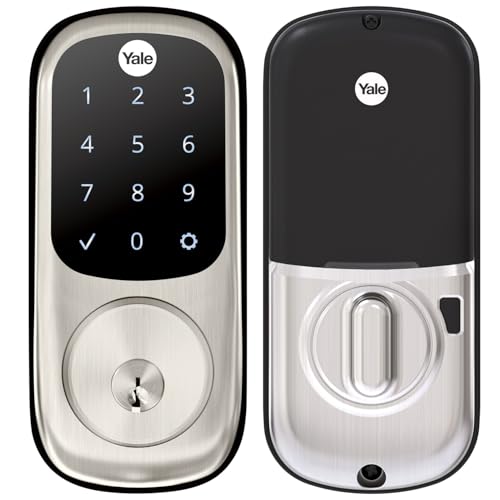
Schlage vs Yale at a Glance
| Feature | Schlage | Yale |
|---|---|---|
| Deadbolt Operation | Manual exterior thumbturn and interior mechanical knob | Motorized deadbolt with auto-lock and interior thumbturn |
| Interface Style | Silicone rubber backlit push buttons | Capacitive backlit touchscreen |
| Power Supply | Included 9V alkaline battery | Included 4 AA alkaline batteries |
| Security Rating | ANSI/BHMA Grade 2 / AAA | ANSI/BHMA Grade 2 |
| Connectivity Options | Standalone offline operation (no wireless) | Modular slot for 2.4 GHz Wi-Fi Smart Module |
| Smart Platform Compatibility | None (listing notes application control method, but unit lacks radio) | Apple HomeKit, Amazon Alexa, Google Assistant (via module) |
| Physical Key Backup | Thumbturn manual entry (no physical key included) | Included 2 physical backup keys |
| Door Thickness Fit | 1-3/8 in. to 1-3/4 in. (35 mm to 44 mm) | 1-3/4 in. to 2-1/4 in. (under 1-3/8 in. requires thin door kit) |
| Operating Temperature | Exterior: -35°C to 66°C; Interior: -10°C to 50°C | The listing does not specify |
| Best For | Maximum offline battery life and extreme weather durability | Connected smart home automation and hands-free locking |
Smart Home Integration and Remote Connectivity
Modern access control often hinges on whether your front door communicates with the rest of your connected devices. When deciding between Schlage or Yale for smart home setups, the two brands occupy completely opposing ends of the technology spectrum. Yale approaches home access through an adaptable modular infrastructure. The Yale Assure Deadbolt Lock with Touchscreen operates out of the box as a standalone digital deadbolt, but it features an internal expansion bay located directly above the battery tray. By sliding in the Yale Wi-Fi Smart Module, the lock gains native 2.4 GHz Wi-Fi connectivity without needing an external bridge or plug-in hub. Through the Yale Access app, users unlock remote access from anywhere, set up auto-unlock routines that trigger as they approach their property, monitor entry history, and link the hardware to Amazon Alexa, Google Assistant, and Apple HomeKit.
Schlage takes a strictly offline approach with its Camelot keypad deadbolt series. While some listing details mention application control, the hardware itself operates without wireless radios, internet bridges, or Bluetooth chips. All programming occurs manually at the lock face using a 6-digit master programming code. You can store up to 19 custom 4-digit user codes, but you cannot unlock the door from an office computer, generate scheduled temporary guest codes from an airport terminal, or monitor when family members arrive home. For users who weigh digital privacy against convenience-much like analyzing local vs cloud architecture in an arlo vs eufy security camera setup-the Schlage deadbolt represents an impenetrable air-gapped system that cannot be hacked over Wi-Fi, intercepted by wireless sniffing, or interrupted by home network outages.
Shoppers asking is Yale smart module worth it will find the answer depends entirely on their desire for automation. If you rely on voice commands to lock up at night, manage an active short-term rental property, or want your door to unlock hands-free when carrying groceries, Yale delivers an integrated software suite that Schlage’s standalone keypad simply does not attempt to match. However, that continuous network capability introduces software dependencies, firmware updates, and cloud reliance that offline purists actively avoid.
Edge: Yale delivers comprehensive smart ecosystem integration and remote phone access through its modular upgrade path, whereas Schlage provides no wireless networking capabilities.
Power Consumption and Battery Longevity
A smart deadbolt is only as reliable as the power cell keeping it awake. In the debate over Schlage vs Yale battery life, the fundamental hardware architecture dictates performance. The Schlage Electronic Keypad Deadbolt Lock operates on a single included 9V battery and boasts an operational lifespan of up to 2 to 3 years under typical residential conditions. This remarkable longevity is directly tied to Schlage’s semi-manual mechanism. The internal electronic circuit does not throw or retract the heavy metal bolt; instead, validating a 4-digit PIN merely engages an internal clutch mechanism for several seconds. The user supplies the physical energy required to throw the deadbolt by turning the exterior thumbturn. Because no motor strains against misaligned door frames, weatherstripping resistance, or sagging hinges, power consumption remains exceptionally low.
The Yale Assure deadbolt relies on 4 AA alkaline batteries to power an automated motor drive and its backlit capacitive touchscreen. While motorized operation delivers true keyless luxury-allowing features like hands-free auto-lock whenever the door closes-the motorized deadbolt motor draws substantial current each time the latch moves. When upgraded with the 2.4 GHz Yale Wi-Fi Smart Module, the battery drain increases substantially due to continuous network polling, status updates, and app synchronization. While standard offline keypad usage on the Yale yield decent life from the 4 AA cells, maintaining a continuous Wi-Fi link demands significantly more frequent battery maintenance than Schlage’s passive clutch system.
Evaluating this power disparity is similar to comparing battery efficiency across mobile hardware, as seen in the fitbit versa 4 vs apple watch se debate where extensive background computing demands regular charging intervals. Schlage provides clear audio and visual low-battery alerts well before the 9V cell fully depletes, and the single-battery replacement process takes seconds without unscrewing interior housing plates. Yale users must remain proactive with high-drain AA replacements to prevent unexpected lockouts, particularly if auto-lock and Wi-Fi features remain continuously active.
Edge: Schlage holds a decisive lead with up to 3 years of runtime on a single 9V battery, achieved through its motor-free, clutch-driven manual thumbturn mechanism.
Keypad Usability, Materials, and Weather Resistance
Entry interfaces face continuous physical wear, UV degradation, and seasonal temperature swings. The physical differences between Yale vs Schlage keypad reliability become apparent the moment you touch each console. The Schlage Camelot keypad deadbolt, available in finishes like the Schlage Camelot Keypad Deadbolt in Aged Bronze, utilizes physical silicone rubber buttons coated to resist surface abrasion and backlit by dedicated LEDs. These raised buttons provide distinctive tactile feedback, allowing users to enter codes accurately in complete darkness or while wearing bulky winter work gloves. Furthermore, Schlage officially rates its exterior escutcheon for extreme operational temperatures ranging from -35°C up to 66°C (-31°F to 150°F), making it an exceptional performer in deep northern freezes and scorching desert heat.
The Yale Assure deadbolt replaces mechanical buttons with a modern capacitive touchscreen. When dormant, the glass-style front presents a clean, minimalist face that complements contemporary architectural hardware. Touching the screen illuminates crisp, backlit numbers that do not collect mechanical grime between keys or exhibit physical button depression wear over years of use. Touchscreens eliminate the telltale mechanical wear patterns that occasionally reveal frequently pressed digits on inferior push-button hardware. However, touchscreen responsiveness can degrade when operated with heavy gloves or during freezing rain events where surface ice forms across the display glass. Yale’s listing does not specify precise operating temperature parameters, leaving outdoor thermal limits less defined than Schlage’s documented ratings.
To offset electronic failure risks, Yale equips the YRD226 Assure deadbolt with a traditional keyway cylinder and includes two physical backup keys in the package. If the 4 AA batteries discharge unexpectedly or an exterior freeze impairs capacitive touch detection, homeowners can bypass the electronic lock face entirely using a physical key. Schlage BE365 deadbolts do not feature a traditional keyway override on the exterior escutcheon; they rely solely on code entry, though the external 9V battery system and low-battery warning indicators minimize total power failures. For pure tactile confidence in harsh outdoor climates, push-button hardware maintains distinct operational advantages.
Edge: Schlage wins for weatherproofing and tactile entry with its -35°C to 66°C rating and responsive silicone buttons, while Yale provides backup security via included physical keys.
Security Standards and Physical Construction
Deadbolt durability determines home protection when brute-force physical attacks occur. In examining schlage be365 vs yale assure construction, both manufacturers engineer their exterior hardware to meet rigorous residential standards. Both the Schlage BE365 and the Yale Assure touchscreen deadbolt achieve an ANSI/BHMA Grade 2 certification, which designates high-level durability, impact resistance, and operational cycle longevity for residential and light commercial entryways. Both units employ heavy metal escutcheons and solid deadbolts that withstand standard mechanical prying and blunt force.
Schlage enhances physical security through its patented free-spinning exterior thumbturn. When the deadbolt is locked and an unauthenticated user attempts to turn the exterior knob, the mechanism spins completely freely without engaging the deadbolt latch. This prevents intruders from using wrenches, channel locks, or pipe levers to twist the exterior housing and forcefully snap the internal latch mechanism. The internal assembly remains secured by Grade 2/AAA rated internal metal components. Code management remains tightly contained: the lock accepts up to 19 distinct four-digit user codes alongside a required 6-digit master programming code, preventing unauthorized code additions at the physical door face.
Yale counters with intelligent security automation built into its firmware. The Assure lock features an integrated auto-lock sensor that can automatically throw the deadbolt after a set duration, ensuring the property is never left unsecured through simple forgetfulness. Yale’s Grade 2 certified chassis protects internal motorized gears within a sturdy housing. Furthermore, should an electronic malfunction occur, Yale’s physical cylinder provides an alternate point of mechanical defense. When comparing physical metal integrity, both brands demonstrate industrial-grade manufacturing standards, much like comparing high-grade steel fabrication in the traeger pro 575 vs tailgater smoker comparison.
Edge: Tie; both locks carry ANSI/BHMA Grade 2 certifications and employ rugged metal construction to resist forced entry.
Door Installation and Architectural Compatibility
Installing an electronic lock should not require professional carpentry or complex electrical wiring. Both brands design their hardware for straightforward retrofit installation over standard door bore holes using a single handheld screwdriver. When reading any comprehensive schlage keypad lock review or yale assure deadbolt review, homeowners celebrate that both deadbolts feature universal backset adjustments, adapting effortlessly to standard 2-3/8 inch or 2-3/4 inch latch backsets without requiring specialty cutting tools.
Door thickness compatibility reveals an important mechanical divergence. The Schlage Camelot series is engineered specifically for standard exterior doors measuring 1-3/8 inches (35 mm) to 1-3/4 inches (44 mm) thick. This covers the vast majority of standard interior and exterior residential entry doors. Yale, by contrast, targets heavier and thicker door slabs. The Yale Assure deadbolt guarantees fit on doors ranging from 1-3/4 inches up to 2-1/4 inches thick out of the box. If you attempt to mount the Yale Assure deadbolt on a thinner 1-3/8 inch interior or secondary exterior door, you must purchase an optional thin door kit, as specified in the product documentation.
From an installation perspective, Yale’s modular architecture offers distinct operational flexibility. Homeowners can install the Yale Assure deadbolt as a simple digital keypad lock today, and upgrade it to a full Wi-Fi smart lock months later by sliding the smart module into the compartment without detaching the lock from the door or changing strike plates. Similar to how modular kitchen appliances simplify daily workflows-an advantage detailed in our ninja dz401 vs af300 dual-zone analysis-Yale provides an expandable hardware foundation that evolves alongside your home automation needs.
Edge: Tie; Schlage natively accommodates thinner standard residential doors down to 1-3/8 inches, while Yale accommodates thicker doors up to 2-1/4 inches and features modular upgrade slots.
Pros and Cons
Schlage

Pros
- Up to 3-year battery life on 9V cell
- Tactile silicone backlit push buttons
- Operating temperature down to -35°C
- Grade 2 certified metal construction
Cons
- No smart home or Wi-Fi connectivity
- Requires manual exterior thumbturn operation
View Schlage Electronic Keypad Deadbolt Lock Camelot on Amazon
Yale

Pros
- Modular Wi-Fi smart module expansion
- Works with HomeKit, Alexa, and Google
- Includes two physical backup keys
- Motorized auto-unlock and auto-lock capability
Cons
- Shorter battery life with Wi-Fi module
- Listing does not specify operating temperature range
View Yale Wi-Fi Smart Module Yale on Amazon
Who Should Buy Each One
Choose Schlage If
- You live in an area subject to extreme winter freezes or desert heat and need documented -35°C to 66°C temperature tolerance.
- You want exceptional battery longevity that delivers up to 2 to 3 years of typical use on a single standard 9V battery.
- You prefer tactile, silicone rubber push buttons that provide positive physical feedback and work reliably while wearing thick gloves.
- You want a completely air-gapped, offline deadbolt that eliminates wireless hacking risks, network drops, and app configurations.
Choose Yale If
- You want full smart home integration across Apple HomeKit, Amazon Alexa, or Google Assistant via the 2.4 GHz Wi-Fi Smart Module.
- You need remote locking, unlocking, and live activity history tracking through the Yale Access smartphone app.
- You appreciate automated motorized locking features that secure your deadbolt automatically whenever the door closes.
- You have a thick exterior door measuring up to 2-1/4 inches that requires heavy-duty deadbolt mounting hardware.
Final Verdict
For the vast majority of homeowners seeking an everyday electronic lock that eliminates physical keys with absolute reliability, Schlage is the superior choice. Its brilliant mechanical design offloads the physical work of throwing the bolt to a manual exterior thumbturn, freeing the 9V battery circuit from motorized strain. This architecture yields up to three years of dependable power, while the physical silicone push buttons and certified -35°C to 66°C operational temperature rating make it practically immune to harsh winter storms and scorching summer sun. If your goal is zero maintenance, high physical security, and utter freedom from smartphone apps, Schlage provides unrivaled peace of mind.
However, if your lifestyle centers around connected smart living, Yale is the clear winner. The Assure deadbolt provides a sleek, modern touchscreen interface paired with an ingenious modular expansion architecture. When outfitted with the Yale Wi-Fi Smart Module, it transforms into an automated access hub capable of auto-unlocking upon arrival, reporting real-time entry logs, and obeying voice routines across Alexa, HomeKit, and Google Assistant. Yale successfully bridges the divide between traditional keyless security and the modern automated home, provided you are willing to manage shorter battery maintenance intervals in exchange for remote connectivity.
FAQ
Between Schlage vs Yale, which deadbolt has better battery life?
Schlage provides substantially better battery life. The Schlage electronic deadbolt operates on a single 9V battery and delivers up to 2 to 3 years of performance under typical use. Because Schlage requires the user to manually turn the exterior thumbturn to throw the bolt, no motorized actuator drains the battery. Yale uses 4 AA batteries to power a motorized bolt drive and touchscreen, which consumes power more rapidly-especially when running the 2.4 GHz Wi-Fi Smart Module.
Can the Schlage BE365 connect to Wi-Fi or smart home voice assistants?
No. The Schlage BE365 Camelot deadbolt is a standalone electronic lock with no internal wireless communication hardware. It cannot connect to Wi-Fi networks, Bluetooth devices, Apple HomeKit, Amazon Alexa, or Google Assistant. All access codes are programmed directly at the physical keypad using a 6-digit programming code.
Is the Yale smart module worth buying for an Assure deadbolt?
Yes, if you want remote access and smart home automation. The Yale Wi-Fi Smart Module slots directly into the Assure deadbolt above the batteries, enabling 2.4 GHz Wi-Fi communication without an external hub. It gives you the ability to unlock your door remotely via the Yale Access app, check access history, use hands-free auto-unlock, and connect to Apple HomeKit, Alexa, or Google Assistant.
What happens if the batteries die completely on these locks?
On the Yale Assure deadbolt (model YRD226), you can unlock the door using one of the two included physical backup keys. On the Schlage deadbolt, dedicated visual and audible indicators alert you long before the 9V battery drains completely. Because Schlage uses an easily accessible battery compartment, swapping the 9V battery takes only moments.
How do push-button keypads compare to touchscreens in freezing weather?
Physical silicone push buttons, like those on the Schlage BE365, generally perform better in extreme cold because they provide clear tactile feedback and can be pressed easily while wearing heavy winter gloves. Schlage rates its exterior keypad down to -35°C (-31°F). Capacitive touchscreens, like the Yale Assure, look sleeker and eliminate button wear, but they can be more challenging to operate with thick gloves or during freezing precipitation.
Do Schlage and Yale electronic deadbolts fit standard exterior doors?
Yes, both locks fit standard door preparations with 2-3/8 inch or 2-3/4 inch backsets. However, door thickness compatibility varies: Schlage fits doors from 1-3/8 inches to 1-3/4 inches thick out of the box, whereas Yale fits standard doors from 1-3/4 inches to 2-1/4 inches thick (doors under 1-3/8 inches require a separate thin door kit).


