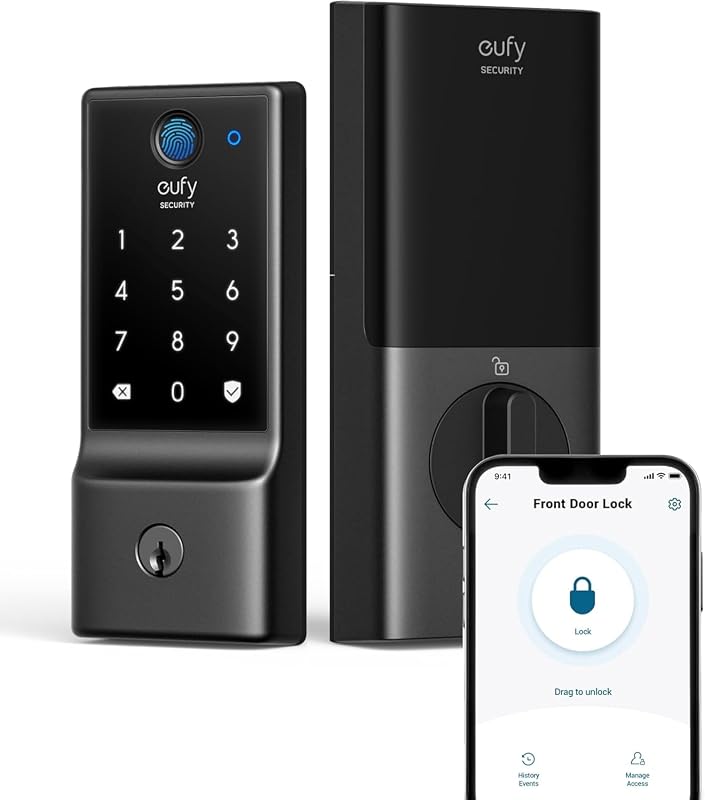
The core deciding difference between these two smart home ecosystems is how they store footage and process detection events: Arlo utilizes a cloud-first architecture backed by an active service tier for automated video retention and rapid emergency dispatch, while Eufy operates around decentralized local hardware that delivers multi-terabyte storage expandability and on-device artificial intelligence without monthly fees.
Choose Arlo if you prioritize off-site cloud video history, multi-platform smart home automation, and direct integration with municipal emergency services. Choose Eufy if you demand absolute data privacy, massive on-premises recording capacity, and sophisticated facial recognition without committing to ongoing service charges.


Arlo vs Eufy at a Glance
| Feature | Arlo | Eufy |
|---|---|---|
| Primary Video Storage | 60-Day Cloud Storage (via Arlo Secure) | 16 GB Built-in, Expandable up to 16 TB Local Storage |
| Mandatory Monthly Fees | Required for video history and advanced AI after trial | No monthly fees required |
| AI Detection Engine | Cloud-based Person, Vehicle, Animal, and Package Detection | BionicMind AI with up to 99% Facial Recognition |
| Hub Siren Output | Camera-integrated sirens (listing does not specify hub dB) | 100 dB Piercing Siren on HomeBase S380 |
| Smart Platform Support | Alexa, Apple Home, Google Home, SmartThings, IFTTT | Amazon Alexa, Google Assistant (hub ecosystem) |
| Ecosystem Device Limit | Listing does not specify device ceiling | Up to 50 devices (16 cameras/doorbells, 34 sensors) |
| Outdoor Weather Resistance | IP65 Certified Weatherproof | Hub indoor only (6W draw); cameras vary |
| Resolution Standards | 2K HDR / 2K HD Video | IP Video Input supporting up to 4K ecosystems |
| Best For | Hands-off monitoring and emergency dispatch | Privacy-focused setups and subscription-free storage |
Video Storage Architecture and Subscription Models
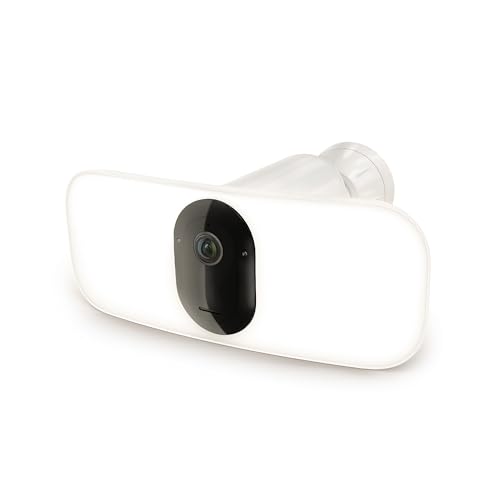
Storage management defines the operational experience of any smart camera installation. In an Arlo Wireless Floodlight Security Camera 2K HDR deployment, video clips are routed directly through secure network protocols into the cloud. The platform relies on the Arlo Secure Early Warning System, which provides users with 60 days of rolling video history, interactive event summaries, and keyword-searchable activity feeds. While the hardware permits basic motion alerts and live streaming out of the box, accessing recorded event archives requires maintaining an active service plan once the initial trial period concludes. This structure eliminates the need to manage physical hard drives or worry about equipment theft compromising past evidence, but it ties the long-term utility of the hardware to continuous cloud connectivity.
By contrast, the eufy Security HomeBase 3 (HomeBase S380) centralizes recorded footage on physical solid-state or magnetic media located inside the residence. The hub arrives with 16 GB of integrated high-speed memory and features an internal expansion bay that accommodates standard 2.5-inch storage drives up to 16 TB in capacity. Because all video clips write directly to the local drive over a dedicated 2.4 GHz wireless connection, users incur zero ongoing operational expenses while retaining months or even years of continuous video recordings. When comparing kitchenaid pro 5 plus vs bowl-lift 7 qt hardware capacity, evaluating physical mechanical headroom proves just as essential as evaluating the storage ceilings of home security hubs. For homeowners seeking an arlo vs eufy local storage solution, Eufy offers an independent recording pipeline that remains operational even during external broadband service interruptions.
The practical trade-off between these storage systems involves convenience versus ongoing overhead. The arlo vs eufy subscription differences highlight two fundamentally divergent philosophies: Arlo treats home security as an ongoing managed service with secure off-site redundancy, whereas Eufy treats security as an owned hardware asset. Relying entirely on cloud storage means an intruder who physically damages or steals an outdoor Arlo camera cannot destroy the digital video evidence, as the clip has already uploaded to the cloud. Conversely, Eufy keeps your private footage off third-party servers entirely, providing an arlo vs eufy no subscription model that grants unlimited archiving freedom at the cost of managing your own physical storage hardware.
Edge: Eufy. The HomeBase S380 delivers up to 16 TB of local expandable video storage with zero recurring subscription charges.
AI Detection, Facial Recognition, and Alert Intelligence
An alert engine is only as valuable as its ability to suppress false triggers caused by swaying tree branches, windblown foliage, or passing neighborhood pets. Arlo processes incoming 2K HDR video feeds through server-side machine learning algorithms to identify specific trigger classifications, separating human beings from passing vehicles, visiting animals, and delivered packages. Devices such as the Arlo Video Doorbell 2K (2nd Gen) allow homeowners to draw customized activity zones across entry pathways and apply digital privacy zones to mask out neighbor properties. Furthermore, Arlo generates dynamic event captions that summarize detected actions directly in the push notification, enabling the homeowner to evaluate activity without opening the full video feed.
Eufy tackles notification intelligence through on-device computing powered by its proprietary BionicMind artificial intelligence engine housed within the HomeBase S380. Operating at up to 99% facial recognition accuracy, BionicMind analyzes incoming camera streams locally to distinguish recognized family members from unfamiliar visitors. Over time, the self-learning algorithm refines its recognition profiles, cataloging familiar faces to ensure the system suppresses redundant alerts when household members enter the premises. At the end of each day, the hub compiles these local security events into Daily Security Briefings, allowing users to review a chronological timeline of verified movements across their property.
Deciding whether is eufy homebase worth it depends largely on whether you prefer on-device facial identification or generalized cloud-based classification summaries. Just as culinary appliances balance internal heating sensors in our philips airfryer xxl vs instant vortex plus assessment, intelligent hubs must balance onboard computing power against processing latency. When asking is arlo secure worth it, the primary advantage lies in Arlo’s descriptive text captions and rapid cloud tagging. However, Eufy’s capability to recognize specific individuals locally without uploading facial profiles to external servers provides unmatched speed and privacy for family monitoring.
Edge: Eufy. The local BionicMind AI engine achieves up to 99% facial recognition accuracy directly on the hub hardware to filter out recognized household members without cloud processing.
Outdoor Monitoring, Illumination, and Active Deterrence
Perimeter protection demands bright lighting, dependable weatherproofing, and decisive deterrence features designed to stop trespassing before an intrusion occurs. The Arlo Wireless Floodlight Security Camera 2K HDR serves as an aggressive active deterrent for outdoor monitoring, combining a high-resolution 2K image sensor with an integrated motion-activated LED panel. On rechargeable battery power, the unit produces 2000 lumens of wide-angle illumination, which increases up to 3000 lumens when connected to the optional outdoor magnetic charging cable. Paired with a 160-degree field of view, color night vision, auto-zoom tracking, and a built-in siren, it can automatically flood driveways or dark side yards with light the instant an intruder crosses the detection perimeter.
Entryway surveillance is further supported by the Arlo Video Doorbell 2K (2nd Gen), which utilizes an expansive 180-degree diagonal viewing angle. This unique aspect ratio delivers a head-to-toe perspective, allowing users to see both full-height visitors standing on the porch and small packages placed directly against the door threshold. Both Arlo units carry an IP65 waterproof rating, ensuring imperviousness to blowing rain, seasonal frost, and intense heat. For critical moments, Arlo integrates an emergency response button directly into the mobile application interface, giving users one-touch access to dispatch local police, fire, or medical personnel to the camera’s registered physical location with pre-filled address details.
Eufy takes a centralized approach to deterrence through the HomeBase S380, which incorporates a piercing 100 dB siren directly into the central desktop console. When connected outdoor cameras detect unauthorized human presence, the hub can sound its high-decibel alarm indoors while triggering coordinated sirens on exterior cameras. The HomeBase S380 also supports cross-camera tracking, automatically chaining footage from multiple outdoor vantage points to follow a subject moving around the perimeter of the home. Just as appliance controls require careful tactile balancing in our instant vortex plus vs chefman turbofry comparison, security hardware requires balancing physical deterrence against false alarms. While Eufy coordinates synchronized multi-camera sirens, Arlo holds the definitive advantage in raw perimeter illumination and direct emergency dispatch tools.
Edge: Arlo. The 3000-lumen floodlight output, 180-degree head-to-toe doorbell viewing angle, and in-app emergency service dispatch provide superior direct deterrent capability.
Smart Home Integration and Ecosystem Scale
How security cameras interface with third-party platforms dictates how smoothly they integrate into automated smart home routines. Arlo stands out as one of the most broadly compatible security ecosystems currently available. Both the Arlo Wireless Floodlight and the Arlo Video Doorbell integrate natively with Amazon Alexa, Google Home, Apple Home (HomeKit), Samsung SmartThings, and IFTTT. This open interoperability enables complex cross-brand automation, such as triggering indoor smart bulbs to flash red when outdoor motion is detected, or streaming live camera video directly to an Apple TV or smart display through voice commands.
Eufy structures its hardware around a powerful dedicated central controller. The HomeBase S380 acts as an administrative bridge capable of managing up to 50 individual devices across a single property, including 16 high-resolution cameras or video doorbells and 34 auxiliary security sensors. This unified structure ensures seamless camera synchronization, cross-tracking, and single-interface management. However, Eufy’s external platform integrations focus primarily on Amazon Alexa and Google Assistant, lacking native out-of-the-box compatibility with Apple HomeKit on the HomeBase S380 hub platform.
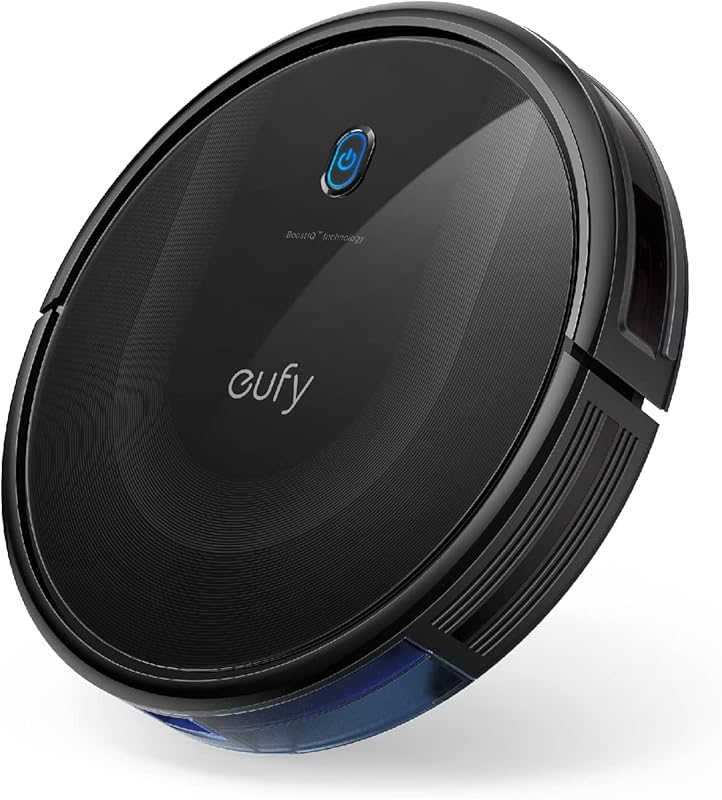
Furthermore, Eufy’s broader smart home product lineup includes specialized cleaning appliances that operate completely independent of the central security hub. For instance, the eufy 11S MAX Robot Vacuum Cleaner delivers 100 minutes of quiet cleaning with BoostIQ surface adaptation and a slim 2.85-inch profile, yet it relies strictly on an included infrared remote control rather than Wi-Fi or app management. In our broader look at automated cleaning tech in the eufy vs roborock guide, we explore how differing control protocols impact connected lifestyles. For users wanting their home security infrastructure deeply woven into Apple Home, SmartThings, and automated IFTTT recipes, Arlo provides substantially wider software compatibility.
Edge: Arlo. Native integration across Apple Home, Amazon Alexa, Google Home, Samsung SmartThings, and IFTTT delivers unmatched cross-platform automation flexibility.
Data Privacy, Encryption, and Network Operation
Evaluating arlo or eufy for home security requires a close examination of how each manufacturer safeguards sensitive personal video feeds. Eufy addresses consumer privacy through physical data localization backed by cryptographic protocols. When cameras transmit footage to the HomeBase S380, the data is secured using AES-256-GCM and ECC-256 encryption standards. Because the footage is recorded onto an internal hard drive inside your living room, the system does not depend on cloud servers to store, retrieve, or parse sensitive video clips. Facial recognition profiles compiled by BionicMind remain strictly contained on the local hub processor, eliminating risks associated with cloud database breaches.
Arlo approaches privacy through cloud security measures and user-managed application permissions. Video recorded by Arlo hardware is encrypted during transmission and stored within secure cloud data centers. In the mobile app, users can define strict privacy zones that black out sensitive visual areas-such as a neighbor’s window or swimming pool-ensuring those pixels are neither recorded nor displayed during live streaming. Arlo also provides two-factor authentication and user-controlled privacy settings to restrict account access across multiple family members.
The network footprint of these two architectures also differs significantly in daily operation. Because Arlo cameras push high-definition 2K clips to the cloud whenever triggered by motion, installations with numerous high-traffic cameras consume notable upstream internet bandwidth. Eufy routes camera traffic locally over private 2.4 GHz Wi-Fi channels directly to the HomeBase S380, drawing only 6 watts of hub power while conserving residential internet bandwidth for other devices. When evaluating any eufy review against an arlo review, buyers who prioritize absolute data sovereignty consistently favor Eufy’s on-premises architecture.
Edge: Eufy. Video files and facial recognition databases remain stored exclusively on physical hardware inside the home, protected by AES-256-GCM and ECC-256 encryption.
Pros and Cons
Arlo

Pros
- Direct emergency response dispatch through app
- Broad compatibility including Apple Home and IFTTT
- Up to 3000 lumens floodlight illumination
- Head-to-toe 180-degree doorbell viewing angle
Cons
- Video history requires recurring paid subscription
- Cloud dependency for advanced smart detection
View Arlo Wireless Floodlight Security Camera 2K on Amazon
Who Should Buy Each One
Choose Arlo If
- You want direct emergency response capabilities in the mobile app to dispatch police, fire, or medical services directly to your home address.
- You live in an Apple HomeKit or Samsung SmartThings smart ecosystem and need seamless multi-platform voice control and cross-device routines.
- You require intense perimeter lighting, such as the 3000-lumen output delivered by the Arlo Wireless Floodlight, to illuminate large driveways or yards.
- You want a wide 180-degree head-to-toe perspective at the front door to monitor packages left directly beneath the camera.
Choose Eufy If
- You refuse to pay recurring monthly subscription fees to view, store, and manage your security camera video history.
- You want massive continuous video recording capacity with support for up to 16 TB of expandable local hard drive storage.
- You prefer advanced AI facial recognition that identifies family members and filters out false alarms locally on the HomeBase hub.
- You want a unified single-hub ecosystem capable of managing up to 50 cameras and smart sensors simultaneously from one console.
Final Verdict
For most homeowners seeking a comprehensive, privacy-first security setup, Eufy represents the stronger overall value. The HomeBase S380 completely rewrites the economics of home monitoring by eliminating mandatory monthly subscriptions while offering unprecedented local storage expandability up to 16 TB. Combined with BionicMind facial recognition that operates entirely on-device behind AES-256-GCM encryption, Eufy provides an uncompromising defense against intrusion without demanding ongoing service contracts or streaming your private life into the cloud.
However, Arlo remains the superior choice for users who demand professional-grade deterrent hardware and enterprise-level smart home connectivity. If your household relies heavily on Apple HomeKit, Samsung SmartThings, or IFTTT, Arlo fits into your existing ecosystem far more effectively than Eufy. Furthermore, for perimeter security where blinding 3000-lumen illumination, 180-degree head-to-toe entryway framing, and direct one-touch emergency response dispatch are paramount, Arlo delivers specialized safety features that an on-premises local hub cannot replicate.
FAQ
Does Arlo require a monthly subscription to record video?
Yes, Arlo requires an active paid Arlo Secure plan to access cloud video recording history and advanced AI object detection once the initial trial expires. Without a subscription, Arlo cameras still support live video streaming, motion push alerts, and two-way audio communication, but video clips will not be saved for later playback.
Can Eufy record continuously without paying monthly fees?
Yes, Eufy supports continuous video recording with zero monthly subscription fees when connected to the HomeBase S380 smart hub. Users can install an internal 2.5-inch hard drive or solid-state drive up to 16 TB in capacity to store months of non-stop continuous footage locally.
Is Eufy HomeBase S380 compatible with Apple HomeKit?
The product data lists compatibility for the HomeBase S380 ecosystem with Amazon Alexa and Google Assistant; it does not list native support for Apple HomeKit. Homeowners committed to Apple Home setups should consider Arlo, which explicitly supports Apple Home integration.
How does the Arlo emergency response feature function?
The Arlo Secure Early Warning System allows users to initiate an emergency dispatch call directly from the camera app. When triggered, the system contacts local police, fire, or medical services tied specifically to the camera’s registered physical address, providing pre-filled location details to expedite emergency responder arrival.
What happens to Eufy recordings if the internet disconnects?
Because Eufy cameras record directly to the HomeBase S380 via local 2.4 GHz wireless protocols, the system continues to capture and store motion events on the physical internal drive even if your home loses external broadband internet connectivity. Remote mobile app viewing will pause until the internet is restored, but local data recording remains uninterrupted.
Can Arlo cameras be hardwired instead of using battery power?
Yes, Arlo products offer flexible power options. The Arlo Video Doorbell 2K (2nd Gen) can operate wire-free via its internal rechargeable battery or be hardwired to existing low-voltage doorbell wiring for continuous trickle charging. Similarly, the Arlo Wireless Floodlight can run on battery or utilize an outdoor magnetic charging cable to boost lighting output to 3000 lumens.