The primary distinction separating these smart climate platforms is how they read and manage household temperatures across multiple living zones: Ecobee relies on dedicated remote room sensors and broad multi-platform smart home support to balance hot and cold spots, whereas Nest focuses on centralized temperature control powered by streamlined scheduling inside the Google Home ecosystem.
Homeowners heavily invested in Google Assistant who want an accessible, set-and-forget setup should pick Nest. Those managing multi-story floor plans, Apple HomeKit setups, or homes with severe hot and cold spots should pick Ecobee.
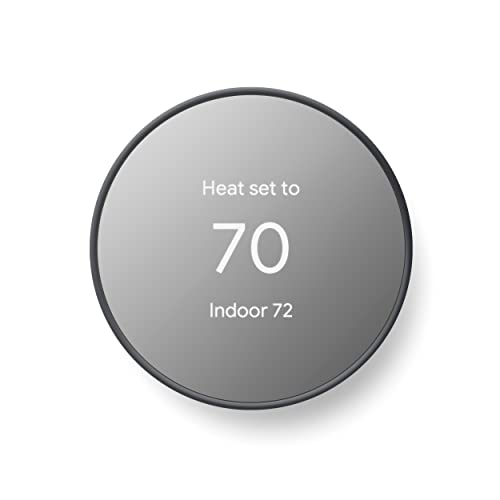


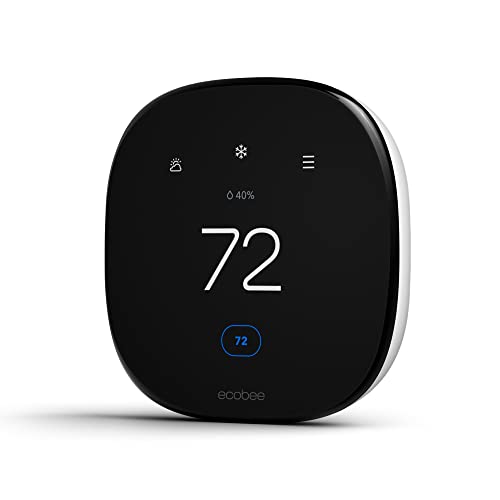
Nest vs Ecobee at a Glance
| Attribute | Nest | Ecobee |
|---|---|---|
| Primary Smart Ecosystems | Google Home, Amazon Alexa, Matter-certified assistants | Apple HomeKit, Amazon Alexa, Google Assistant, SmartThings |
| Remote Room Sensing | Not listed in product data | SmartSensor included with Premium, supported on Enhanced |
| HVAC System Compatibility | Heat pump, conventional heating and cooling; C-wire needed for select systems | 90% (Enhanced) to 95% (Premium) of HVAC systems |
| Power Source and C-Wire Solution | Battery powered (A or AAA included); optional C-wire/power accessory | Corded electric (24V); Power Extender Kit (PEK) included |
| Occupancy Detection Hardware | Software-driven Home/Away scheduling | Built-in radar occupancy sensing |
| Display and Controls | 1.07 to 2-inch LCD; button control, voice, Google Home app | 4-inch LCD / vibrant cinematic display; touch and app control |
| Auxiliary Hardware Features | HVAC system monitoring alerts | Air quality monitor, built-in speaker, doorbell video streaming |
| Manufacturer Warranty | Not listed | 3-year warranty |
| Best For | Streamlined Google Home users with single-zone layouts | Multi-room homes needing balanced comfort across diverse platforms |
Room Sensors and Multi-Room Temperature Balancing
Temperature regulation across a multi-story home rarely matches the climate reading at a single hallway wall. A standard thermostat measures air only in its immediate vicinity, which often leaves upstairs bedrooms or drafty corner dens uncomfortably warm or chilly. Managing these climate variations requires remote hardware that samples conditions where people actively relax or sleep rather than where the base unit was installed.
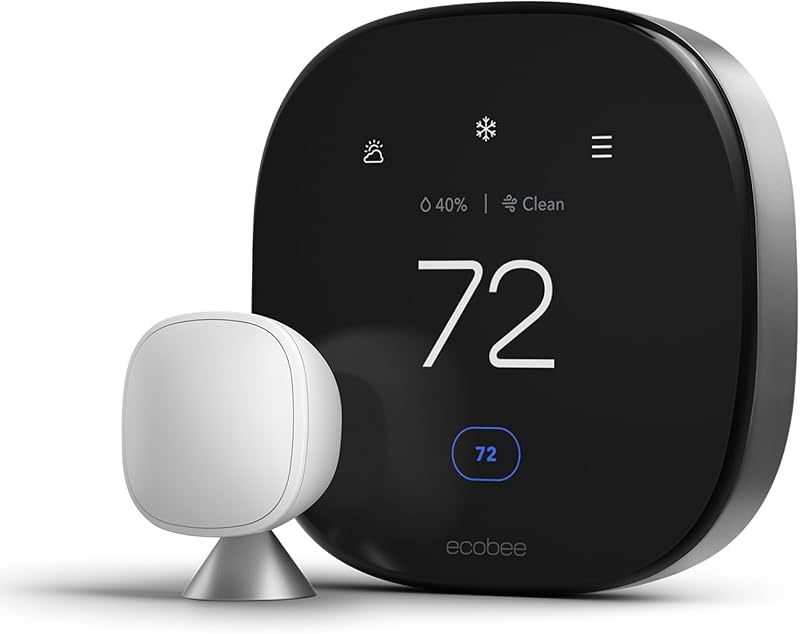
In any ecobee Smart Thermostat Premium setup, whole-home comfort is driven by the included SmartSensor. This peripheral detects both ambient temperature and actual room occupancy, allowing the system to ignore unoccupied hallways and steer cooling or heating directly to occupied spaces. The ecobee Smart Thermostat Enhanced also supports pairing with standalone SmartSensors. In contrast, the provided Nest listings do not include external room sensors, relying entirely on the central unit to assess ambient temperature. For readers comparing the ecobee room sensor vs nest approach, Ecobee provides a dedicated physical tool for managing localized climate imbalances right out of the box.
When deciding whether to choose nest or ecobee for large house installations, multi-point sensing is the decisive factor. A sprawling or two-story home regulated by a single wall reading will consistently experience hot and cold zones during seasonal extremes. By deploying external sensor units to bedrooms and offices, Ecobee averages or prioritizes rooms that family members occupy throughout the day, whereas a standalone Nest thermostat maintains its calculations strictly from its fixed mounting location.
Edge: Ecobee delivers a substantial advantage with its included and supported SmartSensor hardware, actively eliminating hot and cold spots across multi-room layouts.
Smart Home Integration and Voice Ecosystems
Modern connected climate hardware must communicate smoothly with existing voice assistants, mobile platforms, and automated routines. A thermostat locked into an incompatible network creates unnecessary friction, requiring specialized apps for simple adjustments instead of universal voice commands and linked ecosystem automations.
Evaluating an ecobee vs nest configuration reveals a stark contrast in native ecosystem support. Ecobee hardware functions seamlessly across Amazon Alexa, Google Assistant, Apple HomeKit, and SmartThings. Owners can even adjust their climate from an Apple Watch or speak directly to Siri and Alexa through the built-in speaker and microphone embedded inside the Premium unit. If you are debating nest or ecobee for homekit environments, Ecobee is the clear winner because Apple HomeKit integration is natively supported, whereas Nest relies on the Google Home platform and Matter-certified voice assistants, lacking direct HomeKit branding in these listings.
For Google-centric environments, the Nest Thermostat remains completely at home. It programs directly through the Google Home app on iOS and Android devices, coordinating heating adjustments alongside other household equipment. Just as homeowners evaluate whole-home connectivity when reading a tp-link deco xe75 vs google nest wifi pro comparison, matching your thermostat to your primary ecosystem prevents software fragmentation. While Nest handles Google Assistant and Alexa commands reliably, Ecobee offers wider platform versatility across every leading standard.
Edge: Ecobee takes the lead by delivering native integration with Apple HomeKit, SmartThings, Alexa, and Google Assistant alongside built-in voice hardware.
HVAC Compatibility and Electrical Wiring
Thermostat installations hinge on electrical wiring compatibility. Older properties and certain heating architectures frequently lack a dedicated 24-volt common wire (C-wire), which supplies steady electric current to power smart displays, radio transmitters, and Wi-Fi chips without draining internal cells.
The Google Nest Thermostat – Smart Thermostat for Home – Programmable Wifi Thermostat – Charcoal is engineered to run without a C-wire in most standard homes. It utilizes internal replaceable batteries-two A-size batteries in the Charcoal edition and two AAA-size batteries in the Google Nest Thermostat – Smart Thermostat for Home – Programmable Wifi Thermostat – Snow model. However, the manufacturer data notes that specific systems, including zone-controlled setups, heat pump configurations, heating-only, and cooling-only lines, mandate an added C-wire or compatible power accessory. Nest provides an online compatibility checker to verify furnace and heat pump configurations prior to mounting.
Ecobee approaches power delivery by including all required installation hardware directly inside the carton. Both the Premium and Enhanced variants feature a bundled Power Extender Kit (PEK), which reliably powers the 24V corded electric unit in buildings lacking a physical C-wire. Ecobee specifies 95% HVAC system compatibility on the Premium model and 90% compatibility on the Enhanced unit, supporting systems from boilers and furnaces to humidifiers and heat pumps. Readers assessing overall nest vs ecobee compatibility will appreciate that Ecobee includes both the PEK and a trim plate, eliminating unexpected trips for third-party wiring adapters.
Edge: Ecobee earns the advantage by bundling the Power Extender Kit and trim plate, removing the guesswork for homes lacking a dedicated C-wire.
Hardware Controls, Displays, and Auxiliary Monitoring
A smart thermostat is both an interactive wall control and an alert terminal for household wellness. Differences in screen dimensions, touch interfaces, and secondary hardware sensors profoundly influence everyday operation and user satisfaction.
Ecobee constructs its Premium model with an elegant metal chassis, a matte finish, and an expansive color display featuring a cinematic interface, while the Enhanced model features a generous 4-inch LCD touchscreen. Beyond thermostat duties, the Premium includes a built-in indoor air quality monitor that alerts homeowners when airborne pollutants increase and provides furnace filter maintenance reminders. Furthermore, it integrates a smart speaker capable of streaming audio, listening for smoke alarm sirens, and streaming live front-door video with two-way audio when linked to an ecobee Smart Doorbell Camera.
Nest utilizes a more minimalist, industrial aesthetic built with durable plastic and polycarbonate casings. Depending on the variant selected, Nest features a compact 1.07-inch or 2-inch LCD screen managed through exterior button controls, mobile taps, or voice prompts. Instead of environmental air monitoring, Nest focuses on mechanical well-being through HVAC monitoring, surveying equipment activity to alert users if heating or cooling patterns deviate unexpectedly. Similar to balancing smart hardware options in our ring vs nest analysis, buyers must choose between an interactive, feature-dense command terminal and a subtle, unobtrusive wall dial.
Edge: Ecobee wins with its larger display, premium metal construction, built-in air quality monitor, and smart speaker capabilities.
Automated Scheduling and Energy Savings Efficiency
The primary financial motivation behind installing a smart climate controller is automated energy conservation. Both manufacturers use intelligent software routines to curtail heating and cooling consumption when spaces are unoccupied, but they employ distinct methodologies to achieve those savings.
In any rigorous nest review, the system’s software simplicity stands out. Operating via the Google Home app, Nest turns down the temperature automatically when occupants leave the house, ensuring empty spaces are not conditioned unnecessarily. The Savings Finder utility analyzes programmed schedules and recommends minor temperature shifts to trim utility bills, while the Nest Renew service coordinates with compatible regional grids to shift energy usage to cleaner or less expensive hours. For buyers asking is nest thermostat worth it, this streamlined background management requires minimal manual oversight once baseline routines are scheduled.
An ecobee review reveals an efficiency engine driven by physical occupancy hardware. Ecobee advertises annual heating and cooling savings of up to 26% compared to maintaining a static 72°F hold. Its built-in radar occupancy sensor preheats or precools living areas before family members arrive and switches automatically into savings profiles when rooms fall vacant. The eco+ optimization suite factors in user habits, humidity readings, local weather patterns, and real-time grid activity. When shoppers examine whether is ecobee worth it, the tangible radar occupancy tracking and integrated humidity compensation deliver comprehensive climate intelligence.
Edge: Tie. Ecobee offers deeper occupancy-based and humidity-driven automation, while Nest provides effortless background scheduling and clean-energy grid alignment via Nest Renew.
Pros and Cons
Nest

Pros
- Works without C-wire in most homes
- Seamless Google Home app scheduling
- Built-in HVAC system health monitoring
- Nest Renew clean energy support
- Batteries included in box
Cons
- No remote room sensors included
- Lacks native Apple HomeKit integration
- C-wire required for heat pump systems
View Google Nest Thermostat – Smart Thermostat on Amazon
Ecobee
Pros
- SmartSensor balances hot and cold spots
- Includes Power Extender Kit for C-wire
- Works with HomeKit Alexa Google SmartThings
- Built-in radar occupancy sensing
- Air quality monitoring on Premium
Cons
- Requires wired 24V corded power setup
- SmartSensors sold separately on Enhanced model
View ecobee Smart Thermostat Premium – WiFi on Amazon
Who Should Buy Each One
Choose the Nest If
- Your smart home is built primarily around Google Assistant and the Google Home mobile app.
- You prefer a compact, minimalist wall interface with a smaller footprint and subtle styling.
- You live in a smaller home or apartment where single-room temperature readings are sufficient.
- You want automated schedule suggestions via Savings Finder and clean-energy coordination with Nest Renew.
Choose the Ecobee If
- You live in a multi-story or sprawling house that suffers from severe hot and cold spots across different rooms.
- Your automation ecosystem relies on Apple HomeKit, SmartThings, or wrist-based control via Apple Watch.
- You lack an existing C-wire and want a bundled Power Extender Kit included in the box.
- You desire advanced hardware features such as indoor air quality monitoring, radar occupancy sensing, and smart speaker streaming.
Final Verdict
When comparing the ecobee smart thermostat vs google nest, Ecobee emerges as the superior climate control system for most households. By supplying remote SmartSensor tracking, native Apple HomeKit and SmartThings interoperability, a built-in Power Extender Kit for C-wire-free installation, and onboard air quality monitoring, it solves the most challenging comfort problems in residential climate control. The ability to measure occupancy and temperature away from the central hallway gives Ecobee an undeniable operational edge.
Nest remains an attractive and practical selection for smaller homes, apartments, and dedicated Google Home households. Its streamlined setup, intuitive Savings Finder schedule adjustments, HVAC system monitoring, and clean-energy grid integration provide genuine utility without overwhelming the user with auxiliary hardware. However, if your home experiences uneven heating between floors or your smart home relies on multi-platform flexibility, Ecobee is well worth the investment.
FAQ
Does Nest work with remote room sensors?
The standard Google Nest Thermostat models covered in this comparison rely on the central wall unit to measure household temperature and do not list remote room sensor compatibility. If balancing multiple individual rooms across a larger floor plan is your primary concern, Ecobee includes its SmartSensor hardware specifically for that purpose.
Can I install Ecobee if my home lacks a C-wire?
Yes. Both the ecobee Smart Thermostat Premium and ecobee Smart Thermostat Enhanced include a Power Extender Kit (PEK) inside the box. This kit allows you to wire the thermostat safely without an existing C-wire, providing reliable 24V power without having to pull new electrical wiring through your walls.
Does the Nest Thermostat work with Apple HomeKit?
The Nest Thermostat listings highlight compatibility with Google Assistant, Amazon Alexa, and Matter-certified voice assistants via the Google Home app, but they do not list native Apple HomeKit support. Homeowners who want native Apple HomeKit and Apple Watch functionality should choose Ecobee.
How does the Ecobee SmartSensor balance household comfort?
The Ecobee SmartSensor measures both ambient room temperature and physical occupancy. Instead of relying solely on a hallway reading, the thermostat prioritizes conditioning the specific rooms your family is actively using, helping eliminate hot and cold spots across different areas of the house.
What type of HVAC monitoring does Nest provide?
Nest features built-in HVAC monitoring that monitors heating and cooling performance over time. If the system detects irregularities in how your equipment heats or cools the home, it sends a proactive mobile alert along with maintenance reminders to help prevent unexpected mechanical failures.
What auxiliary features does the ecobee Smart Thermostat Premium include?
The ecobee Smart Thermostat Premium includes a built-in indoor air quality monitor that alerts you to rising pollutants and tracks humidity. It also integrates a smart speaker with Siri and Alexa capabilities, listens for smoke alarm sirens, and allows you to view live video and talk to visitors when paired with an ecobee Smart Doorbell Camera.
Related reading: google nest wifi pro vs asus zenwifi xt9, netgear orbi rbk752 vs google nest wifi pro.