The decisive difference between the AMD Ryzen 7 5700X and the AMD Ryzen 7 5800X comes down to power efficiency versus maximum clock frequency, defined by a 40-watt thermal design difference and a 100 MHz gap in peak boost speeds.
Builders seeking low heat output and high computing density inside small or quiet enclosures should select the Ryzen 7 5700X, while users wanting the highest factory clock speed on an eight-core Zen 3 chip regardless of wattage should select the Ryzen 7 5800X.


AMD Ryzen 7 5700X vs AMD Ryzen 7 5800X at a Glance
| Attribute | AMD Ryzen 7 5700X | AMD Ryzen 7 5800X |
|---|---|---|
| Processor Series | Ryzen 7 | AMD Ryzen 7 |
| Cores and Threads | 8 cores, 16 threads | 8 cores, 16 threads |
| Architecture | AMD Zen 3 | AMD Zen 3 |
| Max Boost Clock | 4.6 GHz | 4.7 GHz |
| Wattage (TDP) | 65 watts | 105 watts |
| Cache Memory | 36 MB | 36 MB |
| Socket | Socket AM4 | Socket AM4 |
| PCIe Standard | PCIe 4.0 on X570 / B550 | PCIe 4.0 on X570 / B550 |
| Memory Support | DDR4-3200 | DDR-3200 |
| Bundled Thermal Solution | Cooler not included | Cooler not included (high-performance cooler recommended) |
| Best For | Cool, power-conscious gaming rigs and compact chassis | Uncompromising factory clocks and sustained full-load rendering |
Power Consumption and Operating Efficiency
Thermal Design Power (TDP) serves as the primary technical partition separating these two Socket AM4 desktop processors. The Ryzen 7 5700X is tuned to operate at an official rating of 65 watts, whereas the Ryzen 7 5800X operates at an official package rating of 105 watts. In everyday computing environments, this 40-watt difference dictates how much electrical energy the processor pulls through the motherboard voltage regulator modules under sustained compute spikes. A lower wattage profile reduces overall system power draw, creating fewer demands on power supply reserves and producing noticeably less heat that must be extracted from the computer case.
Evaluating 5700X vs 5800X power consumption reveals that the 65W rating gives the 5700X an immense advantage in smaller computer cases and thermal-constrained setups. Builders weighing an upgrade path against components like the amd ryzen 5 5600x vs ryzen 7 5700x often focus on maintaining a moderate electrical footprint while gaining eight cores. The Ryzen 7 5800X pulls significantly more current to sustain its elevated factory settings, which means the power delivery circuits on your motherboard work harder under heavy multi-threaded runs. The AMD 5700X vs 5800X TDP difference essentially defines whether you prioritize electrical efficiency or pure out-of-the-box juice.
Over extended operating sessions, the lower wattage of the 5700X maintains manageable surface heat and places less strain on auxiliary hardware. While the 5800X can sustain higher current draw when running unconstrained, the efficiency curve sharply favors the 5700X for users tracking their total system energy envelope. When continuous workloads run for hours, the 65-watt design of the 5700X executes tasks with remarkably disciplined electricity usage.
Edge: AMD Ryzen 7 5700X delivers significantly better operational efficiency with its low 65-watt profile compared to the 105-watt rating of the competitor.
Clock Speeds and Processing Performance
Frequency limits directly influence how rapidly a central processor crunches individual instructions. The AMD Ryzen 7 5800X features a maximum boost clock speed of 4.7 GHz, giving it a 100 MHz advantage over the AMD Ryzen 7 5700X, which tops out at a 4.6 GHz maximum boost. Both microprocessors utilize AMD’s high-efficiency Zen 3 architecture and feature 8 physical cores alongside 16 concurrent processing threads. The small bump in clock speed on the 5800X provides higher peak frequency figures right out of the box without requiring manual clock frequency adjustments.
Both models come fully unlocked for overclocking, allowing builders to adjust parameters using utilities designed for the Socket AM4 ecosystem. When examining an AMD Ryzen 7 5800X review against an AMD Ryzen 7 5700X review, the 100 MHz gap between 4.6 GHz and 4.7 GHz represents a very narrow performance delta of roughly two percent in single-threaded operational potential. Those who investigate higher multi-core tiers like the amd ryzen 7 5800x vs ryzen 9 5900x will note that within the eight-core bracket, clock frequency is the primary tool used by the 5800X to assert its dominance.
Under heavy multi-core loads, the higher 105W ceiling allows the 5800X to sustain its aggressive boost curves longer before hitting electrical boundaries. Conversely, the 5700X hits its 65W cap sooner, stabilizing at slightly lower sustained frequencies under 100% thread saturation. For tasks that rely heavily on the fastest possible execution speed per clock cycle, the 5800X extracts every bit of operational frequency that the Zen 3 manufacturing process can reliably yield.
Edge: AMD Ryzen 7 5800X holds the advantage with an out-of-the-box 4.7 GHz boost frequency compared to the 4.6 GHz boost limit on the 5700X.
Cooling Demands and Thermal Management
Neither processor includes a stock cooling unit in the retail packaging, requiring the purchase of an aftermarket thermal solution. However, the thermal expectations for each chip vary dramatically based on the manufacturer’s listing specifications. The Ryzen 7 5800X listing explicitly advises that a high-performance cooler is recommended to manage its 105-watt design. The Ryzen 7 5700X, carrying its modest 65-watt envelope, does not require exotic liquid setups or massive dual-tower air sinks to maintain steady operating temperatures.
When analyzing Ryzen 7 5700X vs 5800X thermals, the 5800X is known to run significantly hotter inside the chassis due to dense thermal concentration within a single eight-core complex operating at 105 watts. Builders pairing the 5800X with compact cases or entry-level heatsinks often experience elevated peak temperatures under heavy compute sessions. In contrast, the 5700X disperses less total heat energy, making it compatible with modest air coolers, slim low-profile units, and quiet fan profiles. This makes the 5700X an easier chip to integrate into builds where noise control is a priority.
The cooling hardware required to keep the 5800X running within optimal parameters adds operational complexity to a build. If an inadequate cooler is installed on the 5800X, the chip will quickly throttle back its boost frequencies to protect the silicon, negating its 4.7 GHz frequency advantage. The 5700X operates comfortably under straightforward cooling solutions, avoiding thermal throttling scenarios even when housed in chassis configurations with restricted interior airflow.
Edge: AMD Ryzen 7 5700X wins easily due to its forgiving 65W thermal profile, avoiding the strict requirement for high-performance cooling hardware.
Gaming Performance and Frame Delivery
Modern gaming performance hinges on low-latency memory access, single-threaded execution speed, and high cache capacity. Both the Ryzen 7 5700X and Ryzen 7 5800X are rated by the manufacturer to deliver ultra-fast 100+ FPS performance in the world’s most popular video games. Each chip requires a dedicated discrete graphics card, as neither features an integrated display engine. Both processors are built around 36 MB of total cache memory, which dramatically reduces cache misses and helps feed the graphics pipeline without hesitation.
Deciding between the Ryzen 5700X or 5800X for gaming usually reveals that high-resolution gaming is overwhelmingly GPU-dependent, meaning the minor 100 MHz clock difference between these two processors rarely creates a visible discrepancy on display panels. When comparing other gaming-focused chips in this bracket, such as the specialized 3D V-Cache options explored in the amd ryzen 7 5700x vs 5800x3d matchup, both the standard 5700X and 5800X serve as traditional, high-speed Zen 3 alternatives with identical 36 MB cache reserves. The DDR4-3200 memory interface on both chips ensures equal memory throughput during high frame-rate scenarios.
In high-refresh-rate competitive gaming at 1080p, the 5800X can theoretically eke out a tiny frame-time lead due to its 4.7 GHz boost clock. However, that margin is exceptionally slim in practical application. Because both processors carry eight physical Zen 3 cores and identical architectural features, modern gaming engines utilize their processing structures in nearly indistinguishable ways. In day-to-day gameplay, the two chips perform so similarly that gaming alone rarely justifies the higher thermal output of the 5800X.
Edge: Tie. Both processors provide identical 36 MB cache arrays, 8 Zen 3 cores, and official ratings for 100+ FPS gaming, making their real-world gaming performance virtually indistinguishable.
Workstation and Productivity Workloads
For creators and professionals, multi-core sustained power determines project render times, code compilation speed, and system responsiveness during intense multitasking. Both processors provide 8 cores and 16 concurrent execution threads on the advanced Socket AM4 motherboard platform, supporting high-speed PCIe 4.0 storage and expansion cards on X570 and B550 motherboards. When tackling tasks such as compiling scientific data, rendering multi-layered video timelines, or designing complex CAD models, both chips offer considerable processing throughput.
When selecting the Ryzen 7 5700X or 5800X for workstation duties, sustained all-core power limits become the defining characteristic. The 105-watt rating of the 5800X gives it the electrical freedom to maintain higher all-core frequencies across its 16 threads during long renders. Builders considering serious compute rigs often compare these options to higher core counts like the amd ryzen 7 5700x vs ryzen 9 5900x, but within the eight-core category, the 5800X finishes intensive multi-core processing jobs slightly faster because it does not have to throttle down to fit inside a 65-watt envelope.
Conversely, the 5700X can handle identical workstation workloads thanks to its matching 8-core, 16-thread Zen 3 layout and 36 MB cache pool. However, under non-stop, continuous CPU-bound rendering, its 65W power limit restricts its sustained all-core clock rate compared to the 5800X. If everyday duties involve extensive background exports, mathematical modeling, or virtual machine hosting, the unconstrained power delivery of the 5800X provides slightly faster completion times.
Edge: AMD Ryzen 7 5800X takes the edge for heavy workstation rendering thanks to its higher 105-watt power budget allowing sustained multi-threaded boost clocks.
Platform Compatibility and System Integration
Both desktop processors share identical foundational platform requirements. Built for the established AMD Socket AM4 interface, both processors drop into AMD 500-series motherboards, specifically supporting PCIe 4.0 data channels on B550 and X570 chipsets. They both feature native support for DDR4-3200 system memory and operate reliably on both Windows and Linux operating systems, ensuring broad software compatibility across diverse desktop use cases.
The subtle difference in platform integration centers around motherboard VRM quality and physical enclosure choices. The 105-watt Ryzen 7 5800X demands a motherboard with robust power phase stages and heatsinks to handle higher electrical loads without VRM overheating. In contrast, the 65-watt Ryzen 7 5700X can be paired with entry-level or mid-range B550 motherboards without placing thermal stress on the motherboard circuitry, making it far more versatile for budget-conscious system construction or upgrades from entry chips like those seen in the amd ryzen 5 5600 vs ryzen 7 5700x comparison.
Physical casing constraints also factor into platform integration. The Ryzen 7 5700X listing shows dimensions of 1.57 inches long by 0.24 inches wide, while the 5800X listing notes 1.57 by 1.57 inches, though both seat cleanly into standard AM4 sockets. Because the 5700X radiates significantly less heat into the chassis, system builders have far greater flexibility in picking smaller cases, conservative fan configurations, or compact form factor builds without encountering thermal challenges.
Edge: AMD Ryzen 7 5700X wins for integration flexibility due to its moderate motherboard VRM demands and suitability for space-constrained cases.
Pros and Cons
AMD Ryzen 7 5700X

Pros
- Low 65-watt thermal design power
- Runs cool on modest air coolers
- Full 8-core, 16-thread Zen 3 architecture
- Substantial 36 MB cache memory
- Supports PCIe 4.0 on AM4 motherboards
Cons
- Cooler not included in retail package
- Slightly lower 4.6 GHz max boost clock
View AMD Ryzen 7 5700X on Amazon
AMD Ryzen 7 5800X
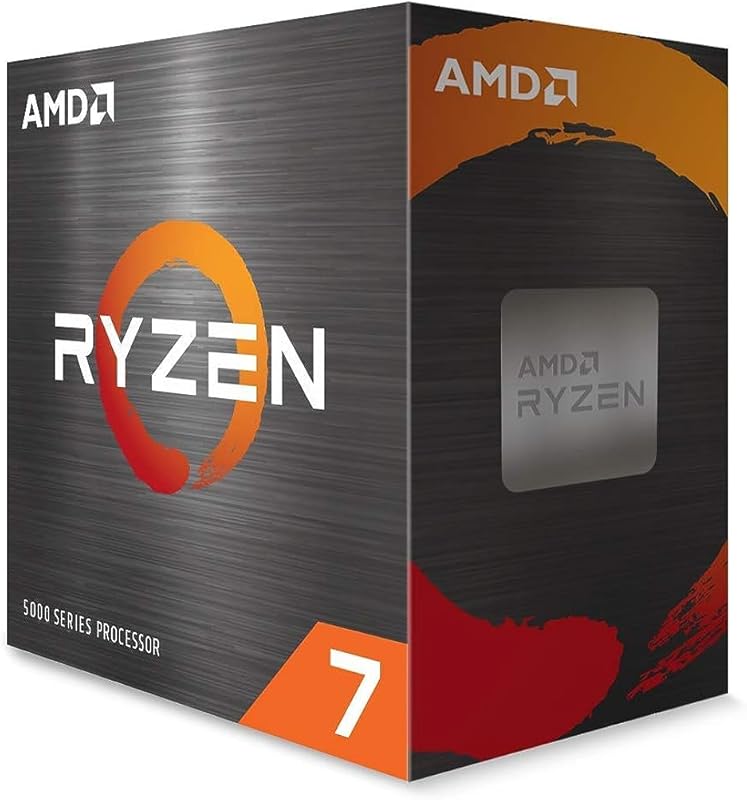
Pros
- Higher 4.7 GHz maximum boost clock
- Fast 8-core mainstream desktop processing
- Sustains higher clocks under workstation load
- Full 36 MB total cache pool
- PCIe 4.0 and DDR4-3200 platform support
Cons
- High 105-watt power consumption profile
- Requires high-performance cooling hardware
- Cooler not included in retail package
View AMD Ryzen 7 5800X on Amazon
Who Should Buy Each One
Choose the AMD Ryzen 7 5700X If
- You want 8 cores and 16 threads while maintaining a strict 65-watt thermal profile.
- You are building inside a compact Mini-ITX chassis or a case with modest ventilation.
- You prefer using standard, quiet air cooling rather than investing in bulky liquid cooling hardware.
- You are upgrading an older AM4 motherboard with entry-level power delivery heatsinks.
Choose the AMD Ryzen 7 5800X If
- You want the maximum out-of-the-box clock speed available on an 8-core Zen 3 processor at 4.7 GHz.
- You run continuous, heavy multi-threaded workstation renders where higher wattage maintains higher all-core boost.
- You already own a robust, high-performance liquid or dual-tower air cooler capable of managing 105W TDP.
- You have a well-ventilated mid-tower or full-tower chassis and an enthusiast-grade motherboard.
Final Verdict
For the vast majority of PC builders and desktop upgraders, the AMD Ryzen 7 5700X is the superior overall choice. It delivers the same 8-core, 16-thread Zen 3 architecture, identical 36 MB cache memory, and matching PCIe 4.0 expansion support as its sibling, but confines its operational footprint to a remarkably efficient 65 watts. Because the gaming and general productivity differences between 4.6 GHz and 4.7 GHz are minuscule in everyday use, the 5700X offers an easier-to-cool, quieter, and more versatile desktop experience that does not punish your system thermals.
The AMD Ryzen 7 5800X remains the definitive pick when peak clock speeds and unthrottled workstation rendering take priority over power consumption. If you already have a high-performance aftermarket cooler, an airflow-focused chassis, and an enthusiast motherboard, the 5800X allows its 105-watt limit to push sustained multi-core frequencies higher during demanding compute tasks. Unless you specifically require that extra frequency headroom for non-stop productivity, the cooler and more efficient Ryzen 7 5700X earns the recommendation.
FAQ
Does either processor come with a CPU cooler in the box?
Neither the AMD Ryzen 7 5700X nor the AMD Ryzen 7 5800X includes a thermal cooler in the box. You will need to purchase an aftermarket air or liquid cooler separately. The 5800X listing specifically notes that a high-performance cooler is recommended due to its 105-watt rating, whereas the 65-watt 5700X can be comfortably managed by standard air cooling units.
Can the Ryzen 7 5700X and 5800X be installed on the same motherboards?
Yes, both processors share the AMD Socket AM4 platform and are fully compatible with AMD 500-series motherboards, including B550 and X570 models with PCIe 4.0 support. However, the higher 105W power draw of the 5800X means it performs best on motherboards with well-heatsinked power delivery components, while the 65W 5700X is much gentler on entry-level motherboards.
Do these processors have integrated graphics for monitor output?
Neither processor features integrated graphics hardware. Both the Ryzen 7 5700X and Ryzen 7 5800X require a dedicated discrete graphics card installed in the PCIe slot to output video to a monitor.
How big is the boost clock difference between the 5700X and 5800X?
The maximum boost clock difference is exactly 100 MHz. The Ryzen 7 5700X peaks at 4.6 GHz, while the Ryzen 7 5800X reaches up to 4.7 GHz under factory configurations. Both processors feature an unlocked multiplier, allowing users to fine-tune operational frequencies if desired.
Is the Ryzen 7 5800X worth it over the 5700X for gaming?
For dedicated gaming builds, the Ryzen 7 5800X rarely offers a noticeable advantage over the 5700X. Both chips share identical 8-core, 16-thread Zen 3 layouts and 36 MB of cache, and both are rated by AMD to deliver 100+ FPS in mainstream games. Because the 100 MHz clock difference produces negligible frame-rate variance, the cooler-running 5700X is generally preferred for gaming rigs.
What type of system memory do these processors support?
Both the Ryzen 7 5700X and Ryzen 7 5800X natively support DDR4-3200 system memory. Pairing them with high-quality DDR4 memory ensures smooth communication across the Zen 3 compute fabric.
Which processor is better suited for a small form factor build?
The AMD Ryzen 7 5700X is much better suited for small form factor or Mini-ITX builds. Operating at a modest 65-watt rating, it generates significantly less heat than the 105-watt 5800X, allowing it to function reliably within compact cases where airflow is restricted and cooling space is limited.


