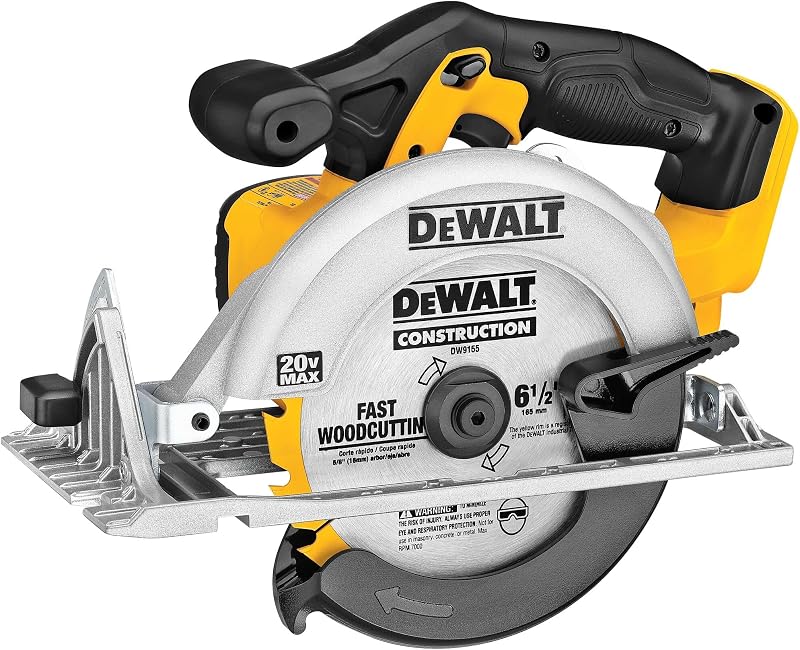
Choosing between the Milwaukee 2953-20 and the Milwaukee 2960-20 comes down to the core distinction in tool design: a high-speed 1/4-inch hex impact driver engineered for driving construction screws versus a dedicated 3/8-inch mid-torque impact wrench built for breaking free heavy automotive bolts. While both tools share the 18-volt battery platform, their anvils, internal hammer-and-anvil strike profiles, rotational speeds, and torque deliveries serve fundamentally different mechanical workloads.
Woodworkers, carpenters, and general contractors should pick the Milwaukee 2953-20 for rapid screw fastening and lightweight handling in overhead spaces. Automotive technicians, machinery mechanics, and tire service pros should choose the Milwaukee 2960-20 for heavy bolt removal and high breakaway torque.

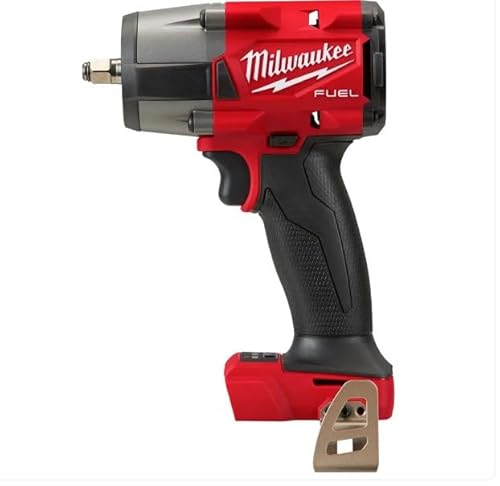
Milwaukee 2953-20 vs Milwaukee 2960-20 at a Glance
| Feature | Milwaukee 2953-20 | Milwaukee 2960-20 |
|---|---|---|
| Tool Category | 1/4″ Hex Impact Driver | 3/8″ Mid-Torque Impact Wrench |
| Drive Style / Chuck | 1/4″ Hex Quick-Change Collet | 3/8″ Square Drive with Friction Ring |
| Peak Torque Output | 2,000 in-lb | 600 ft-lb Nut-Busting |
| Maximum Speed | 3,900 RPM | Not listed |
| Tool Length | 4.47 inches | 6.0 inches |
| Bare Tool Weight | 2.2 pounds | 4.1 pounds |
| Operating Voltage | 18 Volts | 18 Volts |
| Drive Modes | 4-Mode Drive Control | 4-Mode Drive Control |
| Work Lights | Tri-LED | Tri-LED Anvil Ring |
| Best For | Fastening screws and light drilling | Automotive fasteners and mechanical teardown |
Fastener Application and Drive Mechanism
The defining physical difference between these two tools lies in the anvil design. The Milwaukee 2953-20 features a 1/4-inch quick-insert hex collet designed specifically for standard 1/4-inch driver bits, nut setters, and specialized impact drill bits. This interface permits single-handed bit insertion, letting you snap a fastener bit into the nose cone quickly without fumbling. It is engineered for driving structural wood screws, drywall screws, cabinet hardware, and light metal fasteners. Using this hex interface for mechanical socket work requires a 1/4-inch to square drive adapter, but high-load socket tasks can easily shear small 1/4-inch adapter shanks under sustained torsional stress.
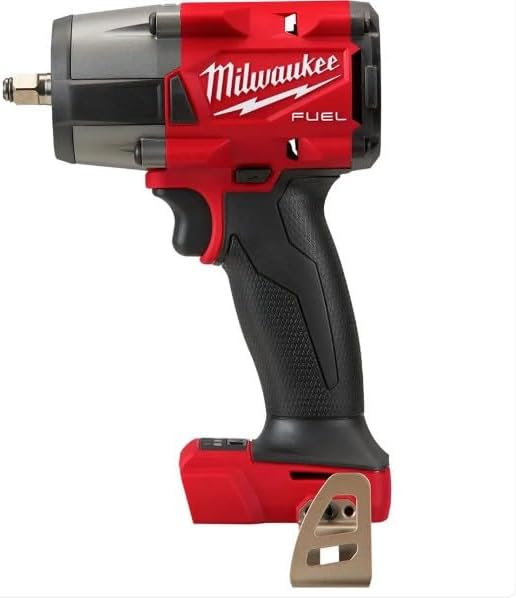
In contrast, the Milwaukee 2960-20 features an integrated 3/8-inch square drive with a friction ring retention system. A friction ring, also called a hog ring, allows users to slip standard automotive impact sockets on and off quickly by hand without hunting for a separate detent pin release tool. This square anvil handles the severe torsional shock loads of mechanical fastening directly, eliminating the weak link of an adapter. Comparing a dedicated impact driver to a square-drive impact wrench is a common crossroads on jobsites, much like shoppers evaluating the milwaukee 2953-20 vs 2656-20 to match the right tool mechanism to their daily materials.
Attempting to drive hundreds of framing screws with a 3/8-inch square drive tool feels clunky, heavy, and awkward, just as trying to pull rusted chassis bolts with a 1/4-inch hex driver leads to broken bits and stripped fastener heads. When considering a milwaukee 2953-20 vs m18 fuel selection, drive compatibility defines your primary daily workflow.
Edge: Tie. Each drive mechanism is purpose-built for its intended fastener class, with the 2953-20 optimizing 1/4-inch driver bits and the 2960-20 standardizing 3/8-inch mechanical sockets.
Working Torque and Fastener Breakaway Power
Torque output is where these two tools pull entirely apart in capacity. The Milwaukee 2953-20 torque is rated at 2,000 in-lb. When converted to foot-pounds, that equates to approximately 166.7 ft-lb of rotational force. This level of power is exceptionally potent for an impact driver, allowing users to drive long timber screws, lag bolts, and structural anchors into dense wood without pre-drilling. The tool utilizes an 800-watt power delivery system to sustain constant output through deep wood fastening, but it remains calibrated to avoid twisting screw heads completely off during building projects.
The Milwaukee 2960-20 torque operates in an entirely different weight class, providing 600 ft-lb of nut-busting torque. Measured against the driver’s ~167 ft-lb equivalent, the 2960-20 supplies more than three and a half times the raw breakaway force. This level of mid-torque output is designed explicitly to overcome thread friction, corrosion, heat cycling, and factory over-tightening found on automotive suspension arms, brake caliper brackets, and wheel lug nuts. For buyers asking is milwaukee 2960-20 worth it for garage duty, the massive torque ceiling provides the authority to break loose rusted automotive fasteners without reaching for a breaker bar.
Choosing between the milwaukee 2953-20 or 2960-20 for automotive tasks becomes straightforward based on these figures. While an impact driver can remove small trim screws and interior valve covers, it lacks the rotational mass and strike energy to break loose stubborn vehicle chassis bolts. For real mechanical repair, the 600 ft-lb rating of the mid-torque platform is essential, a dynamic echoed when comparing larger impact wrenches such as in the milwaukee 2953-20 vs 2962-20 equipment breakdown.
Edge: Milwaukee 2960-20. It dominates raw fastening force with 600 ft-lb of nut-busting torque, delivering the muscle necessary for demanding mechanical fasteners.
Rotational Speed and Fastening Efficiency
While the impact wrench wins overwhelmingly on brute force, the Milwaukee 2953-20 commands an enormous advantage in rotational speed. The 2953-20 tops out at an impressive 3,900 RPM. In any standard milwaukee 2953-20 review, users highlight how fast this tool sinks fasteners into timber and sheet metal. High RPM reduces the cycle time per fastener, which translates directly to massive time savings when driving hundreds of decking screws, drywall fasteners, or metal roofing screws in a single shift. Fast rotational speed also allows self-tapping screws to bite into sheet metal instantly without wandering across the workpiece.
For the Milwaukee 2960-20 mid torque, the manufacturer listing emphasizes faster removal speed and increased productivity, though the exact maximum rotational speed in RPM is not listed in the provided specifications. Impact wrenches generally trade pure rotational velocity for heavier internal striking hammers. A heavy internal hammer delivers a slower, much more massive impact blow that breaks rusted threads loose without generating the blistering free-spinning speed of a construction driver.
If your primary job involves continuous repetitive screw fastening, using an impact wrench with lower RPM slows down your installation pace significantly. The high-speed 3,900 RPM gearbox of the 2953-20 keeps production moving at full speed on framing and assembly sites, making it superior for assembly tasks where speed matters more than raw foot-pounds of torque.
Edge: Milwaukee 2953-20. A class-leading 3,900 RPM motor sinks long construction fasteners substantially faster than a heavy automotive wrench.
Size, Weight, and Maneuverability
Working in cramped positions places a premium on tool clearance and total weight. The Milwaukee 2953-20 specs reveal a remarkably compact tool measuring just 4.47 inches in overall length and weighing only 2.2 pounds without a battery. This ultra-short profile allows tradespeople to reach between framing studs, inside cabinet carcasses, and into narrow ceiling joist cavities with ease. Carrying a 2.2-pound tool on your tool belt all day causes minimal fatigue, and the included all-metal belt clip keeps the driver secure when climbing ladders. In discussions of the milwaukee 2953-20 vs m18 fuel compact variants, the 2953-20 remains one of the shortest tools in its category.
The Milwaukee 2960-20 measures 6.0 inches in length and weighs 4.1 pounds as a bare tool, climbing to 5.0 pounds when equipped with an M18 5.0Ah battery pack. While 6.0 inches is notably compact for a mid-torque wrench capable of producing 600 ft-lb, it remains over 1.5 inches longer and nearly twice as heavy as the 2953-20. That extra physical bulk comes from the reinforced metal front housing, heavy steel anvil, and oversized striking mechanism required to generate high breakaway power without cracking under internal stress.
Under a car hood or inside a wheel well, the 6.0-inch length of the 2960-20 is a massive advantage compared to older, bulkier pneumatic tools. However, for continuous overhead assembly or drywall hanging, holding a 5.0-pound package quickly causes wrist and arm fatigue. When size and weight are the deciding factors, the impact driver is vastly easier to handle over a long workday.
Edge: Milwaukee 2953-20. At 4.47 inches in length and 2.2 pounds, it provides substantially better clearance and all-day handling comfort than the heavier wrench.
Speed Control and Work Area Illumination
Precision driving requires granular motor control to avoid over-torquing smaller hardware. Both the 2953-20 and the 2960-20 feature Milwaukee’s 4-Mode Drive Control system, which lets users switch between distinct power levels via an electronic push-button selector located on the base of the tool. On the 2953-20, this system allows operators to drop the power when handling delicate cabinet screws or small wood joints, preventing stripped threads, cracked wood, and snapped screw heads. The tool also provides metal drilling capacity of 0.5 inches and wood drilling capacity of 0.5 inches, giving it versatile utility beyond pure fastening.
The 2960-20 mid-torque wrench utilizes its 4-Mode Drive Control to tame its 600 ft-lb motor. It provides selectable RPM and IPM levels, including an automatic shut-off mode in forward to prevent overtightening critical bolts during reassembly, alongside a bolt-removal mode that drops rotational speed once the fastener breaks loose to keep nuts from flying across the shop floor. In any milwaukee 2960-20 review, mechanics consistently praise this electronic throttle control for keeping high-torque fasteners under strict management during assembly.
Both tools also incorporate advanced Tri-LED lighting systems. The 2953-20 positions three LEDs around the nose cone to illuminate the bit tip directly, while the 2960-20 places high-definition Tri-LEDs surrounding the anvil to cast bright light with fewer shadows into deep engine bays and dark wheel wells. This shared lighting architecture completely outclasses older single-LED platforms, as seen in evaluations like the milwaukee 2953-20 vs 2850, providing superior visibility in unlit jobsite corners.
Edge: Tie. Both models feature robust 4-mode electronic drive controls tailored to their workloads and cast shadow-free illumination via Tri-LED arrays.
Pros and Cons
Milwaukee 2953-20

Pros
- Fast 3,900 RPM rotational speed
- Ultra-compact 4.47-inch length
- Lightweight 2.2-pound body
- Quick-change 1/4-inch hex collet
Cons
- Lacks torque for automotive bolts
- Requires adapters for sockets
View Milwaukee 2953-20 on Amazon
Milwaukee 2960-20
Pros
- Massive 600 ft-lbs nut-busting torque
- Dedicated 3/8-inch friction ring anvil
- POWERSTATE brushless motor
- Tri-LED lighting around anvil
Cons
- Heavier at 4.1 pounds bare tool
- Unlisted top rotational speed
View Milwaukee 2960-20 on Amazon
Who Should Buy Each One
Choose the Milwaukee 2953-20 If
- You primarily drive construction screws, drywall fasteners, deck screws, and timber lags.
- You need an ultra-compact 4.47-inch tool profile to fit between wall framing, inside cabinetry, or overhead.
- You require a lightweight 2.2-pound bare tool to minimize wrist fatigue and carry effortlessly on a tool belt.
- You want blistering 3,900 RPM rotational speed for fast, repetitive wood and sheet metal fastening.
Choose the Milwaukee 2960-20 If
- You perform automotive repair, suspension rebuilds, brake jobs, and tire rotations.
- You need up to 600 ft-lb of nut-busting torque to unseat corroded, thread-locked, or factory-torqued bolts.
- You use 3/8-inch drive impact sockets and need a friction ring anvil for rapid, secure socket swaps.
- You want specialized bolt-removal and auto-shutoff modes designed specifically for mechanical hardware assembly.
Final Verdict
The choice between the Milwaukee 2953-20 and the Milwaukee 2960-20 is not about which tool is better overall, but which tool matches your fastener type. The Milwaukee 2953-20 is the undisputed pick for woodworkers, carpenters, electricians, and general contractors. Its rapid 3,900 RPM motor, featherweight 2.2-pound frame, and 4.47-inch compact body make it one of the most efficient tools available for sinking screws and assembling structural timber. Its 2,000 in-lb of torque provides ample muscle for construction tasks without the excessive weight of a mechanical wrench.
The Milwaukee 2960-20 wins unequivocally for automotive technicians, equipment operators, and heavy mechanical service. With 600 ft-lb of nut-busting breakaway power, a dedicated 3/8-inch friction ring square anvil, and specialized automotive drive modes, it handles high-stress vehicle hardware that would snap impact driver adapters instantly. If you work on cars, heavy machinery, or large industrial bolts, the 2960-20 mid-torque wrench is the tool you need in your toolbox.
FAQ
Can the Milwaukee 2953-20 remove car lug nuts with a socket adapter?
While the 2953-20 delivers 2,000 in-lb (about 167 ft-lb) of torque, it is not recommended for lug nuts. Car lug nuts are often torqued to 80-150 ft-lb and can require over 200 ft-lb of breakaway force if rusted or over-torqued. Forcing an impact driver to remove lug nuts with a 1/4-inch hex-to-square adapter frequently snaps the adapter pin and overheats the tool motor.
What is the main difference in the Milwaukee impact driver vs impact wrench comparison?
An impact driver, such as the 2953-20, features a 1/4-inch hex collet, higher rotational speeds (up to 3,900 RPM), and moderate torque (measured in inch-pounds) optimized for driving screws into wood and metal. An impact wrench, such as the 2960-20, features a square drive anvil, lower RPM, and massive rotational striking energy (measured in foot-pounds) designed to loosen large structural and automotive bolts.
How do you convert the torque specs between these two tools?
To convert inch-pounds to foot-pounds, divide the inch-pound figure by 12. The Milwaukee 2953-20 produces 2,000 in-lb, which equals approximately 166.7 ft-lb. By comparison, the Milwaukee 2960-20 produces 600 ft-lb of nut-busting torque, which equals 7,200 in-lb. This demonstrates why the mid-torque wrench is vastly more powerful for heavy mechanical bolts.
Does the Milwaukee 2960-20 accept standard screwdriver bits?
Not natively. The 2960-20 has a 3/8-inch square drive designed for impact sockets. While you can purchase a 3/8-inch square to 1/4-inch hex adapter, the tool’s 600 ft-lb torque output and lower rotational speed make it poorly suited and overly harsh for driving standard drywall or wood screws.
Can both tools use the same M18 batteries?
Yes. Both the Milwaukee 2953-20 and the Milwaukee 2960-20 operate on the standard Milwaukee 18V cordless battery platform. Compact batteries like a 2.0Ah pack pair well with the 2953-20 to keep it light, while larger batteries like the 5.0Ah pack are ideal for delivering sustained current to the 2960-20 mid-torque wrench.
What does the friction ring on the Milwaukee 2960-20 do?
A friction ring (or hog ring) is a split metal ring positioned at the tip of the 3/8-inch square anvil. It creates spring tension against the inner walls of an impact socket, holding the socket securely during operation while allowing you to quickly pull it off and swap socket sizes by hand without needing a separate release tool.