The decisive difference between the AMD Ryzen 7 7700X and the AMD Ryzen 9 7950X3D comes down to silicon density and cache architecture: the 7700X runs an 8-core, 16-thread Zen 4 design with 32MB of L3 cache, whereas the 7950X3D doubles execution resources to 16 cores and 32 threads while integrating AMD 3D V-Cache technology for an enormous 144MB cache pool.
Mainstream desktop builders focused on high-frame-rate gaming and standard computing should choose the AMD Ryzen 7 7700X for its efficient 105W envelope and straightforward single-die layout. Heavy workstation users, digital creators, and simulation gamers should invest in the Ryzen 9 7950X3D for its multithreaded compute throughput and massive specialized cache reserves.
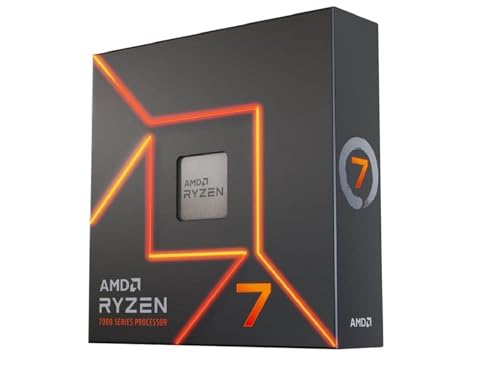

AMD Ryzen 7 7700X vs Ryzen 9 7950X3D at a Glance
| Feature | AMD Ryzen 7 7700X | AMD Ryzen 9 7950X3D |
|---|---|---|
| Processor Cores | 8 Cores | 16 Cores |
| Processing Threads | 16 Threads | 32 Threads |
| Base Clock Speed | 4.5 GHz | Not listed |
| Max Boost Clock Speed | 5.4 GHz | 5.7 GHz |
| Cache Architecture | 32 MB L3 Cache (80 MB total listed) | 144 MB total cache with AMD 3D V-Cache |
| Thermal Design Wattage | 105 W | 120 W |
| Platform Socket | Socket AM5 | Socket AM5 |
| Memory Compatibility | DDR5-5200 support | DDR5 support (unlocked overclocking) |
| PCIe Interface | PCIe 5.0 on select 600 Series | PCIe 5.0 on select 600 Series |
| Cooling Solution Included | Cooler not included | Cooler not included (liquid cooler recommended) |
| Best For | Mainstream High-FPS Gaming | Heavy Workstation Tasks and Simulation Gaming |
Cache Architecture and 3D V-Cache Technology
On-chip cache serves as high-speed memory located directly next to the execution engines, minimizing latency by reducing the frequency with which a processor must request data from system RAM. When evaluating 7700X vs 7950X3D cache specs, the two parts inhabit entirely different classes of silicon layout. The Ryzen 7 7700X listing specifies 32MB of L3 cache alongside 8MB of L2 cache, fitting the traditional monolithic configuration of an 8-core desktop component. This pool provides fast, predictable data retrieval for conventional game code and desktop software that rely on standard memory access patterns.
The Ryzen 9 7950X3D completely reshapes this data pipeline by deploying AMD 3D V-Cache technology to achieve an installed cache memory size of 144MB. This stacked cache hardware provides an enormous local data buffer that retains critical game instructions, world geometry, physics calculations, and asset tables directly on the CPU die. In titles that place intensive strain on memory subsystems, such as expansive open-world simulations, grand strategy games, and titles with dense non-player character interactions, this massive cache prevents compute stalls. Shoppers debating an amd ryzen 7 7700x vs 7800x3d or looking at the 7950X3D will find that large cache capacities directly stabilize 1% low frame rates and eliminate micro-stutters in complex environments.
While the standard cache on the 7700X handles mainstream esports and modern action games with ease, it lacks the specialized memory overhead required to buffer massive asset databases locally. The 7950X3D ensures that instructions remain readily available to the compute engines without wasting clock cycles waiting on motherboard memory buses. For workloads that can exploit direct on-chip buffering, the 144MB capacity offers a structural advantage that standard system architecture cannot replicate.
Edge: AMD Ryzen 9 7950X3D due to its massive 144MB cache footprint driven by AMD 3D V-Cache technology.
Core Counts and Multithreaded Productivity
Core and thread configurations determine how efficiently a central processing unit executes parallel compute tasks like continuous 3D modeling, offline video rendering, code compilation, and background system overhead. The Ryzen 7 7700X is built with 8 physical cores and 16 concurrent processing threads based on the 5nm Zen 4 architecture. For pure desktop operations, game streaming, and everyday multitasking, an 8-core array provides abundant execution headroom, preventing gaming processes from colliding with discord audio, web browser tabs, or capture software.
The dynamic shifts dramatically when evaluating a amd ryzen 7 7700x vs ryzen 9 7950x or the flagship 7950X3D for heavy production pipelines. The Ryzen 9 7950X3D features 16 physical cores and 32 threads, literally doubling the compute parallelization of the 7700X. In a dedicated Ryzen 7 7700X vs 7950X3D workstation comparison, this disparity is impossible to overlook. High-demand workstation engines such as Blender, cinema rendering suites, visual effects compositors, and multi-track audio digital audio workstations scale near-linearly with thread availability, transforming production wait times into brief pauses.
Choosing between the Ryzen 7 7700X or Ryzen 9 7950X3D for streaming also highlights this core divide. While the 7700X can comfortably handle single-PC gaming alongside GPU hardware encoding, running complex software-based CPU encoding (such as x264 slow presets) alongside resource-heavy games will quickly saturate 16 threads. The 32 threads of the 7950X3D provide the isolation necessary to run heavyweight streaming software, video capture pipelines, and studio-grade audio plug-ins simultaneously without degrading front-end gaming responsiveness.
Edge: AMD Ryzen 9 7950X3D because its 16 cores and 32 threads provide double the multithreaded capacity of the 8-core 7700X.
Clock Speeds and Single-Core Gaming Performance
Processor frequency indicates the baseline execution pace of each individual core, which directly governs responsiveness in single-threaded workloads, traditional game logic, and CAD operations. The Ryzen 7 7700X features a specified 4.5 GHz base clock speed and reaches a 5.4 GHz Max Boost frequency. The listing notes that this dominant gaming processor delivers fast 100+ FPS performance in the world’s most popular games, establishing that its raw clock velocity provides exceptional frame delivery across traditional game engines.
In contrast, the Ryzen 9 7950X3D pushes the top-end frequency ceiling to an impressive 5.7 GHz Max Boost, representing a 300 MHz peak advantage over the 7700X. Although the listing for the 7950X3D does not specify its base clock speed, its heightened boost capability ensures rapid instruction execution in single-core bursting workloads. When evaluating AMD 7700X vs 7950X3D gaming benchmarks, the 7950X3D balances raw core velocity on one cluster with 3D V-Cache capabilities on the other, creating a high-frequency execution environment for competitive titles that do not benefit from expanded cache pools.
When deciding on the Ryzen 7 7700X or Ryzen 9 7950X3D for gaming, builders must weigh how their specific game library responds to clock speed versus cache volume. The 7700X maintains sustained high frequencies across all 8 cores uniformly without complex scheduler distribution. However, the 7950X3D pairs its 5.7 GHz Max Boost frequency with dedicated cache hardware, unlocking superior performance ceilings whether an engine favors pure gigahertz or massive cache pools. Readers exploring an amd ryzen 7 7800x3d vs ryzen 9 7950x3d evaluation will notice that the 7950X3D is specifically engineered to combine peak clock bursts with specialized cache acceleration.
Edge: AMD Ryzen 9 7950X3D due to its higher 5.7 GHz Max Boost ceiling.
Power Consumption and Thermal Management
Power design affects electrical efficiency, chassis heat exhaust, power supply requirements, and the physical cooling gear needed to maintain peak clock frequencies. A detailed look at 7700X vs 7950X3D power consumption shows distinct engineering philosophies. The Ryzen 7 7700X carries a 105W operating wattage specification. This power level allows standard mid-tower enclosures and dual-tower air heatsinks to keep operating temperatures within factory specifications without requiring complex liquid loop plumbing.
The Ryzen 9 7950X3D is rated at 120 watts. While 120W is remarkably restrained for a 16-core flagship component, the listing explicitly notes that a cooler is not included and that a liquid cooler is recommended. The thermal density created by stacking 3D V-Cache silicon vertically on top of high-density Zen 4 compute dies presents unique thermal transfer dynamics. Heat must migrate through the silicon layers efficiently, making robust thermal dissipation solutions mandatory to sustain boost clocks over extended computing sessions.
For PC builders assessing thermal overhead in an AMD Ryzen 7 7700X review or a Ryzen 9 7950X3D review, cooling hardware compatibility is a key consideration. The 7700X provides greater flexibility for compact computer enclosures, lower-output power supplies, and standard air-cooling assemblies. The 7950X3D requires dedicated planning around high-performance all-in-one liquid radiators to manage thermal output during sustained 32-thread renders. Comparing an amd ryzen 9 7950x vs 7950x3d shows how power caps help preserve cache integrity, but between these two specific models, the 7700X remains the easier processor to cool.
Edge: AMD Ryzen 7 7700X due to its lower 105W power footprint and less demanding thermal cooling requirements.
Platform Features and System Memory Support
Both processors integrate seamlessly into AMD’s state-of-the-art Socket AM5 ecosystem, ensuring long-term motherboard platform support across select 600 Series motherboards. The AM5 socket standard introduces native PCIe 5.0 lane capabilities, providing massive bandwidth pipelines for modern graphics cards and rapid solid-state storage drives. The physical dimensions of both units measure an identical 1.57 inches in length by 1.57 inches in width, ensuring uniform cooler bracket sizing and chassis socket compatibility.
Memory handling exhibits subtle distinctions within product listings. The Ryzen 7 7700X listing explicitly highlights DDR5-5200 memory support and notes that the processor is fully unlocked for overclocking. This provides enthusiasts with complete control over core multipliers, voltage curves, and memory sub-timings to extract incremental gains from standard desktop memory kits. Those researching an amd ryzen 7 7700x vs ryzen 9 7900x will appreciate the straightforward memory and tuning environment offered by standard Zen 4 chips.
The Ryzen 9 7950X3D listing specifies DDR5 support along with unlocked memory overclocking, while omitting multiplier overclocking on the compute cores to safeguard the sensitive 3D V-Cache layer. Both chips support Windows 10 and Windows 11 64-bit environments (with Linux supported on the 7700X listing). Because both central processing units leverage identical PCIe 5.0 bandwidth channels, DDR5 interfaces, and AM5 motherboard socket ecosystems, platform connectivity remains essentially identical between the two.
Edge: Tie because both processors utilize the same Socket AM5 platform with PCIe 5.0 architecture and DDR5 memory support.
Pros and Cons
AMD Ryzen 7 7700X

Pros
- 8 Zen 4 cores and 16 processing threads
- 4 GHz Max Boost clock speed
- Lower 105W thermal wattage rating
- Fully unlocked for processor overclocking
Cons
- No cooling solution included in box
- Standard 32MB L3 cache without 3D stacking
View AMD Ryzen 7 7700X on Amazon
AMD Ryzen 9 7950X3D

Pros
- 16 cores and 32 processing threads
- Massive 144MB cache with AMD 3D V-Cache
- High 5.7 GHz Max Boost clock speed
- Top-tier creator and workstation multitasking
Cons
- Higher 120W power requirement
- Liquid cooler recommended by manufacturer
- Cooler not included in retail package
View AMD Ryzen 9 7950X3D on Amazon
Who Should Buy Each One
Choose the AMD Ryzen 7 7700X If
- Your primary system focus is high-frame-rate mainstream 1080p or 1440p gaming without running heavy background production rendering.
- You prefer standard air cooling or compact desktop cases that benefit from a 105W power profile.
- You want complete core-multiplier tuning and overclocking capabilities on the AM5 platform.
- You do not run massive multi-threaded workstation programs like 3D ray-tracing, compilation suites, or batch video transcoding.
Choose the AMD Ryzen 9 7950X3D If
- You operate professional digital workstations that demand 16 physical cores and 32 threads for complex creative workloads.
- You play simulation, strategy, and massive open-world titles that experience major frame rate gains from 144MB of cache.
- You run complex live streaming setups where software encoding and background applications execute alongside games.
- You have an established desktop build featuring a high-performance liquid cooling system to handle sustained multithreaded operations.
Final Verdict
For the vast majority of mainstream desktop PC gamers, the AMD Ryzen 7 7700X represents the practical choice. Delivering 8 cores, 16 threads, 5.4 GHz Max Boost clock speeds, and an efficient 105W thermal ceiling, it delivers fast 100+ FPS gaming performance in popular titles while keeping cooling requirements manageable. It operates cleanly on standard Socket AM5 motherboards, pairs effortlessly with DDR5-5200 memory, and avoids the specialized cooling and thread scheduling demands associated with layered cache hardware.
However, when asking is Ryzen 9 7950X3D worth it, the answer is a decisive yes for serious digital creators and simulation gaming enthusiasts. By doubling processing resources to 16 cores and 32 threads, elevating top clock speeds to 5.7 GHz, and integrating a staggering 144MB of total cache via AMD 3D V-Cache technology, the 7950X3D dominates hybrid creator-gamer workstations. If your daily workflow blends intensive multi-threaded rendering, code compiling, and high-end gaming, the Ryzen 9 7950X3D stands unmatched.
FAQ
Does the AMD Ryzen 7 7700X come with a bundled CPU cooler?
No, the AMD Ryzen 7 7700X does not include a CPU cooler in the box. Buyers must purchase an aftermarket air cooler or liquid cooling loop that is compatible with the Socket AM5 mounting format.
Does the AMD Ryzen 9 7950X3D require a liquid cooler?
The product listing for the AMD Ryzen 9 7950X3D states that a cooler is not included and explicitly notes that a liquid cooler is recommended. A high-capacity liquid cooling setup helps manage the thermal density of the 16-core design and the stacked 3D V-Cache structure.
What socket do both of these processors use?
Both processors utilize the AMD Socket AM5 platform. They are designed to operate on AM5 motherboards, supporting PCIe 5.0 capabilities on select 600 Series motherboard chipsets along with DDR5 system memory.
Do either of these processors support integrated graphics?
The AMD Ryzen 7 7700X listing explicitly lists Radeon Graphics integrated onto the processor die, providing basic display functionality without requiring an immediate discrete graphics card. The Ryzen 9 7950X3D listing highlights its compute and 3D V-Cache capabilities without specifying discrete or integrated graphics specs.
Can you overclock both the 7700X and the 7950X3D?
The Ryzen 7 7700X is fully unlocked for core overclocking, allowing direct adjustments to core multipliers. The Ryzen 9 7950X3D listing specifies unlocked memory overclocking, while conventional core multiplier manipulation is restricted to protect the 3D V-Cache layer.
How do the cache specifications compare between these two CPUs?
The Ryzen 7 7700X features 32MB of L3 cache and 8MB of L2 cache (listed with an 80MB total cache spec). The Ryzen 9 7950X3D features an installed cache memory size of 144MB, combining standard cache allocations with vertically stacked AMD 3D V-Cache technology.