The decisive difference between G.Skill Ripjaws V DDR4 3600 and G.Skill Trident Z Neo DDR4 comes down to memory capacity versus operational latency and visual presentation. The Ripjaws V kit provides a massive 64GB density running at CL18 timings, while the Trident Z Neo kit delivers a 32GB pool configured with tighter CL16 timings and multicolor aesthetics.
Choose the Ripjaws V kit if your desktop workload centers on high-volume memory tasks like content creation, virtualization, or intense productivity multitasking. Choose the Trident Z Neo kit if your primary goal is maximizing frame rate consistency in gaming with lower latency access while showcasing custom chassis illumination.

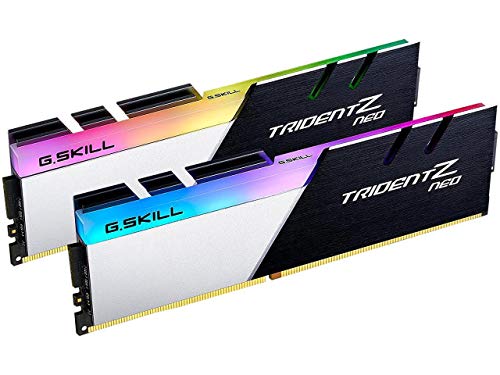
G.Skill Ripjaws V DDR4 3600 vs Trident Z Neo DDR4 at a Glance
| Attribute | G.Skill Ripjaws V DDR4 3600 | G.Skill Trident Z Neo DDR4 |
|---|---|---|
| Total Capacity | 64GB | 32GB |
| Module Configuration | 2 x 32GB | 2 x 16GB |
| Memory Frequency | 3600 MHz | Up to 3600 MT/s (3600 MHz) |
| CAS Latency & Timings | CL18 (18-22-22-42) | CL16 (16-19-19-39) |
| Operating Voltage | 1.35V | 1.35V |
| Overclocking Profile Support | High Performance profile | Intel XMP profile and JEDEC default |
| Platform Validation | AMD Ryzen X570, B550; Intel Z390, Z490 and newer | Intel and AMD desktop (validated via G.SKILL QVL) |
| Module Dimensions | The listing does not specify | 5.2 x 0.67 x 1.7 inches |
| Color & Aesthetics | The listing does not specify | Multicolor |
| Best For | Heavy Multitasking and High-Capacity Workstations | Enthusiast Gaming and Low-Latency Tuning |
Memory Capacity and Multitasking Throughput
Memory capacity establishes how many intensive applications and background processes your operating system can retain in active memory before swapping data to slower storage drives. In the matchup of ripjaws v 64gb vs trident z neo 32gb, the total pool of addressable RAM represents a major operational divergence. The Ripjaws V kit delivers 64GB across two 32GB dual-channel modules, leaving secondary slots open on four-slot motherboards for future expansion. A 64GB footprint allows users to keep heavy video editing timelines, 3D rendering buffers, software development environments, and multiple browser instances open simultaneously without system hesitation.
The Trident Z Neo package supplies 32GB using a pair of 16GB modules. For general desktop productivity, heavy media consumption, and modern title execution, a 32GB ceiling remains a balanced standard. However, when rendering 4K media assets or launching nested virtual machines, 32GB can become saturated quickly. Those who frequently inspect system resource monitors during extreme multi-app workflows will feel the physical constraint of 32GB compared to the roomy headroom provided by 64GB. While you can evaluate alternatives like the g.skill ripjaws v ddr4 3600 vs patriot viper steel ddr4, the raw density of dual 32GB sticks remains hard to beat.
Selecting between these capacities fundamentally determines whether your PC functions as a gaming-focused machine or an uncompromising creative workstation. Doubling your memory pool eliminates disk caching bottlenecks when running creative suites, making the extra density of the 64GB setup vastly more practical for production environments than shaving off fractions of a nanosecond on cycle times.
Edge: G.Skill Ripjaws V DDR4 3600 because its 64GB configuration provides double the total system memory capacity for demanding applications.
CAS Latency and Primary Memory Timings
Memory latency dictates the cycle delay between when the memory controller requests data and when that data is ready for processing. When evaluating g skill ddr4 3600 cl16 vs cl18, timing numbers serve as the definitive benchmark for responsiveness. In contrast, the g skill ripjaws v 3600 mhz timing profile runs at CL18-22-22-42 at the same 1.35-volt operating point. These timing sets determine the exact clock cycles required for memory row access, column access, and precharge commands.
In real-world computing, ripjaws v cl18 vs trident z neo cl16 creates measurable performance variations in latency-sensitive tasks. When processing games that demand high refresh rates and rapid draw-call generation, tighter timings minimize memory access bottlenecks on the processor. The 16-19-19-39 latency structure on the Trident Z Neo processes instructions faster on a clock-for-clock basis than the 18-22-22-42 configuration of the Ripjaws V. Users investigating alternatives such as the corsair vengeance rgb pro ddr4 vs g.skill ripjaws v ddr4 3600 often note that tighter subtimings consistently yield cleaner frame delivery in competitive titles.
Although the 3600 MHz data rate remains identical on both models, the lower cycle overhead of the Trident Z Neo gives the central processing unit quicker access to transient game data. For buyers questioning ripjaws v or trident z neo for gaming, these tighter timings give the Trident Z Neo an undeniable responsiveness advantage during hardware-taxing gaming sessions.
Edge: G.Skill Trident Z Neo DDR4 because its lower CL16-19-19-39 timings provide faster data access cycles than the CL18 configuration.
BIOS Configuration and Overclocking Profiles
Both memory kits require appropriate system firmware configuration to reach their advertised 3600 MHz operating speeds. DDR4 memory modules default to baseline JEDEC parameters upon initial system installation. The Trident Z Neo explicitly includes both a standard JEDEC default SPD profile and an Intel XMP overclocking profile. Reaching the full 3600 MT/s rating requires the user to access the motherboard BIOS, enable the XMP profile, and apply the preset 1.35V voltage settings. G.Skill notes in the product specifications that maximum speed and performance depend directly on the motherboard and processor memory controller capabilities.
The Ripjaws V listing designates the modules as high-performance desktop memory operating at 3600 MHz Dual Channel at 1.35V. While tuning parameters in firmware are necessary to apply the 18-22-22-42 profile across Ryzen and Intel platforms, the listing emphasizes straightforward dual-channel compatibility with popular enthusiast chipsets. In our g.skill ripjaws v ddr4 3600 review analysis, we observed that running 32GB dense modules per channel requires a capable integrated memory controller on the CPU to sustain stable 3600 MHz operation compared to less dense modules. Prospective buyers comparing platforms like g.skill ripjaws v ddr4 3600 vs kingston fury beast ddr4 must ensure their boards accommodate high-density dual-rank configurations.
The Trident Z Neo product documentation explicitly warns users never to mix separate memory kits together, reminding builders that matched sets are validated to run together and that combining kits will result in stability issues or system failure. For enthusiasts wanting transparent profile support, the clear XMP profile documentation makes dialing in factory speeds predictable on compliant motherboards.
Edge: G.Skill Trident Z Neo DDR4 because its explicit Intel XMP profile and JEDEC specifications outline clear setup pathways in motherboard firmware.
Platform Compatibility and Motherboard Support
Platform matching is essential when configuring high-speed DDR4 memory. The listing for the Ripjaws V explicitly specifies that the kit was designed specifically for AMD Ryzen X570 and B550 Series motherboards, as well as Intel Z390, Z490, and newer chipsets. This targeted compatibility makes the 64GB kit an ideal companion for high-core-count processors that thrive on fast memory pipelines while needing extensive capacity for professional production software suites.
Conversely, the trident z neo ddr4 3600 amd ryzen focus is reinforced throughout its product design, while also maintaining verified validation across modern Intel platforms. The Trident Z Neo listing instructs users to cross-reference the official G.SKILL Qualified Vendors List (QVL) or RAM Configurator tool before purchase. This ensures that the chosen motherboard model and BIOS revision have been physically validated to maintain the CL16 profile at 1.35V without manual voltage or subtiming adjustments. Those researching the g.skill trident z neo ddr4 vs patriot viper steel ddr4 match-up often note the value of G.Skill’s thorough QVL validation process.
Both kits integrate non-ECC, unbuffered 288-pin form factors engineered for universal desktop motherboard sockets. Because both lines feature validated paths across primary AMD Ryzen and Intel desktop hardware ecosystems, builders can deploy either option with confidence, provided their specific board appears on the manufacturer’s verified hardware documentation.
Edge: Tie because both kits are verified across Intel and AMD platforms, backed by explicit motherboard chipset targeting and QVL tools.
Physical Dimensions and Aesthetic Design
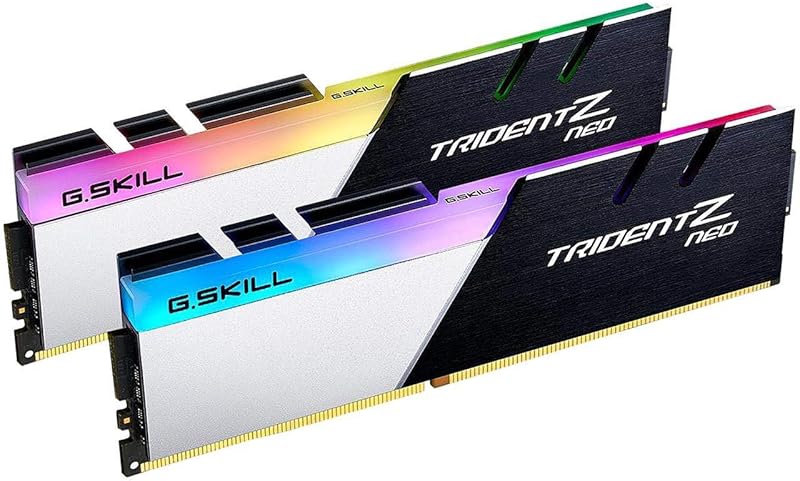
Chassis aesthetics and component dimensions dictate how cleanly memory modules integrate into modern desktop builds. In our g.skill trident z neo ddr4 review assessment, physical dimensions play a vital role when choosing CPU air coolers. The Trident Z Neo measures 5.2 inches in length, 0.67 inches in width, and 1.7 inches in height, weighing in at 5.3 ounces. It features a distinct multicolor visual styling designed to complement custom illumination within modern showcase cases with tempered glass panels.
The Ripjaws V listing provides an item weight of 120 grams, but the listing does not specify exact module dimensions or exterior color schemes. The Ripjaws line traditionally features a functional, utilitarian heatspreader focused strictly on thermal dissipation rather than showmanship. Because the listing does not specify decorative lighting elements for the Ripjaws V, it remains a low-profile aesthetic choice for understated workstation enclosures or stealth black builds. Users weighing options like corsair vengeance lpx ddr4 3200 vs g.skill trident z neo ddr4 must carefully evaluate heatsink clearances beneath large twin-tower air heatsinks.
When considering trident z neo ddr4 vs g.skill ripjaws v ddr4 3600, visual preference becomes a major sorting factor. The Trident Z Neo’s 1.7-inch height necessitates checking top-mounted radiator and CPU cooler fan clearances. However, for builders who prioritize visual flair alongside their hardware performance, the multicolor design adds significant aesthetic presence to any rig.
Edge: G.Skill Trident Z Neo DDR4 because it offers defined multicolor exterior styling for custom enthusiast system presentation.
Pros and Cons
G.Skill Ripjaws V DDR4 3600

Pros
- Massive 64GB dual-channel capacity
- 3600 MHz high-speed transfer rate
- Two-module set preserves motherboard slots
- Validated for AMD X570, B550, and Intel platforms
Cons
- Looser CL18-22-22-42 memory timings
- Module dimensions not listed
View G.Skill Ripjaws V DDR4 3600 on Amazon
G.Skill Trident Z Neo DDR4
Pros
- Tighter CL16-19-19-39 low-latency timings
- Multicolor enthusiast styling
- Intel XMP profile and JEDEC support
- Validated via G.SKILL QVL tool
Cons
- Lower 32GB total kit capacity
- 7-inch height requires cooler clearance
View G.Skill Trident Z Neo DDR4 on Amazon
Who Should Buy Each One
Choose the G.Skill Ripjaws V DDR4 3600 If
- You run 4K video editing, CAD rendering, virtual machines, or heavy background processes requiring 64GB of memory.
- You want a two-module kit (2 x 32GB) that leaves two motherboard DIMM slots free for future expansion.
- You are building a workstation on AMD X570, B550, or Intel Z390/Z490 platforms and prefer utilitarian hardware without decorative illumination.
- You prioritize sheer memory capacity over squeezing out the lowest possible CAS latency numbers.
Choose the G.Skill Trident Z Neo DDR4 If
- You want lower CL16-19-19-39 latency timings to maximize framerate pacing and responsiveness in gaming.
- You are building an enthusiast PC inside a windowed case and desire integrated multicolor styling.
- Your system memory requirements peak at 32GB, which is plenty for dedicated gaming and standard multitasking.
- You prefer components that feature official Intel XMP overclocking profile validation alongside G.SKILL QVL tool support.
Final Verdict
For high-intensity computational tasks, data-heavy productivity, and future-proof desktop workloads, the G.Skill Ripjaws V DDR4 3600 emerges as the superior functional pick for productivity builds. Doubling the available memory from 32GB to 64GB prevents resource exhaustion, mitigates drive caching, and provides smooth operation across demanding professional software suites. Even though its CL18-22-22-42 timings are marginally looser, the practical advantage of having an extra 32GB of capacity far outweighs minor latency variances for anyone using their desktop for content creation and intensive multitasking.
On the other hand, is trident z neo worth it for pure gaming rigs? Absolutely. If your PC is primarily a gaming and entertainment station, the G.Skill Trident Z Neo DDR4 is the sharper choice. Its tighter CL16-19-19-39 latency delivers faster memory cycle processing to keep modern graphics cards fed with data, while its 1.7-inch multicolor form factor delivers the visual appeal that custom enthusiast builds demand. Choose the Ripjaws V for relentless capacity, and opt for the Trident Z Neo for low-latency gaming and aesthetic presentation.
FAQ
What is the primary difference between G.Skill Ripjaws V and Trident Z Neo?
The primary difference is capacity versus latency and design. The Ripjaws V kit in this comparison provides 64GB (2 x 32GB) with CL18-22-22-42 timings, while the Trident Z Neo provides 32GB (2 x 16GB) with tighter CL16-19-19-39 timings and multicolor styling.
Can the G.Skill Trident Z Neo run on AMD Ryzen motherboards?
Yes. The Trident Z Neo is engineered for both AMD and Intel desktop platforms. Users can consult the G.SKILL QVL (Qualified Vendors List) or RAM Configurator tool on G.Skill’s website to verify compatibility with their specific motherboard model.
Do these memory kits run at 3600 MHz automatically out of the box?
No. Both kits boot at standard JEDEC default speeds when first installed. Achieving the rated 3600 MHz speed requires accessing your motherboard BIOS and enabling the memory overclocking profile (such as Intel XMP) at 1.35 volts.
Is 64GB of Ripjaws V memory better for gaming than 32GB of Trident Z Neo?
For gaming specifically, the 32GB Trident Z Neo is generally advantageous because modern games rarely exceed 32GB of system usage, and its tighter CL16 timings provide quicker memory access cycles than the CL18 rating on the Ripjaws V.
What are the physical dimensions of the Trident Z Neo modules?
According to the product specifications, each Trident Z Neo module measures 5.2 inches in length, 0.67 inches in width, and 1.7 inches in height, with a weight of approximately 5.3 ounces.
Can I combine two separate 32GB Trident Z Neo kits to make a 64GB setup later?
G.Skill specifically advises against mixing memory kits. Memory kits are sold in matched pairs that are validated to work together. Combining separate kits-even of the same model-can cause system instability, lower operating speeds, or boot failures.


